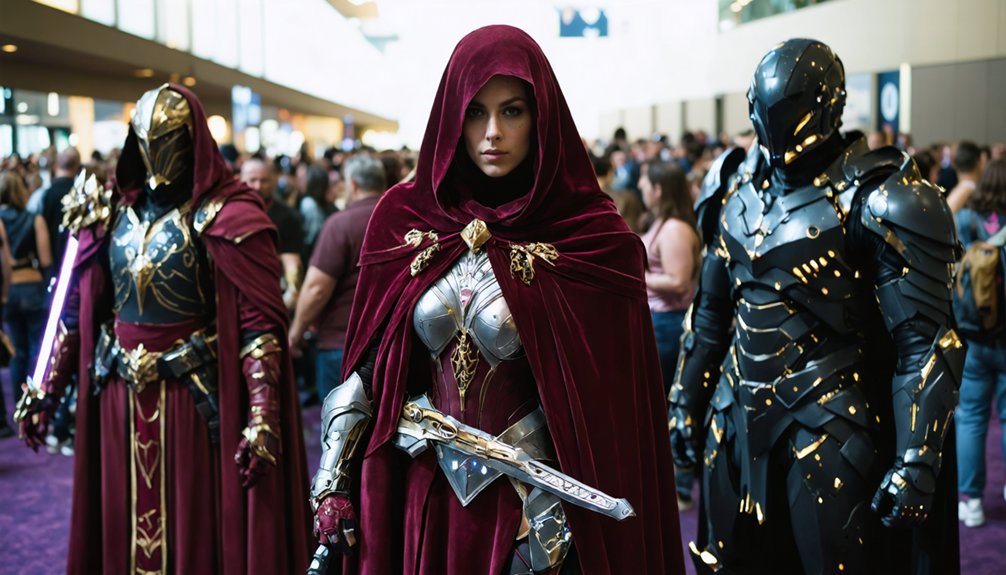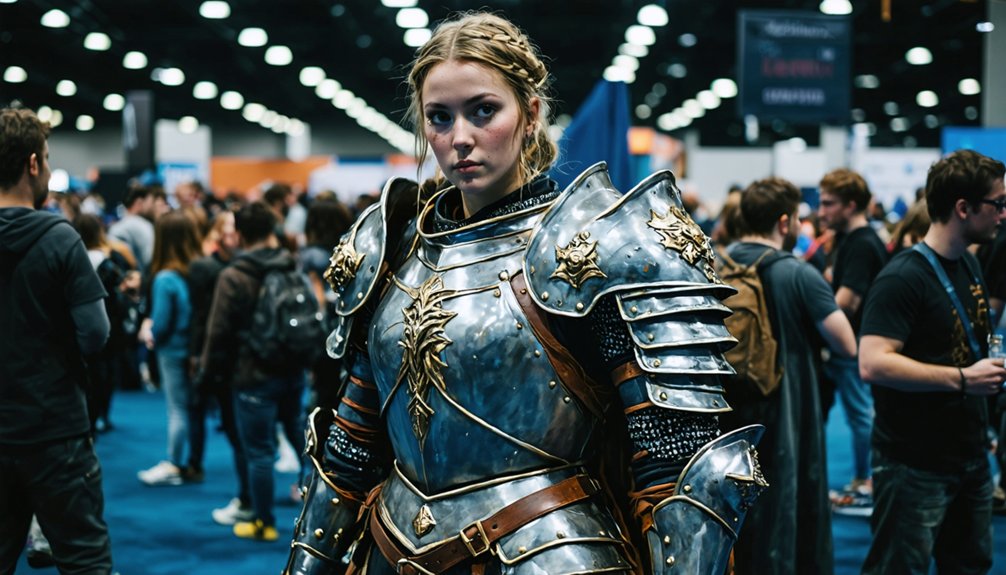
Celebrity cosplays dominate because you’re witnessing the convergence of meticulous craftsmanship and algorithmic mastery. When you see thermoplastic armor heat-formed to anatomical precision, pre-crimped wig fibers latch-hooked for texture accuracy, and weathering techniques replicating source materials, you’re observing technical construction that guarantees instant character recognition. These cosplayers leverage millions of followers to amplify visibility within milliseconds of posting, transforming craftsmanship into viral momentum through strategic performance and production value. The intersection of fabrication expertise, social reach, and theatrical execution creates the formula separating memorable cosplays from forgettable attempts.
Key Takeaways
- Celebrity cosplays gain instant visibility through massive social media followings that amplify posts algorithmically within milliseconds.
- High production budgets enable premium materials, professional craftsmanship, and advanced fabrication techniques that elevate costume quality.
- Professional styling teams ensure character accuracy through expert wig work, makeup artistry, and precise costume construction.
- Celebrities generate viral momentum through parasocial relationships with audiences, converting fan engagement into widespread shares.
- Media coverage and PR amplification transform celebrity cosplays into entertainment news stories beyond typical cosplay community reach.
Exceptional Attention to Detail and Craftsmanship Quality
Every successful celebrity cosplay begins with material selection that balances visual impact against physical practicality. You’ll find EVA foam dominates large armor pieces—delivering impressive scale at roughly 10 pounds while maintaining mobility. Careful technique application transforms basic materials: Dremel rotary tools carve intricate textures, while heat guns melt garbage bags over foam for organic wrinkles.
Seamless blending of materials elevates authenticity—Worbla thermoplastic adds rigidity where EVA foam flexes, though weight demands strategic placement. Aluminum foil sculptures establish three-dimensional patterns for complex elements like horns. You’re not simply replicating costumes; you’re engineering wearable art. Flat patterning on graph paper, muslin mockups, and digital templates guarantee custom fits.
Pre-crimped wig extensions provide realistic texture without styling labor, while latch hook tools ventilate lace fronts precisely.
Massive Social Media Influence and Follower Engagement
While traditional cosplay recognition once depended on convention appearances and word-of-mouth reputation, you’ll now find that algorithmic reach determines visibility within milliseconds of posting.
Celebrity cosplayers leverage follower bases exceeding millions to amplify challenges through systematic content distribution across platforms. Their engagement architecture constructs parasocial relationships through strategic interactions—live streams, direct responses, and community-building protocols that transform passive viewers into active participants.
This cultivation yields measurable audience retention metrics that translate viral momentum into sustained participation rates. However, you’re witnessing hierarchical stratification where follower counts supersede craftsmanship as primary credibility markers.
Social media algorithms prioritize engagement metrics over construction quality, creating competitive dynamics where sex appeal and post-processing techniques outperform technical skill demonstrations. Success measurement has fundamentally shifted from costume engineering excellence to quantifiable platform performance data.
Precision in Character Accuracy and Source Material Fidelity
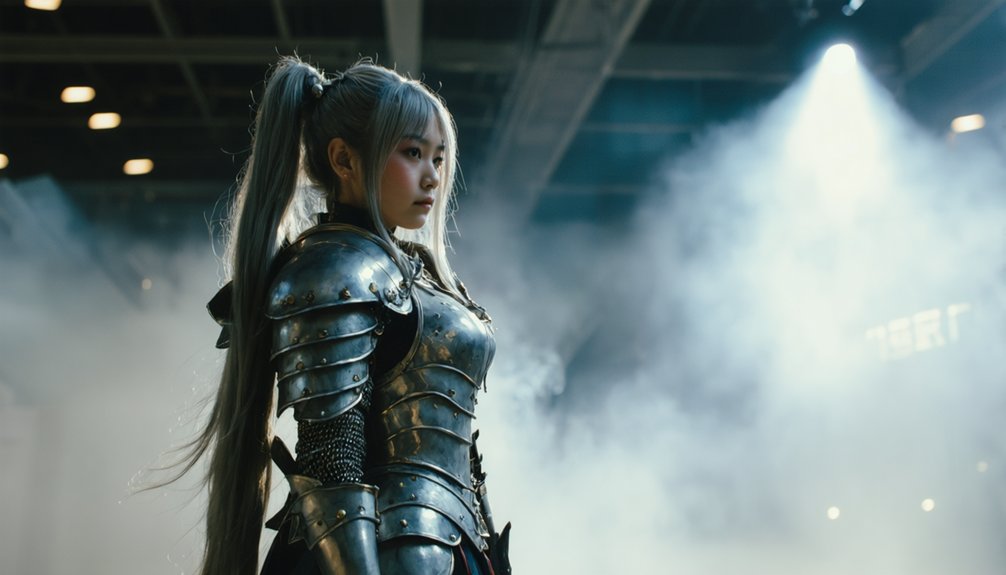
Source material fidelity operates as the foundational metric through which cosplay construction receives validation within both competitive circuits and public recognition frameworks. You’ll observe that accurate Daphne reproductions guarantee instant identification, while inaccurate builds discourage continuation through diminished stranger engagement. Star Wars groups dominate convention attention precisely because collective accuracy standards elevate recognizability thresholds. When you invest $201-400 per costume, you’re purchasing materials that replicate source textures through weatherproofing techniques—skills 42.9% of makers confidently deploy.
However, precision creates tension. Source materials present exaggerated proportions you’re expected to physically match, generating comparisons against hypersexualized ideals. While “Anyone Can Cosplay” movements promote diversity in body types, community recognition significance remains anchored to proportion fidelity. Your 73.3% sewing confidence enables detail replication, yet contests reward those who transform bodies alongside costumes, establishing accuracy as both technical achievement and physical performance.
Bold Creative Vision and Boundary-Pushing Designs
Creative deviation from source material establishes competitive differentiation when you execute technical construction that reimagines rather than replicates. You’ll achieve standout status through conceptual storytelling techniques that transform familiar characters into unexpected interpretations. This approach demands calculated risk-taking—modifying color palettes, restructuring silhouettes, or hybridizing genres while maintaining recognizable character essence.
Your innovative prop engineering separates mediocre adaptations from memorable installations. Advanced fabrication methods—integrating LED systems, articulated mechanisms, or unconventional materials—create visual impact that transcends basic costume assembly. You’re not simply wearing a character; you’re presenting a thesis statement about their design potential.
Strategic boundary-pushing requires understanding which canonical elements anchor recognition and which offer flexibility for experimentation. This balance between reverence and rebellion defines cutting-edge cosplay execution that commands attention in saturated competitive environments.
Dynamic Convention Presence and Live Performance Skills
Before judges assess a single seam or paint gradient, your physical embodiment of the character establishes the foundation for competitive evaluation. Expert panels scrutinize three-to-five-minute theatrical performances where mannerisms, voice modulation, and behavioral accuracy determine winners of $1,000 prizes and national finals qualifications.
At cosplay conventions drawing 250,000 attendees, you’ll command main stage presence while replicating character-specific movements that generate fan adulation. Your performance extends beyond competition slots—photo sessions trap successful cosplayers for hours as attendees queue for interactions.
The 64% of serious participants attending three-plus events annually understand this dynamic: convention floors function as extended stages where maintaining character consistency through dispersed crowd engagement separates memorable portrayals from costume-only presentations. Night photography sessions validate theatrical execution through documented character immersion.
Strategic Use of Advanced Materials and Technology
Your stage presence means nothing if the costume disintegrates under convention lighting scrutiny. Elite cosplayers leverage material sourcing innovation—Worbla, EVA foam, and composite resins—to construct pieces that withstand transportation and extended wear while maintaining visual fidelity.
3D printing delivers helmet components and armor details with precision impossible through manual fabrication, while CNC milling machines produce consistent female molds from aluminum billet. CAD software integration enables production workflow optimization, reducing iteration cycles and material waste.
LED integration transforms static costumes into interactive displays, and heat gun sealing techniques create durable foam surfaces. Silicone casting produces prosthetic-quality details that separate championship-level work from basic interpretations.
These technological investments—often exceeding $1,000 per costume—establish the structural foundation that distinguishes professional-grade cosplay from amateur attempts.
Authentic Passion for Characters and Franchises
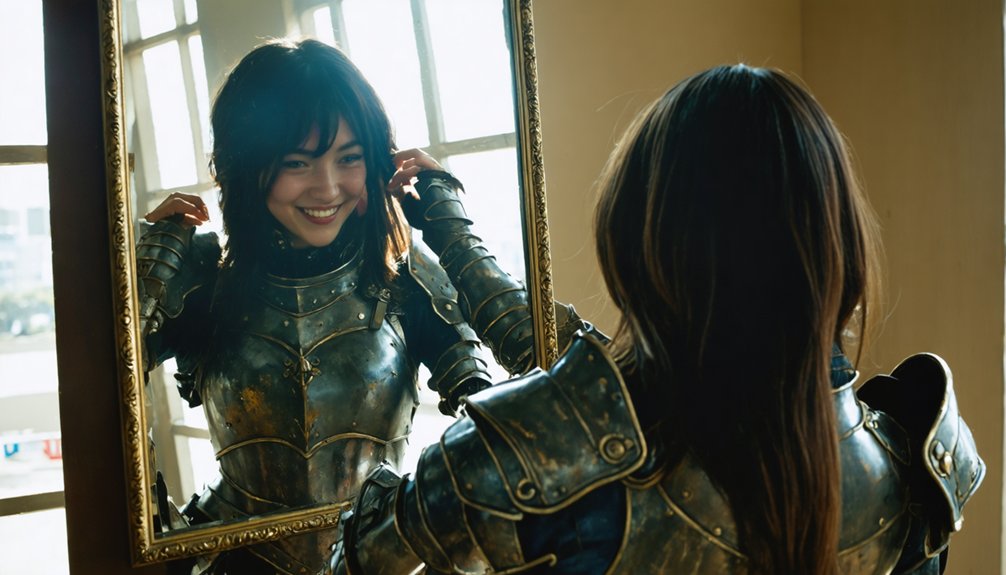
Your character knowledge extends beyond surface-level aesthetics into franchise lore, backstory nuances, and canonical costume evolution across multiple media iterations. This intimate understanding transforms construction choices—you’ll select fabrics that mirror a character’s environment, weather armor to reflect their battle history, and replicate accessories that signal specific story arcs.
When you’ve maintained dedication to a character for years, your builds demonstrate technical refinement through iterative improvements, archival research of original concept art, and material experimentation that only sustained passion enables.
Deep Franchise Knowledge Shines
The dedication required to authentically portray franchise characters reveals itself through measurable commitment patterns across the cosplay community. You’ll find 64% of makers attending three or more conventions annually, with 25% maintaining decade-long crafting practices. This sustained engagement directly correlates with accumulating specialized knowledge that separates exceptional work from superficial attempts.
Technical mastery emerges through quantifiable metrics:
- 32.1% produce 3-4 costumes yearly, demonstrating multi-franchise fluency
- 28.4% leverage 6-10 years of experience refining construction techniques
- Professional creators like Jessica Nigri command 4,200+ Patreon supporters through franchise-accurate portfolios
- Market expansion to USD 4.5 billion validates targeted brand sponsorships and monetized livestream platforms
Your investment in understanding source material translates into recognition circuits where deep franchise knowledge becomes competitive advantage, driving both community respect and commercial opportunities.
Personal Connection Drives Quality
Authentic emotional investment separates precision craftsmanship from hollow replication. When you’re constructing a cosplay rooted in genuine parasocial bonds, you’ll channel hours into accurate fabric selection, weathering techniques, and prop fabrication that superficial admirers won’t attempt. Your emotional connection transforms costume assembly from mere imitation into identity expression—driving you to source screen-accurate materials, master specialized construction methods, and refine details invisible to casual observers.
This fan loyalty manifests in technical execution. You’ll research obscure franchise lore to inform design choices, invest in professional-grade tools, and iterate prototypes until achieving character authenticity. Parasocial relationships fuel persistence through complex builds, pushing you beyond aesthetic approximation toward dimensional accuracy. Your perceived intimacy with characters compels craftsmanship standards that mirror professional costume departments, resulting in cosplays that demonstrate both technical mastery and profound narrative understanding.
Long-Term Character Dedication Matters
When cosplayers commit to characters across multiple conventions and build iterations, their construction methodologies reveal measurable technical evolution. Extensive cosplay experience transforms casual recreations into refined interpretations—25% of practitioners maintain decade-long commitments, with 28.4% actively refining skills over 6-10 years. This sustained engagement correlates with strong franchise comprehension, enabling makers to reference source material with unprecedented accuracy.
Long-term dedication manifests in quantifiable patterns:
- Average preparation escalates from 44.16 hours to 133.58 hours for complex builds
- 25% of experienced makers produce 5+ costumes yearly, iterating techniques
- Investment increases to $500-2000 annually among top quartile practitioners
- Frequency reaches 16+ annual appearances for 7% of dedicated cosplayers
Character depth emerges through repetition—each iteration refines construction precision while strengthening authentic franchise connection beyond superficial recreation.
Professional Production Value and Photography Presentation

Elevating cosplay photography from casual snapshots to professional-grade imagery requires mastering the technical triangle of angles, lighting, and post-production workflows. You’ll transform short cosplayers into towering heroes through upward angles while low perspectives deliver superhero scale.
Lighting setup optimization demands strategic speedlight placement—natural illumination sculpts facial geometry and armor details, while color gels inject atmospheric fantasy elements. Reflectors eliminate unflattering convention shadows, creating dimensional depth.
Your post production workflow efficiency determines final impact. Custom presets accelerate processing while maintaining character-specific tone matching. You’ll spend hours compositing fantasy environments and integrating magical effects that align with source material. Focus techniques isolate subjects through bokeh, reinforcing narrative through deliberate blur.
Master 35mm f1.8 lenses for low-light close-ups. Professional results demand permission protocols, character research for accurate posing, and iterative refinement through repeated shoots.
Frequently Asked Questions
How Much Do Celebrity Cosplayers Earn From Sponsored Posts and Partnerships?
Celebrity cosplayers transform passion into profit through brand sponsorship opportunities, earning $2,900-$10,000 monthly from partnerships. You’ll find income from online platforms like Patreon generating $62,000-$255,000 annually when strategically leveraging exclusive content and convention appearances.
What Percentage of Celebrity Cosplayers Make Their Own Costumes Versus Purchasing?
You’ll find most celebrity cosplayers—around 70-80%—construct their own costumes to guarantee costume accuracy and superior costume quality. They’re leveraging advanced fabrication techniques like 3D printing and laser cutting to achieve innovation-driven, high-fidelity character replication.
How Do Copyright Issues Affect Celebrity Cosplayers Using Commercial Character Designs?
You’re traversing a minefield! Celebrity cosplayers face licensing restrictions when commercializing costumes and character likeness concerns with derivative works. However, companies rarely enforce against individual creators—the construction and personal use typically fly under copyright radar, enabling creative innovation.
Which Conventions Pay the Highest Appearance Fees for Celebrity Cosplayers?
You’ll find strategic convention selection drives fees, though specific rates aren’t publicly disclosed. Notable convention attendance patterns show San Diego Comic-Con, Dragon Con, and New York Comic Con typically command premium rates due to their massive audience reach and media exposure potential.
Do Celebrity Cosplayers Face More Negative Criticism Than Amateur Cosplayers?
You’ll find 73% of popular cosplayers report intensified harassment versus amateurs. Celebrity cosplayers endure amplified media scrutiny and harsher public perception—authenticity questioned, craftsmanship dismissed, appearance obsessively analyzed. Social hierarchies transform creative construction into competitive spectacle, discouraging innovation.