A long-lasting wig care routine is essential for cosplay because synthetic fibers can’t repair themselves once damaged. Skipping washes lets sweat, oils, and product buildup stiffen fibers and break down the cap. Ignored tangles create stress points that snap strands permanently. Heat and UV exposure fade color and alter texture beyond recovery. Without consistent care, you’ll replace wigs far more often than necessary. Every section below covers exactly what’s destroying your wig and how to stop it.
Key Takeaways
- Consistent care prevents fiber deterioration from sweat, friction, and product buildup, which permanently damages synthetic fibers that cannot self-repair like natural hair.
- Regular brushing and detangling stop knots from becoming matted clusters that pull fibers out of alignment and cause irreversible structural damage.
- Proper storage on wig stands in shaded areas prevents cap distortion, UV fading, and fiber breakdown between convention wears.
- Routine maintenance eliminates product buildup and residue that stiffen fibers, dull shine, and degrade the cap’s netting over time.
- A consistent care routine reduces costly full replacements by extending wig lifespan, preserving color, structure, and convention-ready appearance across multiple wears.
Why Most Cosplay Wigs Fall Apart Without Regular Care
Synthetic fibers don’t recover the way human hair does, so without consistent upkeep, cosplay wigs degrade faster than most people expect. Sweat, product buildup, and friction from wear accumulate rapidly, accelerating fiber deterioration at stress points like the nape and shoulders.
Skipping detangling allows knots to tighten progressively, making removal increasingly destructive to styled sections. Exposure to direct sunlight speeds color fading, stripping vibrancy from dyed synthetic strands that can’t be restored through conditioning.
Heat exposure compounds this damage by permanently altering fiber texture. Without routine washing every 10–12 wears, residue stiffens the cap and dulls the overall finish.
Neglecting storage allows crushing and tangling between uses. Each skipped maintenance step compounds the next, shortening a wig’s functional lifespan considerably.
How Tangling Destroys Long Cosplay Wigs Faster Than You Think
When you wear a long cosplay wig, friction between the fibers—especially at the nape and shoulder blades—creates microscopic abrasion that weakens individual strands until they snap.
Knots don’t just tangle the wig; they act as stress points that pull surrounding fibers out of alignment, distorting the cap structure and accelerating shedding.
If you let tangles compound between wears, you’ll end up forcing aggressive detangling that permanently damages styled sections you can’t easily restore.
Friction Causes Fiber Breakage
Long cosplay wigs take the most punishment at the nape of your neck and across your shoulder blades, where constant movement grinds fiber against fiber with every turn of your head. That repetitive friction degrades fiber elasticity, causing strands to lose their flexibility and snap under minimal tension.
Once the structural integrity of synthetic fibers breaks down, you’ll also notice accelerated color fading, since damaged fiber surfaces scatter light unevenly and release dye molecules faster. The friction doesn’t just create knots — it creates microscopic stress fractures along each strand.
You can’t reverse that deterioration. What you can do is intercept it early by brushing from the ends upward before and after every wear, reducing the mechanical load concentrated in those high-friction zones.
Knots Damage Wig Structure
Knots don’t just inconvenience you — they actively destroy your wig’s fiber structure from the inside out. When synthetic strands tangle, the interlocking tension compresses and stretches individual fibers beyond their designed fiber elasticity threshold. Each pulling attempt microfractures the strand’s outer coating, accelerating color fading and creating visible dullness where vibrant tones once held.
Long cosplay wigs concentrate the worst knot formation at nape and shoulder contact zones — areas experiencing constant friction during wear. Left unaddressed, small tangles compound into matted clusters that require aggressive force to remove, snapping entire fiber groups permanently. You can’t reverse that structural loss.
Brushing from ends upward immediately after wear interrupts this compounding cycle before tension escalates. Consistent detangling preserves both structural integrity and chromatic accuracy across multiple convention wears.
How to Brush a Cosplay Wig Without Breaking Fibers
When brushing your cosplay wig, always start at the ends and work upward in short, controlled strokes before moving closer to the roots.
You’ll want to use a wide-tooth comb or a wig-specific brush with flexible bristles, since standard brushes create unnecessary tension that snaps synthetic fibers.
Holding the section just above where you’re brushing reduces the pull on the cap and prevents strand loss at the weft seams.
Start From The Ends
Brushing a cosplay wig from the roots down is one of the fastest ways to snap synthetic fibers and create irreversible frizz. Instead, start from the ends and work upward in short, controlled strokes. This method isolates knots at lower sections before tension reaches the cap, distributing stress gradually rather than forcing it through the full fiber length.
Use a wide-tooth comb or wig-specific brush to maintain precision without aggressive pulling. This technique directly supports color preservation by reducing friction-induced surface abrasion that strips synthetic coating and dulls pigment over time.
It also minimizes the need for fiber repair on sections prone to splitting near high-contact zones like the nape and shoulders. Consistent end-first brushing extends structural integrity across repeated wears.
Use Gentle Brushing Tools
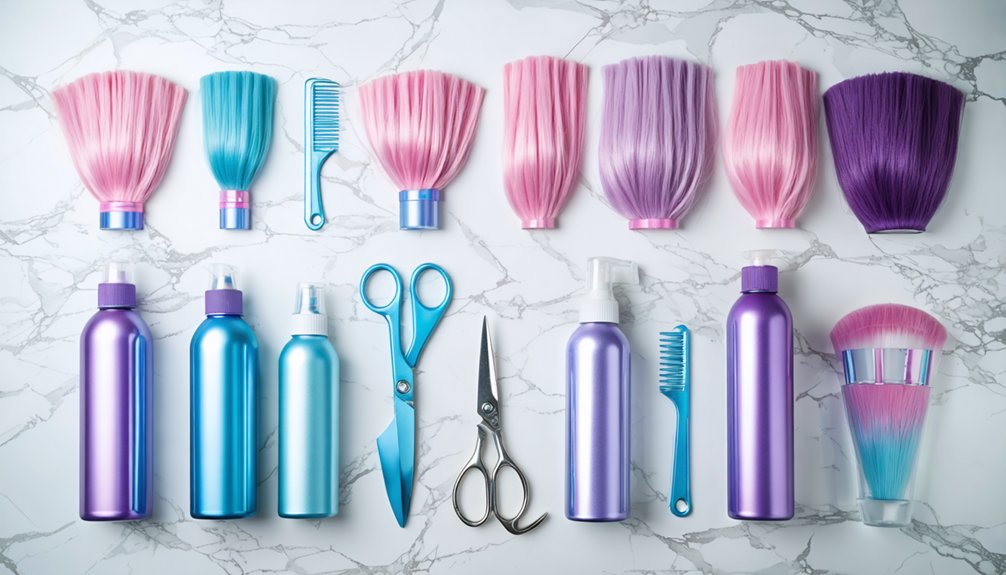
The tools you brush with matter just as much as the technique you use. A wide-tooth comb or loop bristle brush distributes tension evenly across synthetic strands, supporting fiber strengthening while minimizing breakage. Standard brushes with rigid bristles snag and fray fibers, accelerating color fading and dullness over time. Choosing the right tool directly protects color preservation across repeated wears.
- A loop bristle brush flexes on contact, reducing snapping force on delicate fibers
- Wide-tooth combs glide through knots without shredding layered sections
- Avoid boar bristle brushes—they’re designed for human hair, not synthetic strands
- The wrong tool undoes every careful technique you’ve already applied
Invest in purpose-built wig tools. They’re not optional accessories—they’re essential instruments for maintaining structural and visual integrity long-term.
Sweat, Spray, and Buildup: What’s Hiding in Your Wig
After a full day of convention wear, your wig holds more than just style — it traps sweat, hairspray, wax, makeup transfer, and skin oils deep in the fibers and cap lining. These residues don’t just sit on the surface. Product ingredients like polymers, silicones, and alcohol-based compounds bond to synthetic strands, gradually altering hair texture by stiffening fibers, dulling shine, and accelerating tangling.
Sweat compounds the problem by breaking down cap netting and attracting bacteria. You won’t always see the buildup, but you’ll feel it — in rougher strands, reduced movement, and persistent odor.
Spot cleaning after each wear targets concentrated areas before residue sets. Washing every 10–12 wears removes what accumulates beneath the surface, protecting both fiber integrity and cap structure long-term.
How Often Should You Wash a Cosplay Wig?
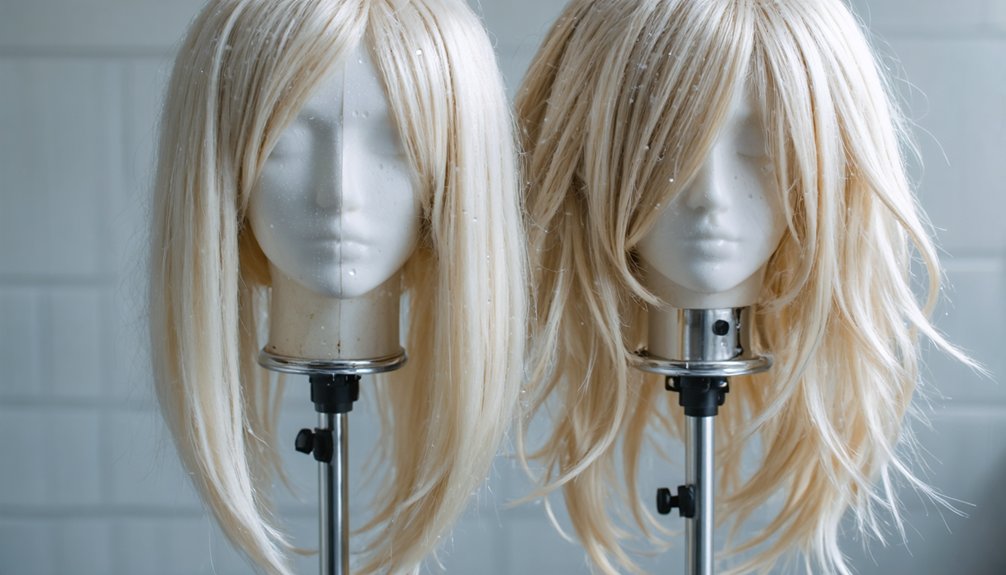
Washing frequency depends on how often you wear the wig and what products you apply during use. Heavy product application and extended convention wear accelerate buildup, demanding earlier intervention for color preservation and fiber conditioning.
- Wash every 10–12 wears for moderate use with light product application
- Wash every 4–6 weeks if you’re wearing the wig regularly across multiple events
- Wash after 30 wears if usage is minimal and buildup remains low
- Spot clean immediately after makeup transfer or heavy sweat exposure to delay full washes
Waiting too long degrades fiber conditioning and dulls color. Washing too frequently strips protective qualities from synthetic strands.
Track your wear count, monitor product buildup, and adjust your schedule accordingly to keep the wig performing at its best.
Why Heat and Sunlight Are Silent Cosplay Wig Killers
Synthetic fibers don’t tolerate heat or prolonged sunlight the way human hair does, and most cosplayers underestimate how quickly either can degrade a wig’s structure. Exposure to direct UV light accelerates color fading, stripping pigment unevenly and leaving your wig looking dull or discolored across repeated wears.
Heat compounds this damage by breaking down the polymer structure within each strand, permanently reducing fiber resilience and causing irreversible frizz, matting, or melting. Even indirect heat sources—such as car interiors, convention hall lighting, or stored proximity to heating vents—cause cumulative deterioration.
You should always store your wig shaded, away from windows, and in a cool, dry environment. Wash only with cool or lukewarm water, and skip the hairdryer entirely. These precautions aren’t optional—they’re what separates a wig that lasts from one that doesn’t.
How Proper Storage Keeps Your Cosplay Wig Convention-Ready
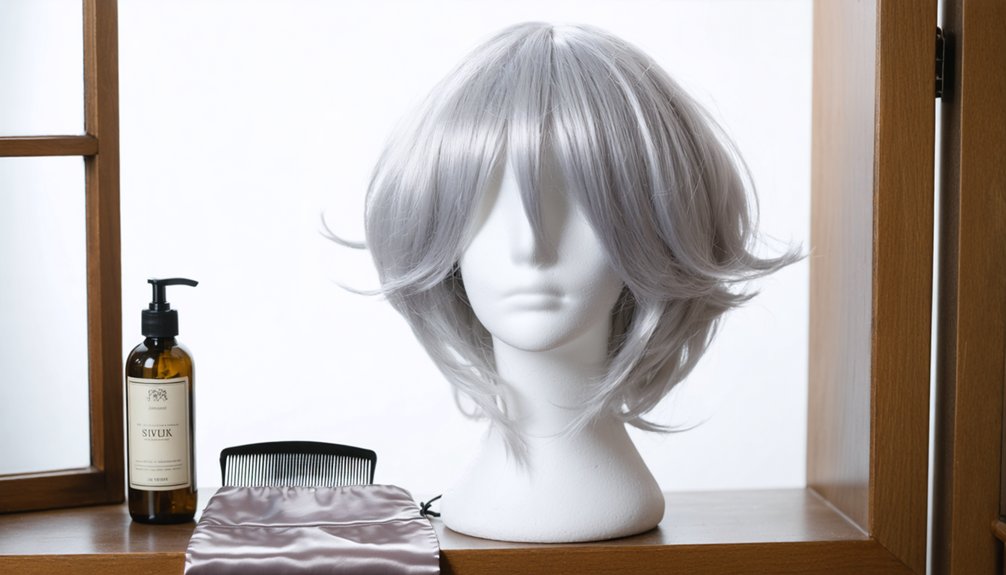
Even the cleanest, best-maintained wig degrades fast if you store it carelessly between wears. Proper storage directly impacts color preservation, fiber integrity, and accessory compatibility when convention day arrives.
Use these storage methods to protect your investment:
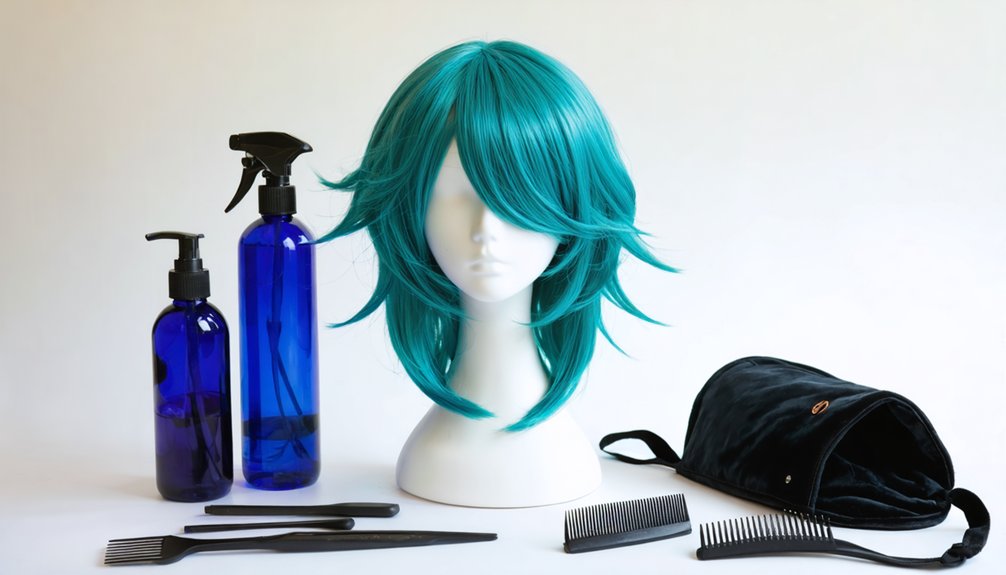
- Wig stand or foam head — maintains shape, prevents cap distortion, and preserves styled sections without compression
- Breathable wig net or zip bag — blocks dust accumulation while allowing airflow to prevent moisture damage
- Shaded, cool environment — stops UV-related fading and fiber breakdown between wears
- Labeled, organized system — reduces unnecessary handling and keeps accessory compatibility intact by storing coordinating pieces together
Skipping these steps means arriving at a convention with crushed fibers, tangled layers, or faded color — problems that routine care should’ve already eliminated.
How Routine Care Locks in Your Wig’s Style and Shape
Routine care doesn’t just clean your wig — it actively preserves the structural integrity of styled sections that took time to set. Brushing from ends upward reduces fiber stress on shaped layers, bangs, and volume points that define character accuracy.
After each wear, light repositioning and a holding spray restore displaced sections before distortion becomes permanent. Styling consistency depends on preventing gradual shape collapse through regular, low-impact maintenance rather than reactive restyling with heat.
Air-drying on a wig stand post-wash maintains the intended silhouette without fiber compression. Color preservation also benefits directly — avoiding heat exposure and harsh brushing prevents fade and surface dulling.
Each maintenance step compounds over time, keeping your wig performance-ready and reducing the need for full reconstruction between wears.
Why Maintaining Your Cosplay Wig Saves You Money on Replacements
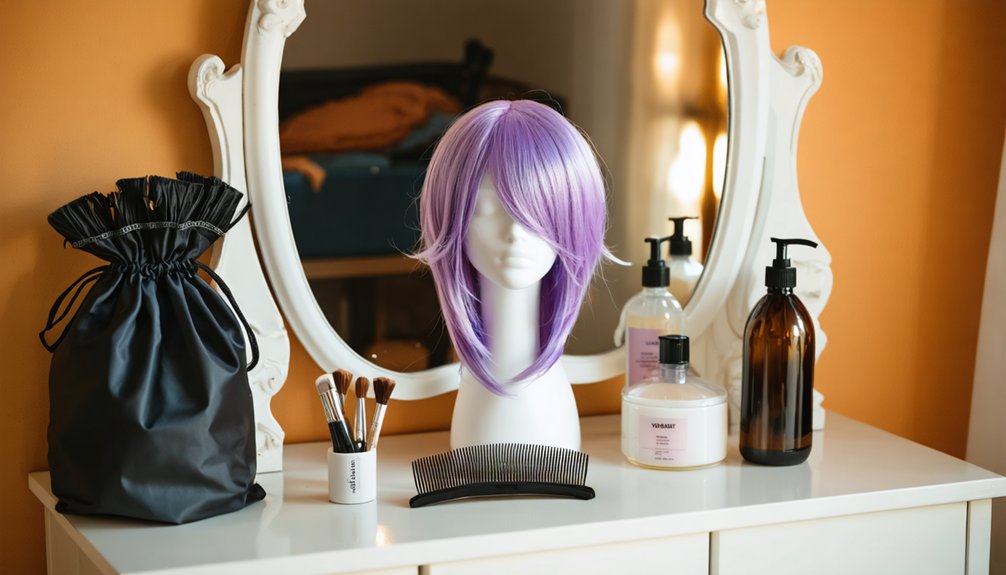
Preserving your wig’s shape and style through consistent maintenance also protects your wallet. Cosplay wigs aren’t cheap, and replacing them due to neglect adds up fast. Routine care directly counters the most common causes of premature wig failure.
- Color fading accelerates under direct sunlight and improper storage — shaded, cool environments preserve vibrancy wear after wear.
- Humidity effects weaken synthetic fibers over time, causing frizz and structural breakdown that no styling product can reverse.
- Tangled, snapped fibers from skipped brushing sessions force full replacements instead of simple maintenance.
- Product buildup left uncleaned stiffens the cap, distorts layers, and permanently compromises wearability.
Cleaning every 10–12 wears, storing properly, and inspecting for early damage keeps each wig performing longer — turning disciplined care into measurable cost savings.
Frequently Asked Questions
Can Wig Care Routines Differ Based on Specific Cosplay Character Styles?
With over 30 wears possible per wig, yes—your care routine should adapt to each character’s wig styling demands. Intricate styles need gentler maintenance to preserve costume accuracy, while simpler cuts tolerate more standard upkeep methods.
Are There Wig Care Products Specifically Designed for Cosplay Synthetic Fibers?
Yes, you’ll find specialized shampoos, detanglers, and serums formulated for synthetic fiber maintenance, helping preserve texture and shine. Pair these with proper cosplay wig storage solutions to maximize longevity and keep your wigs convention-ready.
How Does Wearing a Wig Cap Underneath Affect Long-Term Wig Condition?
Wearing a wig cap considerably boosts long-term wig protection by reducing sweat and oil transfer into the cap lining. You’ll extend durability, minimize fiber breakdown, and preserve your wig’s internal structure across repeated wears.
Can a Damaged Cosplay Wig Ever Be Fully Restored After Neglect?
Just as neglected metal corrodes beyond polish, a severely damaged wig often can’t fully recover. You can apply restoration techniques and improve wig maintenance, but broken synthetic fibers, permanent frizz, and lost style structure remain largely irreversible.
Does Wig Color or Dye Affect How Care Routines Should Be Adjusted?
Yes, wig dye and color treatment affect your care routine—you’ll want to use cooler water, avoid harsh shampoos, limit sun exposure, and skip heat styling to prevent fading and fiber degradation in color-treated synthetic wigs.
References
- https://www.youtube.com/watch?v=E5Yyy10B52M&vl=en
- https://www.reddit.com/r/cosplayers/comments/27qupa/help_proper_care_for_extra_long_wigs/
- https://www.epiccosplay.com/pages/wigs
- https://www.youtube.com/watch?v=E5Yyy10B52M
- https://thecostumeemporium.com/blogs/news/costume-wigs-care-tips
- https://www.youtube.com/watch?v=O1ABi1fYh7w
- https://fevercos.com/pages/wig-care-gudie
- https://beautynexuspro.com/hair-care/how-to-take-care-of-your-cosplay-wig