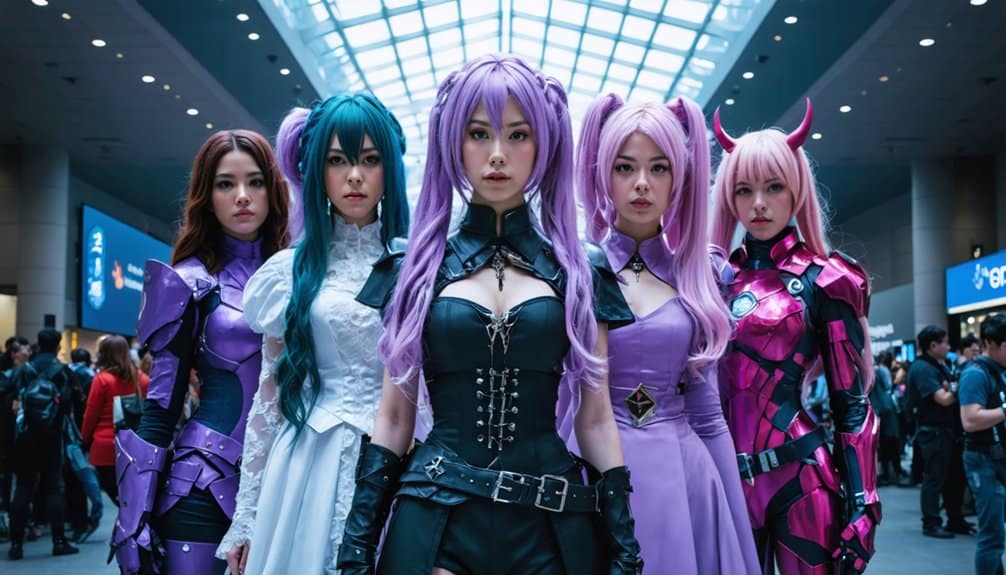
Achieving authenticity in genderbent cosplay requires you to systematically identify your character’s core visual markers—signature colors, iconic accessories, and recognizable silhouettes—then adapt these elements through strategic costume modifications rather than elimination. You’ll need to master technical transformation methods including contouring for facial structure changes, proper binding or padding techniques, and makeup applications that enhance character recognition. Your creative process should balance canon accuracy with thoughtful gender adaptation, preserving the character’s essence while experimenting with presentation that transcends simple stereotypes. The following sections break down each transformation technique in detail.
Key Takeaways
- Preserve character-defining elements like signature colors, iconic accessories, and distinctive silhouettes while adapting gendered costume components for recognizability.
- Master contouring, binding, and padding techniques to safely transform physical presentation while maintaining health and achieving convincing gender expression.
- Balance creative liberty with character accuracy by retaining personality traits and visual markers rather than relying solely on gender stereotypes.
- Document inspiration sources appropriately, whether using canon genderbends, fan art references, or creating original Rule 63 interpretations.
- Mirror signature poses, expressions, and props to reinforce character authenticity beyond physical transformation and gendered costume modifications.
Understanding Core Identity Beyond Gender Presentation
When you approach genderbent cosplay, you’re engaging with identity construction that operates on multiple simultaneous dimensions rather than simple role reversal. Your creative process enables self discovery through self expression, allowing you to explore how gender presentation intersects with character interpretation.
This practice demonstrates that authentic identity doesn’t require alignment with single categorical frameworks—you can simultaneously embody multiple aspects of gender while maintaining creative integrity.
The craft reveals unleashing identity beyond physicality through deliberate performance choices. You’re not simply swapping gendered elements; you’re examining how character essence transcends binary presentation.
Research confirms that individuals naturally identify with various gender dimensions simultaneously, and your cosplay work mirrors this complexity. By thoughtfully reconstructing characters across gender lines, you create space for authentic expression while advancing community understanding of multidimensional identity construction.
Preserving Iconic Visual Elements During Character Reimagining
As you reimagine characters across gender presentations, your primary technical challenge involves isolating which visual elements carry recognition value and which carry gender coding. Costume design strategies require systematic analysis: Sailor Moon’s transformation demands preserving the pleated silhouette while converting skirts to pants, maintaining recognizability through color palette and sailor collar details. Conversely, Tuxedo Mask’s genderbend retains the jacket-and-skirt combination fitted to feminine curves.
Gender-bending character design succeeds by distinguishing which visual elements signal identity versus which merely encode traditional masculinity or femininity.
Essential preservation techniques:
- Retain signature color schemes across all costume modifications
- Adapt iconic accessories rather than eliminating them completely
- Preserve silhouette proportions through hyper-masculinization or hyper-feminization approaches
- Maintain character-specific patterns like Sailor Moon’s distinctive pigtails reimagined as low ponytails
- Balance subversion with familiarity guaranteeing immediate character identification
This systematic approach safeguards core character essence survives gender reinterpretation while achieving authentic transformation.
Your design decisions function along a spectrum between strict canon adherence and unrestricted creative interpretation. When official genderbends exist—like Hetalia’s “I Was Surrounded by Heroines” or Osomatsu-San’s Girlymatsu—you’ll find established visual references guiding your costuming fabrication techniques. These canon versions provide concrete design blueprints requiring minimal creative deviation.
Fan art-inspired builds demand different considerations. You’re synthesizing multiple interpretations, potentially requiring permission from original artists. This approach offers flexibility in combining elements but necessitates careful photographic documentation processes to credit inspirations appropriately.
Pure Rule 63 reimaginings grant maximum creative liberty. You’re translating character essence across gender presentation without predetermined templates, pushing your construction skills while maintaining recognizability. Each approach serves different creative goals—canon builds demonstrate technical accuracy, while original interpretations showcase innovative design thinking within established character frameworks.
Strategic Costume Modifications That Maintain Character Integrity
When you’re modifying a costume for genderbent cosplay, your primary objective is maintaining the character’s visual signature while adapting garment construction for different body proportions. You’ll need to identify which elements serve as instant recognition markers—color schemes, distinctive accessories, or signature patterns—and preserve these even as you alter silhouettes from masculine to feminine cuts or vice versa.
This approach guarantees your audience immediately identifies the character despite gender presentation changes, as you’re working with the core visual language that defines them.
Preserving Iconic Visual Elements
Genderbent cosplay succeeds when you identify and conserve the visual markers that make a character instantly recognizable, even as you transform their presentation across gender lines. Strategic hair treatment applications maintain signature styles—Kakashi’s silver locks styled elegantly, Todoroki’s dual-colored pattern incorporated with feminine flair.
Your accessory arrangement options should mirror original props exactly, guaranteeing immediate recognition despite costume modifications. Signature color palettes remain non-negotiable: purple suits for Joker, red-and-white schemes for Todoroki, blue-and-red sailor themes transformed but intact.
Essential preservation techniques:
- Maintain character-specific color palettes across all costume elements
- Replicate iconic hairstyles with gender-appropriate styling adaptations
- Preserve original props and weapons without downsizing or alteration
- Apply makeup strategies that enhance recognition through hyper-feminization or hyper-masculinization
- Mirror signature poses and expressions to reinforce character authenticity
Performance elements complete the transformation—embodying original mannerisms guarantees your genderbent interpretation resonates immediately.
Adapting Silhouettes Across Genders
Successful silhouette adaptation hinges on understanding which structural elements define your character’s visual profile before you modify a single seam. You’ll need to identify whether iconic pigtails, pleated skirts, or jacket cuts carry recognition value—then strategically swap or retain them. Replace Sailor Moon’s skirt with pleated pants while maintaining waist emphasis, or reshape Tuxedo Mask’s jacket to follow feminine curves without losing sharp lines.
Exaggerated proportions become your tool for clarity: hyper-masculinize or hyper-feminize key areas through binding, padding, or layering to guarantee instant character identification. Subverting expectations works when you’re thoughtful—swapping fitted styles for loose silhouettes signals gender shift while preserving color blocking and design motifs. Modify pants-to-skirt ratios, adjust chest contours through binding or packing, and use makeup contouring to reshape facial planes. Your goal: unmistakable character essence through transformed presentation.
Makeup And Physical Transformation Techniques For Gender Expression
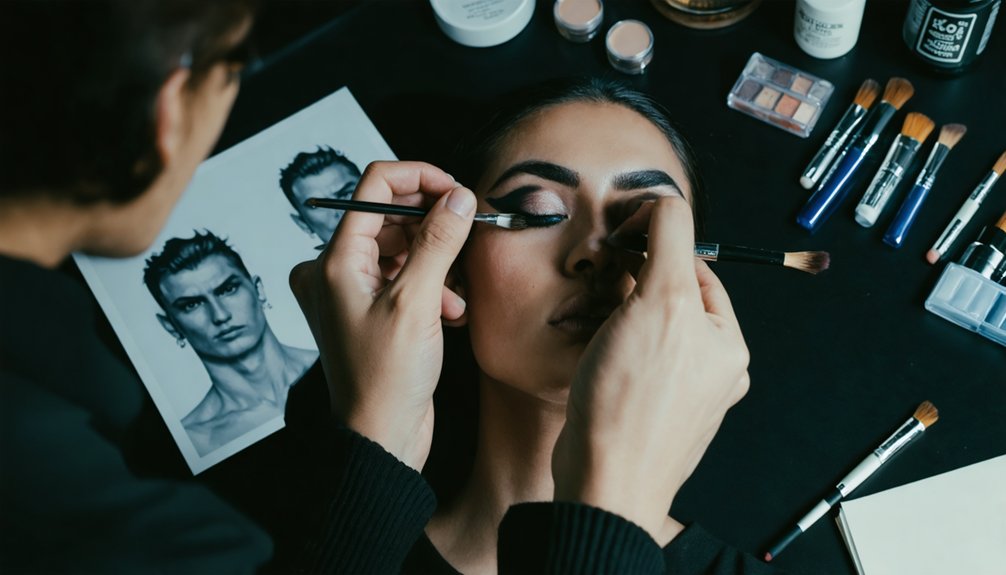
You’ll need to master contouring techniques that reshape facial structure through strategic highlight and shadow placement, creating masculine or feminine features that align with your character’s gender presentation.
Binding methods compress chest tissue safely using proper materials and time limits, while padding redistributes body proportions through structured undergarments and foam inserts.
These physical transformation techniques work together to achieve convincing gender expression while maintaining your health and the character’s visual integrity.
Contouring for Facial Restructuring
When cosplayers pursue genderbent character portrayals, facial structure often presents the most significant challenge to achieving convincing cross-gender presentation. Strategic contouring creates dimensional illusions that fundamentally alter perceived bone structure without permanent modification.
Core contouring applications for gender transformation:
- Jawline tapering: Apply darker shades along jaw sides to create narrower, feminine contours
- Cheek structure enhancement: Place highlighter on medial cheeks for forward-projecting apple cheeks
- Chin softening: Contour chin edges to eliminate square masculine shapes
- Forehead smoothing: Minimize brow ridge visibility through strategic shading
- Reversible experimentation: Test different facial proportions before exploring injectable volumizing techniques
Advanced practitioners combine makeup with brow reshaping considerations to achieve all-encompassing facial feminization. This non-permanent approach enables costume-specific adjustments while maintaining flexibility across different character interpretations.
Binding and Padding Methods
Beyond facial modifications, physical silhouette alteration determines whether a genderbent cosplay reads authentically from a distance. For chest compression, prioritize commercial binders over makeshift solutions—invest $30 in purpose-designed equipment rather than repurposing girdles that compromise rib safety.
Sports bras and breathable fabrics minimize health risks during extended wear. Apply X or K patterns when using elastics, distributing pressure downward rather than circularly compressing tissue. Manually position each breast upward and outward before securing compression layers.
Modified Spanx creates effective makeshift binders: cut leg sections and create crotch slits for vest-style wear. Average practitioners bind 10 hours daily, necessitating increased monitoring for circulation issues and discomfort.
Avoid duct tape, plastic wrap, and ace bandages—these materials tighten dangerously during movement. Strategic layering achieves masculine silhouettes without specialized gear when budget constraints exist.
Challenging Versus Reinforcing Traditional Gender Stereotypes
Genderbent cosplay operates within a fundamental paradox: it attempts to subvert traditional gender presentations while relying entirely on the stereotypes it seeks to challenge. Your design choices—switching skirts for pants, adjusting hairstyles, or modifying silhouettes—depend on obvious gender markers for character recognition. This creates tension between enabling gender nonconforming expressions and perpetuating the very conventions you’re questioning.
Genderbent cosplay’s central irony: challenging gender norms by amplifying the very stereotypes it aims to dismantle.
Consider these strategic approaches for overcoming societal biases:
- Analyze your design choices: Identify which elements rely on stereotypes versus authentic character interpretation
- Experiment with subtle gender signifiers: Test whether recognition requires hyper-masculinization or hyper-feminization
- Prioritize character essence over gender markers: Focus on personality traits, color schemes, and signature accessories
- Document community responses: Track feedback patterns to understand perception gaps
- Develop alternative visual coding systems: Create recognition methods beyond traditional gender presentation
Balancing Character Accuracy With Gender Adaptation
The practical challenge shifts from understanding societal implications to executing your design. You’ll navigate between canonical accuracy and gender translation by identifying core visual markers—Sailor Moon’s pigtails become masculine short hair while preserving the silhouette’s essence.
Retain signature props and color palettes, but adapt garment construction: convert pants to skirts or vice versa while maintaining recognizability. Your makeup techniques prove vital—masculine genderbends require thicker brows and jawline accentuation, while feminine versions incorporate contouring for softer features.
Reference canon genderbends like Hetalia’s Female France or synthesize popular fan interpretations for evolving character narratives. Strategic artistic liberties—adjusting heel heights, lengthening tops—honor diverse gender representations without sacrificing character integrity. This balance guarantees your genderbend reads unmistakably as both the original character and your innovative gender adaptation.
Prioritizing Authenticity Over Sexualized Interpretations
Authenticity in genderbent cosplay hinges on screen-accurate character reproduction rather than sexualized reinterpretation. You’ll face community assessment that prioritizes technical fidelity over revealing adaptations. While internet algorithms favor exposed skin, competitions reward precise costume replication.
Competition judges value technical accuracy and character fidelity in genderbent cosplay over internet-optimized skin exposure and sexualized costume modifications.
Your commitment to original character design establishes credibility, even when judges critique details like unshaved chests or absent makeup on feminine characters. Audience perception shifts when you maintain iconic elements—Kyle’s Catwoman retained the signature bodysuit and goggles despite gender adaptation.
Core authenticity markers include:
- Reproducing character-defining props and armor with technical precision
- Maintaining performance elements like signature expressions and poses
- Researching source material to avoid inappropriate appropriation
- Prioritizing screen-accurate details over conventionally attractive modifications
- Balancing gender adaptation with recognizable character elements
Your innovation emerges through faithful transformation, not sexualized deviation.
Expanding Artistic Boundaries Through Genderbent Design
When you approach genderbent design as a creative laboratory, you’ll discover that character reinterpretation extends beyond simple costume swaps. You’re engaging with intersectional representation by questioning how gender shapes character identity—examining whether Female Polnareff retains her trademark hair or if Male Nami’s navigation skills translate differently.
Canon examples like Hetalia’s Female France and Osomatsu-San’s Osoko demonstrate that official genderbends prioritize narrative impact over superficial changes.
Your design process becomes experimental: airbrushing faded skull motifs on Punisher tops, selecting maxi dresses over overalls for aesthetic cohesion, or retaining short hair to amplify badass qualities. French seams and stretchy fabric techniques guarantee professional execution.
Frequently Asked Questions
How Do I Choose Which Character to Genderbend for My First Cosplay?
Start with character research from your favorite media, considering budget and construction time. Examine target audience preferences at your local conventions to guarantee recognition. Choose armor-heavy designs if you’re hiding body shape differences while maintaining authenticity.
What Budget Should I Expect for Quality Genderbent Cosplay Construction?
Budget considerations for quality genderbent construction range $101-400, though your wallet might sob louder than convention attendees. Material costs scale with complexity—expect premium fabrics, modified patterns, and specialized binding gear to authenticate your creative gender-swapped vision effectively.
How Do I Respond to Negative Comments About My Genderbent Cosplay?
Respond by employing confidence boosting techniques like reframing criticism as creative dialogue, and practicing positive self-affirmation about your innovative design choices. You’ll build resilience by focusing on community support and your authentic character interpretation process.
Where Can I Find Inclusive Fitting Rooms at Conventions for Binding?
Check convention websites for inclusive convention policies listing gender-neutral changing facilities. Contact organizers directly about genderbent changing facilities before attending. Many progressive conventions now designate accessible, private spaces specifically supporting cosplayers who bind or require safe dressing areas.
Should I Create Social Media Accounts Specifically for Genderbent Cosplay Content?
Yes, you’ll benefit from dedicated accounts for growing social media presence within genderbent communities. This strategy enables promoting visibility to specific audiences, streamlines content curation, and helps you build authentic engagement with followers who appreciate gender-creative interpretations.