
Start by selecting your villain’s archetype—Tyrant, Mastermind, Predator, Corrupted Idealist, or Jester—which determines your mechanical role and encounter design patterns. Build a backstory anchored in setting lore with two to three key relationships that create immediate plot hooks. Develop motivations rooted in personal righteousness rather than pure malice, attacking character weaknesses through moral dilemmas instead of direct confrontation. Balance your supernatural strengths with exploitable vulnerabilities, and maintain player engagement through out-of-character negotiations before volatile scenes. The complete framework reveals how you’ll architect tension across a four-act structure.
Key Takeaways
- Choose a villain archetype (Tyrant, Mastermind, Predator, Corrupted Idealist, Jester) to define mechanical role and player interactions.
- Ground backstory in world events and factions, creating key relationships and unresolved mysteries that justify villainous motivations.
- Develop distinctive speech patterns and physical mannerisms that signal psychological state and create exploitable behavioral patterns.
- Balance antagonism with player enjoyment through social resolution options, consent boundaries, and organic consequences versus arbitrary punishment.
- Map a four-act narrative structure while pre-negotiating intense scenes and maintaining OOC communication to separate character from player.
Choosing Your Villain’s Role and Archetype
Every compelling villain requires a foundational archetype that defines their mechanical role at the table and shapes player interactions. You’ll select from five core frameworks: the Classic Tyrant leverages institutional authority through brutal subordinate management; the Mastermind operates via strategic manipulation and psychological warfare; the Savage Predator channels violence into targeted intimidation mechanics; the Corrupted Idealist presents ethical dilemmas through noble-yet-twisted methods; and the Jester introduces chaos-based unpredictability systems.
Your archetype determines encounter design, NPC relationship matrices, and consequence escalation patterns. Character motivation stems directly from archetype selection—tyrants crave control, masterminds seek validation, predators hunt satisfaction, idealists justify extremism, jesters embrace entropy. This framework establishes your villain’s decision-tree logic, conflict resolution approach, and narrative tension mechanics throughout campaign arcs.
Crafting a Compelling Backstory
Your villain’s backstory must anchor them to the game world through specific locations, factions, and events that other players can reference and interact with. You’ll establish two to three key relationships—rivals, former allies, or family members—that create immediate plot hooks and emotional stakes for your character’s villainy.
Build in at least one unresolved mystery or hidden motive that explains your turn toward darkness while leaving room for other characters to uncover the truth through roleplay.
Connecting Personal to World
When you design a villain for LARP, backstory functions as the mechanical foundation that drives every in-character decision you’ll make during gameplay. Your character’s historical origins establish concrete parameters—birthplace dictates available skills, regional conflicts, and faction allegiances.
Research your setting’s lore exhaustively to extract cultural influences that justify your villain’s methodology. If you’re from a militaristic province, your brutality stems from normalized violence; if raised in a merchant oligarchy, exploitation becomes second nature.
Link personal trauma directly to world events. Your mentor’s execution during a political purge explains distrust of authority. Economic collapse in your homeland validates resource hoarding. These connections transform abstract evil into systematic response patterns, giving other players tangible entry points for interaction while grounding your villainy in setting-specific causality rather than generic malevolence.
Building Relationships and Mysteries
Your backstory mysteries create persistent narrative threads: unexplained betrayals, missing artifacts, or concealed identities that trigger specific behaviors.
Implement tangible markers—avoiding particular locations, wearing distinctive items, reacting to certain names—that signal unresolved past events.
Leave deliberate gaps: jilted accomplices resurface unexpectedly, presumed-dead rivals return transformed.
These openings convert your villain from static opposition into dynamic campaign infrastructure, where ancestries and prior alliances naturally generate player-NPC tensions throughout gameplay sessions.
Understanding Your Villain’s Motivations and Beliefs
Every compelling villain operates from a foundation of personal righteousness rather than pure malice. Your antagonist must believe they’re justified—whether through twisted logic, moral conviction, or absolute certainty in their cause. Map out how your character rationalizes harmful actions while maintaining moral high ground in their own mind.
Develop multi-dimensional motivations that explain *why* you target specific characters. Past relationships, obsessions, or misguided protective instincts create meaningful conflict beyond random violence. Identify what you’re truly fighting for—power redistribution, ideological purity, or perceived salvation of others.
Attack weaknesses rather than strengths directly. Your villain’s power emerges from undermining protagonist advantages and creating moral dilemmas. Pre-plan specific antagonistic actions aligned with justifying self beliefs, ensuring consistency throughout gameplay. Catalog potential evil approaches that serve your character arc rather than arbitrary chaos.
Developing Memorable Quirks and Character Traits
Your villain’s quirks transform abstract malice into tangible presence that other players will remember long after the LARP ends. Establish distinctive speech patterns—repeating specific phrases, adjusting vocal pitch during threats, or code-switching between charming and menacing tones—to signal your character’s psychological state without explicit declaration.
Pair verbal signatures with physical habits like particular gestures during manipulation, deliberate invasion of personal space, or ritualized behaviors that create predictable patterns other characters can exploit as weaknesses.
Distinctive Speech Patterns Matter
When crafting a villain for LARP, speech patterns function as one of your most powerful characterization tools—they distinguish you from other players, establish your authority, and signal your intentions before you’ve drawn a weapon or cast a spell.
Develop vocal variety through deliberate word choice and measured delivery. Strategic tone shifts between playful invitation and calculated menace keep opponents unbalanced—a well-placed compliment during hostile negotiation disrupts expectations more effectively than shouting threats.
Ground your speech patterns in game-specific lore rather than real-world stereotypes. Draw from fictional touchstones within your campaign setting to create distinctive vocal quirks that enhance believability without crossing into harmful territory.
Coordinate with game staff beforehand to establish clear boundaries around acceptable speech patterns. This negotiation guarantees other players recognize your character’s emotional core while maintaining safety and inclusion throughout the experience.
Physical Habits Create Presence
Physical habits anchor your villain’s presence in the shared game space through repeatable, observable actions that other players recognize and remember. Design embodied mannerisms that mechanically signal your character’s state—fidgeting with a trinket during negotiations reveals tension, while specific combat stances telegraph your next move. These gestures shouldn’t be decorative; they’re functional tools that create exploitable patterns.
A villain who roars after landing strikes establishes physical presence but creates tactical vulnerabilities opponents can leverage. Link habits directly to backstory elements: beard-twirling references past defeats, slouching reveals insecurity about legitimacy. Track how your mannerisms evolve through campaign events—confidence might straighten posture, betrayal might introduce new defensive gestures. Document these changes to maintain consistency while allowing organic character development that responds to player interactions and narrative consequences.
Balance Strengths With Weaknesses
The strongest villains construct power from paired opposites—every supernatural ability demands a mundane vulnerability, every combat advantage carries a social penalty, every tactical strength creates an exploitable pattern.
Design your character’s combat prowess to create mandatory recovery moments: roaring after devastating strikes opens counterattack windows, channeling magic requires stationary positioning, enhanced strength needs frequent rest periods.
Integrating character flaws through cherished relationships grounds overpowered abilities—your unbeatable warrior becomes vulnerable when allies are threatened, your immortal sorcerer risks exposure protecting a mortal confidant.
Build controversial backstories that opponents can weaponize, leveraging emotional triggers to provoke predictable responses.
Document these paired mechanics explicitly: list each advantage alongside its corresponding limitation. This systematic approach guarantees fair play while maintaining intimidating presence, transforming potential game-breaking powers into balanced, believable threats that enhance rather than dominate collaborative storytelling.
Balancing Antagonism With Player Enjoyment
Playing a villain requires constant calibration between delivering compelling antagonism and preserving your fellow players’ engagement. Evaluate every action for its net effect on others’ experiences—stolen items become engagement opportunities when replaced with mystery cards or puzzles.
The best villains transform disruption into collaboration, replacing stolen resources with narrative hooks that deepen rather than diminish the shared story.
Impact management means creating social resolution pathways beyond combat, allowing protagonists varied methods to overcome your character. Maintain competitive balance within established boundaries, operating with player consent rather than dominating the narrative space.
Your player relationships depend on humility and recognizing that collective enjoyment supersedes personal storylines. Consequences should emerge organically from character actions, not deliberate punishment. Never use your antagonist role to dictate others’ playstyles or behaviors.
When tensions arise, offer out-of-character acknowledgment and adjust your approach—this preserves trust while maintaining dramatic intensity.
Building Relationships Within the Game World
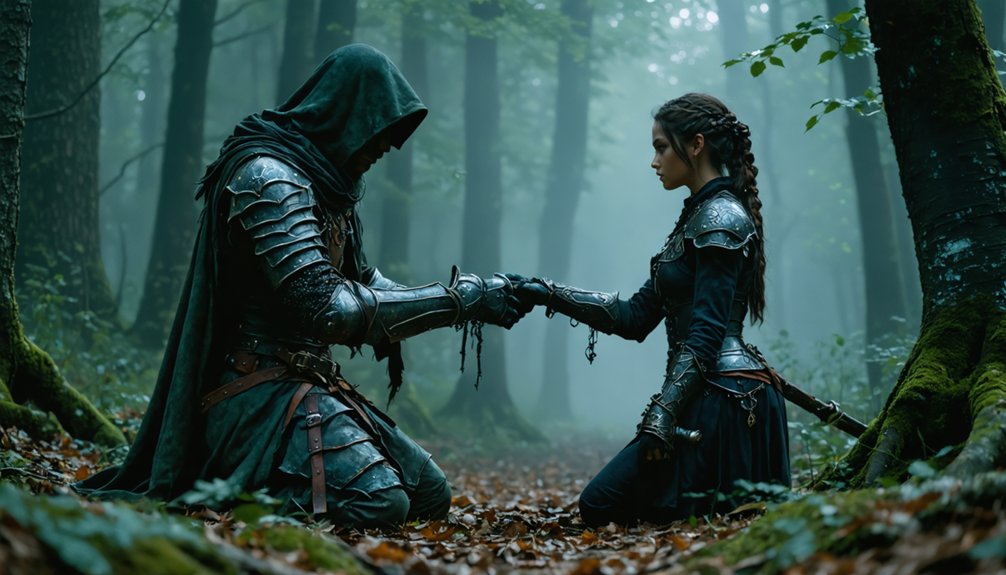
Your villain’s power stems from the web of relationships you construct—allies who advance your schemes, enemies who validate your threat, and pawns who serve unknowingly.
Map the social hierarchy before game start, identifying which characters hold influence, resources, or vulnerabilities you can exploit.
Position yourself strategically within existing factions or create new power structures that place you at the center of conflicts while maintaining plausible deniability.
Allies, Enemies, and Pawns
Since villains rarely operate in a vacuum, you’ll need to map your character’s social web across three distinct categories: allies who provide stability, enemies who generate conflict, and pawns who serve as vehicles for your schemes.
Allies function as emotional anchors—establish these relationships through backstory connections or proactive integration tactics like assisting with camp setup. They’ll provide off-game support for processing intense antagonistic play.
Enemies drive memorable conflict through motivated antagonism rather than random aggression. Negotiate display methods—bullying, sabotage, gaslighting—while maintaining OOC collaboration post-confrontation.
Pawns require careful calibration. Practice negotiating victimization by discussing limits beforehand, then let victims suggest their perfect transgression. Grant them agency within scenes while maintaining interdependence through the traitor route: smile, integrate, betray. Pre-calibrated victim scenes kickstart action and establish your villain’s ruthless tone efficiently.
Manipulating Social Hierarchies
When hierarchies govern the game world, your villain gains leverage by understanding who controls resources, information, and social capital—then exploiting those structures. Map faction relationships during pre-larp workshops to identify vulnerability points.
Target nobles who command bailiffs, then manipulate those command chains through strategic alliances or blackmail. Use Ball of Yarn exercises to establish unexpected connections that destabilize established hierarchies.
Your villain thrives through social capital reallocation—redistributing influence by elevating pawns into positions they’ll defend ruthlessly. Recognize that marginalized player empowerment creates loyal followers; those excluded from elite circles often amplify your agenda when offered validation.
Navigate power-over dynamics by positioning yourself as both oppressor and enabler, ensuring Epic Tales reinforce your narrative dominance while maintaining plausible deniability through intermediaries.
Creating Weaknesses and Vulnerabilities
Every compelling villain operates with at least one exploitable weakness—a vulnerability that gives heroes their opening and transforms your antagonist from an unstoppable force into a beatable opponent.
Design underlying pathologies that drive your character’s actions: insecurity manifesting as dominance-seeking, obsessive fixation on specific individuals, or fatal pride that prevents accepting assistance. These psychological vulnerabilities create dramatic leverage points.
Establish masked signals that telegraph emotional states during stress—verbal tics, protective gestures, or predictable anger responses. Smart opponents will recognize these patterns.
Pre-negotiate your villain’s breaking points with other players. Define where gaslighting ends, how betrayal unfolds, and which humiliations you’ll tolerate. Structure inner conflicts through competing loyalties or moral ambiguity that opponents can exploit.
Your weakness isn’t failure—it’s the mechanism that makes victory narratively earned.
Planning Your Villain’s Story Arc

Your villain’s trajectory through the LARP demands architectural planning before game start. Map your four-act structure: exposition for intelligence gathering, rising action for escalating confrontations, climax for decisive conflicts, and resolution for character transformation.
Pre-negotiate scenes with targeted players, establishing comfort boundaries and desired outcomes. Build tension through calibrated hostility—insults and threats—before physical engagement. Determine your endgame: redemption requiring humility and loss of power, continued villainy, or suffering consequences.
Each act should deepen backstory revelation through memories or NPC interactions, maintaining credible consequences for your actions. Strategic befriending before betrayal amplifies emotional impact. Managing character evolution across chapters creates dimensional depth, whether you’re spiraling toward moral awakening or descending further into antagonism.
Your arc’s architecture transforms random villainy into compelling narrative.
Growing Your Character Over Time
Actively pursue challenges that destabilize your comfort zone. Embrace calculated losses for authentic progression. Introduce exploitable vulnerabilities—predictable routines or emotional triggers—that opponents can discover.
Evolve motivations beyond surface-level malice. Develop distinctive verbal patterns, contrasting ruthlessness with unexpected compassion. Link quirks to formative backstory events, adapting them as experiences accumulate.
Integrate co-player feedback through scene negotiation, ensuring collaborative storytelling while maintaining villainous trajectory integrity.
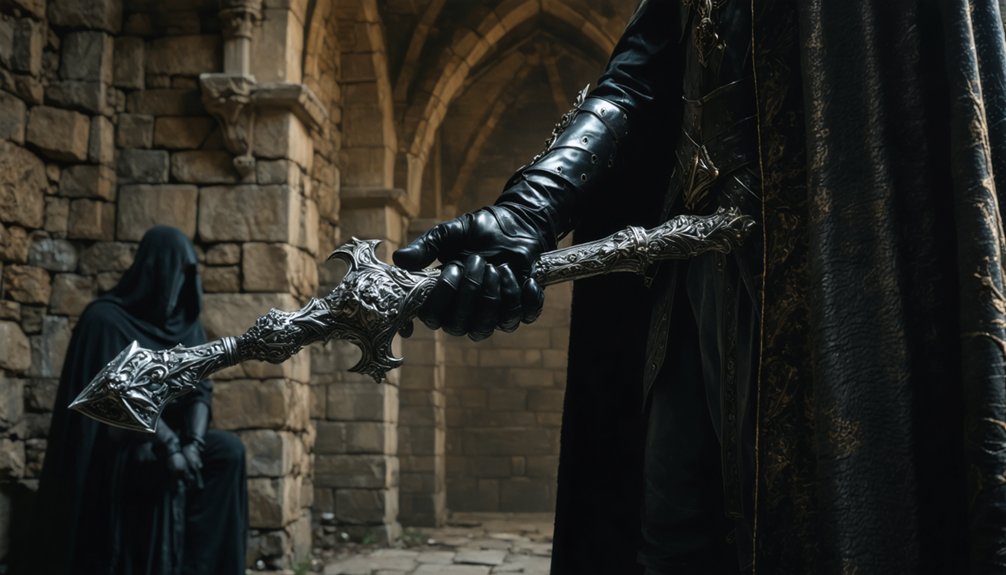
Power struggles in LARP unfold across three interconnected layers: interpersonal conflicts between characters, faction-level political maneuvering, and meta-game dynamics between players. You’ll navigate these simultaneously as a villain. Define concrete goals for each interaction—what you’ll escalate, what you’ll concede.
Internal faction dynamics create pressure that can override your personal narrative arc, so establish boundaries through out-of-character check-ins before volatile scenes.
Managing player expectations prevents antagonism bleed. Recognize your opponent’s motivations; open communication enables cooperative fulfillment where both characters achieve satisfying outcomes.
When faction emergencies threaten to dominate subtler plots, resist the plot train by anchoring to your core objectives.
Post-conflict processing matters. Debrief intense interpersonal dynamics through structured debriefings, separating your villainous persona from persistent emotional residue. This shift protects both you and your fellow players.
Frequently Asked Questions
How Do I Handle Other Players Who Refuse to Engage With My Villain?
Communicate out-of-character about building trust through collaborative storytelling. Respect their boundaries while proposing indirect involvement—messengers, rumors, or faction dynamics. You’ll create engagement pathways without forcing direct interaction, maintaining consent while advancing your villain’s innovative narrative arc.
What Costume Elements Best Communicate Villainy Without Appearing Too Theatrical?
Layer dark, weathered textures like aged leather and muddied fabrics to build authentic villain aesthetics. You’ll project intimidating villain mannerisms through asymmetrical cuts, subtle status props, and battle-worn details that ground your character in immersive realism rather than costume drama.
Can I Switch From Playing a Villain to a Hero Mid-Campaign?
Ironically, villainy’s easier to enter than exit. You’ll need GM approval for negotiating character arcs toward heroism. Crafting redemption narratives requires shifting your alignment score through consistent heroic actions, potentially spending glory points, and mechanically rebuilding your concept.
How Much Out-Of-Game Communication Should Happen Before Villainous Plot Twists?
You’ll need extensive pre-game communication to establish clear expectations and telegraph your twist’s trajectory. Foreshadow through escalating tensions—insults, threats, false friendships—ensuring players anticipate betrayal’s possibility without knowing exact timing. This prevents unfair surprise while maintaining dramatic impact.
What Safety Tools Should Villains Use During Intense Confrontational Scenes?
You’ll need ironclad safety protocols: establish clear safety words before confrontations, secure enthusiastic consent for intense scenes, designate out-of-character signals, and create opt-in systems. These tools transform volatile villain encounters into controlled, innovative roleplay experiences everyone trusts.