When you explore cosplay through a cultural lens, you’ll find characters like Harley Quinn, Ash Ketchum, Naruto Uzumaki, Zuko, Chun-Li, and Felicia encode distinct mythologies, art histories, and social narratives within their designs. Each costume functions as a wearable argument about regional identity and global storytelling. You’re not just replicating a look—you’re engaging with folkloric traditions, martial arts heritage, and comic evolution. The most culturally resonant styles reward the deeper investigation that follows.
Key Takeaways
- Naruto Uzumaki’s orange jumpsuit and forehead protector honor Japanese ninja traditions of discipline, perseverance, and hidden strength through accurate cultural representation.
- Chun-Li’s qipao dress and ox horns normalize Asian femininity in gaming while authentically engaging with Chinese martial arts heritage.
- Zuko’s Fire Nation armor, crimson tones, and scar makeup treat cosplay as scholarly homage to East Asian cultural symbolism.
- Felicia’s hybrid cat-human design engages with Japanese bakeneko folklore, honoring shapeshifting cat spirit mythology through intentional artistic choices.
- Harley Quinn’s evolving aesthetic across Golden Age, New 52, and Rebirth frameworks reflects meaningful cultural and artistic shifts within comic history.
What These Six Cosplay Characters Reveal About Global Pop Culture
Six cosplay characters—Harley Quinn, Ash Ketchum, Naruto Uzumaki, Zuko, Chun-Li, and Felicia—collectively map the contours of global pop culture, illustrating how comics, anime, and video games have converged into a unified creative ecosystem.
Each character’s trajectory demonstrates deliberate cultural storytelling, embedding regional identity into universally recognizable archetypes. Harley Quinn’s American comic roots, Naruto’s Japanese manga origins, and Chun-Li’s martial arts heritage aren’t isolated narratives—they’re interconnected chapters within a broader transnational dialogue.
Cultural storytelling transcends borders when regional identities become universally shared mythologies within a transnational creative dialogue.
You’ll notice that character evolution drives sustained engagement; Zuko’s moral transformation and Felicia’s folkloric depth reward cosplayers who pursue narrative authenticity over surface aesthetics.
These six figures don’t merely represent fandoms—they codify how global audiences absorb, reinterpret, and embody diverse cultural mythologies through performance-based creative expression.
Harley Quinn Cosplay Styles Rooted in Comic Heritage
When you explore Harley Quinn’s cosplay potential, you’re engaging with a character whose origins span decades of DC Comics mythology, from her debut in *Batman: The Animated Series* to her modern anti-hero iterations.
You can leverage her iconic jester aesthetic—diamonds, dual-toned color schemes, and theatrical makeup—to signal cultural literacy within the cosplay community.
Her villain-to-anti-hero arc also invites you to craft creative adaptations that challenge conventional costume boundaries while honoring the character’s rich comic heritage.
Comic Origins Explored
Harley Quinn’s comic origins offer cosplayers a rich, layered heritage to draw from, rooting each costume choice in decades of evolving narrative identity. You’ll find that understanding comic influences alters your approach from mere imitation to informed interpretation.
Her character evolution spans Batman: The Animated Series’ iconic jester suit, through New 52’s edgier aesthetic, to contemporary Rebirth designs. Each iteration reflects distinct cultural and artistic shifts within the medium.
By analyzing these changes, you can strategically select which version aligns with your creative vision and event context. Whether you’re targeting formal masquerade settings or convention floors, grounding your Harley Quinn cosplay in its original comic framework elevates authenticity.
You’re not simply wearing a costume—you’re embodying a documented cultural artifact with measurable historical significance.
Iconic Jester Aesthetic
Rooted in that comic heritage, the iconic jester aesthetic stands as Harley Quinn’s most historically grounded cosplay expression, drawing directly from her Batman: The Animated Series origins.
You’re engaging with a design vocabulary that balances structural precision with playful interpretations, making it particularly effective at masquerade balls and formal costume events. The black-and-red divided bodysuit anchors your construction in authentic jester motifs, while the two-pronged cap signals immediate character recognition across convention spaces.
You’ll find that this iteration rewards analytical attention to fabric geometry and symmetry. Rather than defaulting to contemporary reimaginings, you’re positioning yourself within a lineage of thoughtfully crafted villain aesthetics.
This approach communicates cosplay sophistication, demonstrating your capacity to honor source material while maintaining creative authority over execution.
Creative Villain Adaptations
Beyond the structured formalism of the animated series design, creative villain adaptations invite you to interrogate Harley Quinn’s evolving comic identity across distinct publication eras.
These creative transformations demand scholarly engagement with source material, enabling you to reconstruct villain aesthetics with analytical precision.
Consider these four adaptation frameworks:
- Golden Age interpretation — emphasize classic jester geometry and monochromatic contrast
- New 52 reconstruction — incorporate asymmetrical punk elements and distressed textiles
- Rebirth iteration — integrate layered streetwear with subversive accessories
- Birds of Prey cinematic hybrid — combine maximalist color blocking with deconstructed silhouettes
Each framework positions you as a cultural analyst, translating sequential art history into wearable argument.
Your costume becomes scholarly commentary on villainy’s aesthetic evolution across decades.
Ash Ketchum Cosplay and What It Says About Anime’s Global Reach
When you choose to cosplay as Ash Ketchum, you’re participating in a cultural phenomenon that transcends geographic and linguistic boundaries, reflecting anime’s extraordinary global penetration.
His costume’s simplicity—jeans, a black t-shirt, and an iconic red-white cap—makes him universally accessible, allowing fans from vastly different backgrounds to claim ownership of the same cultural artifact.
You’ll find that Ash’s enduring cosplay appeal demonstrates how Pokémon has functioned as a connective tissue between global fandoms, transforming a Japanese media export into a shared, cross-cultural identity.
Anime’s Worldwide Cultural Impact
Ash Ketchum’s enduring presence in cosplay culture speaks volumes about anime’s extraordinary reach beyond its Japanese origins. When you wear his iconic cap and jacket, you’re participating in a cultural exchange that transcends borders.
Anime’s worldwide impact becomes evident through several key dynamics:
- Global fandoms unite diverse communities around shared narratives
- Accessible character designs lower barriers to international participation
- Localized adaptations accelerate cross-cultural storytelling adoption
- Merchandise ecosystems reinforce sustained worldwide engagement
You’re not simply wearing a costume—you’re embodying a movement that transformed Japanese animation into a universal language.
Pokémon’s success demonstrates how strategic cultural export reshapes entertainment consumption globally. Ash represents anime’s remarkable capacity to resonate authentically across vastly different societies, making him a powerful symbol of contemporary cultural interconnectedness.
Ash’s Universal Cosplay Appeal
Few cosplay choices communicate your cultural literacy quite like donning Ash Ketchum‘s deceptively simple outfit—a blue-white jacket, red-white cap, and jeans that collectively signal membership in one of history’s most expansive fandoms.
You’re not merely wearing clothing; you’re embodying decades of Ash’s character development, from inexperienced trainer to seasoned champion, a trajectory that mirrors anime’s own maturation as a global medium.
Pokémon fandom expansion has democratized cosplay participation precisely because Ash’s costume demands no specialized craftsmanship—only intentionality.
When you choose this character, you demonstrate understanding of how accessible aesthetics carry profound cultural weight. Your assembly of ordinary garments transforms into a statement about anime’s extraordinary reach, bridging geographic and generational divides through remarkably unpretentious visual communication.
Pokémon Bridging Global Fandoms
Pokémon’s status as a transnational cultural phenomenon becomes viscerally legible the moment you slip on Ash Ketchum’s red-white cap—a gesture that instantly connects you to millions of fans across continents who’ve followed the same character through the same formative experiences.
Through Pokémon fandom, you’re participating in meaningful cultural exchange that transcends linguistic barriers.
Consider how Ash’s cosplay accessibility enables:
- Character evolution documentation across generations of fans
- Global connections forged through shared nostalgic iconography
- Community engagement that dismantles accessibility challenges through affordable, replicable costumes
- Representation impact amplified by anime’s cross-cultural normalization
You’re not simply wearing a costume—you’re embodying anime’s remarkable capacity to unify diverse communities.
Ash demonstrates how strategic simplicity in design democratizes cosplay participation worldwide.
Naruto Uzumaki Brings Japanese Ninja Tradition to Life
Naruto Uzumaki’s iconic orange jumpsuit and black forehead protector carry deep roots in Japanese ninja tradition, making this character one of the most culturally resonant choices in anime cosplay.
Naruto’s orange jumpsuit and forehead protector connect wearers to authentic Japanese ninja tradition through one of anime’s most iconic designs.
When you embody this character, you’re engaging directly with ninja symbolism rooted in Japanese heritage — discipline, perseverance, and hidden strength.
Naruto’s character evolution from outcast to leader adds meaningful depth to your portrayal, transforming the costume into a narrative statement.
Cosplay techniques for this build remain beginner-accessible: source the orange jumpsuit, style a blonde wig if needed, and replicate the Konoha headband accurately.
You’re not simply wearing a costume; you’re representing a cultural tradition that millions globally recognize.
Prioritizing accuracy in these details guarantees your interpretation honors the source material’s cultural integrity.
Zuko Cosplay: How Fire Nation Armor Honors Animated Asian Design
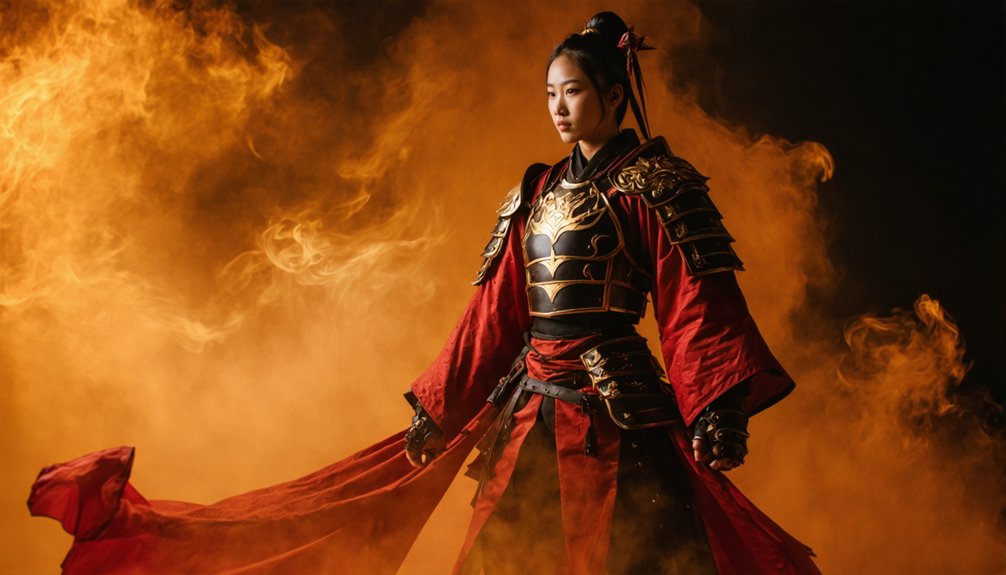
Prioritize these elements for cultural authenticity:
- Fire Nation aesthetics — replicate deep crimson tones with gold accents reflecting dynastic power structures.
- Armor design — incorporate layered pauldrons echoing historical lamellar construction.
- Scar makeup — apply prosthetics referencing Zuko’s transformative character arc.
- Headpiece accuracy — reconstruct the topknot crown honoring East Asian court symbolism.
You’ll distinguish yourself by treating this cosplay as scholarly homage rather than surface-level imitation.
Chun-Li Honors Chinese Martial Arts Through Street Fighter
Shifting from the animated Asian design principles embedded in Zuko’s Fire Nation armor, Chun-Li’s iconic Street Fighter aesthetic offers another layer of cultural representation worth examining carefully.
Chun-Li’s heritage manifests through her qipao dress and distinctive ox horns, both rooted in traditional Chinese aesthetics. When you adopt this costume, you’re engaging with martial arts influence that Street Fighter deliberately encoded into her character design and combat mechanics.
Fighting game representation matters here because Chun-Li normalized Asian femininity within a globally dominant gaming genre. Her lightning kick isn’t merely performance; it’s cultural pride articulated through movement.
You’ll find her costume accessible across diverse body types, which broadens participatory representation considerably. Cosplaying Chun-Li means analytically honoring Chinese martial traditions while critically challenging conventional gender expectations within competitive gaming culture.
Felicia and the Japanese Cat Folklore Behind Her Design
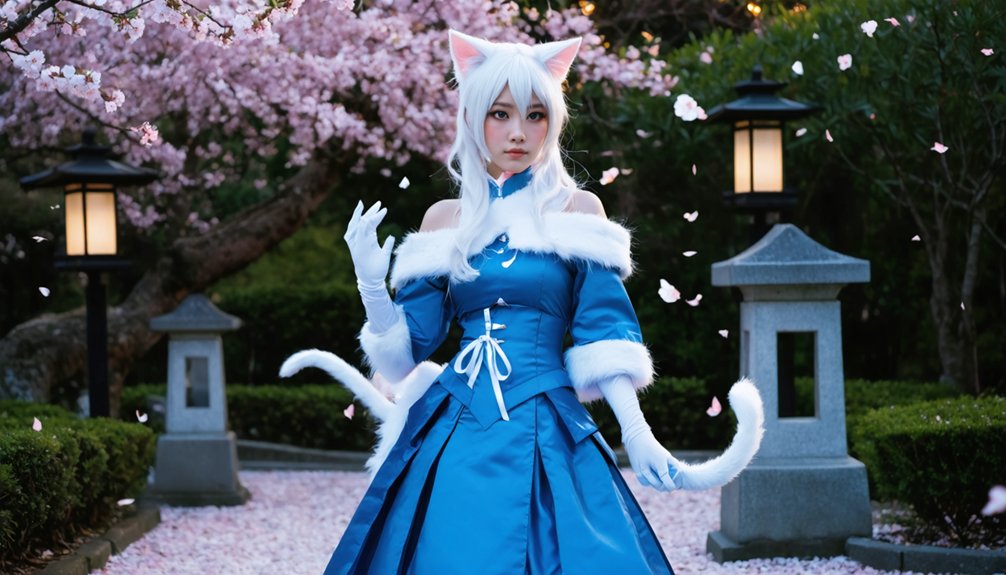
When you cosplay as Felicia from Darkstalkers, you’re engaging with the bakeneko, a shapeshifting cat spirit from Japanese supernatural folklore.
Her hybrid human-cat design directly draws from this mythological tradition, where bakeneko possess magical abilities and transgress the boundaries between animal and human form.
Felicia’s Cat Folklore Origins
- Shape-shifting duality — Felicia’s hybrid form mirrors the bakeneko’s fluid identity between human and feline.
- Supernatural agility — Her movement-based combat reflects the spirit’s mythologized physical prowess.
- Liminal existence — She occupies the boundary between worlds, a core bakeneko narrative trait.
- Protective symbolism — Cats in Japanese tradition ward off evil, informing her heroic characterization.
Understanding these layers transforms your Felicia costume from aesthetic recreation into meaningful cultural commentary, positioning your cosplay within a broader tradition of mythological representation.
Bakeneko Supernatural Design Elements
Felicia’s visual design draws directly from bakeneko folklore, embedding supernatural signifiers that reward culturally informed cosplay interpretation.
You’ll notice her elongated tail and feral agility reference the bakeneko’s shapeshifting mythology, where cats transcend natural boundaries to assume hybrid identities. These supernatural aesthetics aren’t decorative accidents—they’re deliberate design choices encoding Japanese folkloric tension between human and beast.
When you reconstruct Felicia’s costume, you’re engaging that mythological framework actively. Her white fur patches, clawed extremities, and predatory movement vocabulary signal transformation rather than simple anthropomorphism.
Prioritize articulated tail construction and strategic body paint to honor this supernatural dimension authentically.
Culturally sophisticated cosplayers recognize that Felicia represents a legitimate folkloric lineage, not merely a gaming novelty, making your interpretation analytically richer and visually distinctive within competitive convention environments.
Cosplaying Cultural Mythological Creatures
Rooted in centuries of Japanese supernatural tradition, the bakeneko myth frames Felicia’s design as culturally purposeful rather than arbitrarily fantastical. When you approach folklore character adaptations, you’re engaging layered cultural scholarship through costume.
Consider these four analytical priorities:
- Research bakeneko shapeshifting mythology before constructing hybrid human-cat elements.
- Distinguish modest versus bold interpretations to honor mythical creature representations authentically.
- Incorporate historically accurate supernatural motifs into your accessory choices.
- Document your cultural references publicly to educate fellow convention attendees.
Felicia’s design bridges Darkstalkers’ gaming aesthetics with genuine Japanese folkloric identity. You’re not simply wearing a costume — you’re activating cultural dialogue.
Prioritizing scholarly preparation transforms your cosplay from surface-level imitation into meaningful mythological representation that advances the broader conversation around cultural authenticity within competitive cosplay communities.
How to Verify a Character’s Cultural Origins Before You Build
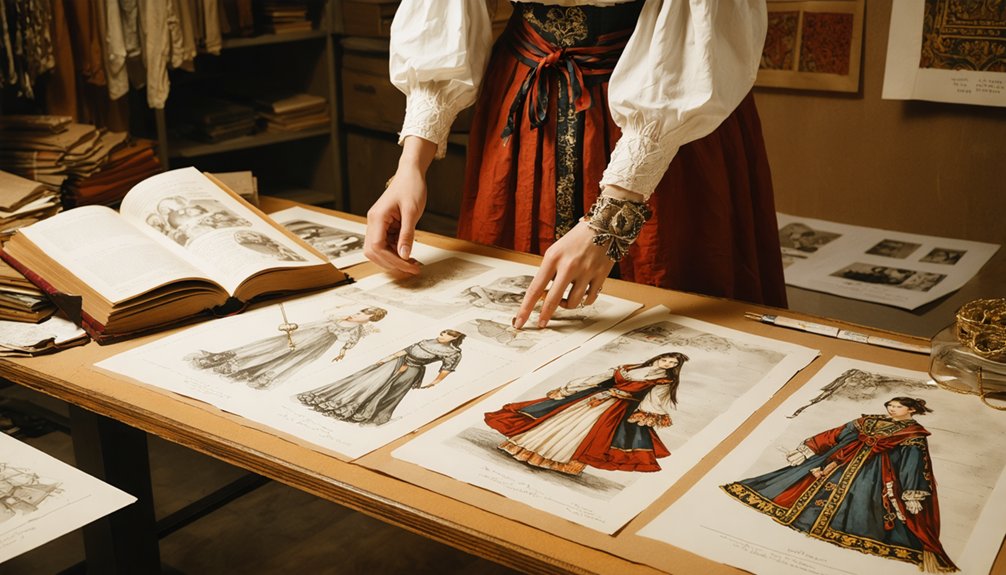
Before you build a cosplay, you should verify the cultural origins of your chosen character to guarantee authentic and respectful representation. Start with thorough character research, examining primary sources like original manga, game lore, or animation archives.
Cultural accuracy demands that you understand symbolic representation embedded in costumes, colors, and accessories—each element often carries heritage considerations specific to its origin culture.
Cross-reference community dialogue within cultural fan groups and academic resources to identify potentially sensitive elements. Costume authenticity isn’t merely aesthetic; it reflects intellectual and cultural responsibility.
Consult creators’ interviews, cultural consultants, or diaspora communities to validate your interpretations. You’ll strengthen your cosplay’s integrity and demonstrate genuine respect for the source material, transforming your costume from simple imitation into meaningful, informed cultural celebration.
Finding Culturally Respectful Cosplay Costumes on Any Budget
Achieving culturally respectful cosplay doesn’t require a substantial financial investment, as thoughtful sourcing and creative resourcefulness can yield authentic results across all budget levels.
You can honor cultural sensitivity guidelines while pursuing inclusive costume options through strategic planning:
- Research authenticity — Study character origins before purchasing, prioritizing accuracy over aesthetic shortcuts.
- Leverage DIY cosplay tips — Repurpose thrifted garments to recreate Chun-Li’s qipao or Naruto’s orange jumpsuit affordably.
- Identify budget-friendly choices — Characters like Ash Ketchum require everyday clothing, minimizing expenditure while maximizing cultural accuracy.
- Consult community resources — Engage cosplay forums where experienced creators share culturally informed construction techniques.
You’ll discover that mindful representation doesn’t compromise financial accessibility; rather, it sharpens your analytical approach to character embodiment, producing more meaningful, culturally resonant results.
How Cosplaying Across Cultures Connects Fans Worldwide
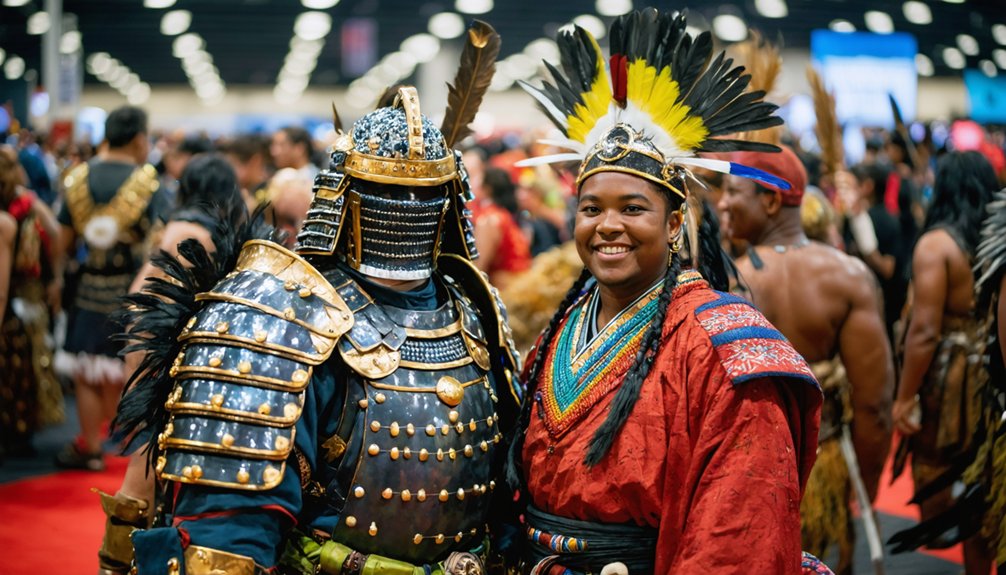
Cosplaying across cultures functions as a dynamic bridge, connecting fans globally through shared admiration for characters like Chun-Li, Naruto Uzumaki, and Zuko—figures whose cultural origins span Asian martial arts traditions, Japanese manga, and animated fantasy worlds.
When you embody these characters, you’re actively participating in cultural exchange that transcends geographic boundaries. This shared engagement creates meaningful fandom connections, transforming conventions into spaces where diverse communities intersect around common narratives.
You’ll find that portraying characters like Felicia or Harley Quinn generates cross-cultural dialogue, prompting research into Japanese folklore or Western comics respectively. These interactions cultivate mutual appreciation rather than surface-level imitation.
Ultimately, cosplay’s connective power lies in its capacity to convert individual enthusiasm into collective understanding, making global fan communities intellectually richer and culturally more informed.
Frequently Asked Questions
Can Children Participate in Culturally Representative Cosplay Safely?
Yes, children can safely participate. Imagine a child cosplaying Ash Ketchum — you’re modeling cultural sensitivity effortlessly. You’ll guarantee age appropriate costumes align with respectful representation, fostering innovative cultural appreciation from an early, formative stage.
Are There Cosplay Competitions Specifically Focused on Cultural Representation?
Yes, you’ll find competitions emphasizing cultural significance and representation accuracy, such as World Cosplay Summit, which actively celebrates global heritage. These events challenge you to innovate authentically, rewarding meticulous research and culturally respectful portrayals across diverse fandoms.
How Do Cosplay Communities Handle Cultural Appropriation Disputes?
You’ll find cosplay communities tackle cultural appropriation disputes through cultural sensitivity training, enforcing community guidelines, promoting respectful representation, and implementing structured dispute resolution frameworks—empowering you to engage innovatively while honoring diverse cultural identities authentically.
What Photography Techniques Best Capture Culturally Detailed Cosplay Costumes?
Use natural and diffused lighting techniques to highlight intricate costume details, ensuring you’re capturing texture, embroidery, and cultural motifs authentically. You’ll maximize depth by employing macro photography, revealing craftsmanship that honors each costume’s cultural significance effectively.
Do Cultural Organizations Officially Endorse Cosplay Representations of Their Heritage?
Most cultural organizations don’t officially endorse cosplay representations, yet you’ll find many actively promote cultural authenticity and heritage education through community dialogue, encouraging innovators like you to engage respectfully with traditions while fostering cross-cultural appreciation and understanding.
References
- https://www.classpop.com/magazine/cosplay-costumes
- http://yetanotheropinon.blogspot.com/2013/01/top-ten-cosplay-costumes-of-all-time.html
- https://authormorgansterling.com/blog/cosplay-for-everyone-celebrating-diverse-identities-and-creative
- https://asimplelotus.wordpress.com/2013/12/26/top-ten-cosplays-i-would-propose-to/
- https://www.boredpanda.com/best-cosplays/
- https://www.halloweencostumes.com/blog/p-1051-the-top-10-comic-con-costume-ideas.aspx