Prioritize comfort with durable, sensory-friendly base layers and footwear that support extended wear. Transform mobility aids into character-specific elements using lightweight attachments like Velcro and zip ties. Utilize adaptive sewing tools—heat-resistant pins, SlideLock rulers, and inclusive patterns designed for wheelchair users. Design costumes with strategic closures: hidden side zippers, accessible pockets positioned for seated reach, and magnetic fasteners for single-hand operation. Incorporate hidden storage within props, armor, or cape linings for essential supplies. Choose characters you’re passionate about, avoid ableist portrayals, and connect with disability cosplay communities. The techniques below will help you craft authentic costumes that work with your body’s needs.
Key Takeaways
- Prioritize comfortable, sensory-friendly base layers and durable footwear that support extended wear and reduce pressure point strain.
- Transform mobility aids into character elements using lightweight, removable attachments like Velcro strips and decorative spoke covers.
- Use adaptive sewing tools including heat-resistant pins, SlideLock rulers, and inclusive patterns designed for wheelchair users.
- Design costumes with accessible closures like side-seam zippers and magnetic fasteners positioned for easy single-hand operation.
- Build hidden storage into props, seams, and armor for discrete access to essential medical supplies and devices.
Prioritize Comfort in Base Layers and Footwear for Extended Wear
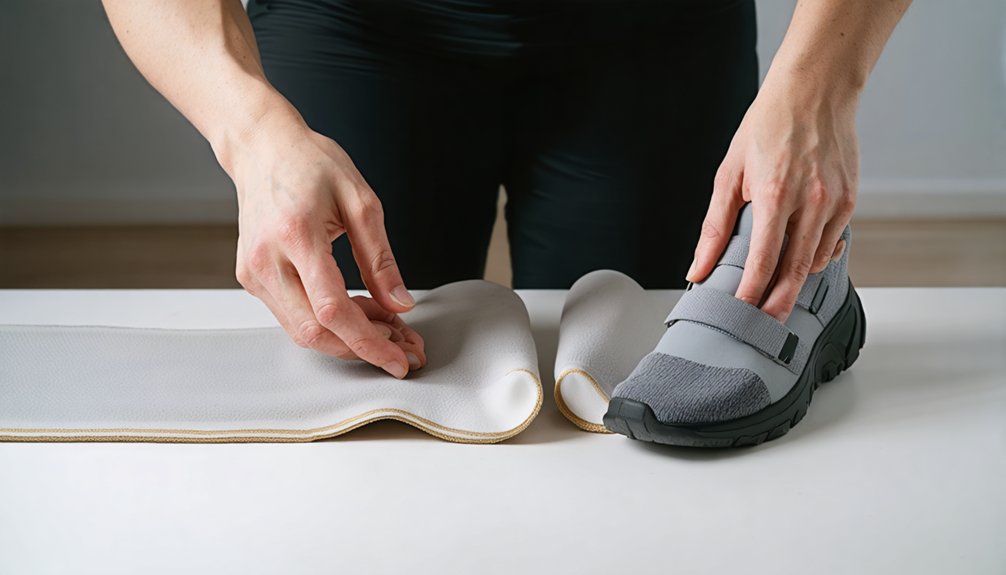
When planning disability-inclusive cosplay, your foundation garments and footwear determine whether you’ll thrive or merely survive convention day. Invest in shoes with proven shoe durability that support extended mobility—your feet sustain hours of convention floor navigation.
Your foundation garments and footwear determine whether you’ll thrive or merely survive convention day.
Quality footwear provides superior weight distribution, reducing strain across pressure points during all-day wear.
Integrate sensory-friendly fabrics into base layers, prioritizing comfort over absolute accuracy. Soft materials prevent irritation during sustained contact with skin. If your character requires uncomfortable footwear, reserve those pieces exclusively for photo shoots.
Strategic costume swapping lets you maintain authenticity during key moments while protecting your physical endurance.
For mobility aid users, fit costumes to your seated form. Adjust dress forms to match sitting height, ensuring garments won’t shift or bind during extended wear periods.
Integrate Mobility Aids as Creative Costume Elements
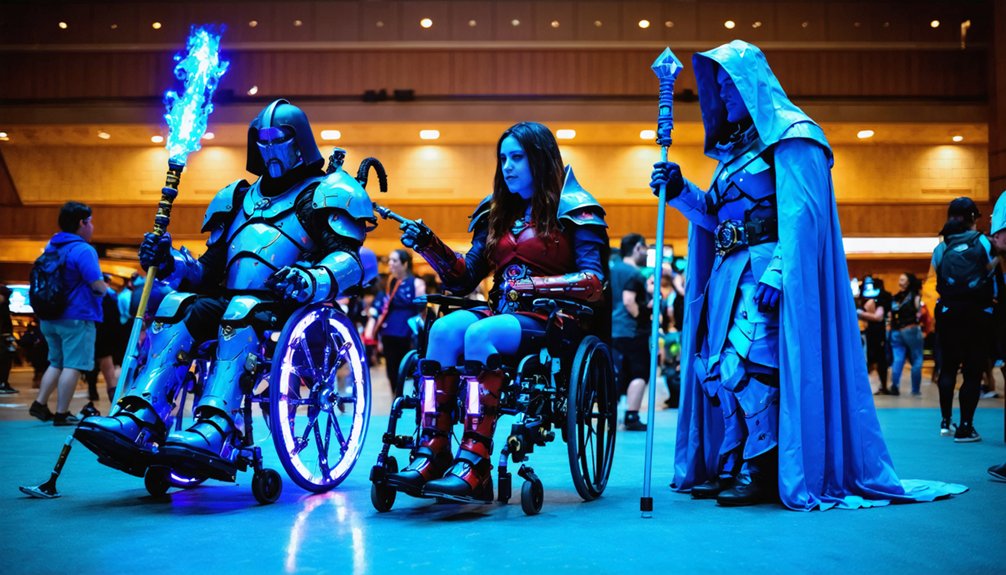
Your mobility aids aren’t obstacles to hide—they’re structural foundations for ambitious costume builds. Transform wheelchairs into DeLoreans, Cinderella carriages, or Mad Max vehicles using cardboard, foam, and fabric—lightweight material options that preserve maneuverability without compromising structural integrity. Velcro strips and zip ties serve as mobility friendly attachments, securing elements without damaging equipment.
Select characters strategically: power wheelchair capabilities enable vehicle-based portrayals, while ambulatory users can integrate crutches or chairs into character-specific elements. Add spoke covers for seamless visual integration. Nonprofits like Magic Wheelchair demonstrate what’s achievable with 8-week custom builds.
Test all modifications before conventions, ensuring attachments don’t interfere with controls or movement. Instagram tutorials and adaptive costume panels provide problem-solving frameworks. Your aids become costume architecture—not limitations, but launchpads for innovation that non-disabled cosplayers can’t replicate.
Utilize Adaptive Sewing Tools and Techniques for Easier Construction
Adaptive sewing tools eliminate barriers between your cosplay vision and finished costume, transforming construction from a dexterity challenge into an accessible technical process. Heat-resistant pins with ribbed, graduated conical heads provide superior grip for sewists managing coordination limitations, while SlideLock cutting rulers enable straight cuts with minimal pressure application. You’ll find universal design principles embedded in tools like wide, flat-headed pins and pressure feet that stabilize fabric without additional hands.
Simplicity’s adaptive patterns, developed with Sewn Adaptive, incorporate wheelchair-user modifications and body adaptations directly into their grading systems. Follow inclusive sewing tutorials that demonstrate duct tape patterning for crutch-fitted costume covers and L-shaped quilting guides for precise seam allowances. These techniques leverage existing pattern bases from cosplay makers, allowing you to focus creative energy on character accuracy rather than drafting struggles.
Design Costumes With Strategic Closures and Accessibility Features
Strategic placement of closures transforms your costume from a struggle into an independent achievement. Position hidden zippers at side seams under your armpits to eliminate shoulder strain during seated dressing, and integrate pockets where you’ll actually reach them—not where the character’s design traditionally places them.
Fit your costume to your seated measurements using an adjusted dress form, ensuring hemlines, proportions, and fabric drape work with your body’s actual convention position rather than an idealized standing silhouette.
Hidden Zippers for Independence
When you’re designing a cosplay costume for independence, zipper placement determines whether you’ll dress yourself or need assistance. Position zippers under the armpit along side seams—this enables single-handed operation regardless of pain levels or mobility limitations. Install invisible zippers using specialized sewing machine feet to maintain your costume’s aesthetic integrity while ensuring functional closures you can operate independently.
Consider magnetic zipper accessibility innovations like VISLON® systems that close through magnetic force between sides. You’ll achieve single-hand closure without looking at your hands, eliminating traditional insert pins and retaining boxes. YKK’s collaborations with Co-Co Life demonstrate how invisible zipper installation techniques merge seamlessly with universal design principles.
These strategic adaptations transform cosplay from requiring assistance into truly independent expression, addressing real mobility challenges while preserving your costume’s visual authenticity.
Seated Fitting Adjustments
Independent closure systems work best when paired with patterns drafted specifically for your seated body position. Transform your costume construction by setting your dress form to seated stool height, then drape muslin directly over this position. This approach captures authentic seam placement considerations that standing patterns miss entirely.
Master seated-specific techniques through:
- Transfer pinned drapes to paper patterns using L-squares and hip curves for precise armhole and hem modifications
- Frankenstein existing patterns with strategic curves and darts that honor your seated shape
- Add stabilization materials for dramatic collars and skirts that defy gravity while seated
- Experiment through multiple sew-resew cycles until ergonomic design factors align with your mobility needs
Your wheelchair becomes part of the design process, not an afterthought.
Strategic Pocket Placement
Pocket alignment strategies include using notches as precision guides and stay-stitching extended pieces to waistlines for secure attachment.
For form-fitting cosplay, faux welted pockets eliminate bulk while maintaining character accuracy—especially vital for anime designs with impossible placements. Test positioning temporarily with fabric glue before permanent stitching.
Consider curved 6×4-inch pockets with pinked edges for simplified construction. Remember: pockets that accommodate mobility aids, medication, or communication devices aren’t extras—they’re indispensable accessibility features.
Incorporate Hidden Storage Solutions for Essential Supplies
Because convention floors demand constant access to medications, mobility tools, and emergency supplies, integrating hidden storage directly into your cosplay eliminates the need to break character or compromise your costume’s visual integrity.
Hidden storage solutions preserve character immersion while ensuring critical medical supplies and mobility aids remain within immediate reach throughout convention attendance.
Engineer customizable storage compartments that respond to your specific disability requirements:
- Prop-based concealment: Hollow out staffs, shields, or armor pieces to create unobtrusive stash locations for insulin pumps, emergency medications, or glucose monitors that remain instantly accessible during photoshoots.
- Structural integration: Build pockets into side seams, underarms, or cape linings using matching thread colors to reinforce openings sized for limited hand mobility.
- Layered concealment: Position back braces within belt systems or corsetry for dual functionality.
- Character-canonical accessories: Select pouches or satchels that double as medical supply carriers while maintaining aesthetic authenticity.
Research Convention Accessibility Before Committing to Attend
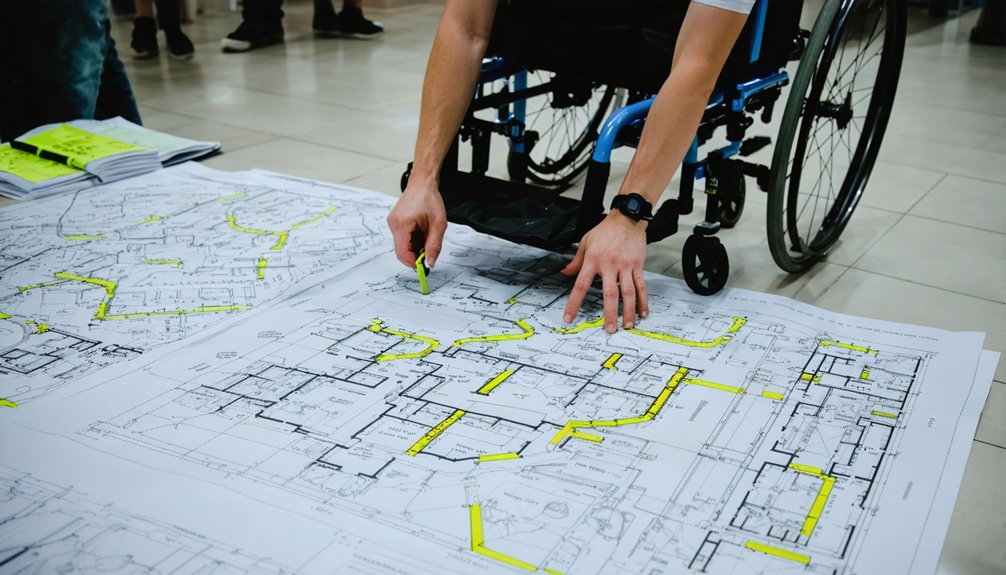
Before investing hours into costume construction and registration fees, verify that your target convention can actually accommodate your access needs. Contact organizers directly about venue logistics planning—ask specific questions about ramping for competition stages, priority elevator access, and designated queuing systems.
Check whether they offer sensory-friendly hours with reduced noise and dimmed lighting, particularly if you’re managing sensory sensitivities. Request details about disability services tables at entry points and confirm whether accessibility stickers are available for companion accommodations. Review social media for feedback from disabled attendees about their actual experiences, as accessibility services remain spotty across most events.
This upfront research protects your investment and guarantees the convention can genuinely support your individual accessibility needs rather than discovering barriers after commitment.
Choose Characters You Love to Overcome Self-Doubt
Selecting characters based on genuine passion rather than perceived physical “appropriateness” directly counters the self-doubt that disabled cosplayers face when confronting gatekeeping attitudes. Role-playing through character imaginings reduces uncertainty by fostering deeper engagement with cosplay communities. Your authentic connection to characters—regardless of their canonical abilities—builds psychological resilience against purist criticism.
Evidence-based approaches for character selection:
- Prioritize emotional resonance over physical matching to activate the immersive tendencies that predict lower depression scores
- Develop self care rituals around character research that reinforce your right to embody any persona
- Document your creative process to challenge algorithmic invisibility affecting disabled cosplayers
- Connect with supportive subcommunities where diverse interpretations receive celebration rather than exclusionary pushback
Your passion legitimizes your cosplay—full stop.
Use Sensory-Friendly Fabrics for Skin Sensitivities
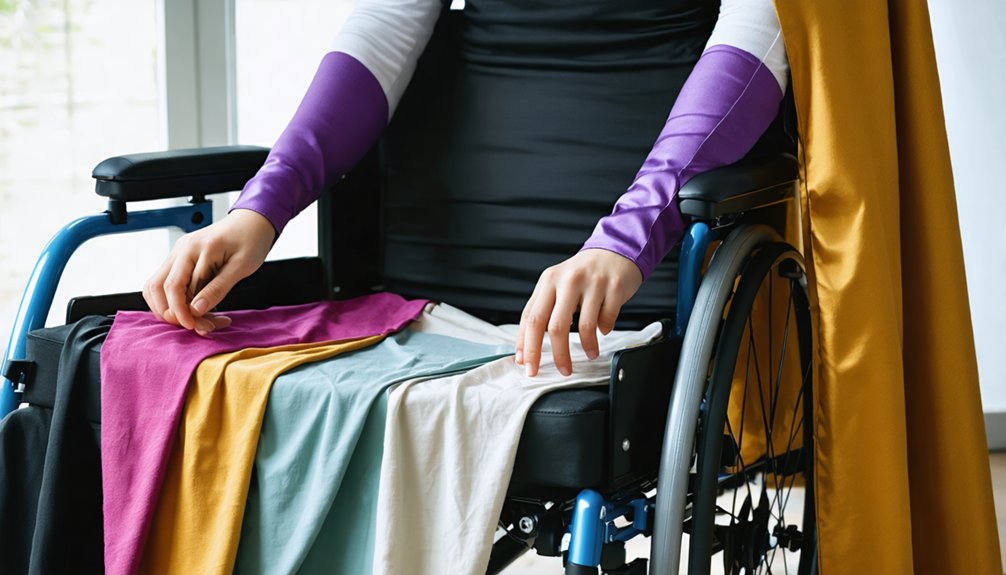
Character passion fuels your cosplay journey, but physical comfort determines whether you can actually wear your creation for more than twenty minutes. Prioritize breathable fiber preference by selecting cotton, bamboo, modal, or silk—fabrics that prevent irritation while supporting extended wear. Eliminate polyester, wool, and stiff blends that trigger sensory overload.
Implement flat seams and tag-free construction to remove friction points. Strategic fabric color selection matters: solid, muted tones reduce visual agitation better than busy patterns. Layer familiar soft clothing beneath costume pieces to buffer rough textures.
Incorporate stretch elements like Lycra for gentle compression without constriction. High-quality combed cotton and organic processing methods enhance tactile comfort. Test materials beforehand through observation and trial. Your costume succeeds when sensory accommodation enables sustained character embodiment.
Avoid Ableist Costume Choices and Portrayals
You must recognize that mobility aids serve as essential medical equipment, not costume accessories—using wheelchairs, canes, or braces as props when you don’t need them trivializes the daily barriers disabled people face.
When selecting character portrayals, avoid costumes that depict disability as frightening (scarred villains), pitiable (exaggerated limb differences), or comedic (vision impairment gags), as these reinforce harmful stereotypes that actively marginalize disabled communities.
If you’re non-disabled, choosing characters that don’t require faking disability symptoms demonstrates respect for authentic disabled representation in cosplay spaces.
Distinguish Props From Mobility Aids
When designing cosplay that incorporates mobility aids, establish clear visual and functional boundaries between decorative props and essential equipment. Convention policies often flag obstructive props as safety risks while protecting functional mobility tools. You’ll need strategic device identification to prevent security from confiscating your wheelchair or crutches as costume accessories. This separation of mobility aids from decorative elements protects both you and fellow attendees.
Critical Distinctions to Implement:
- Mark functional aids visibly so staff recognize them as medical equipment, not removable props
- Research convention accessibility policies before integrating aids into your design approach
- Avoid sharp protrusions on wheelchairs that could endanger others in crowded spaces
- Communicate with security beforehand about modified aids like Davros-inspired electric wheelchairs to prevent misunderstandings
Respect Authentic Disability Representation
Beyond securing recognition for your mobility aids lies a deeper responsibility: avoiding portrayals that appropriate disability experiences. Cripping up—the practice of able-bodied cosplayers mimicking physical characteristics of disabilities—remains disturbingly common at conventions, particularly when cosplayers borrow wheelchairs or fake tics to achieve “character accuracy.”
This appropriation creates a harmful dynamic where non-disabled attendees receive praise for temporarily using mobility aids as props, while actual wheelchair users face criticism that their devices “ruin” cosplays of standing characters.
Instead, promote disability-led projects by supporting disabled cosplayers portraying characters authentically. Share inclusive cosplay imagery featuring genuine adaptive techniques rather than performative mimicry. When you’re non-disabled, skip characters requiring disability simulation—countless alternatives exist. Reserve neurological condition portrayals, like Tourette Syndrome tics, for those with lived experience. Your character choices directly impact community inclusivity standards.
Build Community Through Visibility and Representation
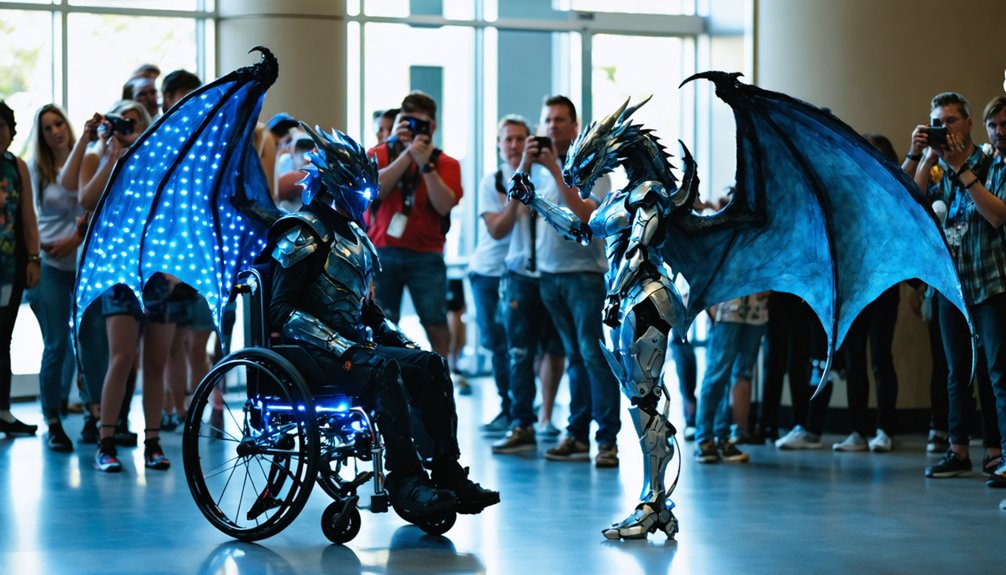
Over 18 million cosplayers worldwide create powerful ripples of representation that extend far beyond convention halls. Your visibility directly combats algorithmic bias and transforms the landscape for disabled cosplayers facing systemic underrepresentation. When you showcase mobility aids, adaptive techniques, and authentic portrayals, you’re engineering enhanced visibility impacts that challenge gatekeeping narratives.
Strategic visibility amplifies community power through:
- Documenting your adaptive costume modifications to inspire others facing similar accessibility challenges
- Actively engaging with disabled cosplay networks where supportive community recognition counters mainstream marginalization
- Sharing behind-the-scenes processes that demystify accessible construction methods for emerging creators
- Attending conventions with accessibility features like Otakuthon’s priority queues and designated accommodations
Your presence establishes precedent, validates experiences, and creates pathways for the next generation of disabled cosplayers.
Frequently Asked Questions
How Do I Find Cosplayers With Disabilities to Connect With Online?
You’ll find disabled cosplayers on YouTube, Lemon8, and through disability-focused groups like dD Cosplay Club. Search hashtags, attend accessible convention panels, and connect with local groups to promote community building while discovering adaptive techniques and inclusive design strategies.
What’s the Best Way to Explain My Mobility Aid to Photographers?
State your wheelchair user identity upfront—70% of photographers appreciate advance notice. Discuss costume adjustments that highlight mobility features creatively, whether you’re integrating aids thematically or keeping them visible. Direct communication establishes clear expectations for innovative shoots.
Can I Cosplay a Character Who Doesn’t Use Mobility Aids?
You’re free to cosplay any character regardless of their mobility status. Your creative choices respect representation while celebrate diversity—choosing to showcase, conceal, or creatively integrate your mobility aid demonstrates innovative adaptation that enriches cosplay culture.
How Do I Handle Negative Comments About My Adaptive Costume?
Don’t let negativity rain on your parade. Stay confident in your adaptive design choices. Educate politely by sharing your creative engineering solutions. Focus on the 20 positive supporters, not one critic. Your innovation inspires inclusive cosplay communities forward.
What if My Symptoms Worsen During the Convention Day?
You’ll need immediate action: implement manage fatigue strategies like enforced rest breaks, medication adjustments, and symptom monitoring. Plan alternate transportation options—wheelchair rentals, mobility scooters, or designated assistance—ensuring you’re never stranded when symptoms escalate unexpectedly.