The best comic book makeup techniques start with a full-coverage matte base that creates a two-dimensional, illustrated canvas. You’ll then draw thick black liner outlines along structural points like your jaw, brows, and cheekbones. Bold high-contrast eyeshadow, graphic lips with halftone dots, and layered oversized lashes complete the illustrated effect. Setting each layer locks in precision without softening edges. Keep going to master every technique that brings your character to life.
Key Takeaways
- Start with a full-coverage matte base using theatrical foundation to create a flat, two-dimensional illustrated canvas effect.
- Use black cream paint or gel liner to map bold outlines along jaw, cheekbones, and brows with confident strokes.
- Apply high-contrast eyeshadow, extended winged liner, and oversized lashes to achieve dramatic, animated eye expressions.
- Define lips with black cream liner, bold color, and white highlights to mimic graphic comic book design.
- Coordinate wigs, costumes, and accessories with color-blocked makeup to complete a cohesive, high-impact character design.
Start With a Full-Coverage Base for Comic Book Makeup
A flawless comic book makeup look starts with one non-negotiable step: building a full-coverage, matte base. You’re not trying to enhance your natural skin — you’re replacing it with an illustrated canvas.
Apply full coverage techniques using heavy-duty face paint, theatrical foundation, or body-grade formulas that prioritize opacity over skin-matching precision. These foundation alternatives outperform standard cosmetics by delivering the flat, even tone that comic art demands.
Heavy-duty face paint and theatrical formulas beat standard cosmetics for achieving the flat, opaque tone comic art demands.
Prime your skin first to extend wear and smooth texture. Lock everything down with a setting powder to eliminate shine, since any reflection breaks the two-dimensional illusion.
Use concealer strategically to sharpen edges after your base is applied. Every line you draw later depends on this surface being consistent, opaque, and completely matte.
Draw Bold Black Lines That Define Every Comic Character Feature
Your liner choice directly impacts the sharpness and longevity of every outlined feature, so opt for black cream paint or a gel liner when you need controlled, thick strokes. Switch to a fine-tip liquid liner for precise detail work around the nose, lips, and eye borders.
Before applying a single line, map your outline placement by identifying the key structural points—jaw edge, cheekbone shadow zones, brow arch, and nostril base—since comic art stylizes anatomy rather than following it literally.
Work systematically from the brows downward, using short, confident strokes rather than hesitant dragging, so your lines stay crisp and readable against the flat base you’ve already built.
Choosing The Right Liner
Everything about a comic-book look hinges on your liner choice, because no other product defines character features as decisively as a well-selected black liner.
Different liner types serve distinct application techniques, so matching the tool to the task is critical. Black cream paint delivers thick, controllable strokes ideal for bold jaw and nose outlines. Gel liner offers precision and flexibility for curved brow arches and cheekbone shadows. Liquid liner produces the sharpest, most graphic edges for winged eye extensions and lip borders.
You’ll want an opaque, fast-drying formula that resists smudging under stage lighting or event conditions. Test each liner type on your skin before committing to a full look, since humidity, skin chemistry, and layering order directly impact durability and edge definition.
Mapping Outline Placement
Once you understand which liner types suit your tools and skin, placement becomes the defining challenge that separates a convincing comic-book face from a messy costume attempt.
Map your outlines before drawing them by lightly marking key anchor points along the jaw, cheekbones, brow ridge, nose bridge, and lip borders. Outline symmetry matters enormously here; uneven lines destroy the graphic illusion immediately.
Use your face’s natural bone structure as a guide, then push beyond it through deliberate feature exaggeration. Widen the jaw line, sharpen the cheekbone shadow edge, and extend the brow arch further than nature allows.
Work in sections rather than continuous strokes to maintain control. Step back frequently to assess balance, because comic-book aesthetics demand precision that only intentional placement delivers.
Use These Eye Techniques to Make Your Character Pop
Nothing transforms a comic-book look faster than precise, dramatic eye work. Start by applying bold shadows in high-contrast hues to sculpt cartoon eyes with depth and dimension.
Trace your crease and lower lash line sharply with black cream liner to reinforce that illustrated structure.
Winged eyeliner is non-negotiable here — extend the wing decisively for animated expressions that read across a room.
Add white liner to your waterline to amplify eye color and create that larger-than-life, graphic effect.
Layer oversized lashes over heavily mascara-coated natural ones to achieve dramatic lashes with real visual weight.
Finish with colorful accents — aqua, electric blue, or vivid pink — placed at the inner corner or lid center.
These pops of pigment deliver the vibrant, panel-ready intensity your character demands.
Get the Perfect Comic Book Lip in 5 Steps
Five deliberate steps separate a flat lip color from a fully illustrated, panel-ready mouth.
First, prep with lip care — moisturized lips hold pigment cleanly and prevent cracking mid-wear.
Moisturized lips grip pigment cleanly — skip this step and your boldest color cracks before it sets.
Second, define your lip shape using black cream liner, mimicking graphic design ink borders that comic artists use to frame mouths.
Third, apply bold lip color — bright red is the classic choice, but let your character influence your palette.
Fourth, build color contrast by darkening the center line between lips, replicating illustration techniques that suggest depth on a two-dimensional surface.
Fifth, add lip highlights using white paint or a light concealer on the cupid’s bow and lower lip center, creating that glossy, printed finish.
Each step compounds the illustrated effect precisely.
Add Halftone Dots and Pop-Art Accents Like a Pro
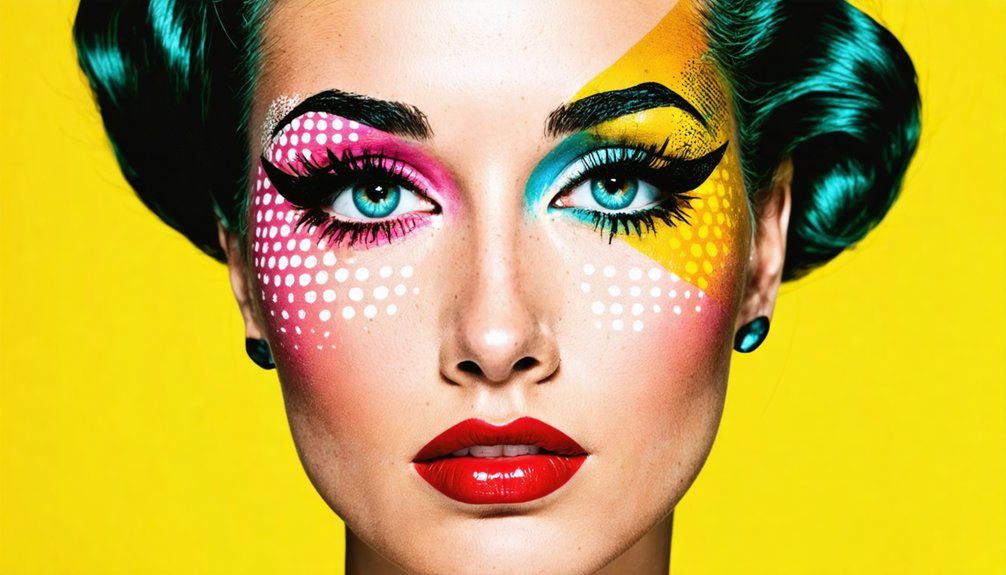
Halftone dots are the signature visual element that instantly transforms face paint into printed comic-book art, and applying them precisely requires both the right tools and deliberate technique.
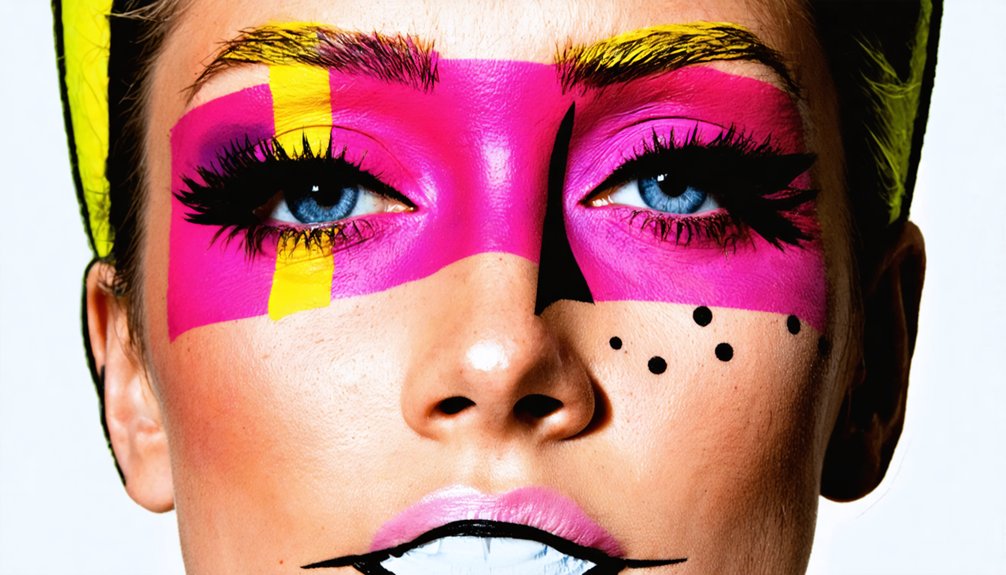
Use a fine round brush or dotting tool to place uniformly sized dots across cheeks, temples, and forehead. Space them consistently to replicate authentic halftone techniques seen in vintage comic panels.
For color layering, apply your base tone first, then introduce contrasting dot colors—red over yellow or blue over white—to build visual depth. Keep dot clusters tighter in shadow zones and looser in highlighted areas.
Beyond dots, you can extend the pop-art effect by adding painted tears, bold facial marks, or speech-bubble outlines near the jaw.
Symmetry and consistent dot sizing elevate the entire look from amateur to professional.
Pick the Right Products Before You Start
Before you apply a single stroke of color, you need to stock your kit with the right foundation and liner products, since the wrong formulas will undermine even the most precise technique.
Opt for a full-coverage, matte foundation or theatrical face paint that builds an opaque, flat canvas mimicking the inked, illustrated skin tones of comic art.
Pair that base with a gel or liquid black liner for crisp outline work, and lock everything down with a setting powder or spray to prevent creasing, smudging, and color migration throughout the day.
Foundation and Face Paint
Product selection sets the foundation for everything else in a comic-book makeup look, and choosing between full-coverage foundation and dedicated face paint will directly affect how sharp, flat, and durable your finish turns out.
Prioritize these application techniques and coverage options:
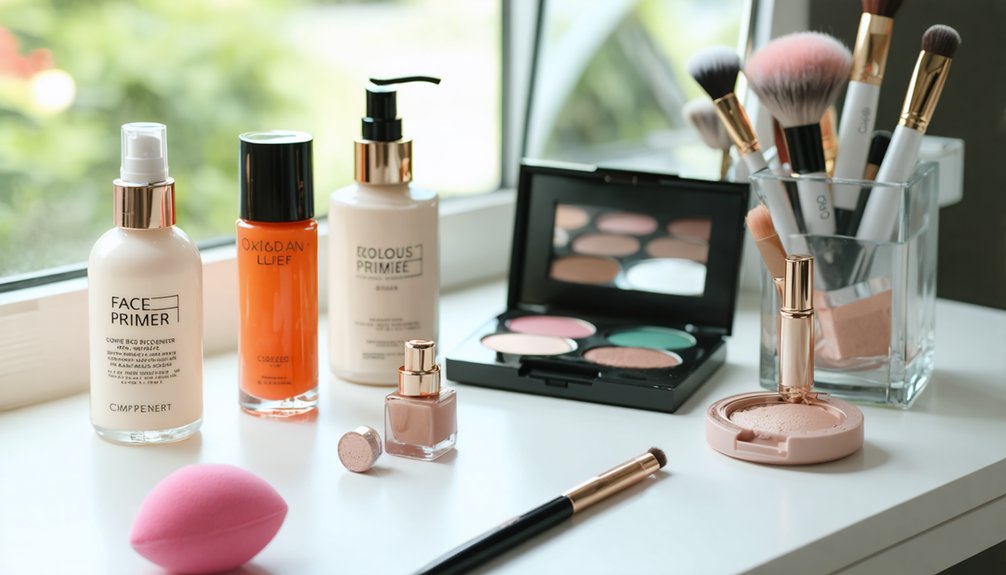
- Skin prep: Apply primer to create a smooth, adhesion-ready surface before any base product.
- Foundation types: Full-coverage formulas eliminate texture and deliver the matte, illustrated canvas comic looks demand.
- Face paint: Alcohol-activated or cream-based paints offer superior opacity over standard foundation.
- Color matching: Prioritize even tone and opacity over precise skin-tone accuracy.
- Setting products: Lock everything down with translucent powder or setting spray to maximize wear and control shine.
Blending methods matter equally—use a damp sponge for seamless coverage without streaking.
Liner and Setting Products
Three liner and setting products determine whether your comic-book look holds its graphic precision through hours of wear or breaks down into smudged, undefined shapes.
Your liner techniques directly impact the sharpness of every outline, jaw definition, and brow stroke you apply. Use black cream paint or gel liner for thick, controlled edges, and switch to a fine-tip liquid liner for detailed facial markings and nose borders.
Both formulas resist fading when layered strategically. Integrate setting sprays after each major step rather than only at the finish — this technique locks cream and powder layers individually, preventing migration.
A finely milled translucent setting powder applied between liner layers further controls shine without softening your graphic edges, keeping every line visually crisp under event lighting or camera flash.
Finish Your Comic Book Character Look With Hair and Costume
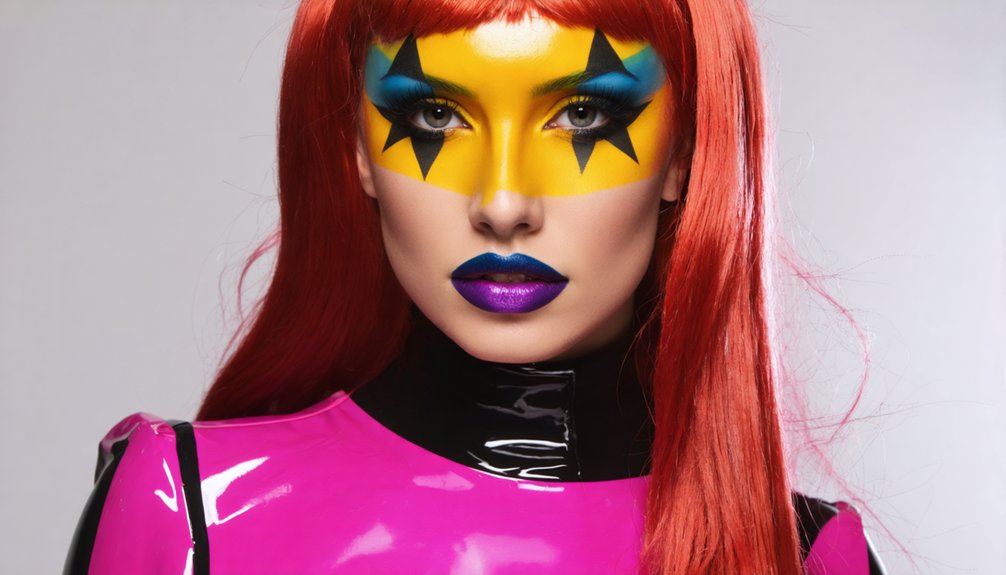
Once your makeup is locked in, the right hair and costume choices pull the entire comic book illusion together. Wig styling, hair color, and costume coordination elevate your look from creative makeup to full visual storytelling.
- Use wigs for precise character silhouettes and consistent hair color accuracy.
- Coordinate themed outfits using color blocking that mirrors your makeup palette.
- Select character accessories that reinforce identity without overwhelming the face.
- Apply hair color spray to extend graphic tones into the hairline seamlessly.
- Prioritize prop selection that communicates your character’s narrative instantly.
These finishing touches unify every element you’ve built. Your makeup creates the illustrated canvas, but your costume and accessories complete the panel.
Treat each component as part of one cohesive, high-impact character design.
Frequently Asked Questions
How Do You Remove Comic Book Face Paint Without Irritating Your Skin?
Use micellar water or an oil-based cleanser for effective face paint removal, especially if you’ve got skin sensitivity. Gently massage it in, avoid harsh scrubbing, then follow with a soothing, fragrance-free moisturizer to restore your skin’s barrier.
Can Comic Book Makeup Techniques Work on Darker or Deeper Skin Tones?
Yes, these techniques absolutely work on deeper skin tones — representation matters here. You’ll boost color vibrancy by layering bright pigments over full-coverage base paint, ensuring bold outlines and pop-art accents pop dramatically against richer complexions.
How Long Does a Full Comic Book Character Makeup Look Typically Last?
With proper prep, you’ll achieve full day durability of eight to twelve hours. Prime your skin, use setting spray, and apply powder strategically to maximize makeup longevity, keeping your comic book look crisp and performance-ready throughout events.
Is Comic Book Makeup Safe for People With Sensitive or Acne-Prone Skin?
You can safely wear comic book makeup with sensitive skin if you prioritize non-comedogenic makeup ingredients, implement targeted acne solutions, and focus on thorough skin prep using gentle, barrier-protecting primers before application.
Can Beginners Achieve a Professional Comic Book Look Without Artistic Drawing Skills?
Yes, you can achieve a professional comic book look using beginner techniques like tracing stencils and tape for clean lines. Follow professional tips: use bold black liner, strong color blocking, and symmetrical outlines to master the style confidently.
References
- https://www.ogleschool.edu/blog/comic-pop-art-makeup-look-tutorial/
- https://familyfocusblog.com/halloween-comic-book-makeup/
- https://www.reddit.com/r/MakeupAddiction/comments/1ln86i2/comicbook_makeup/
- https://camerareadycosmetics.com/blogs/news/comic-book-pop-art-makeup-the-sfx-tutorial-series
- https://www.youtube.com/watch?v=yNQuZ4c34P8
- https://www.instructables.com/Comic-Book-Makeup/
- https://sk.pinterest.com/pin/528961918756838722/
- https://www.youtube.com/watch?v=4kVl5VPBMkc
- https://www.tiktok.com/@creative.cliche/video/7397218143162141995
- https://www.youtube.com/watch?v=hpMvBGwuC78