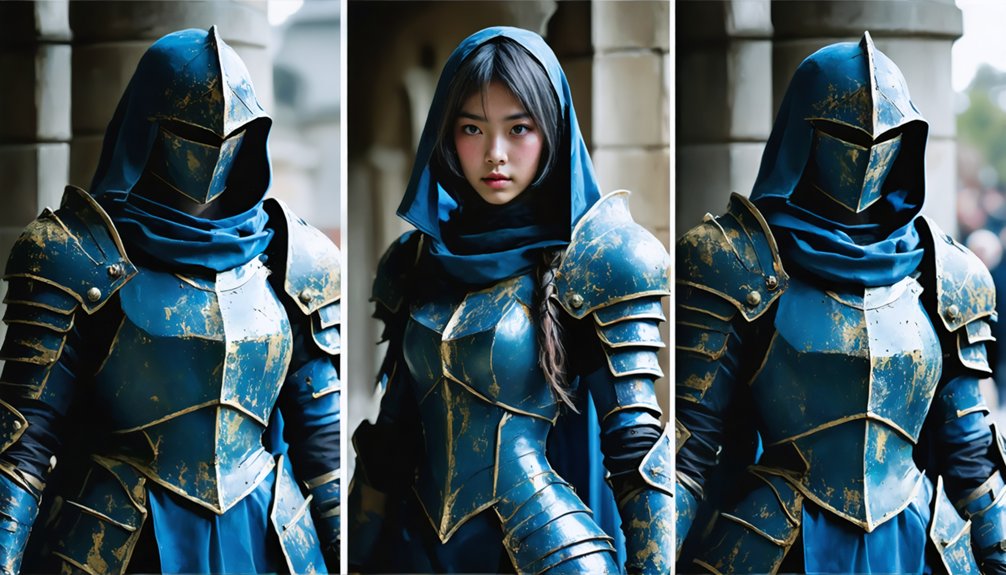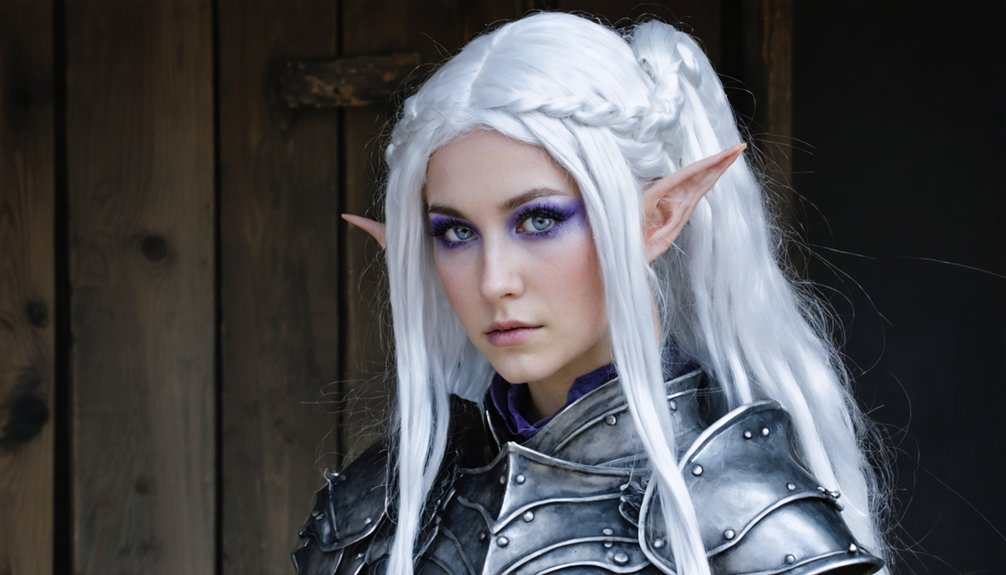
To perfect cosplay character features, you’ll need to master seven core disciplines: thorough character research, precise facial mapping for makeup, accurate wig color-matching and styling, tailored costume construction with quality fabrics, properly scaled prop-building, embodied body language and posture, and meticulous finishing touches like weathering effects and accessory placement. Each layer builds on the last, creating a cohesive, screen-accurate portrayal that’s instantly recognizable. Keep exploring to sharpen every detail of your craft.
Key Takeaways
- Collect reference images from multiple angles to analyze silhouette, proportions, defining features, and visual markers unique to your character.
- Study facial structure carefully, mapping eye distances, brow arches, jawline width, and asymmetrical markings for accurate makeup application.
- Select structured, breathable fabrics with moisture-wicking linings, ensuring precise tailoring and durable seam finishes for costume accuracy.
- Match wig color to canonical references, then build correct volume, parting, and texture using heat styling or teasing techniques.
- Rehearse character-specific postures, gestures, weight distribution, and facial expressions to authentically embody the character’s presence and energy.
Study Your Character Before Building Any Cosplay
Before you cut a single piece of fabric or order any materials, studying your character thoroughly will determine how accurate your finished cosplay looks. Deep character exploration begins with aggressive reference collection — screenshots, official art, and merchandise photography across multiple angles.
Prioritize silhouette analysis to understand iconic proportions, body language, and costume inspiration before sourcing a single component.
Identify defining features including scars, emblems, accessories, and color relationships. Document visual markers like seam placement, trim patterns, and button configurations that sharpen recognition.
Examine hair details carefully, noting volume, part direction, and texture. Research applicable makeup techniques that restructure your facial features toward the character’s design.
Study performance nuances — posture, gestures, expressions — because authentic movement reinforces every technical detail you’ve built into your costume.
Match Your Makeup to the Character’s Face Shape
Before applying a single product, you need to analyze your character’s facial structure by studying reference images from multiple angles and identifying the specific proportions of their cheekbones, jawline, and brow line.
Once you’ve mapped those structural differences, use contour and highlight strategically to shift your own facial geometry toward the character’s defined shapes rather than applying generic contouring techniques.
Complete the transformation by aligning your brow arch, thickness, and tail position to match the character’s eye shape, since brow placement directly controls how the upper face reads at a distance and in photographs.
Analyze Character Facial Structure
When you analyze a character’s facial structure before building your makeup look, you’ll capture the defining facial proportions that make the cosplay instantly recognizable.
Study reference images critically to isolate bone structure, eye placement, and character expression before touching any product.
- Map the distance between the eyes, nose length, and jawline width to identify reshaping priorities.
- Note how the character’s brow arch and eye shape drive their dominant emotional read.
- Identify asymmetrical features, scars, or markings that anchor recognition in photographs.
- Compare multiple angles to avoid building a look that only works from one viewpoint.
These structural observations become your technical blueprint, letting contour, highlight, and shaping products work with precision rather than guesswork.
Contour For Shape Accuracy
Once you’ve mapped the character’s facial proportions and identified which structural features carry the most recognition weight, contour becomes the technical instrument that closes the gap between your face and theirs.
Apply shading methods beneath cheekbones, along the jawline, and beside the nose to recess areas that don’t match the character’s face mapping. Use highlight placement on the brow bone, nose bridge, and cupid’s bow to project structure forward.
Your product selection matters — cream formulas blend into skin more convincingly under photography lighting than powder alone. Work with contouring tools like precise brushes and damp sponges, using blending strategies that eliminate harsh edges.
These sculpting tips, layered with intentional technique, transform contour techniques from basic bronzing into precise facial reconstruction that advances character accuracy.
Brow And Eye Alignment
Brow shape and eye alignment carry more recognition weight than most cosplayers expect, because they anchor the character’s expression and define the emotional register of the face.
Apply brow shaping techniques by blocking your natural brows and redrawing the arch, angle, and thickness to mirror the character’s design precisely.
- Use tinted brow products to shift color without adding bulk
- Apply eye color matching through colored contacts that replicate the character’s iris hue and limbal ring
- Line the upper and lower lash line to reshape your eye’s perceived width and depth
- Layer shadow strategically to shift your eye’s crease position and match the character’s illustrated eye structure
Every adjustment compounds recognition, transforming your face into a readable, emotionally accurate portrait of the character.
Style Your Cosplay Wig to Mirror the Character’s Silhouette
Styling your cosplay wig accurately begins with understanding the character’s silhouette rather than defaulting to a generic hairstyle shape. Match wig color precisely to canonical references, avoiding overly saturated or shiny fibers that read as artificial under convention lighting.
Set wig volume intentionally by teasing internal layers or using wire frameworks to hold structural shapes like spikes or dramatic updos. Establish correct wig parting immediately, since even a slight directional error disrupts front accuracy noticeably.
Build wig texture through careful brushing, heat styling, or product application to replicate the character’s specific hair finish. Prioritize wig realism by adding subtle lowlights or hand-painting depth into flat-toned fibers.
Secure wig accessories exactly as the character wears them. Commit to consistent wig maintenance throughout wear to preserve styling integrity during extended events.
Tailor Your Cosplay Costume for a Polished Look
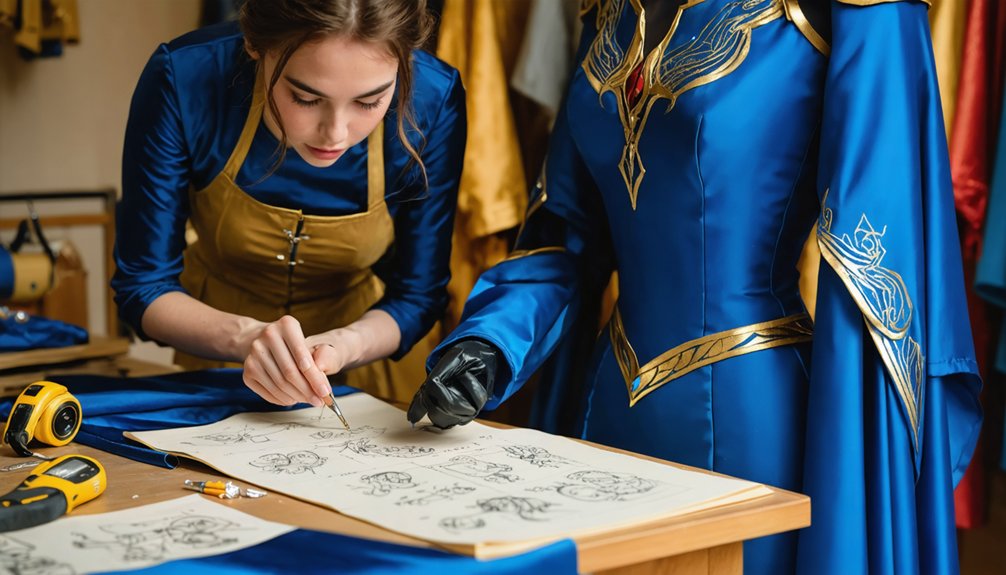
Tailor your costume to fit your body precisely, because an ill-fitting garment undermines even the most accurate design details and breaks the character illusion immediately.
Select structured, heavier fabrics for coats, uniforms, and capes where the character’s silhouette demands clean drape and shape retention under convention conditions.
Finish every hem, seam, and raw edge with care, since loose threads, puckered stitching, and unlined panels signal rushed construction and reduce your overall presentation quality.
Achieve the Perfect Fit
Even the most meticulously crafted costume loses its impact when the fit is off, so tailoring your cosplay to your body is one of the most important technical steps you’ll take.
Precise silhouette shaping and thoughtful fabric selection transform a generic pattern into a character-accurate build.
- Take body measurements before cutting any pattern piece to eliminate guesswork
- Add structured shoulder padding or internal boning to match the character’s proportions exactly
- Press every seam with an iron to sharpen edges and eliminate construction softness
- Finish hems, linings, and raw edges to prevent visible flaws that undermine polished photography
These adjustments aren’t cosmetic—they’re structural decisions that define how your costume reads from every angle, under every lighting condition, and across every photo taken.
Choose Quality Fabrics
Fit sets the foundation, but fabric determines how that foundation performs. Selecting materials with strong fabric durability prevents premature wear during long convention days.
Prioritize texture variety when replicating armor, silk robes, or battle-worn leather because each surface reads differently under photography lighting. Nail color matching by testing swatches against official reference images rather than relying on monitor display alone.
Consider weight distribution carefully — heavier structured fabrics suit coats and capes, while lighter materials work better for layered underlayers.
Evaluate the stretch factor before cutting patterns, particularly for fitted bodysuits or movement-heavy costumes. Breathability options matter greatly during extended wear, so incorporate moisture-wicking linings strategically.
Refine your pattern selection to align with the character’s canonical textures, and use intentional fabric layering to build dimensional, screen-accurate depth.
Polish Seams and Edges
Polished seams and finished edges separate a professional-looking cosplay from one that reads as rushed or unrefined. Apply seam techniques like French seams or flat-felled seams for edge finishing that holds under repeated wear. Strong construction methods and precise stitch details create visual consistency across every panel.
- Match your edge finishing to the fabric blending requirements—stretch fabrics demand zigzag or serged edges, not straight stitching.
- Use tailoring tips like pressing seams open before topstitching to eliminate bulk and sharpen silhouette lines.
- Source quality craft supplies including seam tape, bias binding, and interfacing to reinforce internal structure.
- Inspect every construction method under bright light before convention day to catch fraying, puckering, or misaligned stitch details early.
Precision here transforms good cosplay into exceptional cosplay.
Build Cosplay Props That Match the Character’s Real Scale
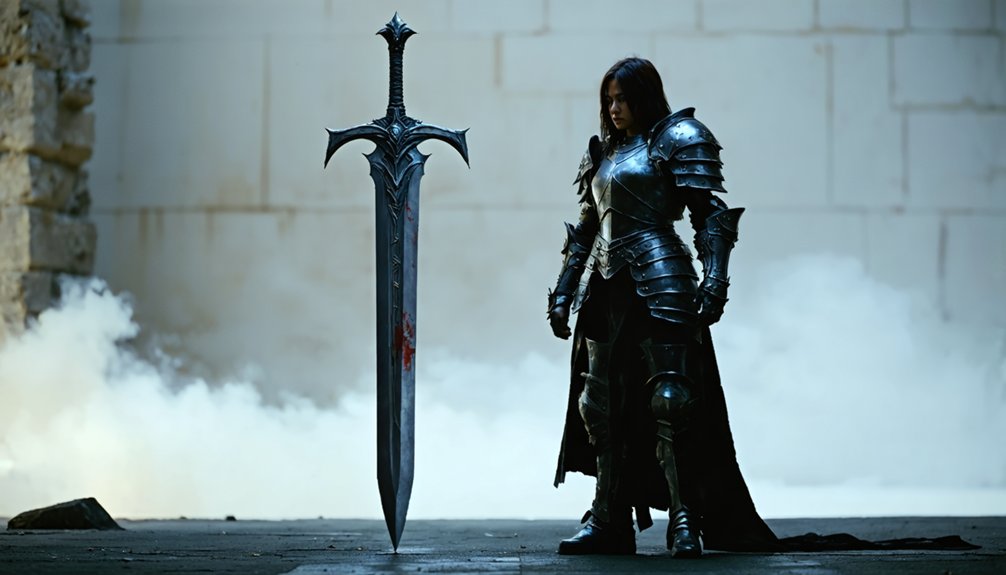
Scale accuracy separates a convincing prop from one that reads as an obvious replica. Pull character references from multiple angles and extract scale measurements by comparing props against the character’s body height, hand size, and costume proportions.
These ratios determine whether your finished build will read as authentic or undersized.
Select prop materials that match the weight, texture, and finish visible in canonical design details. Apply crafting techniques suited to each material — cutting, laminating, casting, or carving — to preserve visual accuracy across every surface.
Incorporate functional use considerations when the prop needs to open, collapse, or light up during performance.
Finish with weathering effects calibrated to the character’s timeline. Scratches, oxidation, and wear patterns applied with precision elevate the prop beyond a clean fabrication into something that genuinely belongs in the character’s world.
Use Body Language to Bring Your Cosplay to Life
Embodying a character through body language transforms a well-constructed costume into a complete performance. Movement dynamics and character quirks distinguish a static display from an immersive portrayal that resonates with audiences.
A costume worn without character is just fabric — true cosplay lives in how you move and breathe the role.
Study how your character walks, reacts, and holds tension in their posture. Rehearse signature stances and expressions before convention day.
Use these techniques to evoke emotional connection:
- Mirror the character’s emotional default state — relaxed confidence, guarded tension, or explosive energy
- Isolate signature gestures tied to iconic story moments
- Control weight distribution to reflect the character’s physical presence and fighting style
- Sync facial expressions with your pose to project consistent personality
Precision in movement elevates your cosplay from costume to character embodiment.
Finishing Touches That Sharpen Screen Accuracy
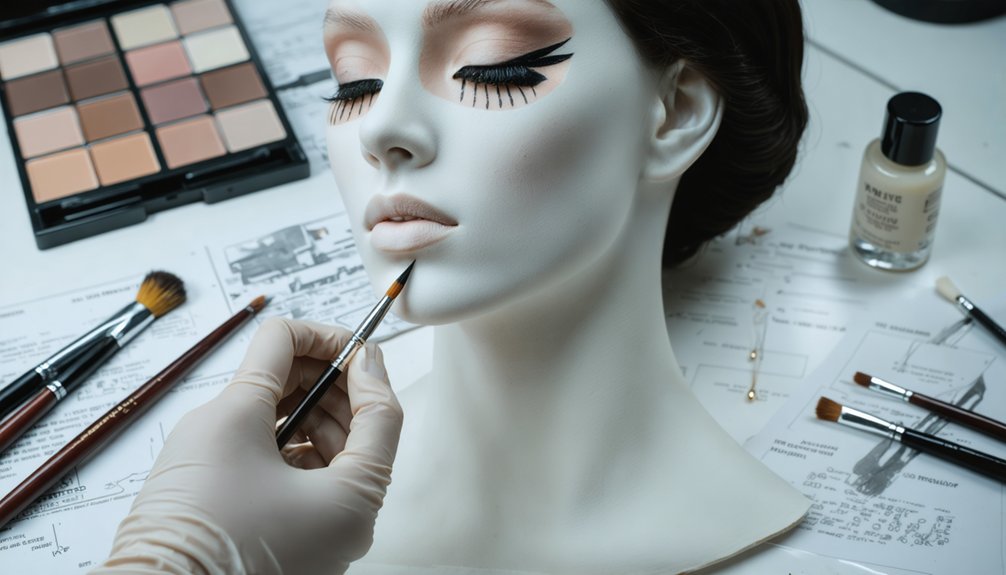
The smallest details carry the most weight when it comes to screen accuracy. Finishing details like precise accessory placement, correctly weathered props, and intentional costume embellishments separate competent cosplay from exceptional work.
Study character nuances closely — subtle weathering on armor, worn leather edges, and faded fabric patches signal authenticity rather than a freshly assembled build.
Prop authenticity depends on matching scale, material texture, and aging accurately to the source material. Visual consistency across every costume element reinforces recognition immediately.
Don’t neglect performance-based finishing. Expression practice sharpens how your face communicates character personality, while movement fluidity and pose dynamics complete the presentation.
A technically precise costume loses impact when your body language contradicts the character’s energy. Align every layer — construction, props, and performance — for full screen accuracy.
Frequently Asked Questions
How Do You Protect Your Cosplay Costume During Long Convention Days?
Pack a repair kit, use fabric care sprays, and layer protective coatings on props. You’ll want to account for weather considerations by sealing seams and carrying emergency supplies to maintain your costume’s integrity throughout demanding convention days.
What Budget Range Should Beginners Expect When Starting Their First Cosplay?
You’ll typically spend $50–$150 starting out. Prioritize smart fabric choices, leverage online resources for patterns, and invest in essential crafting tools. Follow budget tips like thrifting base pieces to stretch every dollar effectively.
How Do You Safely Store Finished Cosplay Pieces Between Events?
Imagine your foam armor warping after improper storage — you’d lose hours of work. Use breathable garment bags and acid-free boxes as storage solutions, ensuring material preservation by controlling humidity and keeping pieces away from direct sunlight between events.
Can Beginner Cosplayers Compete in Professional Cosplay Competitions Successfully?
You can compete successfully using smart beginner tips like mastering one standout detail and studying judges’ criteria. Apply competition strategies such as refining costume fit, practicing confident poses, and showcasing innovative construction techniques that demonstrate your dedication and skill.
How Do You Handle Costume Malfunctions or Damage Mid-Convention?
When unexpected wardrobe moments strike, you’ll want an emergency repair kit handy. Carry safety pins, fabric tape, and a needle for swift costume maintenance, keeping your look convention-ready throughout the day.
References
- https://starstruckpanda.com/how-to-match-character-features-for-cosplay-accuracy/
- http://jaroukaparade.blogspot.com/2015/08/how-to-improve-your-cosplay.html
- https://www.reddit.com/r/CosplayHelp/comments/1eryaq4/how_to_make_a_cosplay_look_more_professional/
- https://www.backstage.com/magazine/article/how-to-cosplay-76975/
- https://www.lancereis.com/photography-tips-for-beginners/7-key-elements-to-a-viral-cosplay-photo
- https://www.pointsincase.com/articles/7-most-important-cosplays
- https://www.youtube.com/watch?v=AfKrTUcqxAE
- https://www.facebook.com/transformazing.official/posts/best-cosplay-tips-to-look-like-your-favorite-character-effortlessly/647114237679549/
- https://www.facebook.com/groups/ozineevents/posts/1504366294290764/
- https://www.emmysmummy.com/top-10-iconic-cosplay-character-looks-and-how-to-achieve-them