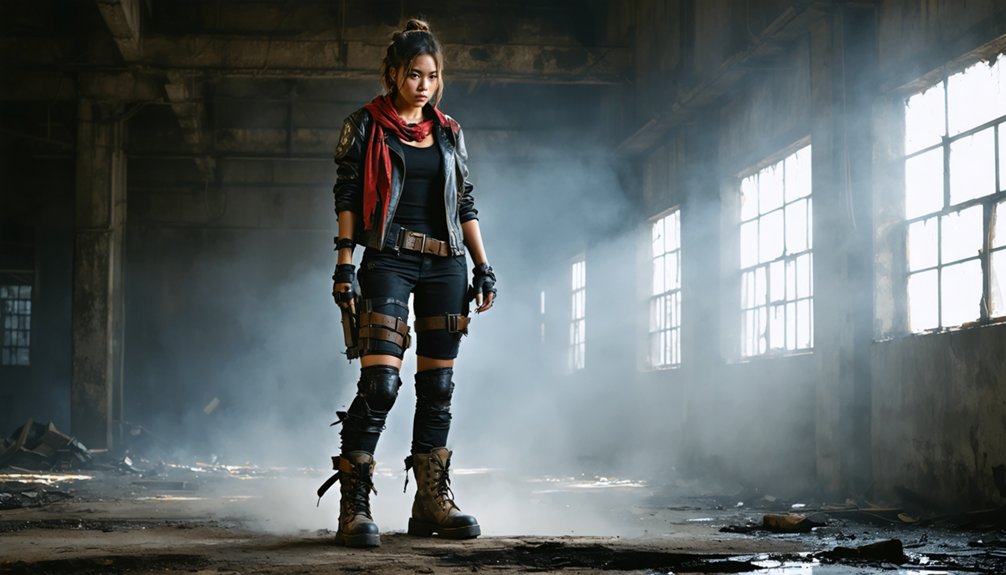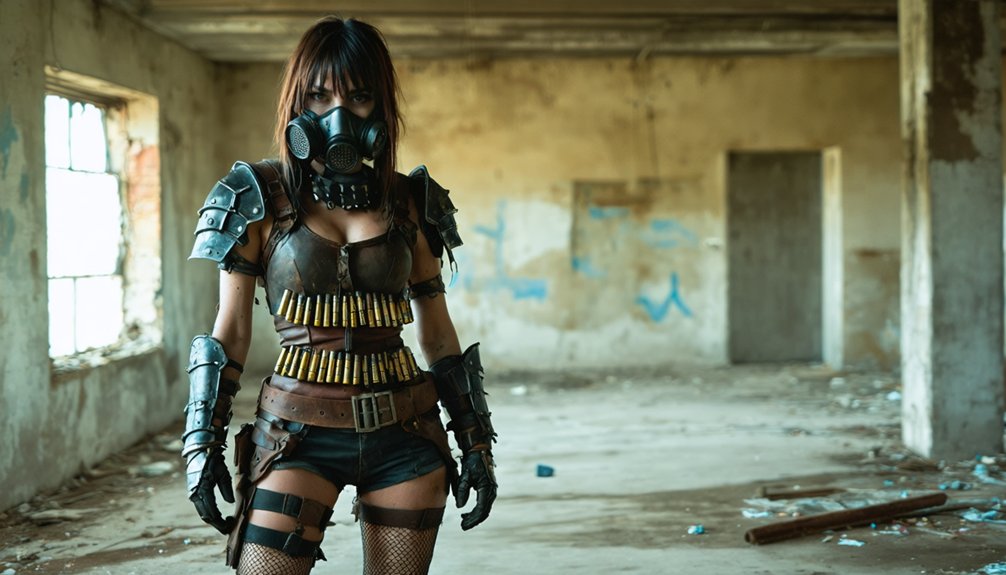
Start by choosing your character archetype—scavenger, raider, or tech-forward engineer—since it shapes every outfit decision you’ll make. Build your base with distressed tees, worn flannels, and faded earth tones, then layer in leather bracers, chest harnesses, and mismatched buckles for that salvaged authenticity. Weather everything at natural stress points like seams and elbows for realistic wear. Keep construction durable so your costume survives the full event, and stick around because there’s much more to unpack.
Key Takeaways
- Choose an archetype like scavenger, raider, or noble warrior to guide your outfit’s aesthetic, accessories, and overall visual storytelling.
- Build a layered base using distressed tees, flannels, and worn jackets in neutral earth tones like olive, gray, and brown.
- Add leather armor accents, chest harnesses, fingerless gloves, and mismatched pouches to reinforce a scavenged, survivalist appearance.
- Weather your costume by sanding seams, fading fabric gradually, and aging leather accessories at natural stress points for authenticity.
- Reinforce high-stress seams at shoulders, knees, and waist to ensure your costume stays structurally intact throughout the entire event.
Choose Your Post-Apocalyptic Character Type First
Before you start distressing denim or hunting down leather bracers, deciding on a character type shapes every outfit choice that follows. Each archetype pulls the aesthetic in a distinct direction.
Your character type is the foundation — every fabric choice, accessory, and distressing decision builds outward from that core.
A scavenger leans into asymmetric layers and salvaged pouches. A raider demands heavier structure, aggressive hardware, and worn leather. A wasteland mechanic benefits from utility vests, tool loops, and grime-treated workwear.
If you’re drawn toward a noble warrior persona, structured armor accents and purposeful silhouettes carry that authority convincingly. Prefer something more tech-forward? Integrating futuristic gadgets like wrist-mounted devices or modded gear shifts the look toward a dystopian engineer or scout.
Your character type becomes the filter for every decision — color palette, distressing intensity, accessories, and layering logic all align once you’ve committed to that core identity.
Build Your Base With Tattered Layered Clothing
Once your character type is locked in, the layered base becomes your most powerful tool for visual storytelling. Post apocalyptic fashion thrives on strategic assembly — distressed tees, flannels, hoodies, and worn jackets stacked to create that unmistakable survivor silhouette.
Stick to neutrals: black, gray, olive, brown, and faded earth tones. Bright colors break the illusion instantly. Fray your hems, roughen your edges, and introduce deliberate holes — but stay controlled. Over-distressed fabric tears mid-event.
Asymmetry elevates realism. One repaired sleeve, a mismatched panel, or an improvised hem signals salvageable materials stitched together under pressure, not a costume bought off the rack.
Prioritize breathable, mobility-friendly fabrics too. You’ll be walking, posing, and wearing this for hours — comfort isn’t optional, it’s tactical.
Add Leather Armor Accents and Scavenger Accessories
With your layered base locked in, leather is what separates a convincing wasteland survivor from a Halloween approximation. Prioritize leather aging through light abrasion and surface treatment, focusing on edges, creases, and stress points where real wear accumulates. A scuffed jacket, bracer, or chest harness instantly signals scavenged protection rather than costume store convenience.
Leather aging is the difference between wasteland survivor and costume store approximation.
Scavenger details elevate the entire build. Fingerless gloves, mismatched buckles, taped repairs, and asymmetric shoulder straps communicate improvisation without screaming “costume.” Add pouches and wraparound belts to reinforce functional storytelling.
Faux-leather alternatives deliver comparable visual impact at lower cost and are easier to maintain across multiple events.
Every accent should look assembled, not purchased. When each piece reads as salvaged and purposeful, your outfit stops being cosplay and starts becoming a character.
Weather Your Post-Apocalyptic Cosplay for a Worn-In Look
Weathering transforms a costume from assembled to lived-in, and the technique matters as much as the materials. Start fabric distressing at natural stress points—seams, elbows, hems—since that’s where real wear occurs first.
Sand edges in deliberate strokes rather than attacking fabric randomly, and layer your effects gradually so you can assess depth before committing. Fading works best applied in stages, building a sun-bleached quality that reads as authentic rather than manufactured.
Accessory weathering follows the same logic. Scuff leather bracers and belt surfaces with light abrasion, then evaluate before adding stronger treatments. Acetone works for aging leather accents but requires gloves and eye protection. Dry completely between each pass.
The goal isn’t destruction—it’s controlled storytelling through every scratch, fade, and frayed thread.
Make Your Costume Durable Enough to Last the Full Event
A distressed costume that falls apart by noon defeats the entire point, so durability has to be built into the design from the start. Reinforce high-stress seams at the shoulders, knees, and waistband before the event, not after the first tear appears. Think of your outfit the way a survivor thinks about radiation protection or food storage — redundancy and reliability matter more than aesthetics alone.
Choose fabrics that handle repeated movement without shredding further than intended. Secure loose patches, straps, and buckles with reinforced stitching or strong adhesive. Keep distressing controlled so structure stays intact through crowds, long walks, and photo sessions.
A costume that holds together communicates intentional design, which ultimately reads stronger than one visibly disintegrating throughout the day.
Frequently Asked Questions
Can Post-Apocalyptic Cosplay Outfits Be Worn in Hot Weather Comfortably?
You can absolutely rock post-apocalyptic cosplay in hot weather! Choose breathable fabrics like cotton or linen for your layers, then incorporate lightweight armor accents to maintain that rugged aesthetic without overheating during intense, crowd-filled events.
Are There Budget-Friendly Options for Building a Wasteland Costume?
You don’t need a fortune to look devastatingly apocalyptic! Raid thrift stores, repurpose recycled materials, and craft DIY accessories like pouches and bracers. Distress denim yourself, layer neutrals, and you’ve built an authentically rugged wasteland costume for almost nothing.
Which Events Are Most Popular for Post-Apocalyptic Cosplay Themes?
You’ll find post-apocalyptic themes thriving at Comic-Con, Dragon Con, and LARP events. Pair futuristic accessories with rugged footwear, and you’re perfectly equipped to dominate wasteland-themed Halloween conventions and immersive roleplay gatherings where survivor aesthetics consistently trend.
Can Children Wear Post-Apocalyptic Cosplay Outfits Safely at Events?
Yes, you can dress kids in post-apocalyptic cosplay while prioritizing children’s safety and costume comfort. Choose breathable layers, avoid sharp accessories, skip heavy distressing, and guarantee mobility-friendly fits that’ll survive a full event day effortlessly.
How Do I Store My Post-Apocalyptic Costume Between Events Properly?
You’ve survived the apocalypse, but poor costume storage won’t. For outfit preservation, hang layered pieces separately, keep leather away from humidity, and store accessories in labeled pouches to guarantee your costume storage stays event-ready.
References
* https://www.youtube.com/watch?v=Psg-sU2Uqsc