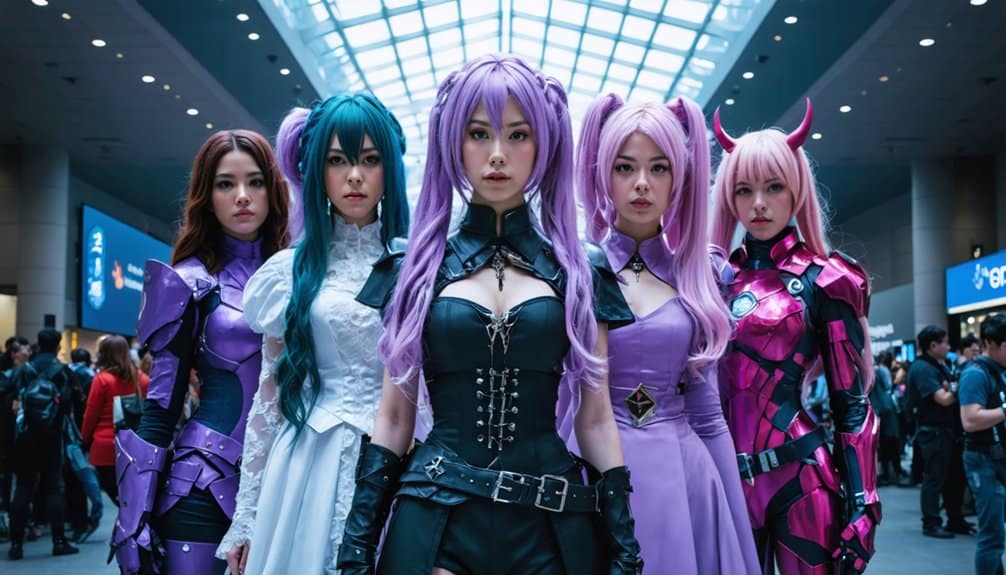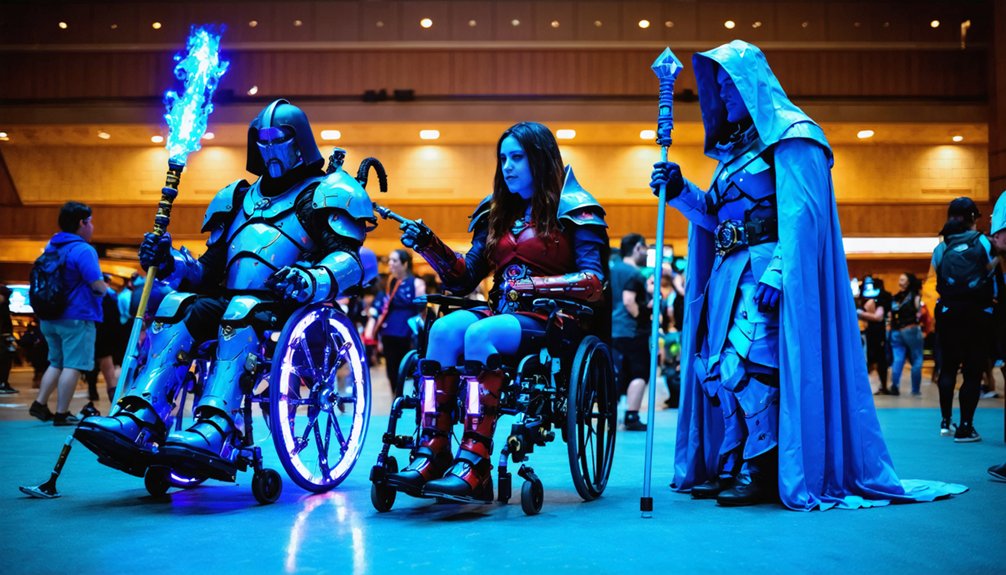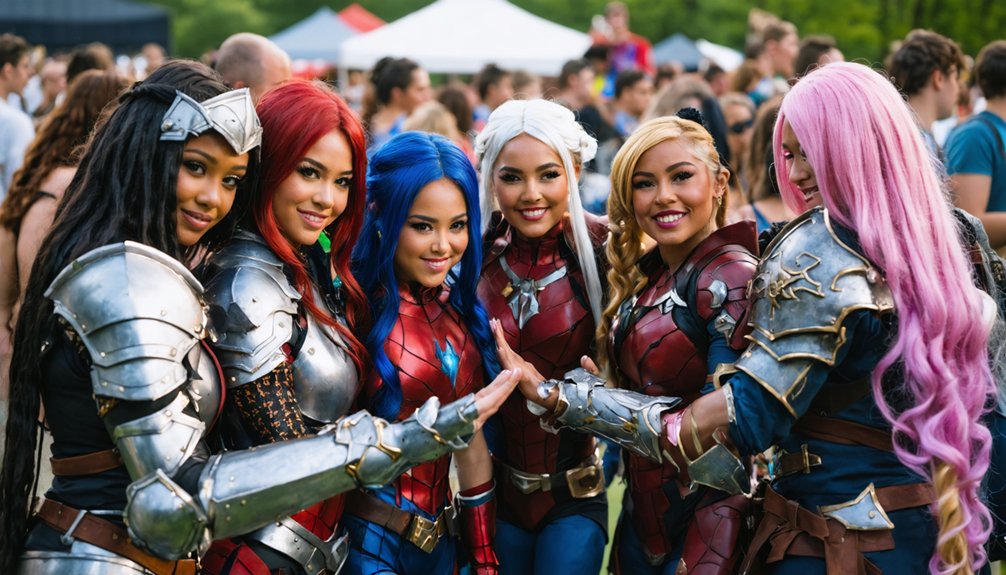
You’ll excel at genderbent cosplay by maintaining core character elements like signature colors and accessories while thoughtfully adapting gender presentation. Research both canon materials and fan interpretations, use makeup to enhance character-defining features, and always respect artist permissions when recreating designs. Avoid oversexualization that contradicts the character’s established traits, and clearly communicate your concept through design choices. Engage with community feedback to refine your approach, and showcase your craftsmanship on social platforms to build understanding. The following practices reveal how to balance creative freedom with meaningful representation.
Key Takeaways
- Maintain character’s signature colors, accessories, and silhouettes to ensure immediate recognition while adapting clothing for your gender presentation.
- Research both official materials and fan interpretations to understand community expectations and existing representation within the canon.
- Use makeup and styling to emphasize character-defining features like eye shape, distinctive marks, and expressions rather than gender stereotypes.
- Always obtain written permission from fan artists before recreating their genderbent designs and provide proper attribution at conventions.
- Preserve the character’s core personality traits and narrative identity rather than defaulting to sexualized or stereotypical gender presentations.
Maintain Core Character Elements While Adapting Gender Presentation
When you’re creating a genderbent cosplay, your primary goal should be preserving the character’s visual identity while adapting their gender presentation. Start by analyzing signature color palettes, iconic accessories, and recognizable silhouettes that define your character beyond gender boundaries. These core visual elements guarantee immediate identification while allowing creative freedom in your interpretation.
You’ll need to strategically adapt clothing through functional modifications—converting garments while maintaining thematic consistency. Consider how neckline adjustments, layering techniques, and fabric choices can support gender fluid interpretations without compromising the character’s essence. Remember that many franchises have canonical cross dressing history, providing precedent for your creative exploration.
Makeup application offers significant flexibility for personal expression. Experiment with techniques that emphasize character-defining features while aligning with your genderbent vision, creating authentic representation that resonates within the community.
Research Canon and Fan Interpretations Before Designing Your Costume
Before you design your genderbent costume, examine both official character materials and established fan interpretations to understand community expectations. You’ll find that some characters have canon gender variants or alternate designs that provide valuable reference points for your transformation.
Analyzing popular fan designs within your specific cosplay community reveals which gender-swapped elements resonate with audiences and which approaches might face resistance at conventions.
Study Official Gender Variants
As you prepare your genderbent cosplay design, understanding the distinction between sex and gender forms the foundation for authentic character interpretation. Research shows 82% of experts agree these categories require independent assessment.
You’ll want to examine transgender representation within your chosen canon by identifying how characters express gender identity beyond binary classifications. Consider cultural influences that shape gender presentation, including roles, norms, and power relations specific to your character’s universe.
Apply the two-step method when analyzing source material: note both biological markers and gender expression separately. This approach reveals nuanced interpretations—whether a character identifies as nonbinary, genderfluid, or agender. Your design gains authenticity when you recognize gender as a social variable encompassing identity, expression, and community relationships rather than limiting creativity to male-female swaps.
Analyze Popular Fan Designs
Your theoretical framework gains practical dimension through examining how fan communities have already reimagined characters across gender lines. Studying established genderbent design influences reveals patterns that’ll inform your approach. Gender interpretation variations span minimal adjustments—like adding lipstick and long hair—to complete reconceptualizations. Popular examples demonstrate community acceptance thresholds and creative boundaries.
Key analysis points for fan designs:
- Sheik’s existing androgynous design makes genderbent interpretations particularly embraced
- Masculine prince-type Zelda variations show successful total reconceptualization
- Yatsuhashi’s tight bun replacing shaved hair demonstrates thoughtful gender code substitution
- Heavy armor preferences reveal comfort zones worth understanding
- Convention exposure (64% attend 3+ events yearly) accelerates design trend awareness
Research canon materials first, then explore fan interpretations to identify which gender interpretation variations resonate most authentically with both source material and community values.
Use Makeup and Styling Techniques to Bridge Gender Expression
Character archetype considerations guide your approach—select neutral eyeshadows for dimensional lids, avoiding eyeliner unless your character specifically wears makeup. You’ll maintain credibility by choosing lip shades close to your natural color, minimizing fullness.
Enhance specific features like moles, freckles, and lower eyebrows by adding product underneath. Quality products matter, particularly for vibrant base applications. Match characters to your face shape rather than limiting yourself to skin tone constraints.
Balance Creative Freedom With Character Recognition
Three core principles anchor successful genderbent cosplay: preserving your character’s essential identity, maintaining visual recognizability, and honoring the original design’s intent. You’ll navigate character identification challenges while respecting audience perceptions through thoughtful design choices that celebrate innovation without sacrificing recognition.
Key balance strategies include:
- Preserve signature color schemes, emblems, and accessories that enable instant character identification
- Maintain equivalent clothing coverage and formality levels across gender interpretations
- Adapt silhouettes to your body type while retaining essential costume elements
- Keep personality traits and narrative roles consistent regardless of gender presentation
- Reference canon genderbent versions or synthesize credible fan interpretations for design coherence
Your creative reimagining succeeds when audiences immediately recognize the character while appreciating your innovative gender interpretation—authenticity to character essence matters more than physical replication.
Clearly Communicate Your Genderbent Concept Through Design Choices
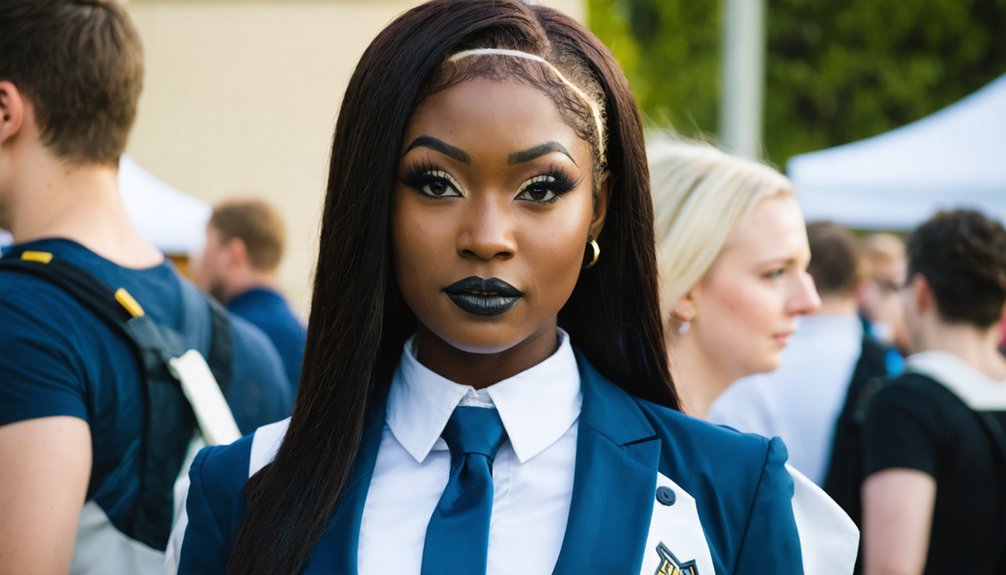
When audiences encounter your genderbent cosplay, they’ll process multiple visual signals simultaneously to identify both the character and your creative interpretation. Maintain signature color schemes as your primary recognition anchor—orange hair and iconic hues guarantee instant identification regardless of silhouette changes.
Strategic design choices clarify your costume context: replace overalls with maxi dresses in character colors, adjust accessory placement while preserving essential elements, and select hairstyles that communicate gender presentation within canonical constraints.
Your character portrayal strengthens through intentional makeup application—masculine presentations benefit from thick eyebrows and jawline contouring, while feminine interpretations utilize conventional makeup standards. Photography angles reinforce your design decisions: above-angle shots enhance feminine coding, below-angle shots establish masculine presence.
These coordinated visual strategies ensure your genderbent concept communicates clearly while honoring character essence.
Respect Artist Permissions When Basing Designs on Fan Art
Although fan artists create stunning genderbent designs that inspire your next cosplay project, their creative interpretations remain protected under copyright law as derivative works. You must obtain permission directly from the artist before recreating their designs, preferably through written documentation. This practice builds community trust and respects creative contributions.
Fan art genderbent designs are derivative works requiring artist permission before cosplay recreation, ensuring community trust and legal protection.
Essential steps for ethical fan art usage:
- Contact the artist directly via their platform to request cosplay permission
- Properly attribute fan art by crediting the creator in convention appearances and social media posts
- Document all permissions in writing to protect both parties
- Add original variations to distinguish your interpretation from the source material
- Negotiate compensation if the artist requests payment for commercial use
This transparent approach strengthens cosplay communities while honoring artistic innovation.
Avoid Oversexualization That Contradicts Original Character Traits
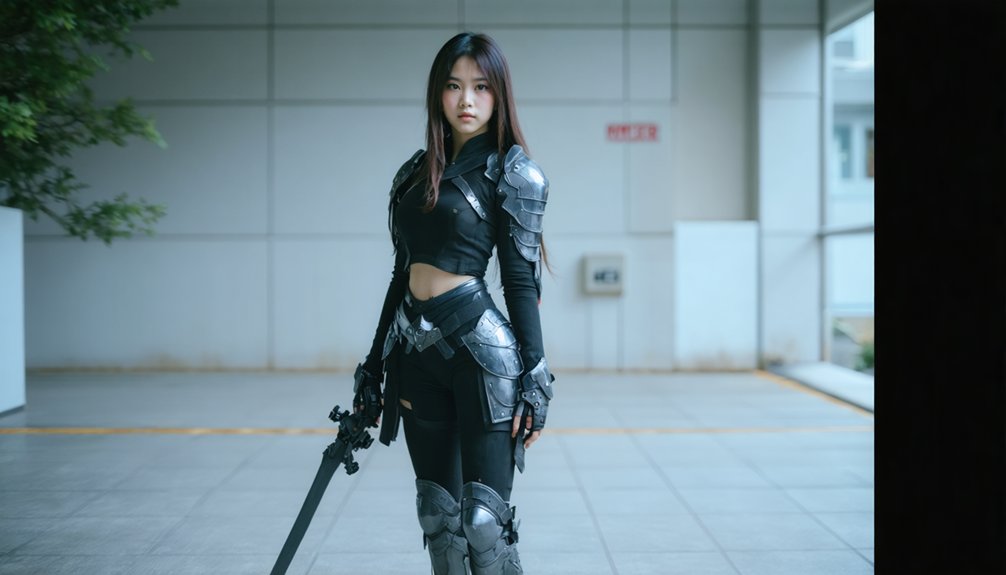
Genderbent cosplay transforms characters across gender presentations, yet this creative freedom carries responsibility to preserve core character traits rather than impose sexualization that contradicts source material. You’ll strengthen authentic representation by examining original depictions before redesigning costumes.
Research shows self-objectification increases when performers engage in sexualized presentations, creating complex psychological outcomes despite perceived empowerment.
Your community benefits when you distinguish between characters designed with inherent sexuality versus those reimagined through external sexualization. Body positivity thrives when gender-swapped interpretations honor established personas rather than defaulting to revealing modifications.
Consider whether your design choices align with the character’s narrative identity or simply replicate normative expectations about gendered presentation.
Educate Others on the Difference Between Genderbending and Crossplay
Clear terminology strengthens community understanding and prevents harmful conflation of distinct cosplay practices. When you educate others about genderbending versus crossplay, you promote diversity in character gender representations while building inclusive cosplay communities.
Genderbending modifies the character’s design to reflect your gender identity, creating altered versions like Fem!Joker. Crossplay maintains the character’s canon appearance while you present as a different gender during performance.
Use these approaches to educate effectively:
- Share the mnemonic: “Change the character’s gender = genderbending; change the cosplayer’s gender = crossplay”
- Provide visual examples comparing modified designs with unaltered character portrayals
- Correct mislabeling respectfully when community members confuse terms
- Emphasize that neither practice equates to cross-dressing or transgender identity
- Create reference guides distinguishing character alteration from cosplayer presentation
Engage With Community Feedback to Refine Your Interpretation

You’ll strengthen your genderbent cosplay by actively seeking constructive critiques at conventions, where face-to-face feedback reveals what resonates with fellow fans. Adapting your interpretation through online discourse—on forums, social media, and community platforms—lets you test design choices and refine details based on collective input.
Iterating your work based on this reception creates a collaborative process that honors both your creative vision and the community’s evolving standards.
Seek Constructive Convention Critiques
- Participating in masquerade post-performance reviews to identify specific strengths and improvement areas
- Engaging photography circles for immediate peer input on costume details and character portrayal
- Recording judge notes from contests to enhance future design iterations
- Using convention apps to gather anonymous feedback while filtering toxic comments
- Building relationships with fellow cosplayers who provide ongoing, respectful guidance
Focus on actionable suggestions around construction techniques and character interpretation rather than appearance-based criticism.
Adapt Through Online Discourse
While in-person feedback offers immediate responses, digital platforms provide broader perspectives that help you refine your genderbent interpretations over time. Platforms like Cosplay Amino and YouTube host thousands of tutorials and discussions that promote artistic expression across gender presentations. You’ll find resources for masculine makeup techniques and genderbent adaptations, though feminine tutorials remain scarce.
Pay attention to community patterns: backhanded compliments labeling unintended looks as “girl versions” signal when clarity’s needed. Make your genderbent intent obvious through deliberate styling choices. Engage with non-binary cosplayers sharing their experiences to amplify underrepresented voices and expand your understanding. Younger community members increasingly view gender as irrelevant to participation, creating supportive spaces where you can experiment. Let discourse guide your refinements while staying true to your vision.
Iterate Based on Reception
Feedback collection transforms genderbent cosplay from static presentation into evolving artistic practice. You’ll distinguish genuine constructive criticism from discriminatory commentary by focusing on craftsmanship showcasing—technical feedback about construction, materials, and execution provides actionable improvement paths.
When creative process highlighting receives positive engagement, you’ve identified elements worth expanding in future iterations.
Refinement strategies based on community reception:
- Separate body-based criticism from legitimate costume construction feedback
- Track which character interpretations resonate across different cultural contexts
- Document praise-to-criticism ratios for specific design choices
- Prioritize feedback addressing craft elements over comments targeting your identity
- Adapt techniques that multiple community members identify as successful
You’re maneuvering multiple evaluation frameworks simultaneously, so select criticism aligned with your artistic goals rather than pursuing universal acceptance—an unrealistic standard given varying audience expectations and cultural contexts.
Showcase Your Craftsmanship and Creative Process on Social Platforms
Social platforms fundamentally reshape how genderbent cosplayers connect with audiences and fellow creators. Document your transformation journey from initial sketches through final convention reveals, enabling digital authentication of your unique interpretation. Share prop-making tutorials and costume construction techniques that demonstrate technical skill while inviting audience empowerment through educational content.
Platform-specific strategies maximize reach: Instagram showcases visual progress through transformation posts, TikTok captures brief construction highlights, and Twitter facilitates technique discussions. Hashtags like #cosplay and #genderbend expand visibility within innovation-seeking communities. During Covid-19, virtual conventions proved documentation creates safe spaces for gender exploration beyond daily norms.
Your creative process becomes policy for inclusive representation. Closed groups like SheProp offer harassment-free environments for sharing methods, while multiplatform integration through Patreon supports sustainable craftsmanship. This transparency builds communities where 64% female audiences actively participate.
Frequently Asked Questions
Can Non-Binary Cosplayers Participate in Genderbent Cosplay Effectively?
You’ll thrive in genderbent cosplay as a non-binary person, creating powerful non binary character representation while strengthening the inclusive cosplay community. You’re reshaping narratives, challenging gender binaries, and building bridges that welcome diverse expressions beyond traditional constraints.
How Do I Handle Negative Reactions to My Genderbent Interpretation?
You’ll weather criticism’s storm by prioritizing quality execution over approval—dealing with unsolicited feedback requires confidence in your craft. Focus on managing cosplay expectations through supportive communities that value creativity, while documenting your artistic process to inspire fellow innovators.
Should I Use Different Pronouns When Portraying My Genderbent Character?
You’re free to adopt your genderbent character’s pronouns while in costume, respecting character’s identity. However, clearly communicate this choice when addressing pronouns at events, ensuring everyone understands you’re honoring your creative interpretation while fostering inclusive interactions.
Are Certain Character Types Inappropriate for Genderbending in Cosplay?
Yes, you’ll want to avoid genderbending trans and non-binary characters, as it risks tokenization and erasing their identity. Respecting character integrity means preserving core traits—especially marginalized identities—while encouraging your creative innovation elsewhere.
What if My Genderbent Design Becomes More Popular Than Expected?
Scale thoughtfully by exploring cosplay monetization strategies like pattern sales or commissions while maintaining authenticity in interpretations. You’ll build community trust by crediting inspiration sources, engaging supportive fans, and staying true to your original creative vision throughout growth.