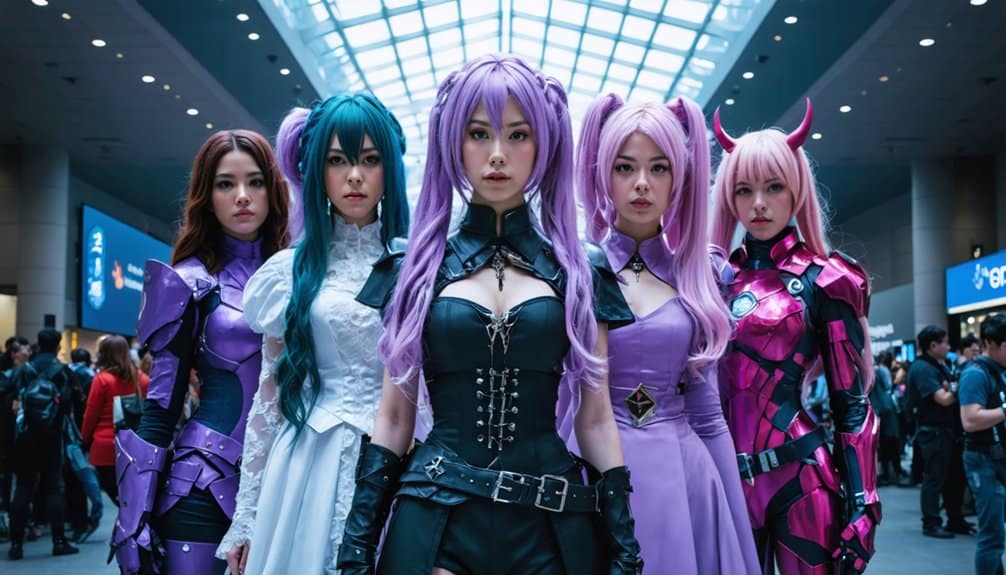
For the best crossplay and gender-fluid cosplay results, you’ll want to choose a character you genuinely connect with, then work with your natural proportions rather than against them. Use body shaping tools like padding and binders, practice contouring techniques to transform your facial features, and study your character’s body language and vocal patterns. Prioritize comfort and safety throughout the process. There’s a whole toolkit of techniques ahead that’ll take your transformation even further.
Key Takeaways
- Choose characters based on personal connection and resonance rather than strictly matching your gender or body type for authentic portrayal.
- Use body shaping techniques like padding, binders, and waist cinchers to achieve your character’s silhouette convincingly.
- Apply contouring makeup to reshape facial features, using sharp angles for masculine looks and soft blends for feminine ones.
- Practice chest-based or head-resonance vocal techniques to match your character’s gender presentation without straining your voice.
- Prioritize safety by scheduling binder breaks, wearing breathable fabrics, and carrying an emergency kit for extended wear.
How to Pick the Right Character for Crossplay
Picking the right character for crossplay starts with personal resonance—choose someone whose personality, story, or aesthetic genuinely excites you. That emotional connection translates directly into a more compelling, authentic portrayal.
The best crossplays begin with genuine passion—pick a character who truly moves you.
Next, compare official reference art and clips against your actual body measurements. This helps you plan proportions realistically and informs your costume material choices early, preventing costly mistakes later.
If you’re gender-bending a character, focus on their individual traits rather than leaning on broad gender tropes. That specificity makes your interpretation genuinely innovative.
Finally, honestly assess your sewing skills before committing to complex builds. Similarly, study the character’s makeup color palettes to determine which techniques you’ll need to master.
Smart preparation transforms an ambitious crossplay concept into an executed, confident reality.
Match Your Measurements to Your Character’s Proportions
Once you’ve locked in your character, it’s time to get specific about proportions. Pull up official reference art and clips, then compare them directly against your actual measurements. This comparison drives every decision you’ll make—from costume materials to silhouette padding placement.
Don’t stress if your proportions don’t match perfectly. That’s where creative problem-solving thrives. Broader shoulders? Strategic layering and darker costume materials on the upper torso can minimize them. Narrower hips? Subtle padding restores balance beautifully.
Makeup color also plays a proportional role. Contouring reshapes how your face reads against your character’s design, making features appear sharper or softer depending on your goal.
Approach this as an exciting experiment rather than a correction. Your measurements aren’t obstacles—they’re your unique starting blueprint for building something extraordinary.
Crossplay Body Shaping Techniques for a Balanced Silhouette

Shaping your silhouette is where cosplay transforms from costume into character. Whether you’re broadening shoulders or creating curves, the right tools make all the difference.
For female-to-male crossplay, shoulder pads and foam pectorals add convincing upper-body mass, while flat binding works best with a proper chest binder rather than improvised alternatives.
For male-to-female crossplay, hip pads, bust forms, and waist cinchers create that balanced hourglass shape. Choose costume fabric that moves naturally with your padding to avoid revealing bulk underneath.
Always prioritize subtlety over exaggeration — proportional balance reads better in person and on camera.
Don’t underestimate makeup shading either. Strategic contouring reinforces your body shaping work by visually sculpting what padding physically creates.
Together, they build a cohesive, character-authentic silhouette you’ll feel confident wearing.
Build or Buy Your Crossplay Costume Based on Your Skill Level
Your sewing skills honestly determine whether you’re better off building your costume from scratch or buying pieces to modify.
If you’re new to sewing, don’t stress—purchased costumes offer a solid foundation that you can tailor, embellish, or combine to match your character’s look.
Experiment freely with alterations, since even small modifications like hemming, dyeing, or adding accessories can transform a generic buy into something uniquely yours.
Assess Your Sewing Skills
Before diving into costume construction, honestly assess your sewing skills—they’ll determine whether you build, buy, or blend both approaches for your crossplay look. If you’re a beginner, buying a base costume and modifying details keeps frustration low while still personalizing your character.
Intermediate sewers can tackle structured pieces that improve costume durability through reinforced seams and intentional fabric selection.
Advanced creators can engineer complex silhouettes from scratch, experimenting with stretch fabrics, boning, and padding integration.
Don’t let skill gaps discourage experimentation—hybrid approaches work brilliantly. Purchase a well-constructed base, then hand-craft accessories, overlays, or gender-bending details yourself.
Each project builds competency. Honest self-evaluation isn’t a limitation; it’s your strategic starting point for creating a crossplay costume that’s both visually compelling and wearable throughout a full convention day.
Modify Bought Costume Pieces
Once you’ve sized up your sewing skills, modifying bought costume pieces becomes your most flexible and forgiving option—especially when you’re working across gender presentations. Costume modification lets you reshape silhouettes, swap out components, and build something distinctly yours without starting from scratch.
Focus your energy on high-impact changes:
- Alter fit strategically — take in waistlines, add shoulder structure, or remove padding to shift the garment’s gendered silhouette.
- Prioritize accessory integration — belts, straps, and hardware can masculinize or feminize a base costume faster than any stitch.
- Swap fabrics selectively — replacing a single panel with a different texture or weight instantly transforms a costume’s visual tone.
These targeted interventions keep your workflow efficient while allowing genuine creative experimentation across any gender expression you’re embodying.
Contouring, Blush, and Liner Techniques for Crossplay Gender Transformation
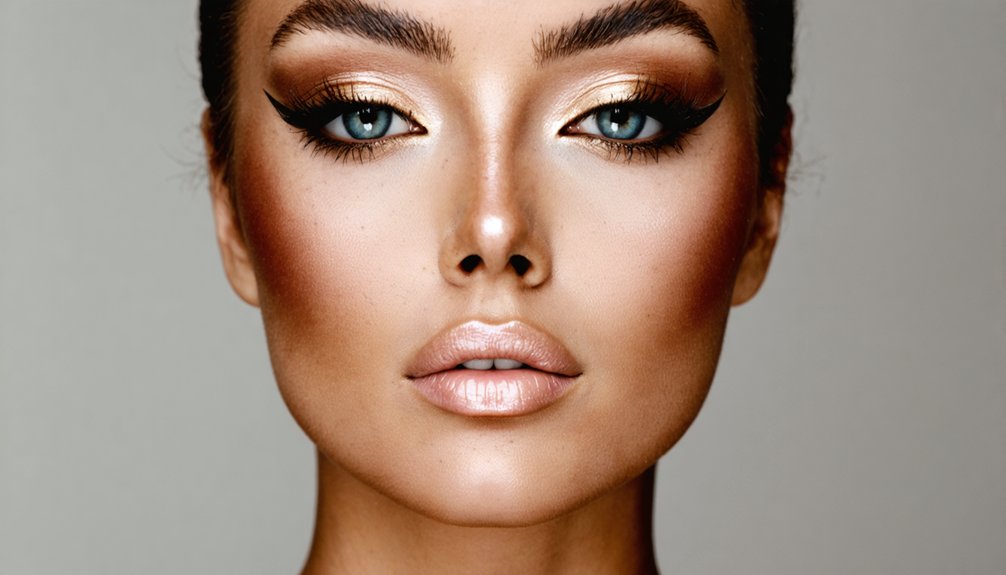
Makeup becomes one of your most powerful tools when transforming your look for crossplay, and mastering contouring, blush, and liner techniques lets you reshape how others read your face entirely.
Start with a foundation that creates an even base for your makeup blending work. For masculine portrayals, contour shading sharpens angular lines along your cheekbones, nose bridge, and jaw.
For feminine looks, blend contour softly along your jaw to reduce sharp angles, then apply blush in circular motions across your cheeks.
Liquid eyeliner that dries quickly works best on top lids for male character cosplays, keeping lines crisp and defined.
Apply mascara substantially to enhance eye definition regardless of direction.
Each technique compounds the other, so practice layering them intentionally before your event.
Master the Body Language Your Crossplay Character Demands
When your costume fits perfectly and your makeup reads true, body language becomes the final layer that sells your crossplay completely. You’ll want to embody your character’s energy through intentional movement, facial expressions, and hand gestures rather than relying on stereotypes.
Masculine characters demand:
- Wide stances with weight evenly distributed and arms extending outward
- Deliberate, grounded hand gestures that claim physical space confidently
- Neutral, composed facial expressions with minimal softness around the eyes
Feminine characters require closer leg positioning, lighter steps, and compact hand gestures near the body.
Practice your character’s specific mannerisms by studying source material closely. Let their personality drive your facial expressions rather than defaulting to broad gender performance. Authentic character embodiment always reads stronger than exaggerated imitation.
How to Adjust Your Voice for Crossplay Without Straining It
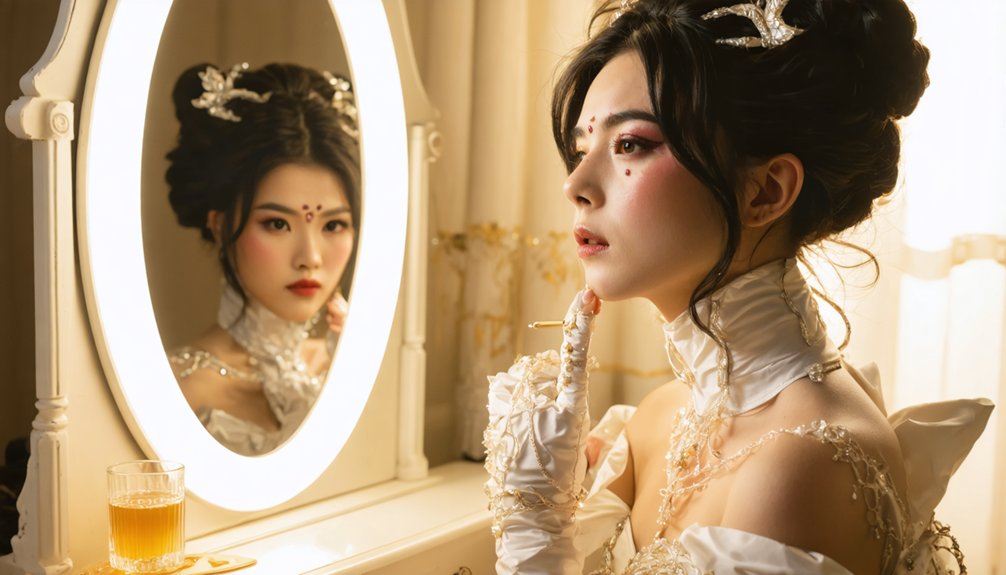
When adjusting your voice for crossplay, you’ll get the best results by focusing on natural inflection rather than forcing an extreme pitch shift that strains your vocal cords.
Try chest-based speaking by breathing deeply into your diaphragm and letting your voice resonate from your chest cavity, which naturally produces a fuller, deeper tone.
Experimenting with this technique during casual conversations before the event helps you find a sustainable, character-authentic sound that feels genuinely yours.
Natural Vocal Inflection Techniques
Adjusting your voice for crossplay doesn’t have to mean forcing unnatural pitches that leave your throat raw by lunchtime. Smart vocal resonance shifts happen through intentional technique, not brute-force pitch control.
Try these practical adjustments:
- Chest breathing first: Speak from your diaphragm to naturally deepen your tone without straining your vocal cords.
- Resonance placement: Shift sound vibrations toward your chest cavity for masculine characters or your head and nasal passages for softer, higher tones.
- Mimic character-specific speech rhythms: Study official voice clips and replicate cadence and inflection patterns rather than obsessing over raw pitch.
Your voice is flexible. Practicing these methods consistently builds muscle memory, letting you embody characters authentically while keeping your throat healthy throughout long convention days.
Chest-Based Speaking Methods
Shifting your speaking resonance downward is simpler than most crossplayers expect, and it starts with breathing mechanics rather than pitch manipulation. Instead of forcing your voice pitch adjustment through strained throat tension, you’ll redirect airflow toward your chest cavity.
Breathe deeply, letting your chest expand rather than your shoulders rise. Speak from that expanded space, and you’ll naturally produce fuller, lower tones without damaging your vocal cords.
This technique pairs well with chest binding safety awareness — since proper binders restrict chest expansion slightly, you’ll want to practice breath control before convention day. Take scheduled binder breaks to maintain lung capacity and vocal stamina throughout extended wear.
Experiment freely with resonance placement during rehearsals, recording yourself to track authentic-sounding progress rather than chasing an artificially forced sound.
Photography Angles and Poses That Sell Your Crossplay Look
Even the most detailed costume can fall flat in photos without the right angles and poses working in your favor. Strategic positioning transforms your crossplay from good to extraordinary.
Match your pose to your character’s gender presentation:
- Feminine looks: Position legs close together, use 3/4 views, and keep hands compact to create a smaller, more delicate silhouette.
- Masculine looks: Widen your stance, extend arms outward, and slump shoulders slightly to project dominance and scale.
- Camera height: Shooting near knee level minimizes shoulder width for feminine portrayals while amplifying presence for masculine ones.
Lighting techniques matter equally — avoid direct flash, which destroys contouring work instantly.
Consider costume durability before intense outdoor shoots, since harsh environments accelerate wear. Every intentional choice compounds into a convincing, powerful final image.
Crossplay Safety Essentials: Binder Breaks, Padding Fixes, and Emergency Supplies
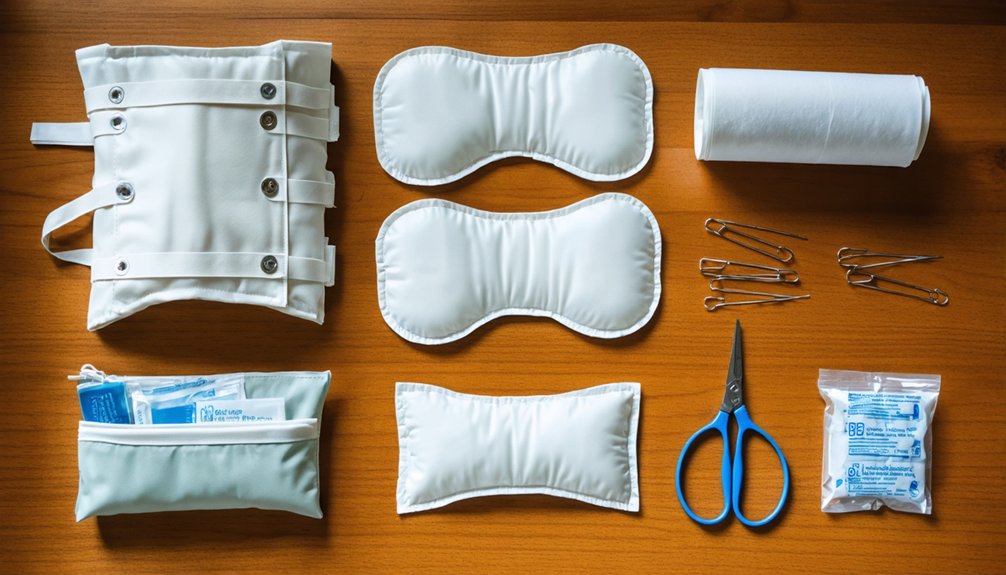
Staying safe in your crossplay gear is just as important as nailing the look itself. Schedule regular binder breaks every two hours to protect your body and maintain comfort throughout long convention days. Never substitute proper binders with duct tape — it’ll damage your skin and restrict breathing dangerously.
Your padding and costume accessories need periodic checks too. Reposition hip pads or shoulder foam if shifting occurs, keeping your silhouette balanced and intentional. Breathable materials help prevent overheating during extended wear.
Always carry an emergency kit stocked with bobby pins, bandages, deodorant, and backup cosplay makeup essentials like a compact foundation and setting powder. These supplies handle unexpected touch-ups and wardrobe fixes fast, letting you stay focused on performing your character confidently and safely.
Frequently Asked Questions
What Are the Best Crossplay-Friendly Conventions for Beginners to Attend First?
You’ll thrive at Anime Expo, Dragon Con, or local comic cons—they’re welcoming spaces where you can experiment freely with cosplay makeup and costume accessories while connecting with an inclusive, innovative crossplay community that celebrates your creativity!
How Do Crossplayers Handle Negative Reactions or Harassment at Public Events?
You’ve got community, you’ve got confidence — both arrive just when you need them. Prioritize public safety by staying in groups, and practice self-advocacy by calmly setting boundaries or alerting event staff immediately.
Are There Online Communities Specifically Dedicated to Crossplay Support and Feedback?
You’ll find vibrant online forums and support networks like Reddit’s r/crossplay and Discord servers where you can share your work, get constructive feedback, and connect with innovative, like-minded crossplayers who’ll celebrate your creative journey!
How Should Crossplayers Approach Group Cosplay Dynamics With Non-Crossplaying Participants?
Prioritize group harmony by practicing proactive, purposeful communication strategies with your co-cosplayers. You’ll want to discuss character roles, boundaries, and visual cohesion early, ensuring everyone’s creatively aligned and confidently celebrating each other’s unique, boundary-pushing portrayals together.
What Budget Ranges Should First-Time Crossplayers Expect for a Complete Costume?
You’ll typically spend $50–$300 on your first crossplay, depending on your sewing skills and costume materials. Smart budget planning means prioritizing binders, padding, and makeup before embellishments—you’re crafting an identity, not just an outfit!
References
- https://www.youtube.com/watch?v=Uhu633NsTw8
- https://rogersenpai.com/cosplay-tips-for-crossplay/
- https://sunlitcosplay.wordpress.com/2015/08/17/essential-tools-for-the-female-crossplayer/
- https://tokyo-cosplay.com/crossplay-101-a-guide-to-gender-bending-costuming/
- https://www.alibaba.com/product-insights/crossplay-cosplay-tips-for-dressing-as-opposite-gender-characters-authentically.html
- https://cosplay.com/archive/thread/jg86g4/tips-for-crossplay-photography
- https://blog.miccostumes.com/how-to-crossplay-male-to-female/