To nail wig color accuracy, you’ll want to start with canonical source material—not memory. Always assess your skin’s undertone in natural daylight, since warm tones suit amber and chestnut shades while cool tones align with ash or platinum. Stay within one to two shades of the reference base, test physical swatches before committing, and cross-reference eye color and complexion. Every detail compounds, and there’s far more precision involved than most people expect.
Key Takeaways
- Always use canonical source material and reference images over memory to identify the character’s accurate base hair color.
- Stay within one to two shades of the reference base tone to maintain believability and character authenticity.
- Assess your skin undertone in natural daylight to ensure the wig color harmonizes with your complexion.
- Test physical swatches under natural daylight rather than relying on screen comparisons or digitally altered vendor photos.
- Avoid common pitfalls like skipping undertone analysis, ignoring fiber quality, and overlooking synthetic color fading over time.
Start With the Character’s Canonical Wig Color
When selecting a wig for character work, start with the canonical hair color from the source material rather than estimating from memory. Pull reference images from multiple angles, since lighting shifts perceived tone markedly across scenes or illustrations.
Identify the color family first, then refine by tone, brightness, and saturation before comparing listings.
Focus exclusively on the wig color in vendor photos, not the model’s styling or face. Hair dye formulas and color blending techniques used in manufacturing affect how a shade reads under different lighting conditions.
Build a shared swatch set using consistent color names before ordering to eliminate guesswork.
Matching the canonical base color accurately establishes the foundation for character believability, making every subsequent styling decision more precise and intentional.
How Does Skin Undertone Affect Wig Color Accuracy?
Your skin undertone—warm, cool, or neutral—directly affects how a wig color reads against your face, making undertone identification a critical first step before selecting any shade.
You can assess your undertone in natural daylight by checking your wrist veins: green veins signal warm undertones, while blue or purple veins indicate cool undertones.
Once you’ve identified your undertone, cross-reference it against your character’s canonical coloring to guarantee the wig shade you choose flatters your complexion while preserving accurate character representation.
Identifying Your Undertone
Skin undertone directly shapes how a wig color reads against your face, making it one of the most practical variables to identify before selecting a shade. Use daylight for this assessment since artificial lighting distorts undertone perception.
Check your wrist veins: green tones indicate warm undertones, while blue or purple tones signal cool undertones. Neutral undertones fall between both readings.
Color theory reinforces why this matters. Warm undertones harmonize with amber, chestnut, and golden shades, while cool undertones align with ash, platinum, and blue-black tones.
Even hair texture interacts here since coarser or shinier synthetic fibers reflect light differently, subtly shifting perceived color against your complexion.
Accurate undertone identification reduces the guesswork and tightens your match before you commit to a full wig purchase.
Undertone Affects Shade Choice
Once you’ve pinned down your undertone, it becomes the primary filter for narrowing wig color accuracy. Warm undertones pull toward golden, amber, and copper pigments — shades that mirror hair dye chemistry built on red-orange base molecules.
Cool undertones align with ash, platinum, and blue-based tones, where violet or blue corrective pigments dominate the formula. Neutral undertones operate with more flexibility across both spectrums.
Wig fiber types complicate this further. Synthetic fibers reflect light differently than human hair, which means a warm-toned shade on a heat-resistant synthetic can read more saturated or flat under stage or natural lighting.
Factoring your undertone into fiber-specific color behavior guarantees the final shade doesn’t fight your complexion — it reinforces the character’s visual profile with measurable precision.
Matching Undertone To Character
Matching undertone to a character’s color profile closes the gap between a technically correct shade and one that reads as visually cohesive on your complexion. When a character carries warm undertones, prioritize wigs with amber, golden, or chestnut bases.
Cool-toned characters align better with ash, blue-adjacent, or silver-influenced shades. Color mixing within the wig’s fiber construction also matters — rooted or blended tones neutralize undertone conflicts more effectively than flat, single-process colors.
You’ll get stronger character accuracy when the wig’s undertone mirrors the character’s illustrated or on-screen complexion cues, not just their surface hair color. Additionally, wigs durability holds up better under stage and photography lighting when the undertone alignment reduces the need for post-production correction or repeated color adjustments between performances.
Why Natural Light Gives You the Truest Color Read?
When you’re evaluating wig color, natural light is the most reliable testing environment you have. Artificial sources distort color temperature, pushing shades toward yellow, orange, or blue depending on bulb type. These skewed lighting conditions make accurate color assessment nearly impossible without a calibrated reference point.
Daylight, particularly soft window light or open shade outdoors, renders color closest to its true spectrum. Hold your swatch against your jawline and the character reference image simultaneously under the same light source.
Photographs taken indoors under warm ring lights frequently misrepresent fiber pigment, causing you to order the wrong shade entirely.
Physical swatches tested in consistent daylight outperform screen-based comparisons every time. Prioritize this step before finalizing any wig purchase to eliminate preventable color mismatches.
How to Test Wig Color With Swatches Before You Commit
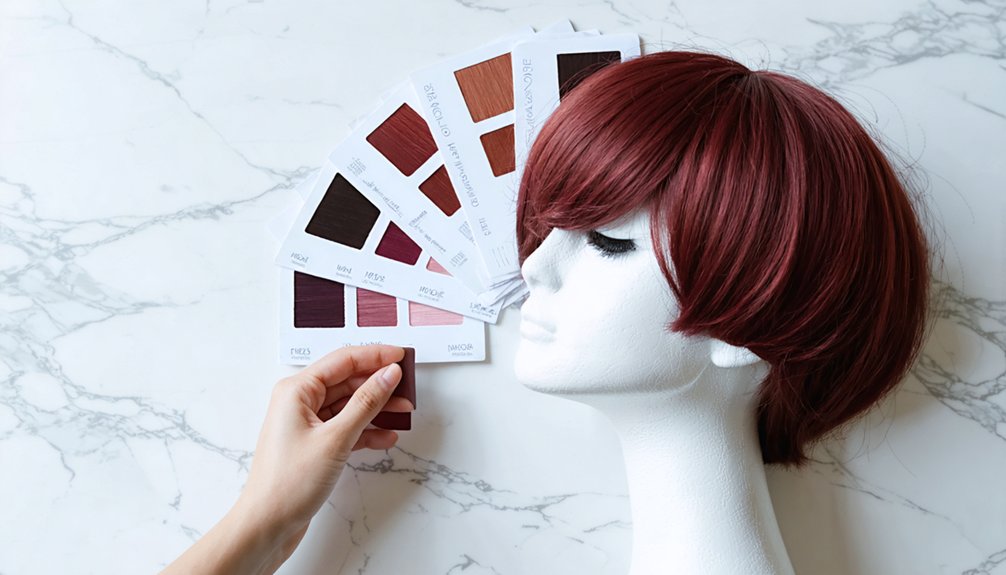
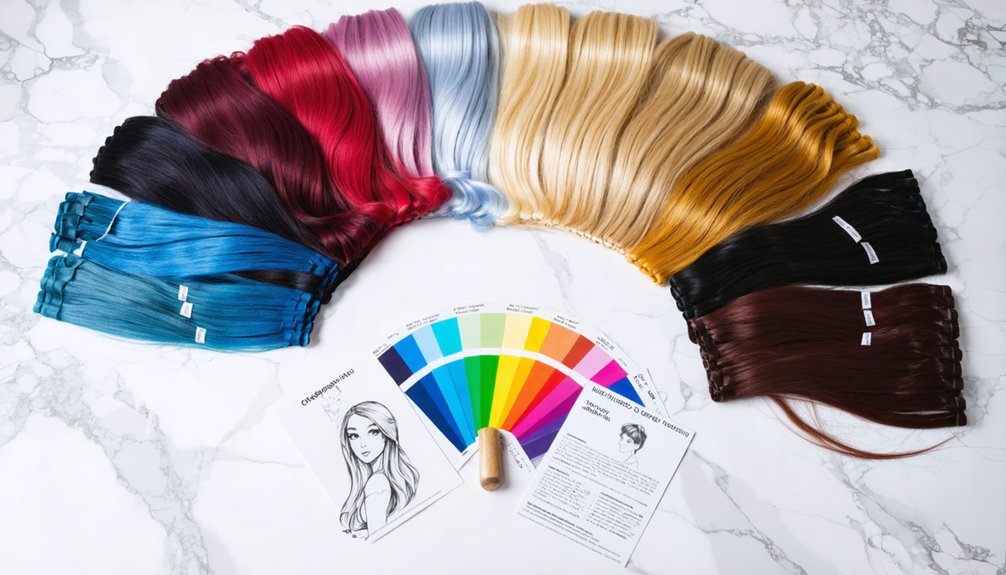
Swatch rings and color charts give you a direct side-by-side comparison that screen listings simply can’t replicate. Hold each swatch against your roots and ends to evaluate tonal consistency across the full length.
When examining synthetic vs. natural fiber options, check how each material holds its stated shade under daylight, since synthetic fibers resist color fading more predictably but can shift under heat or prolonged UV exposure. Natural fibers absorb light differently, affecting perceived depth.
Clip temporary pieces or trial wigs before finalizing a full purchase to confirm both fit and color accuracy on your actual complexion. If uncertainty remains, request vendor consultation using a shared swatch as a reference anchor.
Physical testing eliminates the guesswork that digital listings consistently introduce.
Stay Within One to Two Shades for a Believable Match
When selecting a wig color, you’ll get the most believable result by staying within one to two shades lighter or darker than your reference base.
Drastic color jumps pull attention away from character accuracy and reduce overall realism, especially under stage or camera lighting.
Prioritize matching the base tone first, since getting that foundation right matters more than chasing brightness or saturation extremes.
Avoid Drastic Color Jumps
Staying within one to two shades of your base or reference color keeps the final look believable and avoids the visual disconnect that large color jumps introduce. When you push past that range, synthetic fibers tend to amplify the contrast under stage lighting or camera flash, making the wig read as obviously artificial.
Color fading over time can also widen that gap further, so starting close to the target shade gives you a built-in buffer as the wig ages. Drastic jumps between your natural complexion and the wig tone break character continuity in ways that styling can’t easily correct.
Prioritize base tone accuracy first, then layer in dimension through highlights or rooting to achieve depth without sacrificing the realism your character profile demands.
Base Tone Matching Matters
Base tone is the backbone of a convincing wig match, and it carries more weight than brightness, saturation, or finish. When you’re prioritizing historical accuracy or costume coordination, chasing extreme brightness over a correct base tone consistently undermines the final result.
A wig can look technically vibrant yet read as wrong on camera or stage because its underlying warm, cool, or neutral base conflicts with the character’s established palette.
Stay within one to two shades of the character’s reference tone. That range preserves believability without flattening dimension. If you overshoot in either direction, the wig disconnects visually from the complexion and costume.
Lock in the base tone first, then layer in highlights or depth. That sequence produces a more credible, character-accurate outcome every time.
Match Wig Color to the Character’s Eyes and Complexion
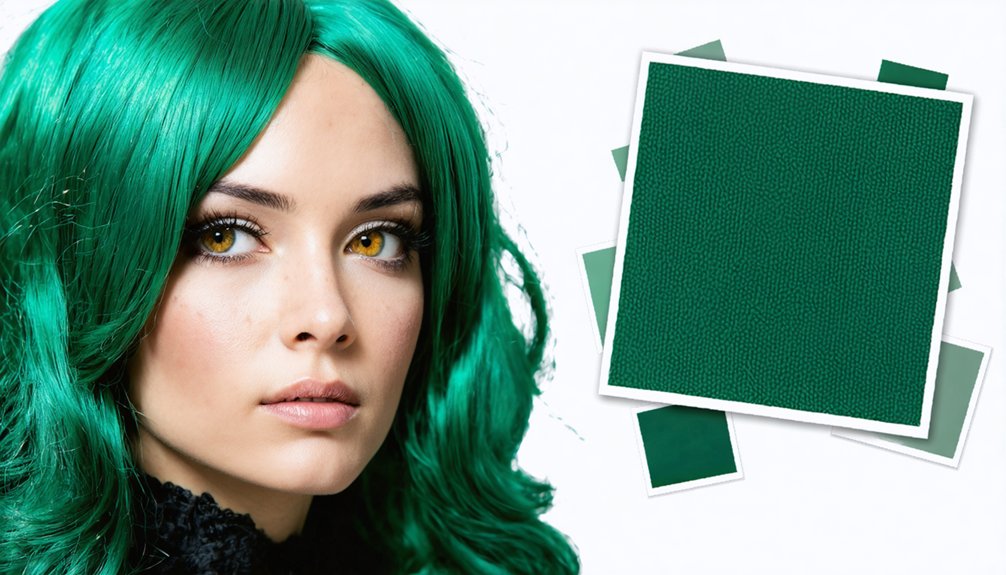
Matching wig color to a character’s eyes and complexion sharpens accuracy and keeps the overall look cohesive. These pairings aren’t arbitrary—they’re rooted in contrast ratios and undertone alignment that directly support costume coordination and hair styling decisions.
Apply these character-specific pairing rules:
- Golden brown, green, hazel, or light blue eyes pair best with dark brown, chestnut, auburn, or red-highlighted shades.
- Dark brown, deep blue, or dark hazel eyes read most accurately against natural black, brown, or blonde tones.
- Skin tone contrast guides intensity—fair complexions suit honey or butterscotch tones, while deeper complexions balance well with maple brown, toffee, or strong light-to-dark contrast.
Cross-reference eye color, skin tone, and character reference images simultaneously before finalizing any wig selection.
Wig Color Mistakes That Undermine Your Color Match
Even small missteps in wig color selection can collapse an otherwise accurate character build. Relying solely on screen grabs introduces color shift errors because monitor calibration varies widely. Skipping undertone analysis forces a mismatch between wig and skin, no matter how precise the character reference appears.
Even one skipped step in wig color selection can quietly dismantle an otherwise flawless character build.
Ordering without physical swatches leaves you dependent on digitally altered product photos.
You’ll also want to account for color fading in synthetic fibers, which shifts the shade after heat exposure or prolonged UV contact. What reads as accurate on day one drifts noticeably within weeks.
Ignoring fiber type compounds this problem since low-grade synthetic fibers absorb light differently than premium alternatives, distorting the perceived hue entirely. Each overlooked variable compounds the others, systematically degrading your final result.
Frequently Asked Questions
Can Wig Color Fade Over Time and Affect Character Accuracy?
Yes, fading destroys accuracy. Prioritize wig maintenance through UV-protective sprays and cold-water washing. Color preservation techniques, like sulfate-free products, actively extend vibrancy, keeping your character’s shade consistently true.
Does Wig Fiber Type Change How Color Appears on Camera?
Yes, wig fiber directly impacts how color reads on camera. Synthetic fibers reflect light differently than human hair, often appearing shinier or flatter, so you’ll want to test your wig’s light reflection under actual filming conditions.
How Do Colored Contacts Interact With Wig Color Choices?
Like a painter balancing a palette, your contact lens styles anchor the scene — you’ll want wig color contrast to echo your eye hue, reinforcing character cohesion while golden, auburn, or complementary tones amplify the overall visual harmony effectively.
Are There Apps That Help Match Wig Colors Digitally?
Yes, apps like YouCam Makeup and Google’s virtual try-on tools support digital color matching, letting you test shades against your complexion. They’re imperfect, so always validate results with physical swatches under natural daylight.
Should Wig Color Change for Outdoor Versus Indoor Performance Settings?
Like a chameleon shifting hues, you’ll want to adjust wig maintenance and costume coordination strategies—yes, wig color should shift slightly, since outdoor light exposes undertones indoor bulbs mask, affecting your character’s overall visual accuracy.
References
- https://www.headcovers.com/resources/wigs/selecting-hair-color/
- https://www.hairplacenyc.com/wigs/resources/how-to-choose-a-wig-color/
- https://www.youtube.com/watch?v=CLE6V3cB90w
- https://beautynexuspro.com/hair-care/how-to-tell-what-your-hair-colow-is-for-wigs
- https://www.epiccosplay.com/pages/wigs
- https://www.hairweavon.com/2025/05/25/the-wig-color-playbook-choose-your-perfect-shade/
- https://www.simplywigs.co.uk/blog/wig-colour-and-skin-tone/
- https://www.wigstudio1.com/blogs/strands-of-knowledge/choose-a-color-color-theory-hair-and-skin-tone