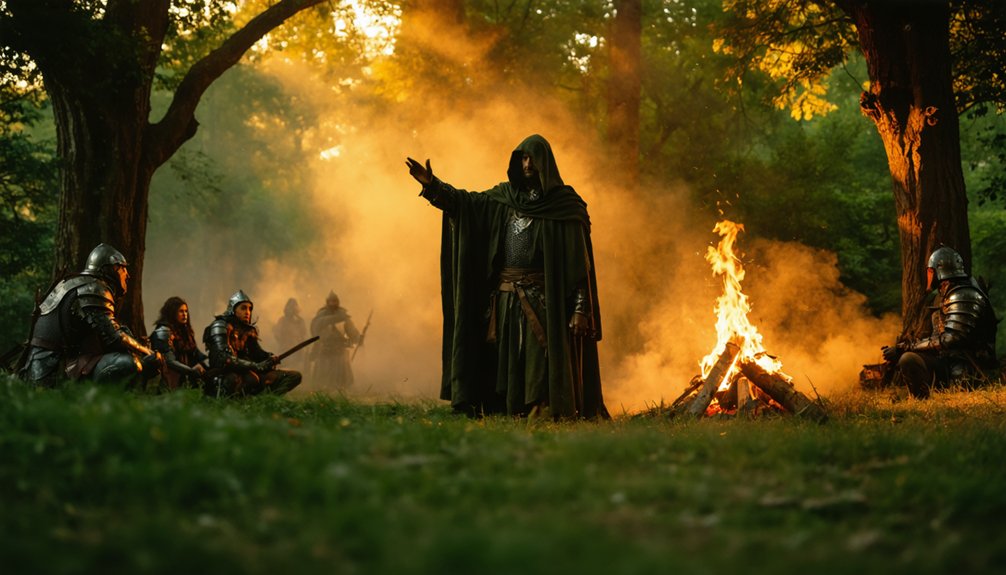
Urban LARP in modern settings turns the city itself into your game world, so you’ll need to think differently than you would at a fantasy event. Pick locations that match your scenario, dress for both character and comfort, and build characters who naturally start conversations. Keep your voice controlled in public spaces, use sound and lighting to shift atmosphere, and always prioritize safety over immersion. There’s plenty more to unpack if you want to run it right.
Key Takeaways
- Use existing urban locations like streets, offices, or public spaces to enhance realism without expensive set construction or visual overhauls.
- Layer ambient sounds and strategic lighting to transform ordinary spaces into immersive, believable urban environments affordably.
- Prioritize practical, weather-appropriate costumes that allow comfortable movement through varied urban terrain during extended play sessions.
- Create characters naturally inclined toward interaction, like journalists or negotiators, to maximize engagement and drive organic storytelling.
- Establish clear safety signals during pre-game briefings and always maintain awareness of bystanders, traffic, and shared public spaces.
Pick a Modern Setting That Fits Your Location
Choosing the right modern setting starts with looking at what your location already offers. Contemporary urban environments are rich with environmental storytelling potential — streets, storefronts, and public spaces already carry the texture your fiction needs. Don’t force a setting that requires expensive visual overhauls. Instead, build your scenario around what’s already there.
An advertising agency, a city school, or a local political hub can anchor your game in a grounded, believable world. Historical accuracy matters even in modern settings — understanding how real spaces function helps you design believable districts, traffic flows, and social hubs.
When your setting reflects genuine urban logic, players engage more naturally. Match your scenario to your location, and you’ll create a richer, more immersive experience without unnecessary production costs.
Dress for the City, Not Just the Character
Once your setting is locked in, your costume needs to match not just your character but the city itself. Urban fashion already gives you a massive advantage—modern streets, buildings, and everyday objects do most of the visual work for you.
Your costume doesn’t just dress your character—it dresses the city. Let the streets do the heavy lifting.
Costume practicality matters more than most players expect. You’ll be walking, standing, and maneuvering real terrain for hours, so prioritize movement over aesthetics. Comfortable shoes aren’t optional; they’re essential. Style that destroys your feet by hour three kills your performance and your immersion.
Choose clothing that handles weather, long wear, and city conditions without requiring constant adjustment. Keep your look visually recognizable so others can read your character instantly.
When your costume works with the environment rather than against it, you’ll stay sharper, move better, and play harder.
Prepare Your Costume, Documents, and Travel Plan
Getting your costume, documents, and travel plan sorted before event day prevents the kind of last-minute chaos that ruins your headspace before play even starts. Costume maintenance and travel logistics deserve equal attention, so treat both as non-negotiable prep steps.
- Read all game materials twice and take notes on rules, zones, and character requirements.
- Contact organizers to confirm what you must bring versus what’s provided on-site.
- Check your costume for repairs, missing pieces, or comfort issues well before the event.
- Map your route using public transport, driving, or carpool options and build in extra time.
Arriving ready means you can focus on character immersion rather than scrambling. A solid checklist keeps everything accountable and ensures nothing essential gets left behind.
Build a Character Who Wants to Talk to People
Urban LARP thrives on interaction, so building a character who actively seeks conversation gives you far more to do and far more to gain from the experience. Lone-wolf designs cut you off from the story’s core engine, which is other people. Instead, create someone with built-in reasons to engage: a negotiator, a journalist, a fixer, or a local organizer works naturally in modern urban fiction.
Practice social negotiation before the event by running through how your character opens conversations, responds to conflict, and reads a room. Be conscious of personal space boundaries, both your character’s and other players’, since respecting those limits actually deepens roleplay rather than limiting it.
Listen actively, react honestly, and prioritize making scenes rewarding for everyone involved.
Stay in Character Without Disrupting Real City Spaces
Urban LARP drops you into real city spaces where bystanders, traffic, and everyday foot traffic aren’t part of the fiction. You’ll need to stay sharp enough to step out of character quickly when a real-world situation demands it, without letting that constant awareness break your immersion.
Treat public space as a resource you’re borrowing, not a stage you own, and your character can move through it naturally without drawing the wrong kind of attention.
Managing Public Space Awareness
Playing in real city spaces means you’re sharing the environment with people who aren’t part of your game, so staying aware of that boundary is essential. Strong street etiquette keeps interactions smooth and prevents confusion or unnecessary disruption to bystanders. Use public decor strategically to anchor your scenes without claiming space aggressively.
- Keep your voice controlled during intense roleplay moments near pedestrian traffic.
- Step aside from doorways, transit stops, and high-flow areas when running key scenes.
- Use subtle costuming so bystanders don’t mistake dramatic moments for real emergencies.
- Signal clearly to teammates when a scene needs to pause for real-world interruptions.
You’re building immersion inside a living city, so respecting its rhythms makes your game stronger, not weaker.
Balancing Immersion With Reality
Staying in character sharpens your game, but the city doesn’t pause for your fiction. Real pedestrians, transit workers, and bystanders aren’t participants, so you’ve got to balance immersion with situational awareness.
Unlike historical accuracy-driven events where controlled venues support deep fiction, urban modern LARPs share space with reality. That tension is actually useful. Let it sharpen how your character moves and reacts rather than letting it break your focus.
When fantasy elements creep into your design, keep them subtle enough that they don’t confuse or alarm the public. Use out-of-character signals clearly when safety demands it, then step back in without hesitation.
The best urban players treat the real city as a collaborator, not an obstacle. Stay sharp, stay present, and protect the game for everyone around you.
Stay Safe on Real Streets During Urban LARP
Urban streets don’t pause for your game, so you need to stay alert to real-world hazards like traffic, uneven pavement, and shifting crowds.
Keep a clear, agreed-upon out-of-character signal ready so you and other players can step outside the fiction instantly when safety requires it.
Knowing your play zone’s layout before you arrive helps you make quick, safe decisions without breaking immersion unnecessarily.
Know Your Surroundings
When you’re LARPing on real city streets, situational awareness isn’t optional—it’s part of the game. Urban environments demand that you stay grounded in physical reality while maintaining character immersion. Costume durability and historical accuracy matter far less if you’re maneuvering unsafe conditions without attention.
Keep these priorities sharp during urban play:
- Watch walking surfaces—uneven pavement, wet stairs, and curbs create real fall risks
- Track crowd density—so you’re never blocking transit corridors or emergency access points
- Identify offgame zones—before play begins so you can exit character cleanly when needed
- Stay hydrated and physically aware—fatigue dulls your attention to genuine street hazards
Your character exists in a fictional layer, but your body operates in a real city. Know the difference.
Communicate Out-Of-Character Safely
Even in the middle of a gripping scene, you need a clear, shared method for stepping outside the fiction—and everyone at the event should know it before play begins.
Common out of character signals include a raised fist, crossed arms, or the word “Clarify” spoken aloud. These markers instantly communicate that you’re addressing a real-world concern, not a character moment.
Strong in character etiquette means honoring those signals immediately—no hesitation, no pressure to stay immersed.
Urban environments add complexity since bystanders, traffic, and unpredictable conditions can require fast, clear communication.
Agree on your safety language during the pre-game briefing, reinforce it, and treat anyone using it with full respect.
Immersion matters, but never at the cost of someone’s comfort or physical safety.
Use Sound and Lighting to Deepen Urban Immersion
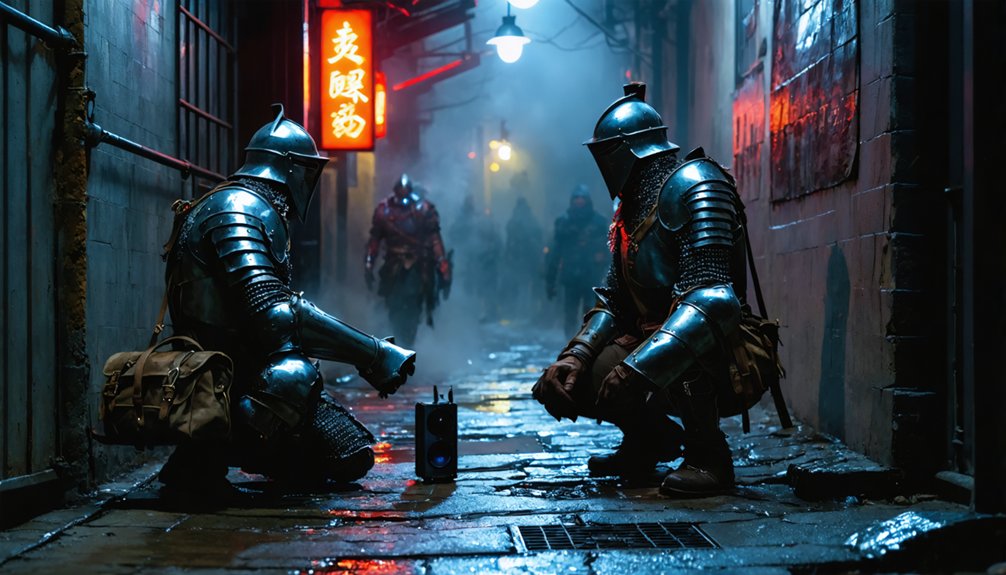
Sound and lighting are two of the cheapest tools you can use to pull players deeper into a modern urban setting. A hidden Bluetooth speaker running ambient noise instantly transforms a plain room into a bar, office, or rain-soaked street corner.
Strategic lighting effects shift tone without expensive equipment.
- Use layered ambient noise playlists matched to each distinct zone or district
- Switch lighting effects between scenes to signal mood or time-of-day changes
- Position speakers out of sight to avoid breaking immersion
- Use warm or cool bulbs deliberately — warm for intimate spaces, cool for clinical or tense environments
You don’t need a big budget. You need intentional choices. Small atmospheric details compound quickly, making your urban environment feel lived-in and believable for every player involved.
Frequently Asked Questions
Can Beginners Join Urban LARP Events Without Prior Experience?
You’re absolutely ready to plunge in! Without prior experience, you can join urban LARP events by focusing on costume authenticity and completing event registration early. Read all materials carefully, and you’ll integrate seamlessly.
How Do Other City Residents Typically React to Urban LARP Players?
You’ll find that public reactions vary, but most city dwellers simply ignore or grow curious about players. Resident perceptions improve when your costume stays grounded and modern, blending naturally into everyday urban environments without causing unnecessary disruption.
Are Urban LARP Events Suitable for Players With Mobility Challenges?
Urban LARP’s accessibility considerations won’t lock you out—you can fully participate with adaptive gameplay strategies. Prioritize comfortable footwear, contact organizers about terrain, and choose interaction-focused characters that don’t require extensive physical movement.
How Long Do Most Urban Modern LARP Events Usually Last?
Urban modern LARP events typically run one to three days. You’ll want to review event logistics carefully before attending, and always factor in urban safety when planning your stamina, footwear, and hydration for sustained play.
Can Urban LARP Events Be Run During Nighttime Hours Safely?
You can run nighttime events safely by choosing well-lit routes, using urban lighting creatively, and maintaining clear offgame communication. Plan your zones, know your exits, and prioritize nighttime safety to keep everyone immersed and protected throughout play.
References
- http://www.crolarper.com/2014/08/these-10-easy-steps-are-all-you-need-to.html
- https://thespacebetweenstories.com/2018/07/03/a-beginners-guide-to-larp/
- https://www.youtube.com/watch?v=uVWLxpcdz28
- https://www.wikihow.com/LARP
- https://www.reddit.com/r/rpg/comments/v53bs1/running_a_modern_city/
- https://clausraasted.medium.com/145-10-ways-to-make-your-larp-look-better-without-spending-more-33fa4a290ce7
- https://guardup.com/how-to-larp-a-guide-for-beginners/
- https://www.brandesstoddard.com/2022/11/larp-design-world-building-dos-and-donts/