Medieval fantasy LARPing immerses you in a participatory world where you’re not just consuming a story—you’re shaping it. You’ll develop improvisation skills, forge genuine friendships through high-stakes collaboration, and engage your body through outdoor combat and navigation. Unlike passive entertainment, it demands analytical thinking, creative precision, and emotional investment simultaneously. The psychological rewards extend well beyond standard leisure. If you’re curious how deep this experience actually goes, there’s markedly more to uncover.
Key Takeaways
- Medieval fantasy LARPing builds genuine friendships through shared quests, high-stakes cooperation, and collaborative storytelling that forges lasting social bonds.
- Unlike passive entertainment, LARPing makes you an active creator, improvising decisions and shaping storylines in real time.
- Embodying detailed characters develops empathy, self-awareness, confidence, and emotional expression within a psychologically restorative environment.
- Outdoor combat and navigation promote physical fitness, coordination, endurance, and spatial awareness through immersive, engaging activity.
- Crafting costumes and developing lore sharpens creative judgment, analytical thinking, and imaginative precision through purposeful worldbuilding.
What Is Medieval Fantasy LARPing?
Medieval fantasy LARPing—short for live-action role-playing—is an interactive hobby in which participants physically embody fictional characters within a structured fantasy narrative. Unlike passive entertainment formats, you’re actively shaping storylines through real-time decisions, dialogue, and movement within a shared fictional world.
The framework typically combines historical authenticity with imaginative invention, drawing from medieval European aesthetics, feudal hierarchies, and myth-based lore. You’ll encounter quests, political intrigue, and combat systems governed by agreed-upon rules that preserve narrative integrity.
Costume craftsmanship plays a central functional role—your attire isn’t decorative but rather signals character identity, faction allegiance, and social standing within the game world. This tangible, embodied structure distinguishes LARPing from tabletop or digital alternatives, positioning it as a uniquely immersive and participatory medium worth serious examination.
Why LARPing Delivers More Than Passive Fantasy Entertainment
When you sit down to watch a fantasy film or load up a role-playing game, you’re consuming a story built by someone else—your role is receptive, not generative. LARPing inverts that dynamic entirely. You’re authoring your character, improvising responses to live variables, and co-creating narrative in real time.
LARPing doesn’t hand you a story—it hands you a blank page and expects you to write it live.
The distinction matters analytically. Passive media optimizes for spectacle; LARPing optimizes for agency.
Historical accuracy in costuming and worldbuilding isn’t decorative—it’s structural, anchoring your immersion in tangible, researched detail. Costume craftsmanship transforms preparation into authorship, making the creative process inseparable from the experience itself.
This active participation engages cognitive, social, and physical systems simultaneously—something no screen-based format replicates.
For those seeking innovation in leisure, LARPing represents a fundamentally different architecture of engagement.
The Friendships and Community LARPing Builds
When you participate in shared quests, you’re not simply completing objectives — you’re building trust and camaraderie through coordinated effort under pressure.
LARP communities tend to develop strong internal cultures, giving you a genuine sense of belonging that’s difficult to replicate in passive entertainment.
The teamwork required in faction play and collaborative storytelling doesn’t just serve the narrative; it forges friendships that frequently extend well beyond the game itself.
Shared Quests Build Bonds
Though LARPing is often framed as a hobby built around fantasy and escapism, its most enduring value may lie in the real-world relationships it produces. When you pursue shared quests alongside others, you’re not simply playing a character — you’re building trust through coordinated action and mutual vulnerability.
That dynamic mirrors what organizational research identifies as accelerated bonding: high-stakes, goal-oriented collaboration compresses relationship-building timelines considerably.
Commitment to historical accuracy and thoughtful costume design signals investment, which others recognize and respect. That shared seriousness creates a foundation for genuine connection.
You’ll find that maneuvering fictional conflicts together generates real camaraderie. The quests end, but the relationships don’t.
What begins as collaborative storytelling frequently evolves into durable friendships grounded in shared experience, creative discipline, and mutual accountability.
Belonging Within LARP Communities
Beyond individual friendships forged through shared quests, LARP communities generate a broader sense of belonging that functions much like other tight-knit subcultures. You’re entering a culture with its own standards, rituals, and values — where commitments to historical accuracy and costume design signal seriousness and earn collective respect.
This culture rewards investment. The more you contribute — whether through refined armor construction, narrative participation, or faction leadership — the more embedded you become within the group’s identity. Researchers studying subcultures consistently find that shared specialized knowledge accelerates belonging, and LARP communities operate on precisely that principle.
You’re not merely joining an activity; you’re adopting an identity framework that others around you recognize and validate. That mutual recognition transforms casual participants into committed community members with genuine social roots.
Teamwork Forges Lasting Friendships
Shared adversity accelerates trust in ways that casual socializing rarely achieves, and LARP’s team-based structure deliberately manufactures that adversity. When you coordinate battle tactics, negotiate faction alliances, or solve narrative puzzles alongside others, you’re building relational capital through demonstrated reliability.
That process mirrors findings in organizational psychology: collaborative problem-solving under pressure produces stronger interpersonal bonds than passive shared experience.
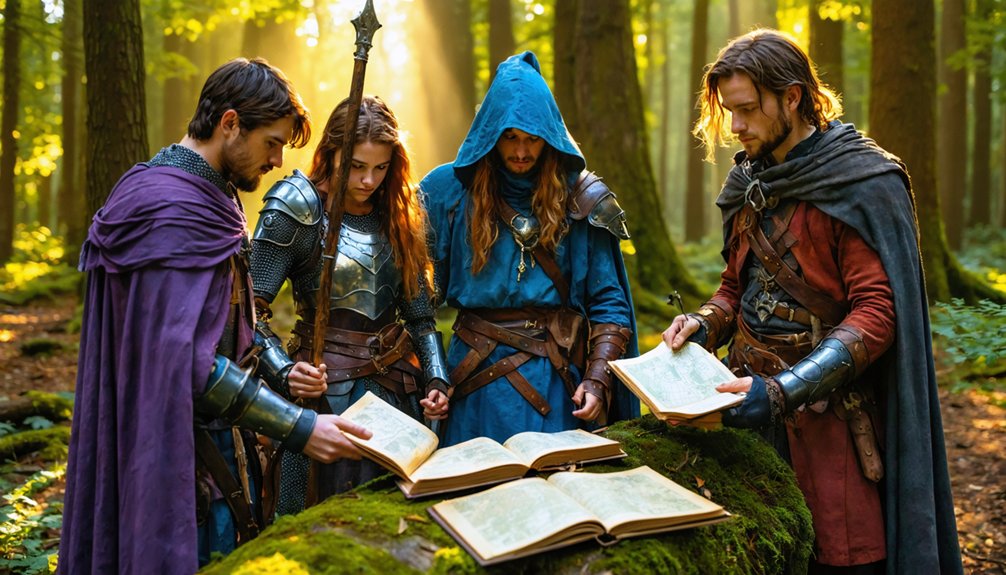
Historical accuracy and costume design add another bonding layer. You’ll frequently collaborate with fellow participants to research period-appropriate details or construct gear together, transforming preparation into a relationship-building phase before events even begin.
These pre-event collaborations establish trust frameworks that carry directly into gameplay.
The result isn’t incidental friendship. It’s structurally engineered connection, where repeated high-stakes cooperation, shared creative investment, and mutual vulnerability consistently produce meaningful, lasting relationships.
Creative Skills You Sharpen Through LARPing
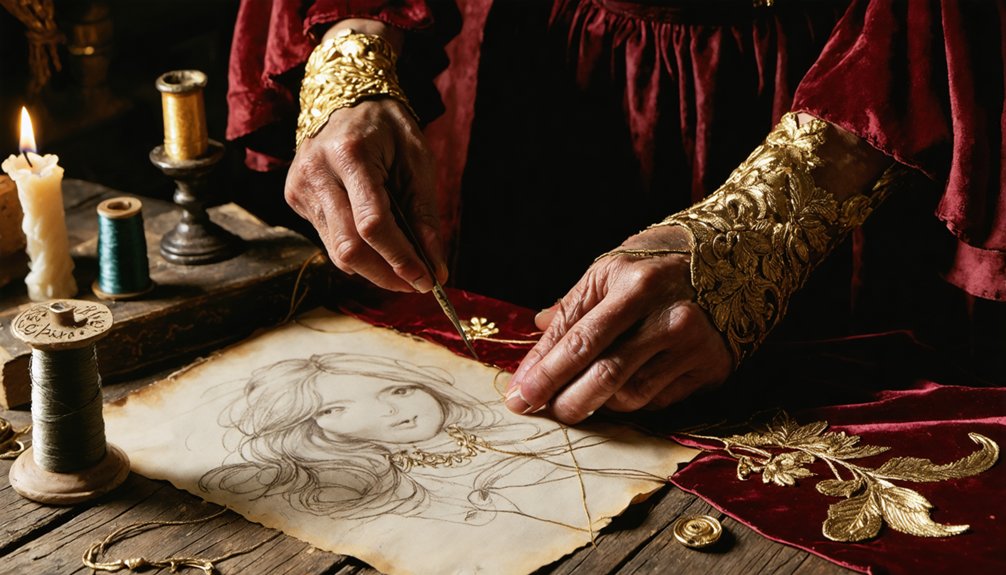
When you step into a LARP scenario, you activate improvisation skills that few other hobbies demand at the same intensity—every unexpected plot twist requires an immediate, in-character response.
You also exercise deep creative judgment through worldbuilding and character creation, constructing original identities with coherent backstories, motivations, and behavioral logic.
These two skill sets reinforce each other: the richer your character’s foundation, the more decisively you’ll think on your feet when the narrative shifts.
Improvisation And Quick Thinking
Medieval fantasy LARPing demands rapid improvisation in ways that few other hobbies replicate. When an unexpected plot twist disrupts your faction’s strategy, you can’t pause to deliberate — you must respond immediately, in character, with conviction.
This cognitive pressure sharpens adaptive thinking at a measurable level.
Unlike historical accuracy in costume design, which allows careful pre-event planning, in-game improvisation strips away preparation entirely. You’re steering shifting alliances, surprise confrontations, and evolving narratives in real time.
Each decision carries consequence within the story world, making your thinking both creative and analytical simultaneously.
Over repeated sessions, this pattern builds transferable mental agility. You’ll notice faster situational assessment, stronger verbal spontaneity, and greater comfort with uncertainty — competencies that extend well beyond the game itself.
Worldbuilding And Character Creation
Before a single event begins, you’ve already exercised one of the most cognitively demanding creative skills available to the hobby: building a character from nothing. You construct motivations, contradictions, and histories that must integrate coherently with an established world. That process demands both analytical rigor and imaginative precision.
Lore development extends this further. You’re not simply inventing a persona — you’re stress-testing that persona against collective worldbuilding frameworks, faction dynamics, and narrative logic others have also shaped. Every inconsistency gets exposed through live play.
Costume design adds another dimension. You translate abstract character concepts into tangible, wearable artifacts, forcing decisions about symbolism, practicality, and period accuracy simultaneously.
The result is a creative discipline that operates across multiple cognitive registers — conceptual, aesthetic, and collaborative — simultaneously.
How LARPing Gets You Moving Outdoors
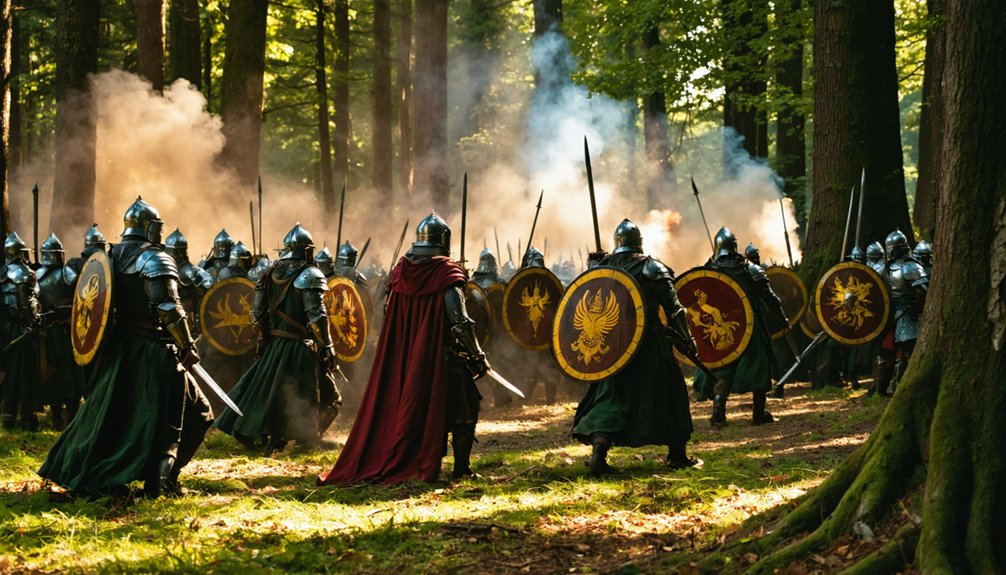
Unlike passive hobbies that confine you to a screen or seat, medieval fantasy LARPing demands physical participation across open terrain. You run, fight, and navigate unpredictable environments, transforming recreation into sustained physical engagement. Combat sequences require coordination, endurance, and spatial awareness—benefits rarely found in conventional exercise formats.
Outdoor settings amplify this effect. Natural landscapes provide varied terrain that challenges your body while reinforcing historical accuracy within the game world. You’re not simply exercising; you’re moving through a functionally constructed environment where costume design and physical performance intersect.
A well-crafted kit must accommodate real movement, making wearability as critical as aesthetics.
This integration of activity and immersion distinguishes LARPing from static alternatives. You gain measurable physical output while remaining fully embedded in a living, evolving narrative framework.
Why Medieval LARPing Is Good for Your Mental Health
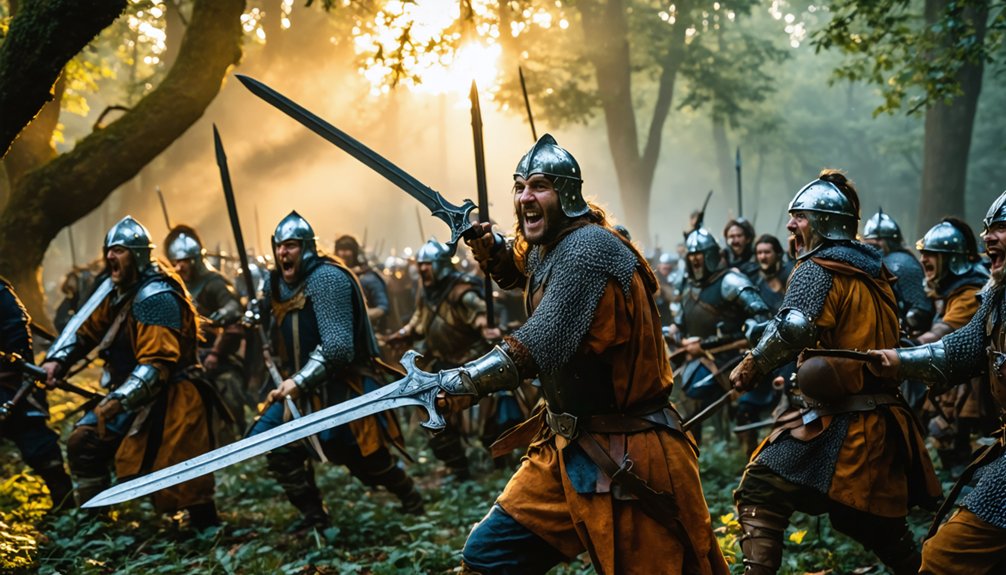
Beyond physical benefits, medieval fantasy LARPing delivers measurable psychological advantages that conventional leisure rarely replicates. When you don your medieval costumes and take up fantasy weapons, you’re actively creating distance from everyday stressors through structured immersion. This psychological separation functions similarly to therapeutic role-play, allowing you to explore confidence, conflict resolution, and emotional expression within controlled fictional boundaries.
Medieval fantasy LARPing creates powerful psychological distance from everyday stress through structured, immersive role-play within safe fictional boundaries.
Research into embodied cognition suggests that physically inhabiting an alternate identity accelerates self-awareness and empathy development. You’re not passively consuming entertainment; you’re constructing narrative agency.
Completing in-game objectives generates genuine accomplishment, reinforcing self-efficacy in measurable ways.
The combination of social bonding, imaginative engagement, and physical embodiment creates a restorative psychological environment that standard leisure formats can’t replicate. Your mental architecture genuinely benefits from this multi-layered experiential engagement.
Your First Steps Into Medieval Fantasy LARPing
Entering medieval fantasy LARPing requires deliberate groundwork rather than spontaneous commitment. Research local communities, evaluate their rulesets, and observe an event before fully committing. Your preparation determines the quality of your immersion.
Prioritize these four foundational steps:
- Research groups — Identify established communities that emphasize historical accuracy and structured worldbuilding.
- Develop your character — Construct a backstory with clear motivations and a defined role within the faction system.
- Invest in costume design — Prioritize period-appropriate materials and silhouettes that reinforce authenticity and in-game credibility.
- Learn the combat system — Study your chosen group’s rules thoroughly before engaging in physical play.
Each step compounds the next. Rigorous preparation transforms participation from casual novelty into genuinely immersive, analytically rewarding engagement with collaborative storytelling.
Frequently Asked Questions
How Much Does It Typically Cost to Get Started With LARPING?
Jumping in won’t break the bank! Your cost overview typically ranges from $50–$200 for equipment essentials like basic costume pieces and foam weapons. You’ll find that community rentals and DIY crafting can considerably reduce your initial investment.
Are There Age Restrictions or Requirements for Joining a LARP Group?
Most LARP groups don’t impose strict age restrictions, but you’ll find that minors typically require parental consent. Organizers actively implement safety accommodations and adjust cost considerations to guarantee age-appropriate participation across diverse, innovative community structures.
How Do I Find a Medieval Fantasy LARP Group Near Me?
Search online platforms like Meetup or LARP-specific directories, filtering by location. You’ll discover communities prioritizing historical costumes and combat safety standards. Examine forums, social media groups, and local gaming stores—they’re invaluable hubs connecting innovative enthusiasts to nearby campaigns.
How Long Do Typical Medieval Fantasy LARP Events Usually Last?
Like a river’s flow, event duration varies—you’ll find day events lasting 8–12 hours, while multi-day weekends stretch 2–3 days. You’ll want your costumes and gear ready for either commitment level.
Can I Participate in LARPING if I Have a Physical Disability?
Yes, you can participate! Many communities prioritize accessibility considerations, offering adaptive gear and modified roles to fit diverse physical needs. You’ll find LARP’s collaborative, innovative nature makes inclusion increasingly central to modern event design.
References
- https://starstruckpanda.com/fantasy-larping-in-medieval-settings/
- https://www.youtube.com/watch?v=IgnmI4KwpM8
- https://shop.fellandfair.com/blogs/journal/the-5-types-of-larp
- https://www.medievalcollectibles.com/blog/beginners-guide-to-larp/
- https://inews.co.uk/inews-lifestyle/wellbeing/larp-live-action-role-playing-depression-mental-health-dressing-up-32363
- https://www.medievalware.com/blog/what-is-larping/
- https://www.reddit.com/r/LARP/comments/3oiaa9/what_is_the_appeal_of_larping/
- https://hobbyfaqs.com/larping-hobby/