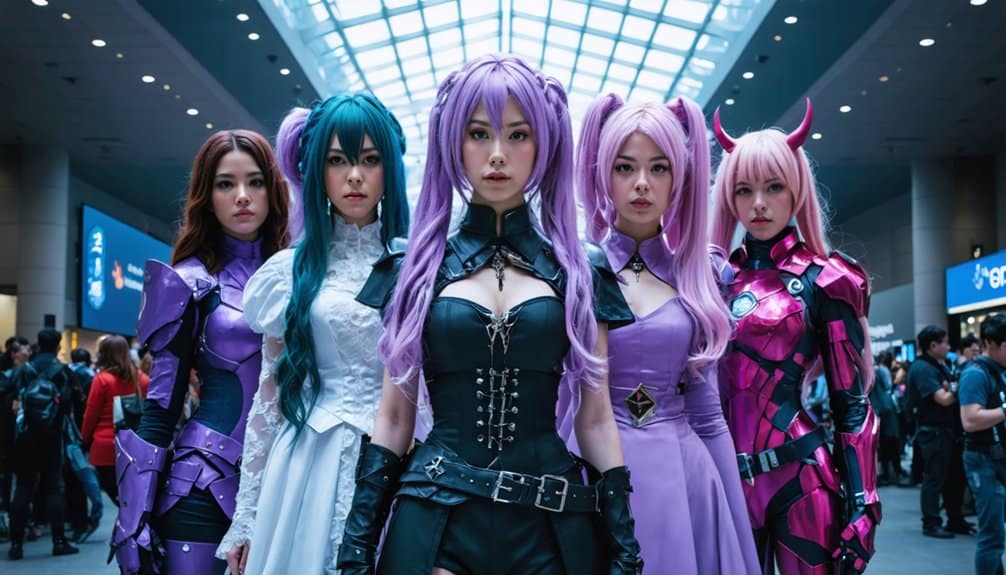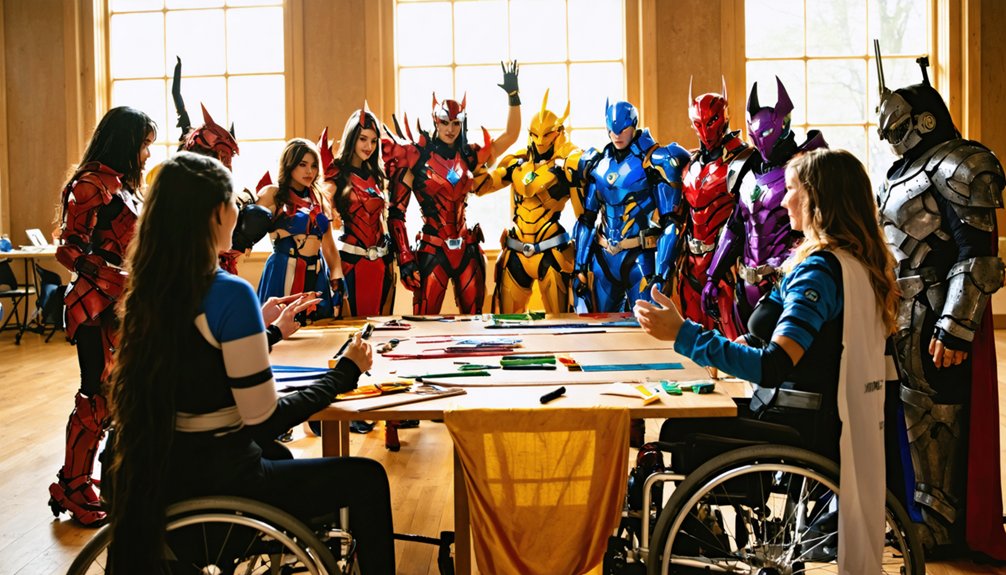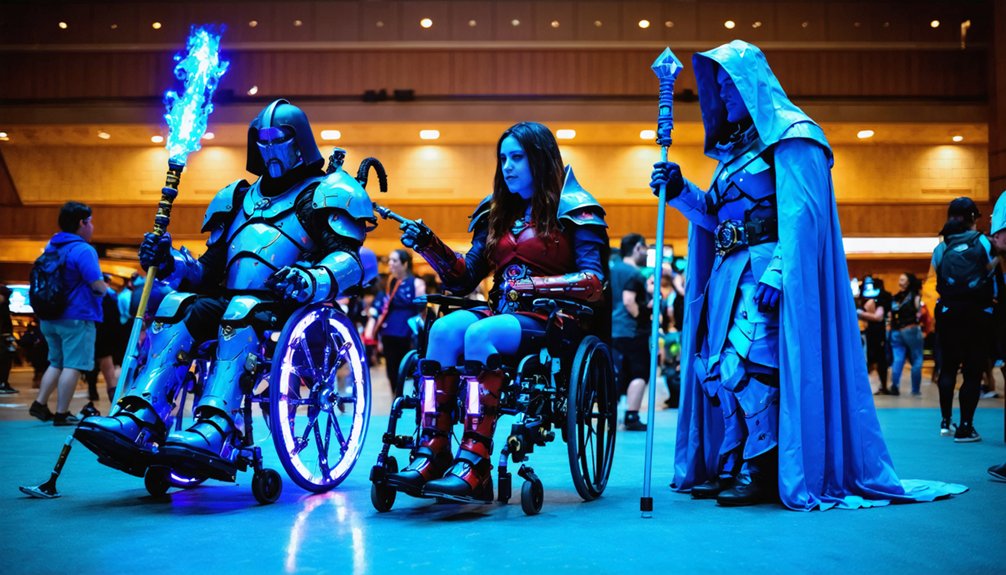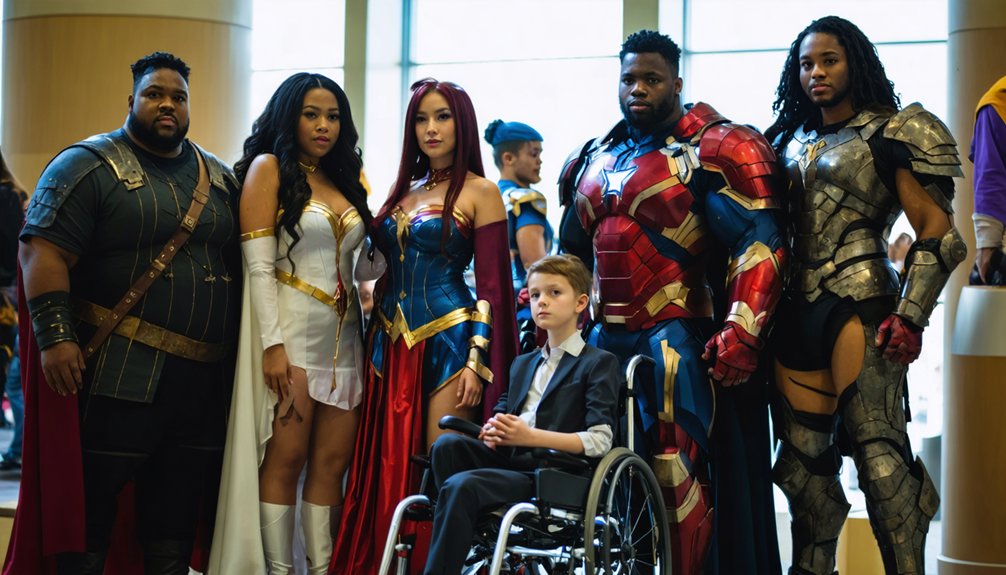
You’ll find cosplay culture challenging traditional body standards through movements like #28daysofblackcosplay and community frameworks that celebrate authentic forms over exact measurements. As you engage with more characters, you’ll experience reduced self-monitoring and access emotional qualities through performative identity—whether channeling superhero fortitude or villain confidence. Veteran cosplayers actively counteract comparison culture by emphasizing equal validity across body types, creating protective buffers against harmful gatekeeping. The convention floor reveals how diverse practitioners command equal attention, transforming fragmented identities into cohesive self-expression through costume embodiment.
Key Takeaways
- Cosplay success increasingly prioritizes emotional embodiment and character connection over achieving exact body measurements or traditional physical accuracy standards.
- Grassroots movements like #28daysofblackcosplay challenge representation gaps and actively resist algorithmic pressures favoring conventional beauty standards on social platforms.
- Community frameworks buffer practitioners against harmful comparisons by celebrating diverse body types and emphasizing that all cosplayers hold equal validity.
- Frequent cosplay participation reduces self-monitoring and external judgment influence, enabling authentic self-expression and integration of admired character qualities.
- Veteran cosplayers combat gatekeeping by sharing struggles, offering technique support, and redefining success around authentic form rather than body modification.
Breaking Free From Character Body Type Standards
Within convention halls and online cosplay communities, an unspoken measurement system operates where participants routinely assess whether a cosplayer’s shoulder-to-hip ratio matches their chosen character’s proportions, whether their height aligns with canonical descriptions, and whether their limb length creates the “right” silhouette. You’re traversing standards that drive body modification struggles—padding, corsetry, silicone overlays—transforming yourself toward hypermasculine or hypersexualized ideals.
Yet cosplay success redefinition emerges through practitioners like Adam Savage, who insists body type shouldn’t inhibit costume exploration. You’ll discover your most memorable encounters aren’t carbon-copy replicas but interpretations prioritizing emotional embodiment over exact measurements. This shift challenges entrenched community benchmarks, allowing custom production and innovative character presentations where your authentic form becomes the foundation rather than the obstacle requiring correction.
How Social Media Transformed Cosplay Representation
As platforms like Instagram, TikTok, and Twitter reshaped creative communities after 2010, cosplayers gained unprecedented control over their self-representation while simultaneously encountering algorithmic pressures that rewarded conventional beauty standards.
Social media gave cosplayers creative freedom but trapped them in algorithms that favor mainstream beauty over diverse artistic expression.
You’ll observe how these digital infrastructures function as identity laboratories—your Instagram stories enable raw self-expression, while curated feeds showcase polished event photography.
The #28daysofblackcosplay movement demonstrates grassroots resistance to representation challenges, yet Reddit threads still enforce “look like the character” gatekeeping that marginalizes non-traditional practitioners.
Social identity formation now occurs through backstage preparation posts and frontstage performance documentation. You’re traversing contradictory forces: platforms democratizing visibility while simultaneously amplifying idealized aesthetics from top-tier influencers whose modeling-style content sets impossible benchmarks for authentic community participation.
Finding Confidence Through Character Embodiment
Beyond the algorithmic pressures and representation battles that define digital cosplay spaces, the convention floor reveals a more intimate transformation. When you embody Harley Quinn’s chaos or Captain Marvel’s authority, you’re engaging in psychological growth through deliberate character trait adoption.
This self actualization journey operates through specific mechanisms:
- Reduced self-monitoring: More characters cosplayed correlates with decreased concern for others’ opinions (Pearson r, p<0.05)
- Trait channeling: Accessing superhero fortitude or villain confidence through performative identity
- Embodied materiality: Homemade costumes generate affects that make fragmented identities feel whole
- Authentic presentation: Increased cosplay frequency enables self-expression without external judgment influence
You’re not masking insecurity—you’re integrating admired qualities into your identity, transforming internal psychology while making fandom visible through material practice.
The Psychology Behind Cosplay and Self-Perception
When you step into a convention hall wearing your chosen character’s costume, you’re immediately measuring yourself against hundreds of other cosplayers—a natural social comparison that can either diminish or elevate your self-perception.
The cosplay community functions as a protective buffer against these potentially harmful comparisons, actively celebrating diverse body types and skill levels rather than enforcing rigid standards.
You’ll find that veteran cosplayers deliberately counteract comparison culture by sharing behind-the-scenes struggles, offering constructive feedback, and emphasizing that every interpretation of a character holds equal validity regardless of body shape or craftsmanship level.
Social Comparison Effects
Within cosplay conventions and online communities, practitioners navigate a dense landscape of comparison opportunities that fundamentally differs from everyday social environments. You’re exposed to considerably more upward social comparison targets than non-cosplayers encounter, creating unique pressures on body image and self-perception.
Four primary comparison mechanisms emerge:
- Convention hall visibility amplifies real-time peer benchmarking
- Social media portfolios create curated idealized standards
- Character accuracy discussions spotlight physical attributes
- Cosplay photography proliferates comparison touchpoints
These dynamics transform motivational comparisons into double-edged experiences. While you might draw inspiration from skilled cosplayers, excessive upward comparison risks undermining self worth enhancement. The community’s visibility—both online and at events—intensifies self-perception pressures that wouldn’t exist in conventional social contexts, demanding intentional navigation between inspiration and detrimental comparison.
Community as Protective Factor
Though social comparison mechanisms create vulnerability to negative self-evaluation, the cosplay community simultaneously constructs powerful protective frameworks that buffer participants against these psychological risks.
When you’re traversing external criticism, you’ll find the community functions as collective armor—supporting mental health through validated acceptance of diverse body types and authentic self-expression.
You’ll observe participants channeling emotions through character embodiment, creating psychological distance that facilitates safer exploration of identity aspects typically constrained in conventional settings.
The emotional regulation benefits emerge as you engage more deeply: inhibitions dissolve, confidence builds incrementally, and you develop resilience against judgment.
This communal acceptance doesn’t merely tolerate difference—it celebrates your authentic presentation, transforming potential vulnerability into empowered self-discovery.
You’re experiencing identity integration rather than escape, accessing fuller human emotional capacity through shared cultural participation.
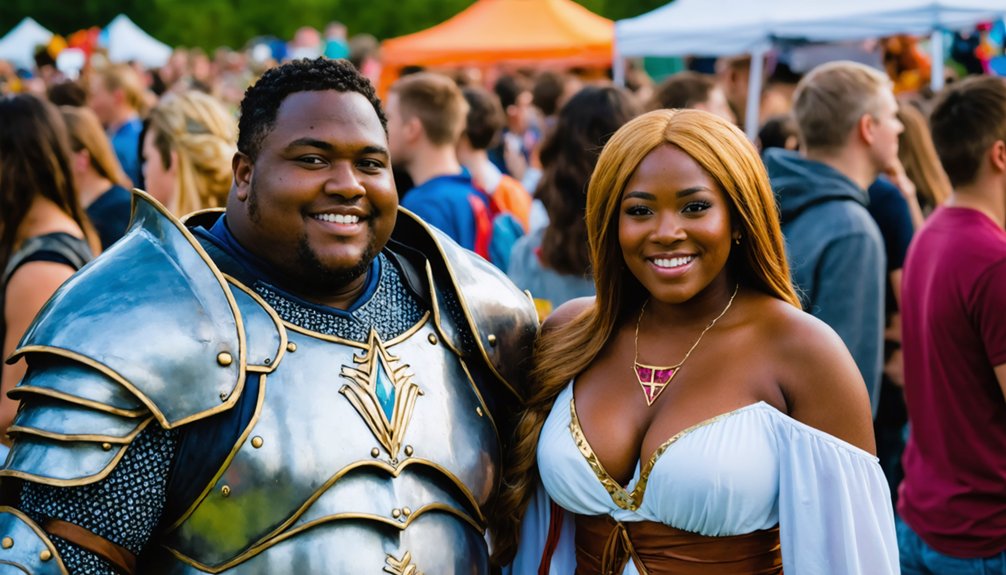
When you walk through a convention hall and see a cosplayer’s flawless armor or perfectly styled wig, you’re experiencing what social psychologists call upward comparison—measuring yourself against someone whose craft appears superior. This pressure intensifies as you encounter the 27% of cosplayers attending five or more events yearly, each gathering exposing you to increasingly skilled makers whose $500-2000 annual budgets and decade-long experience create professional-grade costumes.
Yet you’ll also observe how these same spaces generate immediate support: fellow cosplayers stopping mid-hallway to compliment a first-timer’s hot-glued foam sword, experienced makers sharing techniques between photo sessions, and group cosplays where beginners and veterans stand side-by-side as equal members of their chosen fandom.
Upward Comparisons Fuel Pressure
Social media feeds scroll past at convention hotel breakfasts, where cosplayers refresh Instagram between bites of continental breakfast, measuring their work-in-progress armor against the flawless builds dominating their screens. This amplified self scrutiny intensifies as you compare yourself to professionals whose curated portfolios set unrealistic costume standards.
Upward comparisons erode confidence through constant exposure to idealized bodies and perfectly crafted details.
The pressure compounds through:
- Professional cosplayers displaying unattainable physiques across platforms where attractiveness drives visibility
- Competition circuits at major conventions hosting 130,000+ attendees, creating repeated peer evaluation cycles
- Hyper-sexualized source characters demanding body conformity you can’t achieve naturally
- High-investment participants spending $500+ per event, escalating appearance expectations
You’re caught measuring real flesh against impossible fiction, digital curation against analog reality.
Community Support Reduces Harm
While upward comparisons amplify self-doubt, you’ll find the cosplay community simultaneously constructs protective networks that absorb comparison’s sharper edges. At conventions, you’re embedded in systematic peer encouragement—64% of makers attend three-plus events yearly, establishing repeated touchpoints for validation.
You’ll observe micro-populations forming around shared experiences: photographers, seamstresses, and character enthusiasts crossing fandom boundaries to reinforce collective identity. These infrastructures operate both digitally and physically, with online groups reducing isolation through norm-sharing while convention spaces normalize body diversity through immersive participation.
When you engage with fellow cosplayers, customary compliments flow regardless of personal aesthetic preference, creating reciprocal support loops. Black cosplayers and women, despite facing heightened backlash, leverage these networks to counterbalance negativity. You’re witnessing ethnographic evidence of community resilience—where structural acceptance outweighs individual comparison anxieties.
Building Inclusive Spaces That Celebrate All Bodies
Over the past fifteen years, the cosplay community has undergone a radical transformation in how it defines belonging and acceptance. You’ll find conventions now actively implementing disability centered accommodations and sensory inclusive environments that weren’t considered previously. Arizona’s convention expansion from 4 to 20+ events demonstrates this commitment to accessibility.
Conventions now prioritize disability accommodations and sensory-friendly spaces, marking a fundamental shift in how the cosplay community defines authentic belonging.
Modern convention design includes:
- Priority queuing systems for persons with mobility challenges
- Accessibility stickers enabling human or animal companions
- Sensory-friendly hours with reduced noise and dimmed lighting
- Designated spaces for creative reimagining and community bonding
These physical venues transform urban spaces into welcoming environments where you can participate regardless of body type or ability. Convention organizers recognize that genuine inclusivity requires intentional design—creating spaces where diverse bodies aren’t merely tolerated but celebrated as essential to the culture’s evolution.
Frequently Asked Questions
What Should I Do if Someone Criticizes My Body at a Convention?
Respond confidently by acknowledging your worth without engaging hostility. Seek community support from fellow cosplayers who understand body positivity’s importance in convention culture. You’re embodying creativity, not conforming to unrealistic standards—your presence challenges outdated norms and enriches the community’s diversity.
Are There Cosplay Communities Specifically for Plus-Size or Diverse Body Types?
Like finding your tribe in a vast galaxy, you’ll discover inclusive cosplay meetups and diverse cosplay workshops at conventions specifically celebrating plus-size creators. These spaces foster authentic connections where body diversity thrives through shared experiences and innovative costume collaboration.
How Can Parents Encourage Body-Positive Cosplay for Their Children?
You’ll foster body-positive cosplay by encouraging self-expression through character choices your child loves, promoting self-confidence via celebrating their creative craftsmanship over physical accuracy, and actively participating in diverse cosplay communities where all body types receive enthusiastic celebration.
Do Professional Cosplayers Face Different Body Image Pressures Than Hobbyists?
“Different strokes for different folks”—you’ll notice professionals endure intensified body image scrutiny as microcelebrities setting community benchmarks. They’re driven toward unrealistic cosplay standards despite underweight status, while hobbyists navigate broader, more democratized comparison networks with varied protective factors.
What Resources Exist for Learning Body-Inclusive Costume Construction Techniques?
You’ll find body-inclusive techniques through cosplay community workshops, where makers share fabric modifications and pattern adjustments during construction sessions. Online forums document real-time problem-solving, while convention panels demonstrate adaptive methods through hands-on collaboration and peer mentorship.