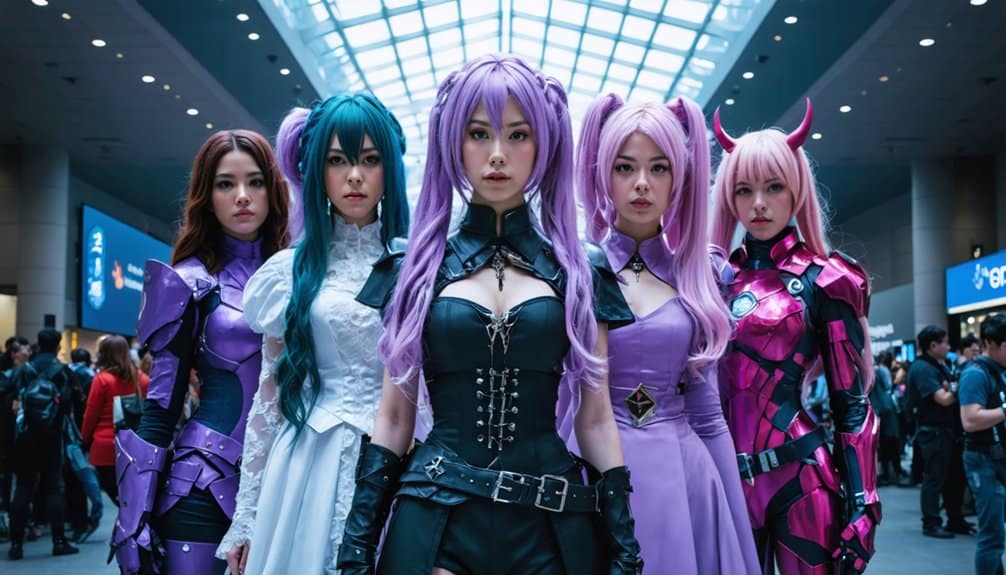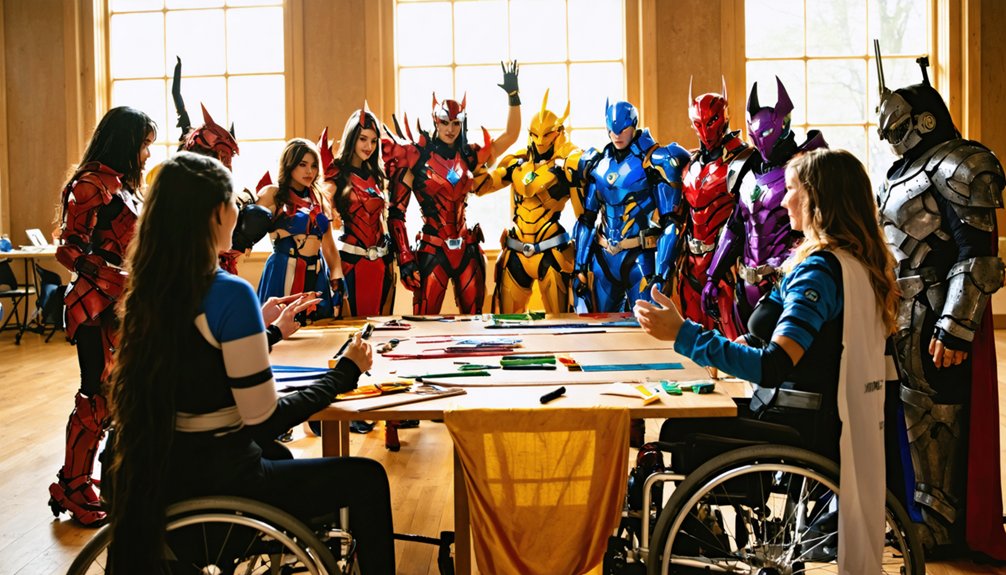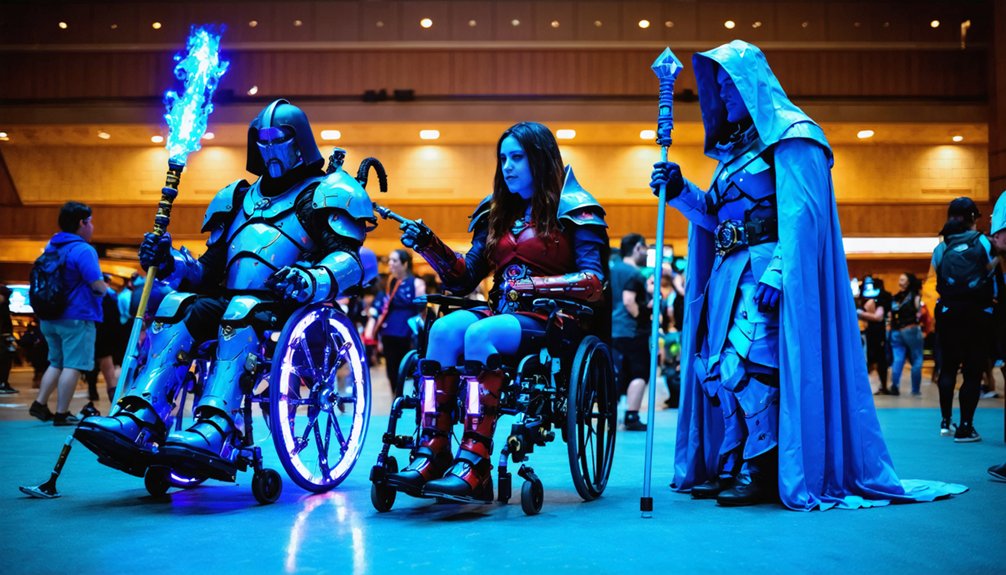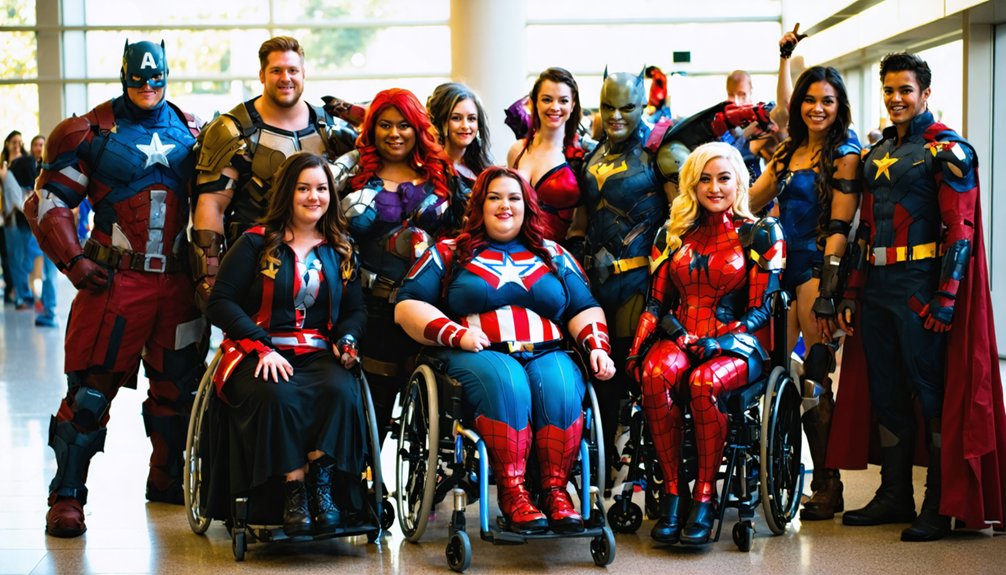
Body positivity messages transform cosplay from a space enforcing narrow corporeal standards into one validating diverse embodiments as legitimate character interpretations. You’ll find these messages counteract thin-ideal pressures by decoupling costume success from physical compliance, reducing self-objectification and modification demands. When communities celebrate craftsmanship over conformity, they create protective factors against body shame internalization, particularly for marginalized identities facing heightened scrutiny. This recontextualization enables your body to function as a cultural agent rather than a site of surveillance, fundamentally reshaping how authenticity gets defined beyond restrictive aesthetic expectations.
Key Takeaways
- Body positivity messages counter thin-ideal pressures that drive cosplayers toward harmful body modifications and excessive self-monitoring.
- Celebrating diverse body types validates that costume success depends on craftsmanship and character connection, not physical conformity.
- Movements like “Anyone Can Cosplay” reduce body dissatisfaction by decoupling character accuracy from exact physical replication.
- Supportive community interactions create protective factors that buffer cosplayers against body shame and societal beauty standards.
- Exposure to varied body representations disrupts monolithic aesthetic expectations and enables broader creative self-expression through character embodiment.
Empowerment Through Self-Expression Transforms Body Surveillance Patterns
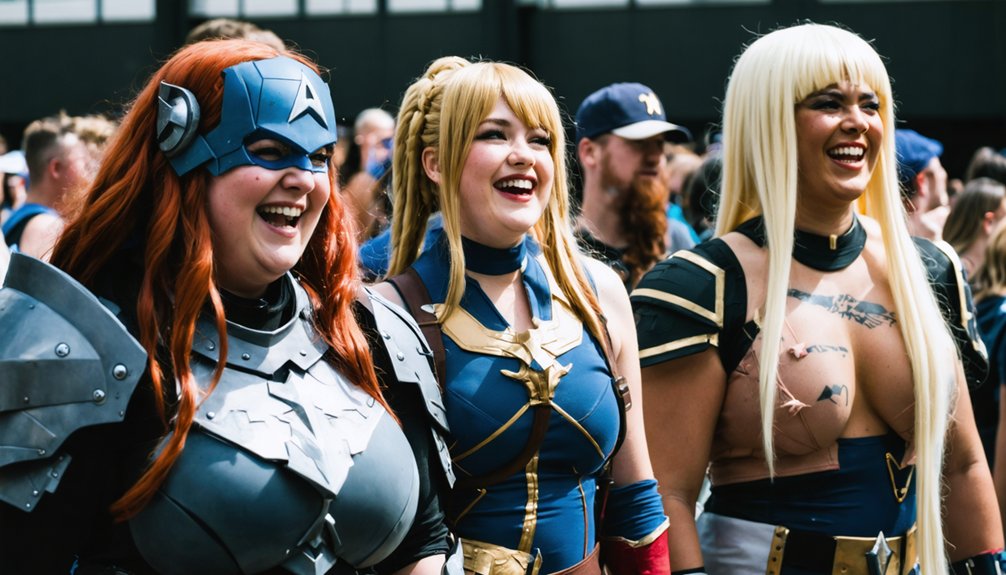
When cosplayers don fabric and makeup to embody beloved characters, they simultaneously enact a radical departure from the habitual self-monitoring that characterizes contemporary body politics. This embodiment practice redirects surveillance away from perceived bodily “flaws” toward character authenticity, generating improved self awareness through theatrical displacement.
Gender-questioning individuals exemplify this dynamic when portraying male characters, temporarily suspending compulsory feminine embodiment while exploring alternative presentations. The performance frame permits participants to recontextualize features previously marked as deficits—prominent elbows, body proportions—as simply components of character portrayal rather than sites requiring correction.
This escapism from conventions doesn’t signal avoidance but strategic repositioning: you’re not hiding your body; you’re deploying it differently. Community spaces that celebrate craftsmanship over conformity further dismantle internalized aesthetic hierarchies, enabling cosplayers to inhabit public space without defensive hypervigilance.
Breaking Free From Character Accuracy and Physical Proportions
You navigate cosplay spaces where accuracy standards impose thin-ideal body types through exercising regimens and costuming modifications, creating distinctive pressures tied to character proportions rather than generalized beauty norms. These community-reinforced expectations function as risk factors when 63.6% of practitioners feel discomfort with revealing costumes, yet protective factors emerge through body positivity movements like “Anyone Can Cosplay” that challenge physical conformity requirements.
Breaking from proportion-based accuracy reduces modification pressures as you prioritize character identification through personality enactment over physical replication, transforming cosplay from a site of body surveillance into one of cultural agency.
Challenging Narrow Body Standards
The cosplay community perpetuates a paradox: while celebrating fictional transformations, it simultaneously enforces rigid expectations around physical accuracy that mirror mainstream beauty standards. You’ll find thin-ideal internalization driving body dissatisfaction among cosplayers, particularly when community representation narrowly defines acceptable body shapes and proportions.
These standards reflect broader societal thin-positive, fat-negative attitudes with profound cultural significance. The pressure manifests through social comparisons targeting character designs, celebrities, and fellow cosplayers portraying identical roles. Social media amplifies upward comparisons to younger selves and idealized versions.
This conformity pressure often pushes you toward body modification attempts. Diverse backgrounds face heightened challenges meeting exact-likeness expectations, revealing how systemic beauty norms infiltrate even communities built on creative transformation. The “Anyone Can Cosplay” movement directly confronts these restrictive frameworks through body appreciation panels and representation advocacy.
Reducing Modification Pressure
Character accuracy demands extract tangible costs from cosplayers’ bodies and wallets, creating a modification cascade that begins with community expectations and culminates in physical transformation attempts. You’re traversing a landscape where 72.1% cite financial barriers and 54.5% fear pain associated with bodily alterations.
The “Anyone Can Cosplay” movement disrupts this cycle by validating body modification alternatives that prioritize your embodied experience over character proportions. When you exercise personal aesthetic preferences, you’re resisting surveillance mechanisms that generate shame through comparison.
Community-level interventions reducing accuracy pressures demonstrate measurable decreases in self-objectification and body monitoring behaviors. By decoupling costume success from physical compliance, you’ll participate in structural change that redefines legitimacy beyond narrow corporeal standards, creating space for innovative interpretations that honor diverse embodiments.
The Psychological Shield Against Thin-Ideal Pressures
Within spaces that actively reject dominant beauty narratives, cosplayers construct formidable defenses against thin-ideal pressures through community-sustained body diversity. This community based resistance operates through several mechanisms:
- Exposure to varied body types portraying beloved characters disrupts monolithic beauty standards
- Supportive interactions create protective factors that buffer against body shame internalization
- Critical engagement with character embodiment reduces adherence to extreme thin-ideal conformity
- Collective validation of diverse presentations counters societal pressures for body modification
Your individual expression fueled confidence emerges when communities normalize bodies previously marginalized by mainstream media. The cosplay environment’s emphasis on character accuracy over conventional attractiveness enables participants to experience psychological liberation from ought-self pressures.
Through witnessing and enacting body-positive representations, you develop critical consciousness that challenges narrow aesthetic expectations, transforming costume assumption into political resistance against oppressive beauty regimes.
How Sexualized Cosplay Can Reduce Body Shame When Chosen Freely
When you select sexualized cosplay through autonomous decision-making rather than external coercion, the embodied practice can disrupt normative pathways between self-objectification and body shame. Your enjoyment of sexualization within this chosen context correlates with increased feelings of empowerment, which subsequently diminishes body surveillance behaviors that typically precede shame responses.
This mechanism operates distinctly from passive consumption of sexualized imagery, as your active participation creates psychological buffers that transform potentially objectifying experiences into assertions of bodily agency.
Empowerment Through Personal Choice
Although mainstream discourse often frames sexualized presentation as inherently objectifying, cosplayers who freely choose provocative character portrayals demonstrate a more complex psychological reality. Your enjoyment of sexualization positively predicts empowerment, which subsequently reduces body surveillance and shame.
This self-efficacy through embodiment operates via specific mechanisms:
- Character-driven self-assurance extends beyond conventions into daily interactions, as embodying confident personas builds lasting psychological resilience
- Diminished surveillance emerges when empowerment mediates the relationship between sexualized presentation and body shame
- Personal agency in costume selection liberates you from external gaze control, fostering vulnerability as strength
- Trait exploration through sexualized cosplay accesses characteristics typically unexpressed in routine contexts
Your freely chosen sexualization thus becomes transformative rather than diminishing, challenging reductive narratives about provocative self-presentation.
Breaking Self-Objectification Patterns
Free choice operates as the critical variable distinguishing empowering sexualized cosplay from objectifying experiences. When you select sexualized costumes autonomously rather than through external pressure, you transform potential objectification into positive self reflection. This distinction matters because research demonstrates that habitual body surveillance—monitoring your appearance for others’ evaluation—increases body shame.
However, your intentional engagement with sexualized aesthetics disrupts this pattern by centering your agency rather than others’ gaze. You’ll find that aesthetic self acceptance emerges when choice remains genuinely voluntary, uncompromised by harassment threats or unrealistic source material standards. Your autonomous selection reframes the body from object-to-be-viewed into a site of creative expression.
This transformation requires convention spaces that protect your safety and community structures that validate diverse body types, enabling sexualized cosplay to function as self-determined performance rather than compulsory objectification.
Enjoyment Reduces Body Surveillance
Autonomous choice alone can’t guarantee positive outcomes when the activity itself amplifies body surveillance mechanisms. While you might exercise freedom of expression through artistic interpretation, research demonstrates that sexualized cosplay intensifies rather than diminishes body-focused anxiety.
Evidence reveals concerning patterns:
- Sexualized imagery increases endorsement of traditional beauty ideals and self-objectification, even when participants freely choose engagement
- Cosplayers experience heightened appearance monitoring through comparisons with fellow participants, source material, and their former selves
- Narcissistic fragility correlates with social appearance anxiety in cosplay communities
- Continued exposure to sexualized content produces body dissatisfaction, disordered eating, and depression regardless of voluntary participation
Your enjoyment doesn’t neutralize surveillance mechanisms inherent to sexualized performance. The research suggests that character connection and community bonds—not sexualization—foster positive cosplay experiences.
Mental Health Benefits Linked to Inclusive Cosplay Communities
When marginalized individuals don costumes and enter convention spaces, they engage in practices that function as powerful mental health interventions within body-positive frameworks. You’ll find that inclusive cosplay communities establish protective factors against depression, social anxiety, and loneliness through validation experiences and community connections.
Cosplay communities create protective mental health spaces where marginalized individuals find validation, connection, and therapeutic intervention through inclusive body-positive frameworks.
These environments facilitate open communication where neurodivergent participants discover family-like support structures previously unavailable in mainstream contexts. The costume itself operates as an avatar, disengaging social fears while enabling identity exploration and self-acceptance.
Through emotional validation mechanisms—recognition, praise, and mentorship—you develop confidence and combat isolation. Research demonstrates that immersive participation, convention attendance, and creative engagement correlate with reduced depression symptoms across spiritual and physical wellness dimensions.
This transformative leisure engagement model positions cosplay as legitimate therapeutic intervention, particularly for those traversing intersecting marginalized identities.
Authentic Self-Presentation Without Fear of External Judgment
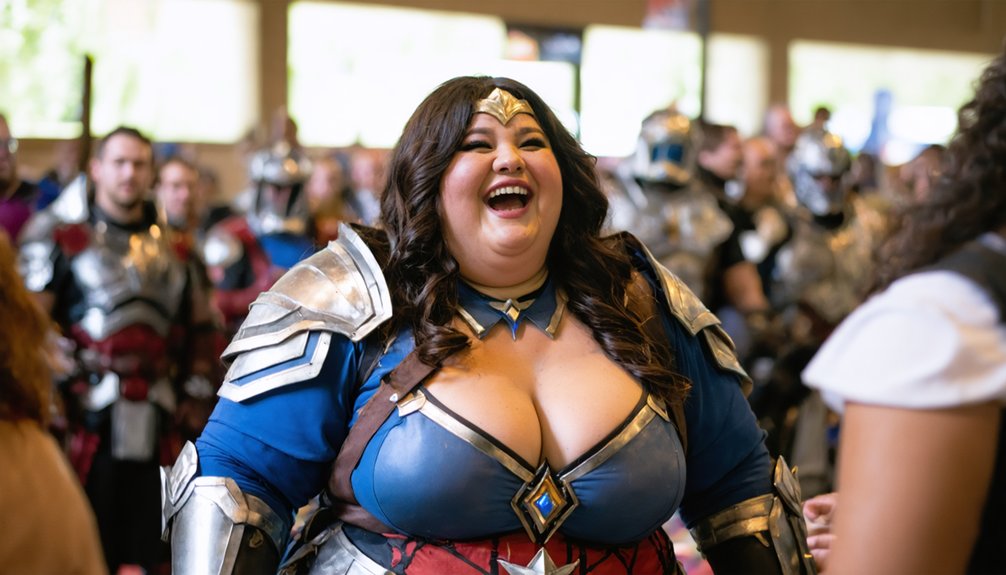
Beyond establishing supportive networks that buffer psychological distress, these inclusive cosplay spaces actively reconfigure how participants present themselves across social contexts. Your repeated engagement correlates considerably with reduced self-monitoring (r=0.251, p<0.05), enabling judgment free self expression aligned with internal desires rather than external expectations.
This transformation manifests through:
- Embodied identity performance that harmonizes bodily movements with character authenticity
- Self-presentation practices extending from fan communities into everyday settings
- Costume choices reflecting personal agency—50% selecting open-chest designs, 31.8% preferring thigh-exposed options
- Bodies functioning as cultural agents liberated from normative aesthetic surveillance
- Supportive fan groups enable authentic self-presentation, reducing self-monitoring behaviors at statistically significant levels
- Diverse cosplayer encounters reframe your perceived flaws as distinctive attributes valued within the collective
- Community interactions serve as protective factors mitigating body dissatisfaction despite upward social comparisons
- Campaigns promoting critical engagement with narrow standards challenge exclusionary conventions that marginalize Black, plus-sized, and darker-skinned participants
As cosplay frequency increases, you’re empowered to disregard others’ opinions entirely, presenting authentically without concern for judgment. This recalibration challenges how bodies perform identity within broader social structures, demonstrating cosplay’s capacity to dismantle self-objectifying behaviors through sustained participatory practice.
The Body as Cultural Agent in Performance Art
The cosplayer’s body transcends decorative function to become an active site of cultural production, where flesh and fabric converge into political statement. Through body centric critique, you’re challenging representational hierarchies that’ve historically marginalized diverse physiques within fan communities.
Your embodied performance constitutes cultural memory preservation, archiving counter-narratives against dominant beauty standards while claiming cosplay spaces as deterritorialized zones of resistance. When you occupy characters through non-normative bodies, you’re generating reflexive techniques that disrupt spectator expectations, forcing audiences to confront their complicity in body-shaming cultures.
This transformation activates your body’s inherent political potency—each performance becomes enunciation against internalized oppression. You’re not merely wearing costumes; you’re deploying flesh as medium for social knowledge transfer, connecting individual experience to universal struggles for bodily autonomy and authentic self-representation.
Community Support Systems That Challenge Narrow Beauty Standards
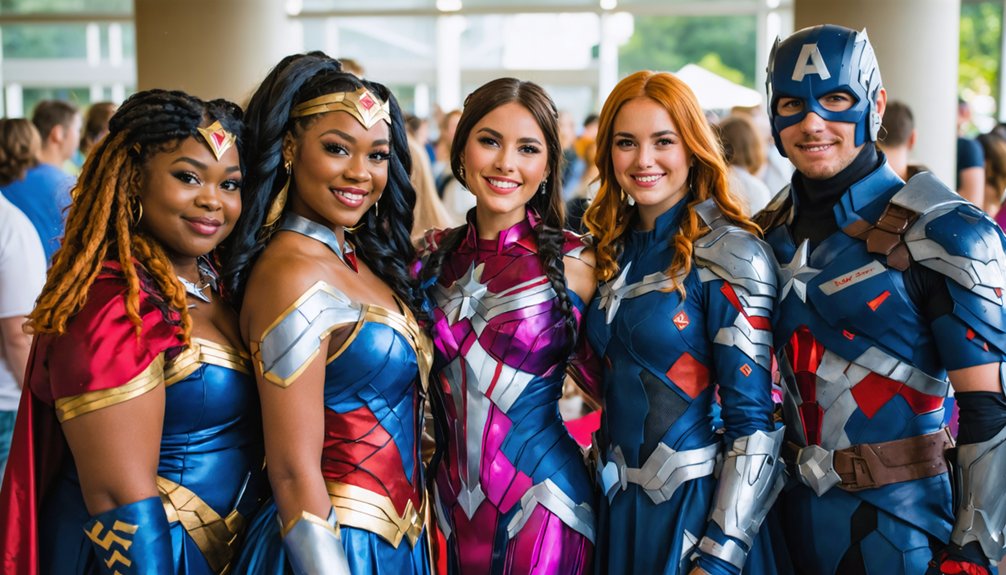
Individual acts of bodily resistance gain amplification through collective networks that actively redistribute power within cosplay spaces. Community building initiatives like the “Anyone Can Cosplay” movement establish protective infrastructures where you’ll encounter social acceptance fostering that directly counters thin-ideal internalization. These systems function as deliberate interventions against conformity pressures:
Collective cosplay networks transform individual resistance into shared power, building protective spaces that actively challenge body conformity and redistribute social acceptance.
Yet barriers persist—underrepresented cosplayers require fourfold effort for visibility, revealing how dominant structures resist transformation even within ostensibly progressive spaces.
Long-Term Wellness Effects of Sustained Cosplay Participation
When participation extends beyond isolated events into sustained practice, cosplay demonstrates measurable protective effects against multiple mental health vulnerabilities. Your longitudinal protective effects accumulate through years of attendance, with each successive event strengthening buffers against depression, social anxiety, and loneliness.
This enduring involvement maintains elevated wellness dimensions—particularly spiritual and physical—while countering thin ideal pressures that typically erode body image over time.
Your intrinsic motivation focus becomes central to these outcomes. When you engage cosplay as creative expression rather than validation-seeking, you’ll experience sustained subjective well-being that persists between events.
The temporal dimension matters: your mental health responses vary with elapsed time post-event, yet behavioral measures consistently predict ongoing ill-being reduction. Through continuous identity exploration and community immersion, you’re cultivating therapeutic benefits that recreational therapy programs now deliberately replicate.
Frequently Asked Questions
What Should I Do if Someone Body-Shames My Cosplay at an Event?
Like armor deflecting arrows, you’ll confront the offender directly with firm boundaries: “Cosplay is for everyone.” Don’t bear this alone—seek event organizer support immediately, documenting incidents. Your visibility challenges systemic gatekeeping, transforming conventions into radically inclusive spaces.
How Can Parents Encourage Body-Positive Cosplay for Their Children?
You’ll foster positive self expression by celebrating character choices that align with your child’s identity, while family encouragement should prioritize creative exploration over appearance standards, creating empowering spaces where diverse body representations challenge normative cosplay expectations innovatively.
Are There Specific Cosplay Communities Focused on Plus-Size Representation?
Like tributaries feeding a river, you’ll find specialized communities championing increased representation through panels at Ichibancon and grassroots networks. These spaces center diverse body types, fostering intersectional solidarity where plus-size cosplayers collaboratively challenge exclusionary norms.
Does Body Positivity in Cosplay Differ Across Various Fandoms?
Yes, you’ll find body positivity varies greatly across fandoms. Queer communities emphasize gender-divergent expression, while anime contexts link empowerment to reduced shame. Cultural influences and diverse body types receive different validation depending on each fandom’s intersectional norms and practices.
Can Cosplay Help With Eating Disorder Recovery or Body Dysmorphia Treatment?
You’ll find cosplay offers mixed therapeutic potential—immersive participation correlates with lower depression levels, providing cosplay mental health benefits and a cosplay self esteem boost, yet form-fitting costume pressures simultaneously trigger disordered eating behaviors requiring careful clinical consideration.