You’ll encounter systemic barriers as a POC cosplayer through algorithmic suppression reducing your visibility by up to 95%, while facing scrutiny for character choices that white cosplayers navigate freely. Platforms shadowban cultural elements, conventions concentrate in economically exclusive urban centers, and double standards persist where blackface gets praised as “accuracy” yet you’re questioned for portraying characters outside your race. These intersecting challenges—from photography bias in lighting darker skin tones to tokenistic diversity panels—reveal how structural racism permeates geek culture’s supposed meritocracy, demanding thorough examination of each barrier.
Key Takeaways
- Algorithmic curation diminishes POC cosplayer visibility, with #BlackCosplay receiving under 5% of total #cosplay views despite substantial creator participation.
- Blackface and racefacing persist in cosplay, with white cosplayers praised for darkening skin while Black cosplayers face rejection for character choices.
- Black cosplayers encounter asymmetrical authenticity demands, facing scrutiny for portraying non-Black characters that white cosplayers avoid when crossing racial boundaries.
- Geographic and economic barriers concentrate conventions in expensive urban centers, creating exclusion zones that disproportionately impact rural and lower-income POC communities.
- POC remain underrepresented despite comprising over 40% of U.S. demographics, facing intersecting challenges from limited media representation and cultural appropriation concerns.
The Visibility Crisis: How POC Cosplayers Are Erased From Digital Platforms
Algorithmic curation systems across major social media platforms systematically diminish the visibility of POC cosplayers through what appears as neutral engagement optimization but functions as digital redlining. You’ll find Instagram and TikTok prioritizing viral content while sidelining POC posts with lower engagement metrics—a feedback loop where reduced visibility guarantees continued marginalization.
Algorithmic content moderation flags cultural elements as “sensitive,” triggering shadowbans that correlate directly with ethnic features. Social media curation bias manifests in hashtag analytics showing #BlackCosplay receiving under 5% of #cosplay’s 2 billion views. Reddit’s r/cosplay demonstrates this numerically: POC creators receive 30% fewer comments despite identical content quality.
The statistics reveal POC cosplayers averaging 50% fewer YouTube subscribers and experiencing 40% reduced discoverability—quantifiable erasure masked as platform neutrality.
Raceface Practices and the Ongoing Defense of Harmful Traditions
You’ll notice that blackface persists in cosplay communities despite widespread criticism, while racefacing practices targeting Asian, Latinx, or Indigenous features receive comparatively less public scrutiny and pushback.
This asymmetry reveals how anti-Black racism’s particular historical weight creates uneven awareness across different forms of ethnic mimicry, allowing some practitioners to claim ignorance about yellowface or brownface while blackface remains universally condemned.
The differential treatment exposes gaps in community education where cosplayers selectively acknowledge harm based on which racialized histories they’ve been taught to recognize.
Blackface Persists Despite Criticism
Despite widespread criticism and documented harm, white cosplayers continue to darken their skin when portraying characters of color, often receiving praise for their “accuracy” while Black cosplayers face rejection for the inverse. This asymmetry reveals how minstrelsy’s historical context persists in contemporary fan practices.
You’ll find communities defending brownface as artistic freedom, dismissing concerns about stereotypes rooted in 19th-century caricature traditions. The global transmission of these norms became evident when Overwatch’s official account amplified a Sombra cosplayer in brownface, triggering backlash that organizers initially dismissed.
Even carnival participants darkening skin for Mr. T costumes face minimal accountability, with authorities reporting “no issues” despite hundreds protesting online. Digital platforms now extend this legacy through performative blackness in GIFs and TikTok trends, repackaging exploitation as expression.
Asymmetrical Scrutiny Across Races
The same costume worn by different bodies receives radically different judgments. When you’re white and cosplay anime characters, you’ll rarely face accusations of cultural appropriation. Yet cosplayers of color portraying identical characters encounter immediate backlash, revealing racial gatekeeping practices embedded within fandom spaces.
This asymmetric application of standards operates through selective enforcement—accuracy concerns materialize only when Black and Asian cosplayers step outside arbitrarily assigned racial boundaries.
You’ll notice defenders cite intent over impact, claiming appreciation negates harm while ignoring centuries of minstrelsy and yellowface. Geographic inconsistencies further complicate discourse: practices normalized in homogeneous regions face prohibition in multicultural contexts.
Meanwhile, limited media representation restricts cosplayers of color to narrow character pools, denying them the creative freedom white participants enjoy unchallenged. Community moderation mechanisms themselves perpetuate systemic bias.
Double Standards in Character Selection and Authenticity Expectations
Black cosplayers consistently encounter scrutiny that rarely applies to their white counterparts when portraying characters outside their racial identity. You’ll notice demands for “accuracy” materialize selectively—Black creators face pressure to match skin tones precisely, while white cosplayers traverse racial boundaries without equivalent backlash. This gatekeeping contradicts cosplay’s foundational ethos yet persists through photographer exclusions, algorithmic suppression, and harassment campaigns.
The authenticity paradox becomes evident: communities tolerating Chinese cosplayers darkening skin simultaneously condemn Black creators for character choices. These double standards reflect systemic barriers requiring inclusive design approaches addressing representation gaps—from limited Black characters to media visibility inequities.
Transformation demands collective community organizing challenging these racialized hierarchies, reframing authenticity beyond phenotype toward craft excellence and creative interpretation.
Demographic Realities Versus Actual Representation in Cosplay Spaces
You’ll notice a stark disconnect: while Black, Asian, and Hispanic populations comprise over 40% of the U.S. demographic landscape and contribute to a $4.5 billion global cosplay market, these communities remain conspicuously underrepresented in convention spaces and online visibility.
The paradox deepens when you consider that Asia Pacific commands nearly half of the market revenue, yet Western cosplay culture continues to privilege Eurocentric character interpretations and participation norms.
Geographic concentration in expensive convention circuits—where 64% of active cosplayers attend three or more events yearly—creates economic gatekeeping that disproportionately excludes communities already facing systemic barriers to entry.
Population Growth Meets Underrepresentation
Despite constituting a $4.62 billion global market projected to reach $23 billion by 2030, cosplay spaces reveal stark disconnects between demographic participation and representational visibility. You’ll notice the Asia Pacific region commands 49.6% market share, yet media platforms chiefly showcase Caucasian creators.
Survey data mirrors U.S. Census demographics—68% Caucasian, 12% Asian, 5% Latino/Hispanic—but this alignment masks critical underrepresentation relative to shifting population dynamics. While 64% of participants create 1-2 costumes annually, spending $101-400 per piece, Black and minority cosplayers remain systematically excluded from high-visibility platforms.
This disparity emerges from intersectional identity factors and cultural appropriation concerns that gatekeep character selection. Market expansion hasn’t translated to equitable opportunity distribution, creating economically vibrant yet representationally stagnant community structures.
Geographic and Economic Barriers
The infrastructure of cosplay reveals a spatial paradox: while conventions generate billions in metropolitan revenue, they’ve simultaneously created exclusion zones that map onto existing racial and economic divides. You’ll find uneven regional access concentrating events in urban centers—Seattle, Atlanta, Toronto—leaving rural ethnic minorities without proximate participation opportunities. Appalachian communities face particular isolation, with cosplay spaces rare outside tourist hubs like Pigeon Forge.
Meanwhile, class-based participation gaps compound geographic barriers: costume materials, convention passes, and travel costs create stratified entry points that disproportionately affect Black cosplayers already maneuvering limited character options from media underrepresentation. This economic gatekeeping mirrors Hollywood’s resource disparities, where minority creators receive fewer opportunities. The result? Conventions appear demographically diverse, yet media coverage amplifies chiefly white participants, reinforcing who occupies visible creative authority within the subculture.
Tokenism in Diversity Initiatives and Convention Programming
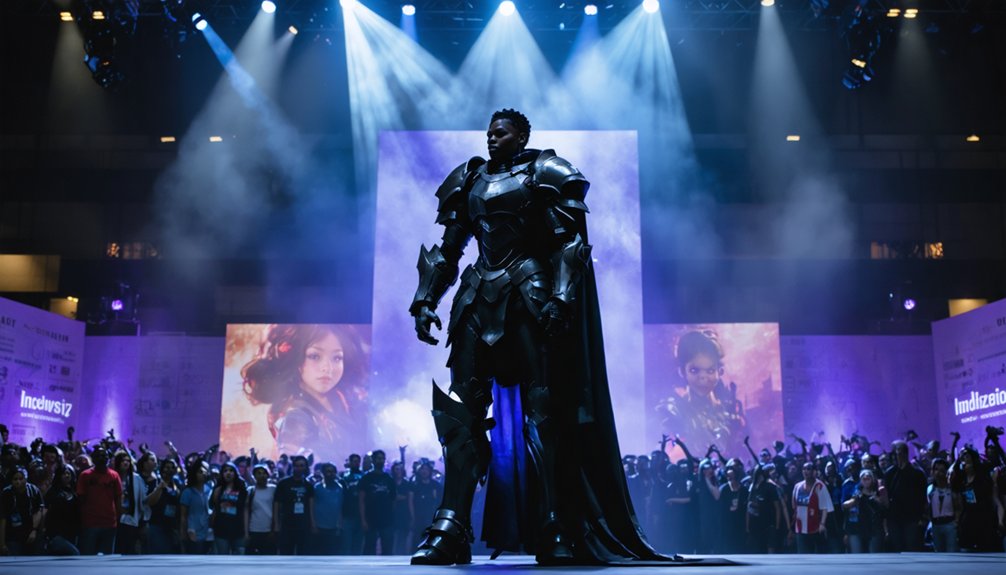
Convention organizers frequently tout diversity panels and multicultural programming as evidence of inclusive spaces, yet these initiatives often function as performative gestures rather than structural change.
Diversity programming frequently serves as performative window-dressing rather than catalyzing the meaningful structural transformation necessary for genuinely inclusive convention spaces.
You’ll notice how international costume showcases paradoxically enforce homogeneity—expecting single individuals to represent entire cultures through stereotypical attire and performances. This romantic nationalism approach creates “poster child” dynamics that many attendees actively resist.
The distinction between authentic representation and tokenism lies in implementation: are diverse voices integrated throughout programming, or relegated to designated diversity slots? True inclusive participation emerges when fan communities themselves drive convention content.
Organizations like Black Girl Nerds and Geeks of Color demonstrate that community driven solutions produce genuine cultural shifts, moving beyond superficial optics toward structural transformation that centers marginalized perspectives without reducing them to symbolic trophies.
Photography Bias and the Technical Barriers to Equal Documentation
Beyond programming decisions, photography practices at conventions reveal how technical processes themselves become sites of racial exclusion. You’ll find photographers openly declining to shoot Black cosplayers, citing dark skin tones as unsuitable for portfolios. These lighting limitations aren’t neutral technical challenges—they’re symptoms of an industry trained exclusively on lighter subjects.
When Victory’s Madoka cosplay received racist captions and dozens of critical comments, the underlying issue was clear: cosplay photography techniques remain optimized for white skin tones. Darker-skinned cosplayers face photographers who lack skills in proper exposure and lighting for diverse complexions. This technical gap creates cascading inequities—fewer documentation opportunities, reduced visibility in search results, and amplified invisibility when white cosplayers dominating ethnic characters receive preferential coverage. The result? POC remain structurally excluded from cosplay’s visual archives.
Dismantling the Meritocracy Myth: Structural Racism in Geek Culture
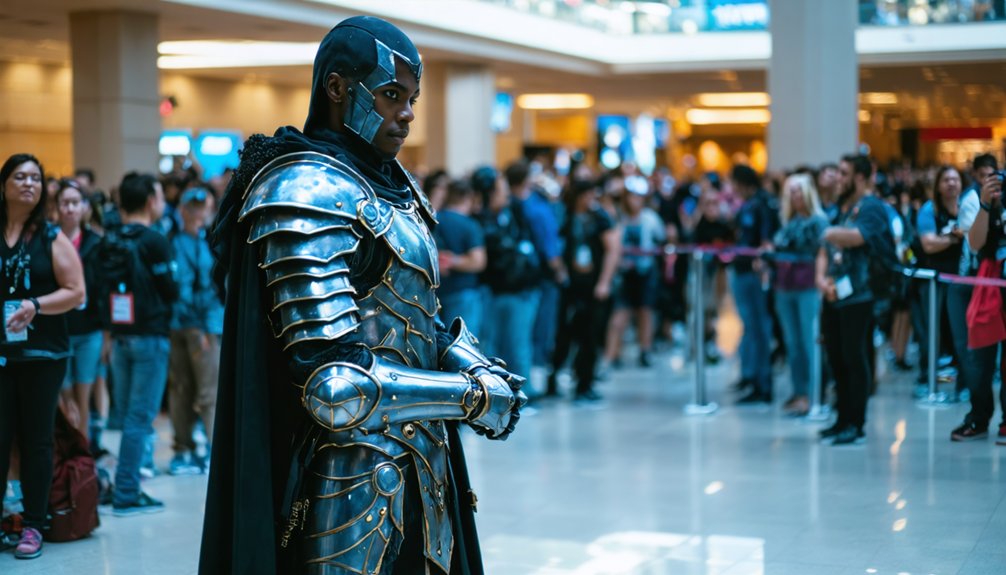
Geek culture’s most insidious defense mechanism operates through meritocracy narratives that frame success as purely skill-based while obscuring how white male dominance shapes institutional power. You’ll encounter “colorblind” ideology weaponized to dismiss systemic patterns, while confronting insider outsider dynamics reveals how authenticity gatekeeping protects racial hierarchies.
The myth collapses when examining who controls decision-making—68% white/Caucasian workers versus 13% people of color in gaming industries—while resisting tokenized inclusion demands recognizing how corporate gatekeepers determine narrative visibility.
Structural barriers maintaining racial inequality:
- Nostalgic “paid your dues” rhetoric legitimizes exclusionary practices
- 100% of gaming participants witnessed racial discrimination within communities
- 87.5% of games portray Black/Latino characters as gang members or villains
- White male “outsider victim” narratives erase minoritized experiences
- Institutional racism trickles down, normalizing discriminatory community systems
Frequently Asked Questions
How Can White Cosplayers Actively Support POC Creators Without Performative Allyship?
You’ll create equitable opportunities by demanding transparent pay rates from brands, recommending POC-skilled photographers, and pushing for inclusive marketing teams. Don’t just share content—actively challenge raceface practices and amplify POC voices in decision-making spaces.
What Specific Actions Should Conventions Take to Ensure Meaningful POC Inclusion?
You’ll need improved hiring practices prioritizing POC staff across departments, diverse vendor selection reflecting community demographics, transparent guest invitation data, and dedicated anti-discrimination programming—moving beyond token representation toward structural accountability that transforms convention culture fundamentally.
Which Camera Settings and Lighting Techniques Best Photograph Darker Skin Tones?
Auto white balance misreads darker complexions in 60% of shots. You’ll achieve accurate skin tones using manual white balance with grey cards, soft diffused lighting from octaboxes, and strategic fill light—while natural lighting through shade presets prevents excessive cooling.
How Do Poc-Led Cosplay Collectives Differ From Mainstream Diversity Panels?
You’ll find POC-led collectives prioritize community building through shared identity and authentic representation challenges, while mainstream panels often deliver broader diversity discussions without addressing specific cultural barriers that cosplayers of color navigate daily in chiefly white spaces.
What Accountability Measures Exist When Cosplayers Engage in Harmful Raceface Practices?
You’ll find accountability relies primarily on social media criticism and peer pressure rather than formalized penalties. Conventions rarely enforce race-specific codes, leaving cultural insensitivity unchecked institutionally while authentic representation depends on individual ethics and community callouts.