Winning a cosplay contest means mastering every layer of preparation. You’ll need to choose a character you can genuinely embody, build props that pass safety inspections, and test your costume under real stage conditions. Your skit timing, makeup durability, and backstage behavior all factor into your final score. Pack an emergency repair kit, submit documentation early, and rehearse in full costume until confidence feels automatic. Every detail covered here sharpens your competitive edge.
Key Takeaways
- Choose a character you connect with emotionally, ensuring your performance style aligns with their personality for authentic audience engagement.
- Test your costume and props thoroughly, simulating stage conditions to identify mobility issues, fabric weaknesses, and structural failures.
- Rehearse your skit in full costume multiple times, focusing on timing, transitions, and dialogue to build confidence and precision.
- Review contest submission guidelines early, confirming file formats, deadlines, and documentation requirements to avoid disqualification.
- Pack an emergency kit with repair supplies, medical items, and spare costume components to handle unexpected backstage issues quickly.
How to Pick the Right Character for a Cosplay Contest
Choosing the right character sets the foundation for your entire cosplay contest performance. Evaluate character personality and character backstory to guarantee genuine emotional connections that translate authentically on stage.
Strong performance style alignment between you and your chosen character drives audience engagement and elevates presentation quality.
Prioritize thematic relevance by selecting characters with meaningful character evolution, as dynamic arcs offer richer storytelling opportunities.
Consider character relationships when crafting narrative moments within your skit. Analyze design challenges early, ensuring costume inspirations remain executable within your skill level and budget.
Verify the character’s contest eligibility regarding content appropriateness.
Selecting a character you deeply understand transforms technical execution into compelling artistry, distinguishing your entry from competitors.
Costume Accuracy vs. Creative Interpretation: Finding the Balance
Balancing costume accuracy with creative interpretation defines your artistic identity within the cosplay contest space. You’ll need to preserve the character essence while introducing costume innovation that distinguishes your work from screen-accurate replicas.
Start by identifying the character’s core visual elements—silhouette, color palette, and signature accessories—then treat those as non-negotiable anchors. From there, you can reinterpret secondary details using alternative materials, fabrication techniques, or stylistic upgrades.
Use high-resolution reference images to confirm accurate color placement and proportion before deviating intentionally. Judges recognize deliberate creative choices differently than construction errors, so document your design decisions clearly.
Rehearse in your completed costume to verify that your artistic modifications don’t compromise mobility or structural integrity during performance. Precision in both accuracy and innovation signals mastery to experienced judges.
Building Props That Pass Cosplay Contest Safety and Peace Bonding Checks
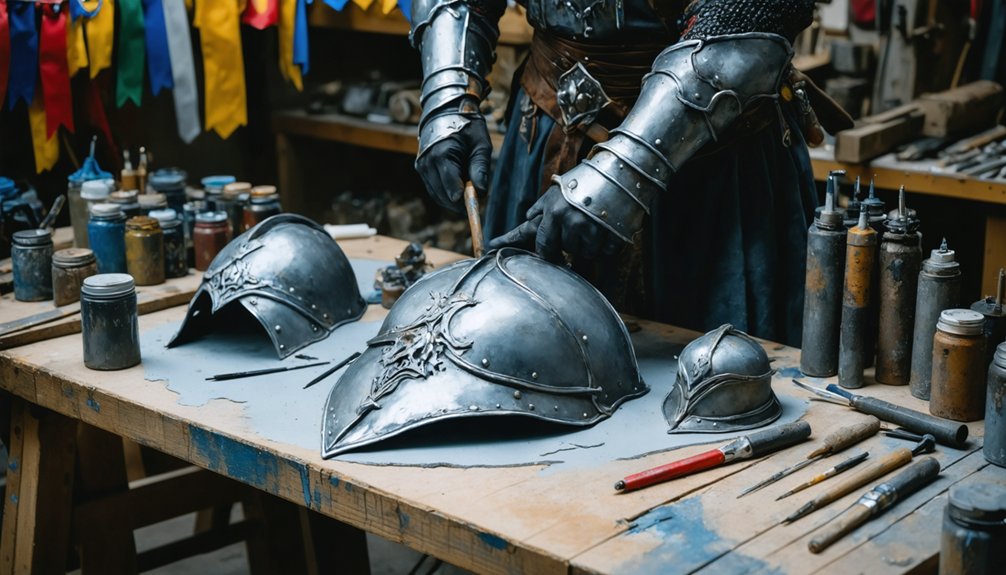
When building props for a cosplay contest, you’ll want to prioritize lightweight, non-hazardous materials like EVA foam, thermoplastics, and fabric-covered PVC to satisfy both safety requirements and practical performance needs.
You must research your specific convention’s peace bonding rules before construction, since blade edges, projectile mechanisms, and rigid metal components routinely fail inspection.
Designing compliance into your prop from the start saves you from costly last-minute modifications that compromise your costume’s visual integrity.
Safe Material Selection Tips
Building props that survive both the stage and the safety inspection table starts with material selection, and you’ll save yourself significant headaches by getting this right before you cut a single piece of foam.
Prioritize lightweight options like EVA foam, thermoplastics, and PVC pipe during material sourcing, as these pass most peace bonding checks without issue. Use non-toxic adhesives such as contact cement rated for indoor use, and verify they’re fully cured before handling.
Incorporate flexible components at stress points to prevent snapping during dynamic movement. Choose prop materials free of sharp casting edges, and confirm all paints are skin-friendly makeup-grade where contact occurs.
For younger performers, age-appropriate choices mean eliminating rigid points entirely. Fabric safety matters too — avoid flammable synthetics near open-effect lighting rigs.
Peace Bonding Compliance Strategies
Peace bonding compliance isn’t something you figure out at the inspection table — you bake it into the prop from day one.
Research your specific convention’s contest regulations before you begin construction. Each event enforces different prop safety thresholds for blade length, projectile mechanisms, and material hardness.
Build compliance strategies directly into your design phase. Opt for foam, thermoplastics, and fabric composites that inspectors consistently approve.
Avoid metal edges, functional triggers, or detachable sharp components entirely. Attach a peace bonding anchor point during construction — a built-in loop or tie-off location — so staff can secure your prop without damaging its finish.
Document your materials with a printed spec sheet. Presenting this proactively at inspection signals professionalism and accelerates clearance, keeping you focused on your performance instead of last-minute modifications.
Fabrics, Wigs, and Makeup That Survive Stage Lights and Movement
Stage lighting and physical performance create two of the most punishing conditions a cosplay costume will face, so your material choices have to account for both before you ever step into the contest hall.
Smart fabric choices, tested wig styles, and proven makeup techniques separate polished competitors from those scrambling backstage.
- Fabric choices and durability factors: Test performance wear under direct heat lamps to catch fading, warping, or sheen distortion before contest day.
- Wig styles and movement dynamics: Secure wigs with wig caps, grip bands, and strategic pinning to eliminate displacement during active stage sequences.
- Makeup techniques and costume testing: Apply setting spray and powder-lock primers, then run full movement rehearsals to identify cracking, smearing, or stage lighting washout before you compete.
Write a Cosplay Contest Skit That Actually Lands
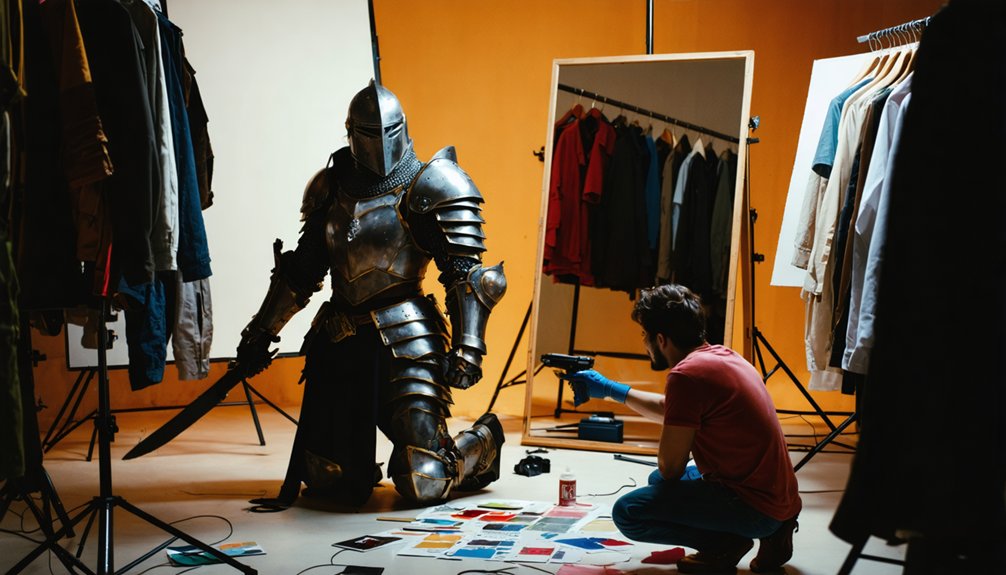
A well-structured skit does more than showcase your costume — it gives judges a clear reason to remember you. Build your story arc around clear character motivation so every action feels purposeful.
Use timing techniques to control pacing, letting beats breathe before delivering skit humor or visual gags. Plan scene transitions deliberately — abrupt shifts kill audience engagement.
Map out interaction planning if you’re performing with others, ensuring character dynamics feel natural rather than rehearsed. Write dialogue that creates emotional resonance through specificity, not exaggeration.
Mark your script for emphasis, pauses, and movement cues. Record rehearsals to audit clarity and comedic precision.
Your skit should open strong, escalate meaningfully, and close with impact — leaving judges with a memorable moment anchored in authentic character expression.
Why You Must Rehearse in Full Costume Before Contest Day
Rehearsing in full costume before contest day isn’t optional—it’s how you uncover movement restrictions that a street-clothes run-through will never reveal.
You’ll identify weak seams, unstable props, and wig displacement issues under real performance conditions, giving you time to make structural corrections before they fail on stage.
Repeated full-costume rehearsals also build the muscle memory and confidence you need to deliver a clean, controlled performance when it counts.
Movement Restriction Awareness
When you slip into a full suit of armor, a structured corset, or an oversized mech costume for the first time on contest day, you’re setting yourself up for failure. Restricted movement techniques can derail your performance before you even reach the stage.
Rehearsing in full costume builds critical body awareness and exposes real costume flexibility limitations.
Prioritize these three rehearsal checkpoints:
- Walk your full stage route wearing every costume layer to identify restricted joints or pinch points.
- Execute all scripted gestures to confirm arm and torso range-of-motion meets performance demands.
- Simulate entrances and exits at full speed to uncover balance issues caused by props or elevated footwear.
Early detection prevents last-minute costume modifications and protects your overall stage performance integrity.
Costume Durability Testing
Body awareness keeps your performance intact on stage, but costume durability determines whether your outfit survives long enough to get you there. You must prioritize costume stress testing before contest day arrives.
Conduct a fabric longevity analysis by wearing your full build through extended rehearsal sessions. Sweat, friction, and repeated motion expose weak seams faster than any static inspection will.
Complete a prop weight assessment to confirm you’re carrying loads that won’t fatigue you mid-performance.
Your movement flexibility evaluation should simulate every scripted gesture, turn, and pose under actual stage conditions. Test durability under lighting by positioning yourself beneath comparable heat sources, since stage lights accelerate fabric degradation and reveal color inconsistencies.
Finish with a performance wearability check confirming every component holds structure from entrance to exit.
Performance Confidence Building
Costume durability keeps your outfit intact, but confidence keeps your performance alive. Conquering performance anxiety requires deliberate practice using proven confidence techniques before contest day arrives.
Rehearse using these three critical methods:
- Full-costume run-throughs — develop character embodiment, refine vocal projection, and strengthen emotional expression under realistic performance conditions.
- Visualization methods and relaxation strategies — mentally rehearse your stage interaction sequences, reducing anxiety while sharpening improvisation skills for unexpected moments.
- Recorded practice sessions — analyze your audience engagement quality, identifying weak shifts and emotional delivery gaps requiring correction.
Your recorded footage reveals what mirrors hide. Each rehearsal builds neural pathways that transform scripted movements into authentic character presence, ensuring you own every stage moment confidently.
Contest Deadlines and Submission Rules You Can’t Afford to Miss
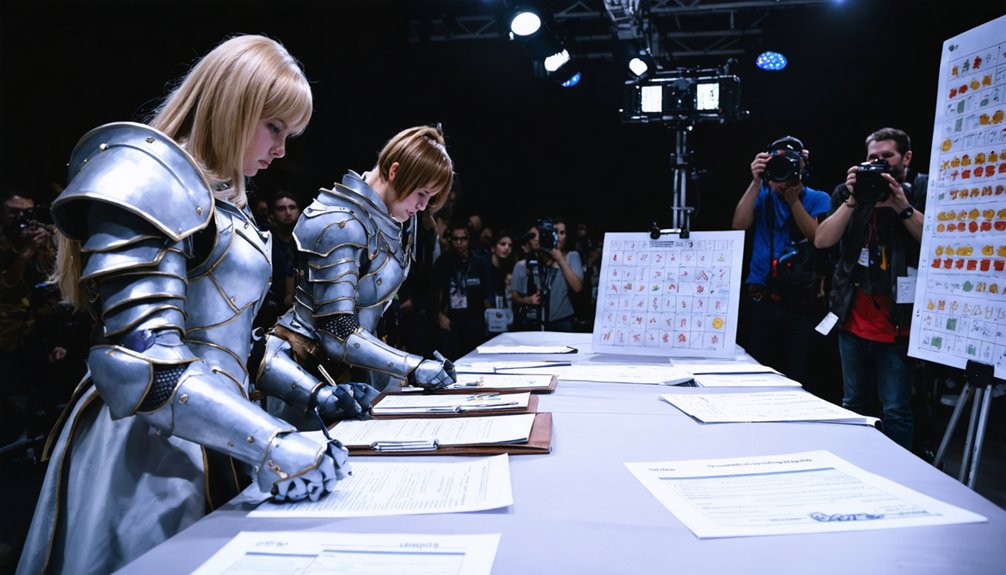
Missing a contest deadline can disqualify you instantly, regardless of how impressive your costume or performance is. Treat every contest entry as a structured project with firm milestones. Review submission guidelines early and build deadline reminders into your calendar weeks before the actual cutoff.
Rules compliance isn’t optional—judging criteria often penalize incomplete documentation requirements, including missing reference images, audio files, or unsigned waivers. Understand your participant responsibilities thoroughly before submitting anything.
Skipping a single waiver or missing one reference image can cost you the entire competition.
Performance evaluation sometimes begins before you step onstage. Judges may review pre-submitted materials as part of scoring. Confirm accepted file formats, word limits, and photo specifications.
Double-check every requirement the night before submission. One overlooked rule can erase months of preparation instantly, so verify everything twice.
What Goes in Your Cosplay Contest Emergency Kit
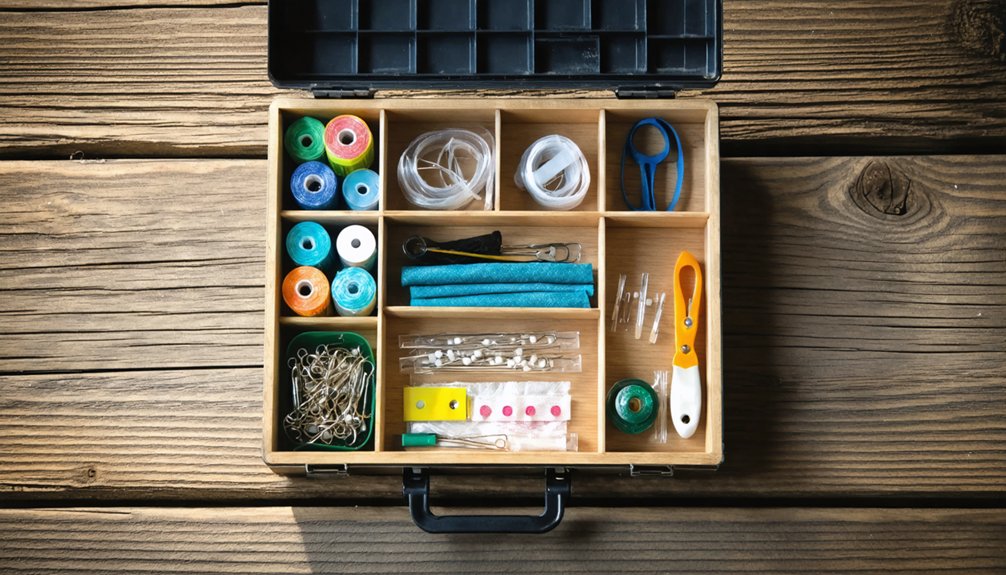
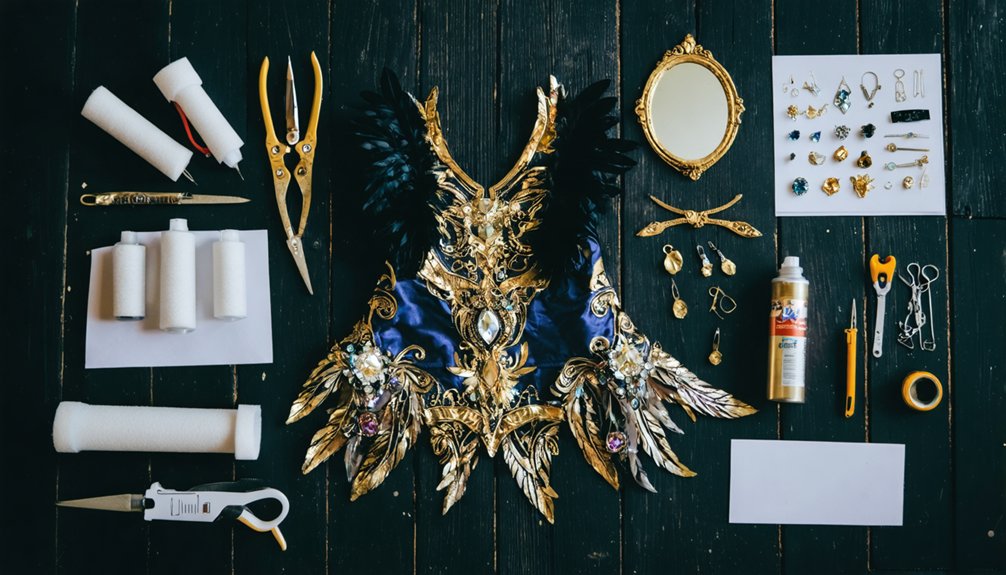
Your emergency kit is your backstage lifeline, so pack it with essential repair supplies like safety pins, needles, thread, fabric glue, and hem tape to address costume failures on the spot.
Include medical and safety items such as bandages, blister pads, pain relievers, and personal medications to keep you performance-ready throughout a long contest day.
Finally, store backup costume components—spare wig clips, extra fasteners, a duplicate accessory or two—because a single missing piece can pull you from competition if you’re not prepared.
Essential Repair Supplies
Seven items can mean the difference between walking onto that stage confidently and scrambling backstage in a panic: safety pins, needles, thread, fabric glue, double-sided tape, bandages, and a small pair of scissors.
Your portable kit becomes your on-site solution center for costume malfunctions that strike without warning. Master these essential tools and you’ll execute quick fixes before judges ever notice anything went wrong.
Prioritize these three emergency repair essentials for last-minute adjustments:
- Safety pins and double-sided tape — instant structural repair techniques for split seams or detaching panels
- Fabric glue — bonds embellishments and decorative elements within minutes
- Bandages and scissors — address performer injuries while enabling precise trimming for unexpected costume corrections
Pack your kit methodically. Disorganized supplies waste critical backstage time.
Medical And Safety Items
Beyond costume repairs, a well-stocked emergency kit protects your physical safety when unexpected injuries strike during a high-energy performance.
Pack essential medical supplies including adhesive bandages, antiseptic wipes, and blister pads for injury prevention during extended wear. Your safety gear should include moleskin padding for pressure points created by armor or rigid footwear.
Address hydration needs by carrying electrolyte packets, since stage lighting accelerates dehydration rapidly. Document allergy considerations on your health checklist, and include antihistamines if your costume materials trigger reactions.
Store emergency contacts visibly, listing convention staff, personal physicians, and nearby urgent care facilities.
Incorporate stress management tools like noise-canceling earbuds or calming supplements into your kit. Add comfort items such as cooling towels and energy bars to sustain peak performance throughout competition day.
Backup Costume Components
Costume failures mid-competition can end your run before judging completes, so pack backup components that address your costume’s most vulnerable points.
Costume malfunctions strike unpredictably, making a strategic backup costume kit non-negotiable for serious competitors. Prioritize accessory organization so you’re locating replacements in seconds, not minutes.
- Fabric alternatives: Pack pre-cut fabric patches matching your primary costume’s color and texture for rapid field repairs during last-minute adjustments.
- Additional accessories: Duplicate fragile or detachable elements—buttons, clasps, decorative pieces—that commonly detach during outfit changes between competition rounds.
- Costume layering components: Store compression garments and structural underlayers separately, protecting your costume’s silhouette integrity if primary layers sustain damage.
Label every backup item clearly, and rehearse accessing your kit while wearing your costume to eliminate performance-day hesitation.
Stage Presence Tips That Win Cosplay Contest Judges
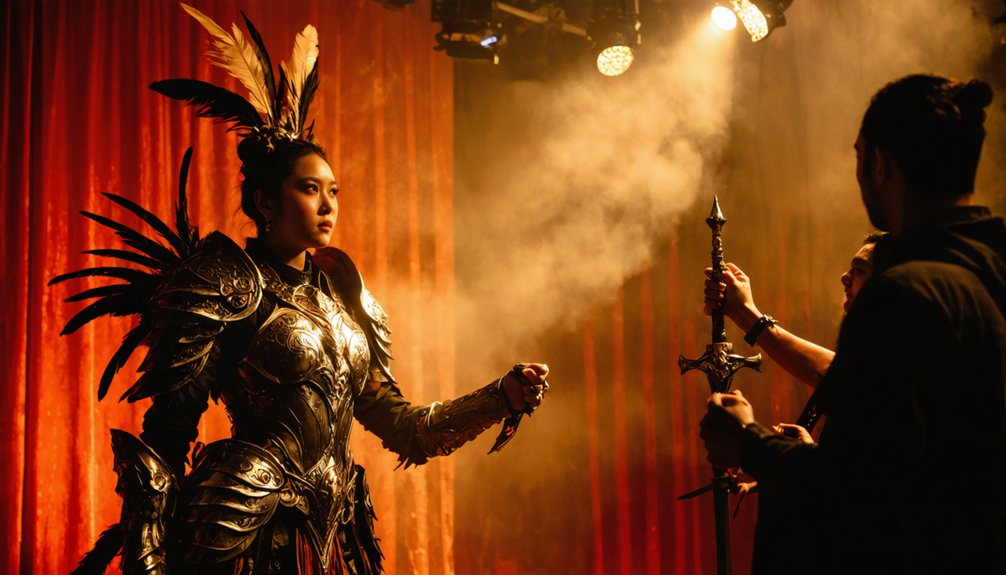
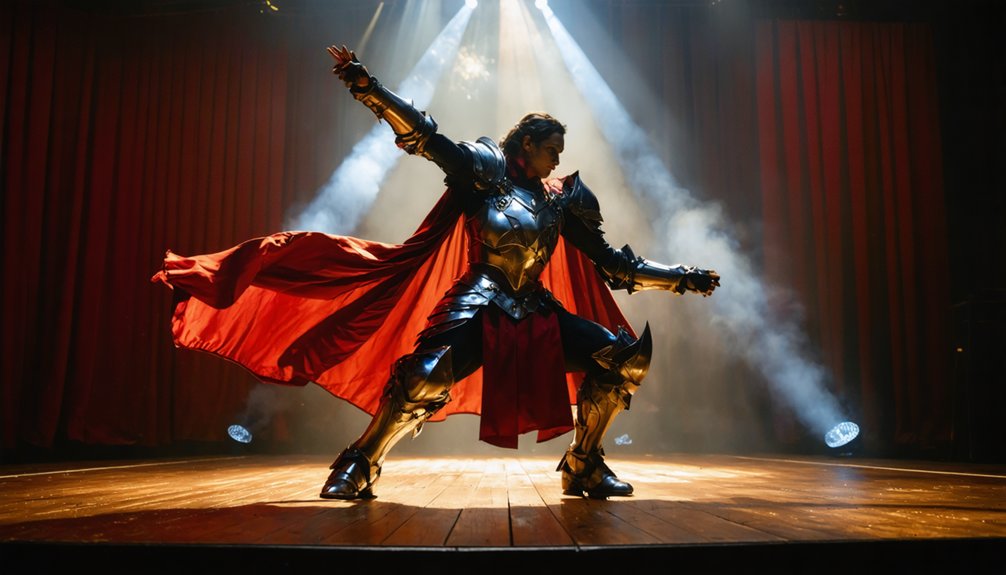
When you step onto that stage, judges shift from evaluating your costume’s craftsmanship to gauging how confidently and deliberately you command the space. Your stage charisma becomes the decisive variable separating technically equal competitors.
Own every movement with intention—slow your pace, extend poses longer than feels natural, and lock eyes with judges during static evaluation moments.
Prioritize audience engagement by projecting expressions beyond the front row. Rehearse your entrance and exit as precisely as your skit’s core sequence; weak shifts undermine strong performances.
Maintain alignment and posture during judging pauses, since slumping signals insecurity.
Record full-run rehearsals in costume to identify hesitation points and self-correct before competition day. Judges reward deliberate performers who’ve clearly internalized their character rather than simply worn it.
How to Behave Backstage Without Annoying Staff or Contestants
Backstage functions as a shared operational space, so treat it accordingly. Backstage etiquette isn’t optional — it directly affects everyone’s performance readiness. Practice respectful communication by keeping conversations brief and purposeful. Crowd management starts with you: don’t cluster near entrances or block pathways staff need clear.
- Honor personal space and quiet zones — contestants in costume need stillness; don’t disturb their focus or risk damaging their props.
- Apply timing awareness — monitor call schedules independently rather than repeatedly questioning staff.
- Build contestant camaraderie strategically — brief, encouraging exchanges strengthen community without disrupting preparation flow.
Staff appreciation means following instructions immediately without negotiation. When you respect the operational rhythm backstage, you signal professionalism that judges and organizers genuinely notice.
Frequently Asked Questions
Can Beginners Win Cosplay Contests Without Professional Costume-Making Experience?
Yes, you can win as a beginner! Channel your beginner confidence and costume creativity by focusing on unique artistic interpretation, precise detail accuracy, and strong stage presence—judges reward innovation and passion over professional-level technical skill every time.
Are Group Cosplay Entries Judged Differently Than Solo Contest Participants?
Groups win 40% more awards! Yes, judges evaluate your group dynamics and teamwork strategies separately, appraising synchronization, costume cohesion, and collective performance. You’ll face unique scoring criteria, so coordinate movements, unify themes, and rehearse shifts together for maximum competitive impact.
How Early Should Contestants Arrive Before a Cosplay Contest Begins?
Arrive at least two hours early to manage contest nerves and handle unexpected issues. You’ll secure your check-in, complete peace bonding, and test props—optimizing your arrival time guarantees you’re stage-ready with confidence.
Do Cosplay Contests Require Contestants to Make Their Own Costumes?
Like a blank canvas awaiting your vision, most contests don’t require you to make your own costume. However, judges reward costume authenticity and innovative crafting techniques, so you’ll gain a competitive edge by showcasing original construction skills.
Can Purchased Costumes Be Modified Enough to Qualify for Contests?
Yes, you can qualify with purchased costumes if you’ve made significant costume alterations. Review each contest’s judging criteria carefully, as they’ll often reward innovative modifications, unique artistic elements, and craftsmanship that demonstrate your creative interpretation beyond the original purchase.
References
- https://www.firststopcosplay.com/blogs/fsco-blog/new-blog-post-wip-cosplay-convention-survival-guide
- https://cosplay.com/archive/thread/5d4ro4/how-do-you-prepare-for-conventions?page=1
- https://www.tumblr.com/silencedrowns/12000413701/the-pretty-much-ultimate-convention-packing-list
- https://www.cosplaytutorial.com/tools/checklist.php
- https://cosplay.com/topics/whats-your-routine-right-bef
- https://andsewingishalfthebattle.tumblr.com/post/137705078630/the-novices-guide-to-cosplay-competition
- https://www.comicpalooza.com/activities/tracks/cosplay/cosplay-contest/cosplay-contest-rules/
- https://www.lemon8-app.com/@forevertreble/7454397817994461738?region=us
- https://www.etsy.com/listing/4456371613/cosplay-judging-essentials-checklist-pdf
- https://misadventuresinanime.home.blog/2019/03/20/ultimate-convention-cosplay-packing-checklist/