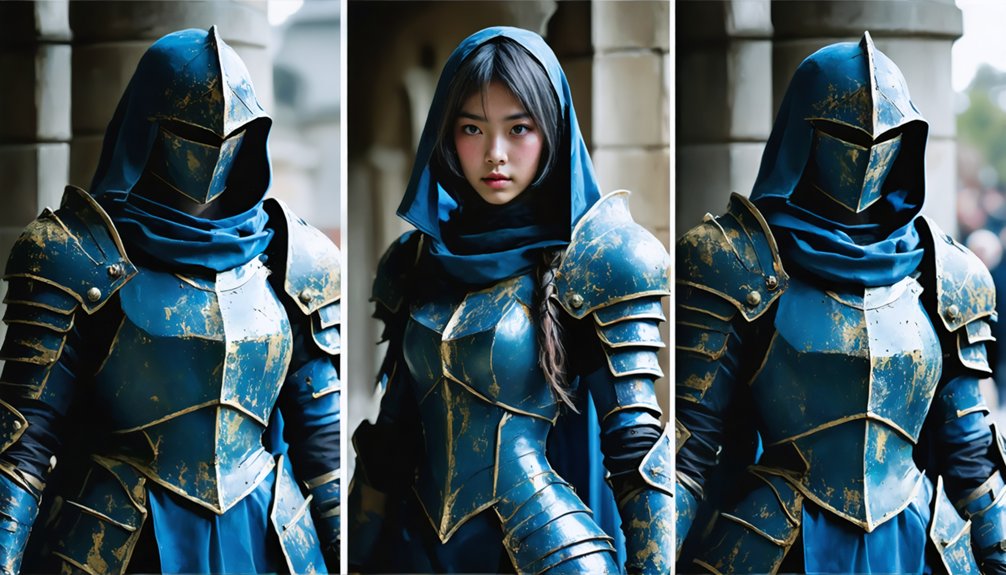
Nailing character accuracy starts long before you touch a pair of scissors or a heat tool. You’ll want to pull screenshots, design sheets, and promotional artwork to map every gradient, highlight, and shadow in the character’s hair. From there, you’ll cut conservatively, use internal wire armatures for spike stability, and apply dry shampoo or finishing spray to kill that telltale plastic shine. Keep going to master every technical detail.
Key Takeaways
- Study character hair from multiple reference sources, including screenshots, design sheets, and promotional art, to blueprint accurate color, texture, and styling details.
- Cut wigs conservatively using sharp shears at varied diagonal angles, removing less than needed initially, then refining gradually for precision.
- Insert foam tubing or wire armatures into fiber sections to maintain spike direction and stability without relying on excessive styling products.
- Eliminate plastic shine by applying dry shampoo, concealer along the hairline, and synthetic-formulated finishing spray for a realistic, matte finish.
- Test heat tools between 260–300°F on a single strand first, applying protectant before styling the entire wig to prevent damage.
Study Your Character’s Hair Before Touching a Wig
Before you cut, style, or even unbox your wig, study your character’s hair from every available angle. Pull screenshots from multiple episodes, collect official design sheets, and source promotional artwork. Character hair often carries historical hair references or cultural influences embedded by the original designers — details that define authenticity.
Identify the exact texture patterns, whether the hair reads as sleek, coarse, layered, or gravity-defying. Note color gradients, highlight placement, and shadow shifts across different lighting conditions.
Compare how the hairstyle shifts between close-up frames and full-body shots, since proportions frequently vary.
Document everything before committing to any cuts or heat work. Your reference library becomes your blueprint.
Precision at this research stage prevents costly mistakes and guarantees your final portrayal accurately reflects the character’s intended design.
Cut, Spike, and Heat Style Your Wig to Match the Character
Once your reference library’s complete, it’s time to transform raw wig fiber into a screen-accurate hairstyle through cutting, structural spiking, and controlled heat work.
Begin layered trimming using sharp hair shears, cutting diagonally at varied angles rather than straight across. Trim conservatively — remove less than needed initially, then refine gradually to avoid irreversible mistakes.
Cut diagonally, trim conservatively, and refine gradually — precision protects against irreversible mistakes.
For spike creation, insert foam tubing or wire armatures into fiber sections before securing them with hairpins. This internal structure maintains directional accuracy without relying solely on product.
When heat styling synthetic fibers, set your flat iron between 260–300°F and always apply heat protectant beforehand. Test a single bottom-layer strand first.
Clamp gently, move deliberately, and allow each section to cool completely before assessing shape or applying additional passes.
Kill Plastic Shine and Make Your Cosplay Wig Look Real
Cutting and heat-shaping gets your wig structurally accurate, but synthetic fibers carry an unmistakable plastic sheen that’ll betray the illusion immediately under convention lighting. Shine reduction requires a deliberate layering approach using products that diffuse light rather than reflect it.
Apply these techniques strategically:
- Dry shampoo or baby powder: Work small amounts through synthetic fiber sections, distributing evenly to scatter light refraction across the surface.
- Concealer and skin-matching powder: Press along the hairline and part to eliminate the harsh synthetic-to-skin contrast.
- Finishing spray formulated for synthetics: Mist two to three passes from 12 inches away, then set with targeted hairspray application.
Allow each product layer to fully absorb before adding the next. This sequential method builds a matte, organic-looking finish that photographs convincingly under harsh event lighting.
Frequently Asked Questions
How Do I Store My Styled Cosplay Wig Between Convention Events?
Store your styled wig on a foam head, keeping its sculpted spikes intact. After wig cleaning, you’ll want breathable storage solutions like mesh bags inside sealed containers, protecting delicate fibers from dust, humidity, and crushing damage between events.
Can I Wear a Cosplay Wig Over My Natural Thick Hair?
Yes, you can! Flatten your thick hair using a wig cap for ideal hairstyle maintenance. Prioritize wig material selection—choose stretch-lace or large-cap synthetic options—to accommodate volume while ensuring a seamless, accurate cosplay fit.
What Wig Cap Color Should I Choose for My Skin Tone?
Choose wig cap materials that closely match your skin tone for seamless blending. You’ll want beige for fair skin, tan for medium tones, and dark brown for deeper complexions, ensuring skin tone matching stays virtually invisible beneath lace fronts.
How Long Does a Properly Maintained Cosplay Wig Typically Last?
With proper care, your wig’s styling durability extends 2–5 years. Wig material determines longevity—synthetic fibers last shorter than human hair. You’ll maximize lifespan by applying finishing products, minimizing heat exposure, and storing it correctly between uses.
Should I Buy a More Expensive Wig for Competition-Level Cosplay?
Like a knight choosing armor before battle, you’ll win with quality. For competition-level cosplay, invest in premium wig material — cost versus quality matters, as superior fibers deliver realistic movement, styling versatility, and judges’ recognition you can’t achieve cheaply.
References
- https://www.instagram.com/reel/DNZKg7nyDqC/
- https://starstruckpanda.com/cosplay-wig-styling-for-character-accuracy/
- https://cosplayadvice.com/wig-tips/
- https://www.youtube.com/watch?v=3FVxpNesJv0
- https://wigreports.com/how-to-style-cosplay-wig/
- https://www.instagram.com/reel/C2zaK1-rPlk/
- https://www.thepopverse.com/cosplay-wig-wigs-cheap-tips-tricks
- https://www.oreateai.com/blog/mastering-the-art-of-cosplay-wig-styling-tips-for-a-flawless-look/25c8888d4fcfef35f03bac2164a10bf7
- https://www.unice.com/blog/complete-cosplay-wigs-tips/
- https://www.youtube.com/watch?v=exgfWFYu_h0