You don’t need a costume shop to craft authentic medieval accessories at home. Source wool blankets, linen, or duck cloth from thrift stores and fabric retailers, then use fabric glue, safety pins, and leather stamping tools to assemble historically grounded pieces. Repurpose old curtains into layered gowns, stamp heraldic motifs onto leather belts, and layer faux gemstones onto cardboard circlets for convincing regalia. The techniques and material strategies that follow will sharpen every component of your build.
Key Takeaways
- Thrift stores and fabric shops offer affordable natural fibers like wool and linen, ideal for historically accurate medieval accessories.
- No-sew techniques using fabric glue and safety pins allow easy assembly of cloaks, surcoats, and layered medieval garments.
- Stamp and carve leather belts and pouches with filigree patterns and heraldic motifs for convincing period-accurate accessories.
- Layer faux gemstones, metallic beads, and woven cords on crowns, necklaces, and pouches to evoke authentic medieval opulence.
- Referencing historical illuminated manuscripts and heraldic patterns ensures embellishments remain historically grounded and visually cohesive.
Find Medieval Cosplay Materials at Thrift Stores and Fabric Shops
Whether you’re building a full medieval ensemble or just adding key pieces, thrift stores and fabric shops offer cost-effective sourcing options that rival specialty retailers. Goodwill and similar outlets frequently stock wool or linen blankets with minimal patterns, materials that directly support historical accuracy in texture and composition.
You’ll also find leather belts, faux leather goods, and plain dark walking boots suited for period-appropriate aesthetics.
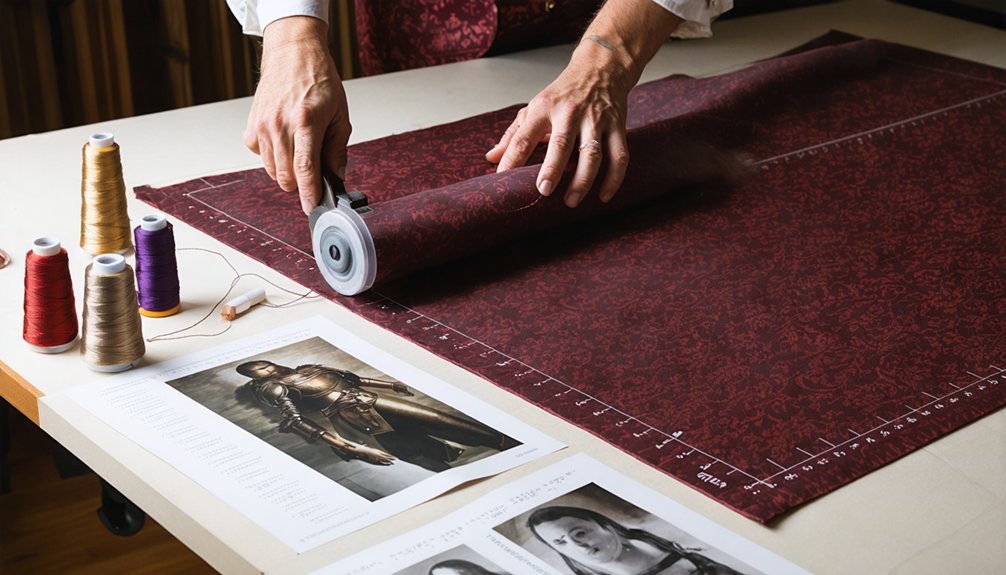
For precision sourcing, fabric retailers like JoAnn provide measured cuts of wool, linen, or duck cloth, with four yards typically sufficient for core garments.
Fabric durability becomes a decisive factor when selecting materials, as period construction demands heavier weaves capable of sustaining structural modifications.
Prioritize natural fibers and dense textiles whenever possible, as they replicate medieval material standards most effectively.
Build a Medieval Cosplay Cloak From a Blanket in Under an Hour
A neutral wool or linen blanket from a thrift store converts into a functional medieval cloak in under an hour using no-sew construction methods. You’ll drape the blanket across your shoulders, then secure it using safety pins positioned precisely at the collarbone. This technique mirrors the practical ingenuity found in medieval cooking environments, where efficiency dictated resourcefulness.
Fabric glue reinforces raw edges, preventing fraying without stitching. You can attach a faux fur collar by applying adhesive along the neck hole’s perimeter.
Fabric glue seals raw edges cleanly, while adhesive bonds a faux fur collar along the neckline perimeter.
Gold cord threaded through two pinned corners creates an elegant front closure. Much like castle architecture prioritized functional grandeur, your cloak should balance visual authority with wearable comfort.
Thin wall-mounting pinhead nails substitute effectively as decorative brooches, adding period-accurate embellishment to the finished garment.
How Do You Turn Old Curtains Into a Medieval Cosplay Gown?
Beyond the cloak, your existing wardrobe or local thrift store likely holds another versatile medieval cosplay resource: old curtains. Pre-hemmed curtains eliminate hemming entirely, letting you focus on silhouette and layering. Select velvet or brocade panels, as their textures echo castle architecture’s ornate interior tapestries while conferring authentic visual weight during medieval dance performances.
Cut a centered neck hole, then apply fabric glue along raw edges to prevent fraying.
Layer an open-fronted surcoat over a base garment using repurposed curtain panels, securing seams with fabric glue or safety pins.
Affix a faux fur collar around the neckline using fabric glue for added dimension.
Finally, cinch the waistline with a rope belt or wool sash positioned at navel level to complete the structured medieval silhouette.
No-Sew and Minimal-Sew Techniques That Actually Look Authentic
Achieving an authentic medieval aesthetic doesn’t require a sewing machine or advanced needlework skills. You can replicate the layered complexity of castle architecture’s stonework through strategic fabric manipulation alone.
Secure neutral blankets with safety pins to construct instant cloaks, or apply fabric glue to raw tablecloth edges for clean, professional finishes. Attach faux fur collars to neck holes using the same adhesive, eliminating stitching entirely.
Fabric glue and safety pins transform simple blankets and tablecloths into polished, medieval-inspired cloaks and fur-collared garments.
For shoulder-draped capes evoking medieval armor silhouettes, staple strap ends directly to faux fur corners. Pre-hemmed curtains bypass hemming requirements while delivering rich texture immediately.
Cardboard circlets and recycled hat foundations complete headpieces without complex construction. Each technique prioritizes structural integrity and visual authenticity, delivering period-accurate results through innovative, accessible methods that respect historical design principles.
Which Medieval Cosplay Tools Are Worth Buying vs. Making Yourself?
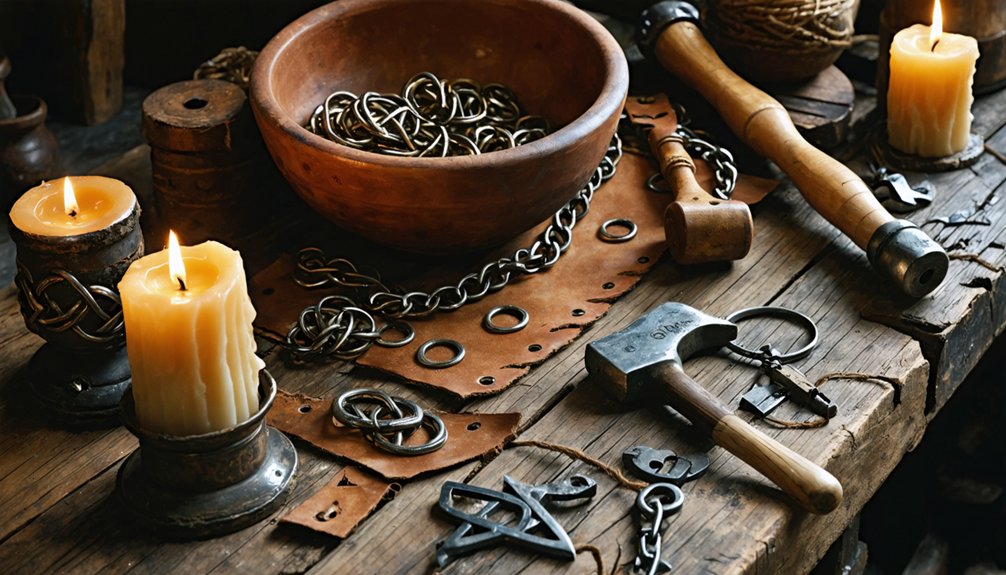
Deciding which tools to buy versus make yourself markedly impacts both your budget and the quality of your medieval cosplay accessories. Invest in high-quality leather tooling stamps, carving knives, and metal-working files — these precision instruments consistently outperform improvised alternatives when replicating medieval weaponry details or castle architecture-inspired engravings on armor pieces. Their durability justifies upfront costs across multiple projects.
Conversely, you can fabricate effective DIY alternatives for several tools. Repurpose household items like wooden dowels as burnishing rods, or fashion stencils from cardboard to guide historically accurate heraldic patterns onto shields and banners.
Regular cleaning and maintenance of purchased tools extends their longevity considerably. Strategically balancing purchased precision tools against resourceful DIY solutions maximizes both craftsmanship quality and cost efficiency throughout your cosplay construction process.
How to Embellish Leather Belts and Pouches for a Medieval Look
With your toolkit optimized for medieval craftsmanship, you can now direct that same precision toward embellishing leather belts and pouches — accessories that anchor an entire costume’s historical authenticity. Stamping and carving techniques produce filigree patterns and embossed motifs that echo the decorative vocabulary found on medieval weaponry and castle backdrops alike.
You’ll want to cut heraldic shapes — griffins, crowns, chevrons — from leather scraps, then secure them with fabric glue for immediate visual impact. Tooling each surface with historically accurate motifs elevates your accessories beyond generic costume pieces into deliberately researched artifacts.
Incorporate faux gemstones or decorative beads to simulate period opulence. These embellishment strategies don’t require industrial equipment; they demand only methodical execution, quality tools, and a precise understanding of medieval aesthetic conventions.
Stamp, Carve, and Glue Your Way to Real Leather Craftsmanship
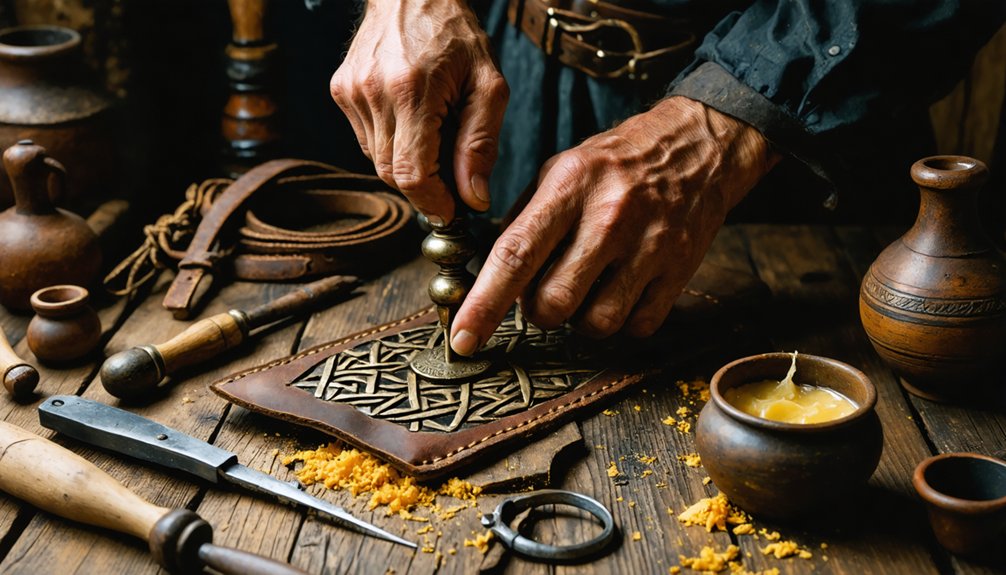
Leather craftsmanship rewards methodical precision over brute force, and once you internalize that principle, stamping, carving, and gluing become intuitive rather than intimidating.
Dampen vegetable-tanned leather slightly before tooling; this receptivity mirrors how medieval dance choreography demands a prepared, responsive surface before movement begins. Use beveling tools to define carved motifs—griffins, crowns, interlaced knotwork—pressing firmly yet consistently to achieve clean depth.
Stamping geometric repetitions evokes castle architecture’s rhythmic stonework, translating structural grandeur onto wearable accessories.
After tooling, seal carved channels with leather conditioner to prevent cracking.
For affixing heraldic cutouts or layered decorative panels, apply contact cement methodically: coat both surfaces, allow tack time, then press firmly. This adhesive technique outperforms fabric glue where structural integrity under costume movement is essential.
Jewelry and Adornments That Complete Your Medieval Cosplay
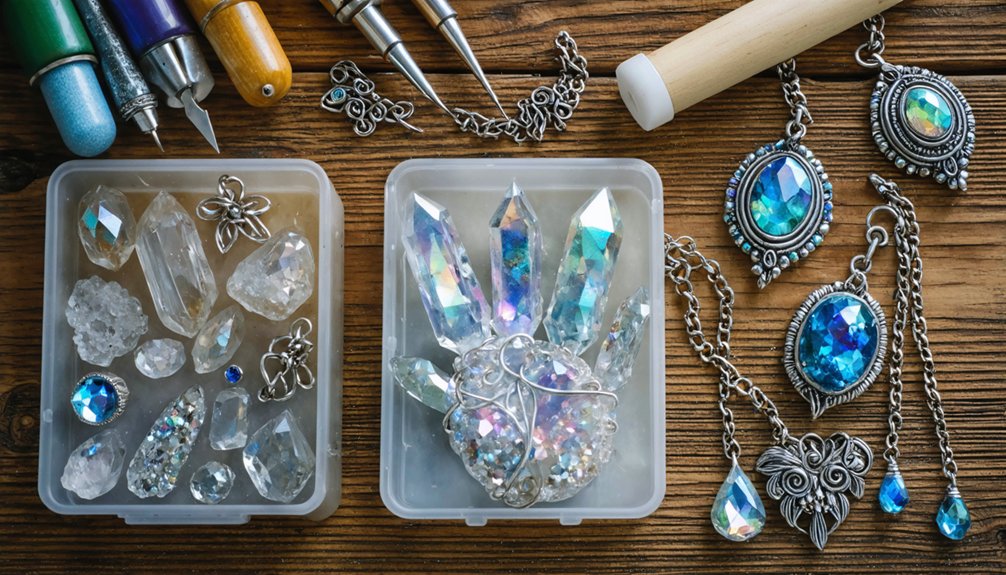
To craft opulent crown jewels, you’ll want to affix faux gemstones like rubies or emeralds onto cardboard or recycled hat forms, securing them with strong adhesive to simulate historically rich regalia.
You can layer beads onto clothing, pouches, or necklaces to replicate the decorative density characteristic of medieval adornment traditions.
These embellishments, when strategically combined, produce a convincing visual complexity that elevates your cosplay beyond superficial costume assembly.
Crafting Opulent Crown Jewels
Jewelry and adornments are what elevate a medieval cosplay from a simple costume to a convincing historical statement. Crown jewels, in particular, anchor your character’s identity within medieval storytelling traditions.
Begin with a cardboard base shaped into your desired crown profile, then layer faux gemstones—rubies, emeralds, or sapphires—using precision-applied adhesive for secure placement. Gold spray paint transforms raw cardboard into convincing metalwork.
For necklaces, combine beads with metallic cord to simulate period-accurate opulence without sacrificing costume comfort during extended wear. Thin pinhead nails repurposed as brooches allow strategic fabric attachment, adding detail without bulk.
Each embellishment should reflect historically grounded design choices, referencing heraldic motifs or Gothic architectural patterns to maintain authenticity and demonstrate your command of medieval aesthetic conventions.
Layering Beads And Adornments
Beads and layered adornments transform a medieval costume’s supporting details into cohesive, character-defining statements. Strategic bead placement along necklines, sleeve edges, or pouch seams simulates historical opulence without requiring extensive resources.
You’ll achieve maximum visual complexity through deliberate adornment layering—combining textures like metallic beads, faux gemstones, and woven cord simultaneously rather than applying elements independently.
Prioritize structural hierarchy when layering: position heavier pendant elements lowest, graduating toward lighter bead strands near the collarbone. Affix beads using strong fabric adhesive or needle-threading techniques, ensuring durability through repeated wear.
Rubies, emeralds, and amber-toned faux gems introduce period-accurate chromatic richness when integrated into layered configurations. Cross-referencing historical illuminated manuscripts guides authentic bead arrangement patterns, reinforcing your costume’s scholarly credibility while maintaining innovative construction efficiency.
Puttees, Sashes, and Surcoats: Layering That Reads as Medieval
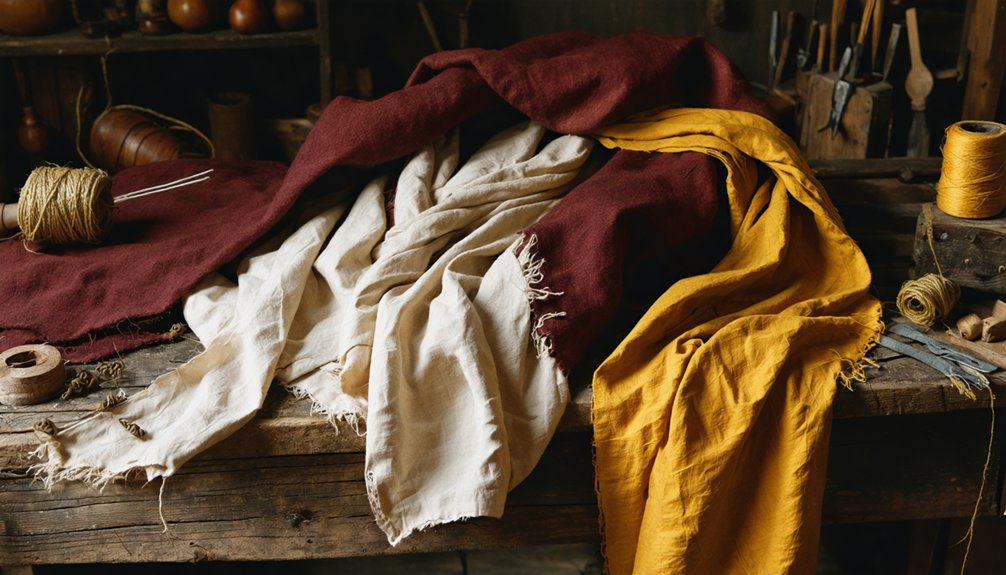
Layering separates a convincing medieval silhouette from a costume that reads as generic fantasy, and three specific elements—puttees, sashes, and surcoats—do the heaviest work in achieving that distinction. Much like castle architecture relies on structural layers for both function and grandeur, your costume demands deliberate construction.
- Puttees: Wrap boot tops using bandages or boxing wraps, mimicking leg armor worn alongside Medieval weaponry.
- Sashes: Tie linen or wool strips at navel level, defining the waistline authentically.
- Surcoats: Repurpose open-fronted curtains as over-garments layered above base robes.
- Strategic paneling: Sew fabric panels to adjust width without excessive material waste.
Each element compounds visual complexity, creating a silhouette that communicates historical precision rather than generic fantasy approximation.
Finishing Touches That Make Your Medieval Cosplay Look Intentional
Once the structural layers are in place, finishing touches determine whether your medieval cosplay reads as intentional craftsmanship or improvised dress-up. You’ll want to reference authentic costume patterns when adding embellishments, ensuring proportions align with historical precedent.
Apply medieval fabric dyes to raw edges or faded sections to achieve color consistency across layered garments. Affix heraldry-inspired leather cutouts using fabric glue, and substitute thin pinhead nails for brooches when traditional clasps aren’t available.
Gold cord tied at cloak necks replaces bulky hardware while maintaining period accuracy. Faux gemstones on circlets or pouches signal deliberate design rather than afterthought decoration.
Each detail you add should serve a visual or functional purpose, reinforcing the cohesive historical narrative your costume communicates.
Frequently Asked Questions
How Do You Care for and Store Handmade Medieval Cosplay Accessories?
Coincidentally, you’ll extend your accessories’ life by applying regular cleaning tips—wipe leather, air fabrics—and using smart storage solutions like acid-free boxes or breathable bags, keeping tools maintained so your handmade medieval pieces stay authentically pristine.
Can Medieval Cosplay Accessories Be Adapted for Different Historical Periods?
You can adapt medieval cosplay accessories across periods through bridging eras techniques—swapping heraldic motifs, adjusting silhouettes, or modifying embellishments. Historical fusion lets you repurpose leather tooling, fabric layering, and jewelry styles to authentically represent Renaissance, Viking, or Byzantine aesthetics.
What Safety Precautions Should Be Taken When Using Leather Tooling Equipment?
Like a 3D-printed blueprint, visualize your workspace first. For leather safety and tooling precautions, you’ll want to wear cut-resistant gloves, secure your leather firmly, maintain sharp tools regularly, and guarantee proper ventilation when applying chemical dyes or finishes.
How Do You Accurately Replicate Specific Regional Medieval Styles in Cosplay?
You’ll achieve regional accuracy by researching distinct cultural motifs and heraldry, then applying material sourcing strategies—selecting era-specific wool, linen, or embossed leather—to authentically replicate the precise aesthetic nuances of targeted medieval regional styles.
Are There Communities or Events Where Medieval Cosplay Accessories Can Be Showcased?
You’ll find vibrant communities at Renaissance fairs, LARP events, and Comic-Con where you can showcase medieval armor and demonstrate costume authenticity, connecting with innovators who’ll appreciate your technically precise, regionally accurate accessory craftsmanship.
References
- https://www.reddit.com/r/LARP/comments/1fomqua/what_everyday_items_could_i_use_for_a_medieval/
- https://renaissancewardrobe.com/blogs/renaissance-and-medieval-life/creating-authentic-medieval-costumes
- https://starstruckpanda.com/diy-medieval-cosplay-accessory-crafting/
- https://www.lovetoknow.com/celebrations/halloween/how-make-easy-medieval-costumes
- https://www.youtube.com/watch?v=2B90J56J9fo