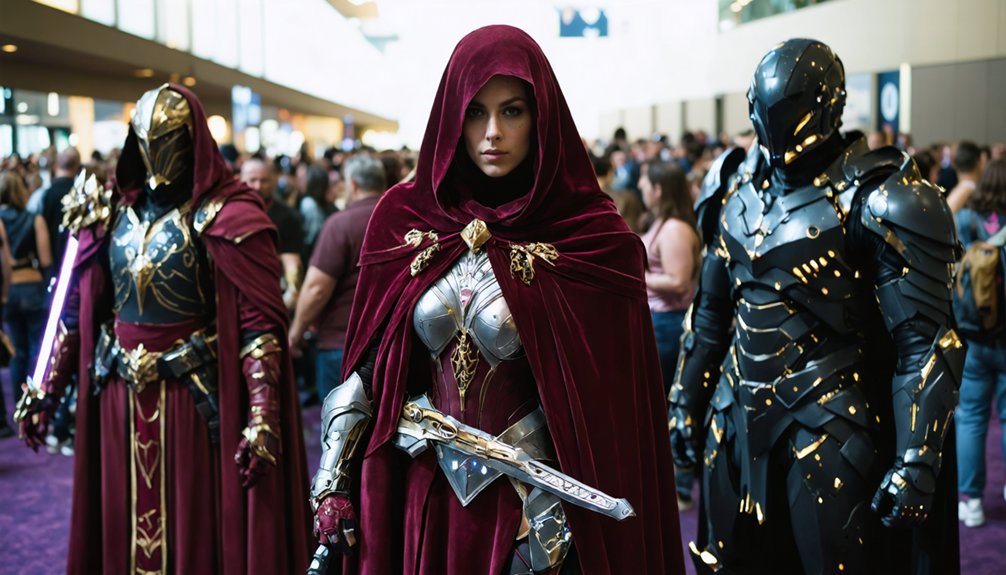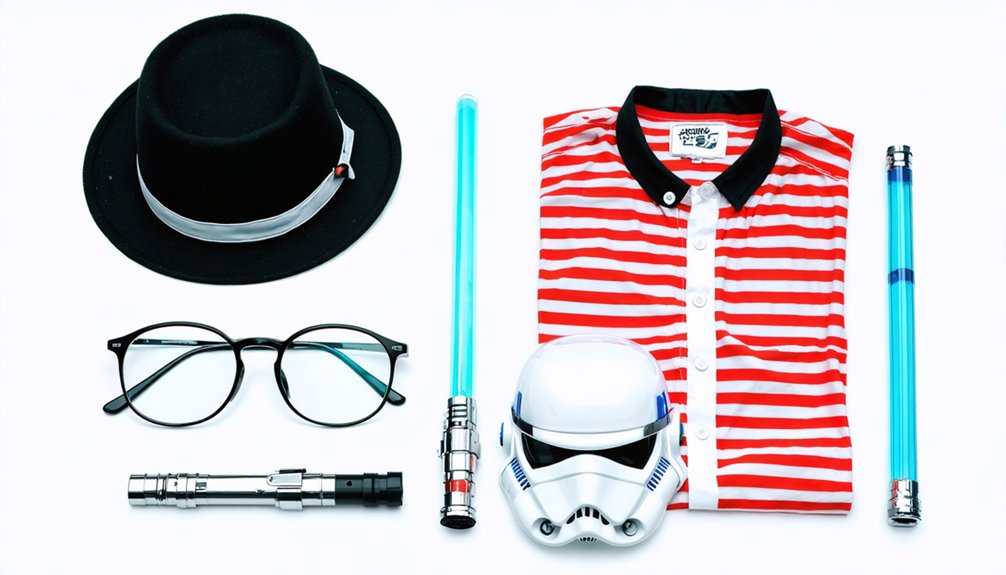
Starting your cosplay journey means choosing film characters with simple, recognizable designs like Ash Ketchum’s red vest and cap or Daphne’s purple dress. You’ll want to raid your closet first, cross-referencing basics like jeans and leather jackets against character references. Supplement gaps with thrift store finds and dollar store accessories. Nail the look with bold eyeliner, character wigs, and signature props. There’s much more to uncover about building your perfect beginner costume.
Key Takeaways
- Choose characters with simple, recognizable outfits like Ash Ketchum or Daphne, which require minimal components and effort.
- Raid your closet for basics like jeans, leather jackets, and turtlenecks that match casual film character wardrobes.
- Shop thrift stores and dollar stores to find affordable clothing and accessories matching your chosen character’s color palette.
- Enhance costumes with signature props like wands, sunglasses, or hats for instant character recognition without complex construction.
- Practice makeup and hair techniques, such as bold eyeliner or braids, beforehand to ensure polished, accurate character portrayal.
Best Film Characters for Beginner Cosplay
When starting out in cosplay, choosing the right film character can make or break your first experience. You’ll want characters whose designs prioritize simplicity without sacrificing recognizability.
Choosing the right character for your first cosplay sets the tone — simple designs with strong recognition make all the difference.
Draw character inspiration from iconic scenes that feature straightforward wardrobes — think Ash Ketchum’s red vest and cap or Daphne’s purple dress from Scooby-Doo.
These selections work because their core elements translate directly into closet cosplay or minimal DIY construction. You’re targeting outfits requiring three components or fewer, reducing both cost and assembly complexity.
Nathan Drake’s black tie and dress pants combination demonstrates how everyday formalwear becomes a viable costume foundation.
Prioritize characters whose iconic scenes establish a strong visual signature through accessories rather than elaborate fabrication, keeping your entry point manageable while delivering maximum audience recognition.
How to Raid Your Closet for a Film Costume
Your closet already contains the raw materials for a convincing film costume — you just need a systematic approach to uncover them.
Start by cataloging your wardrobe essentials: jeans, leather jackets, turtlenecks, scarves, and basic color-blocked pieces. These foundational items directly mirror countless character silhouettes from recognizable films.
Next, cross-reference your inventory against characters whose outfits rely on casual, everyday clothing. Jessica Jones requires dark jeans and a leather jacket — items most people already own.
Luke Cage’s look demands a gray scarf paired with a black turtleneck.
Lay potential combinations flat on your bed, photograph them, then compare against reference images. This visual audit eliminates guesswork and identifies precisely which supplementary accessories you’ll need to complete each look authentically.
Budget Shopping for Beginner Cosplay
You’ll find that thrift stores offer affordable clothing that closely resembles film character attire, making them your first stop for budget cosplay builds.
Supplement your outfit with dollar store accessories like mouse ears, fake mustaches, or stick-on props that add character-specific detail without inflating costs.
Thrift Store Costume Finds
Thrift stores offer some of the best sourcing options for beginner cosplayers working on a tight budget. These thrift store treasures enable creative costume crafting without financial strain. You’ll find versatile pieces that closely match iconic film characters at a fraction of retail cost.
Follow this strategic approach when thrift shopping:
- Target specific color palettes matching your chosen character’s signature aesthetic before browsing.
- Check blazer and jacket sections for leather pieces replicating Jessica Jones’ signature look.
- Hunt accessory bins for pearl necklaces, sunglasses, and scarves completing character profiles.
- Inspect formal wear racks for dress pants and black ties enabling Nathan Drake portrayals.
You’re maximizing value by combining multiple affordable thrift finds, creating authentically recognizable costumes through deliberate, methodical selection rather than expensive single-purchase solutions.
Dollar Store Accessory Hacks
Beyond clothing and apparel, accessories make or break a cosplay’s authenticity—and dollar stores deliver surprising value here.
You’ll find mouse ears, headbands, and clip-on dollar store earrings that replicate character jewelry with minimal investment. Dollar store hats provide solid bases for characters like Ash Ketchum, requiring only minor modifications using paint or fabric markers to match specific designs.
You can also source stick-on gems, plastic wands, and faux pearl necklaces for characters like Joanne, eliminating costly custom orders entirely.
Use pink athletic tape purchased at dollar stores to reconstruct arm casts for niche character references.
Prioritize items with structural versatility—pieces you can repaint, reshape, or layer onto existing costume components.
Strategic dollar store sourcing consistently maximizes your costume’s visual impact without exceeding tight budget constraints.
Mix And Match Outfits
Mixing and matching clothing you already own—or sourcing pieces from thrift stores—lets you build convincing beginner cosplays without committing to single-purpose purchases.
Strategic color combinations and layering techniques transform ordinary wardrobes into recognizable character ensembles.
- Layer a red vest over a green tunic paired with a cap to construct Ash Ketchum’s iconic trainer look.
- Combine black turtlenecks with gray scarves to portray Luke Cage using deliberate color combinations.
- Stack a leather jacket over dark jeans for Jessica Jones, applying minimal layering techniques for maximum impact.
- Pair red and black pieces with pigtails to assemble a Harley Quinn cosplay from thrifted separates.
Each approach prioritizes versatility, ensuring individual pieces remain wearable beyond the cosplay itself.
How to Sew and Assemble Your Film Costume
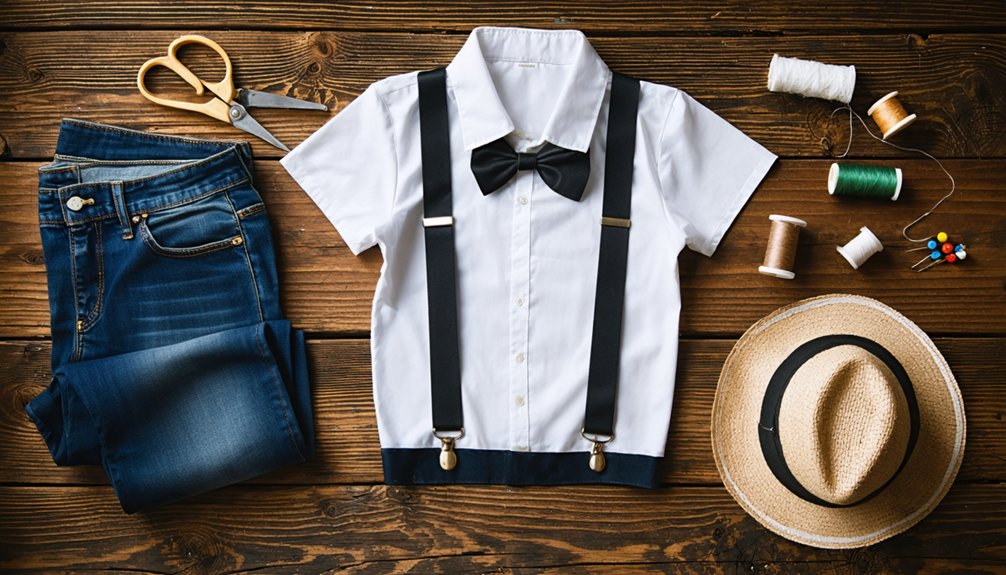
Gather your tools before starting: scissors, a measuring tape, and a sewing machine are your core essentials.
Before cutting premium fabric, test your design using inexpensive materials to refine your fit and structure. Master straight stitches and clean hems first — these fundamental sewing techniques will anchor your entire costume assembly process.
Test inexpensive materials before cutting premium fabric — mastering basic stitches first anchors every successful costume build.
Select fabrics matching your character’s aesthetic while prioritizing comfort during extended wear. Use free online patterns as structural guides, adapting measurements precisely to your body dimensions. Pin seams carefully before stitching to prevent misalignment.
When assembling complex pieces, work systematically — construct individual components separately before joining them together. This modular approach minimizes errors and allows targeted adjustments.
Double-stitch high-stress areas like shoulder seams and waistbands to guarantee durability throughout conventions or events.
Signature Props That Make Film Characters Recognizable
Once your costume’s construction is solid, the right props will push your portrayal from recognizable to unmistakable. Signature weapons and iconic accessories communicate character identity instantly, requiring minimal explanation.
Prioritize these four prop categories:
- Signature weapons — Wands, shields, or replica blades directly reference a character’s core function and combat identity.
- Iconic accessories — Pearl necklaces, distinct sunglasses, or specialty hats encode personality without requiring full costume accuracy.
- Headpiece attachments — Mouse ears on headbands or character-specific hats deliver immediate visual shorthand efficiently.
- Facial additions — Drawn or adhesive mustaches, dramatic eyeliner, and face paint refine character accuracy at minimal cost.
Source props from dollar stores, online marketplaces, or stick-on accessory retailers to maintain budget discipline while maximizing visual impact.
Makeup and Hair Styling for Beginner Cosplay
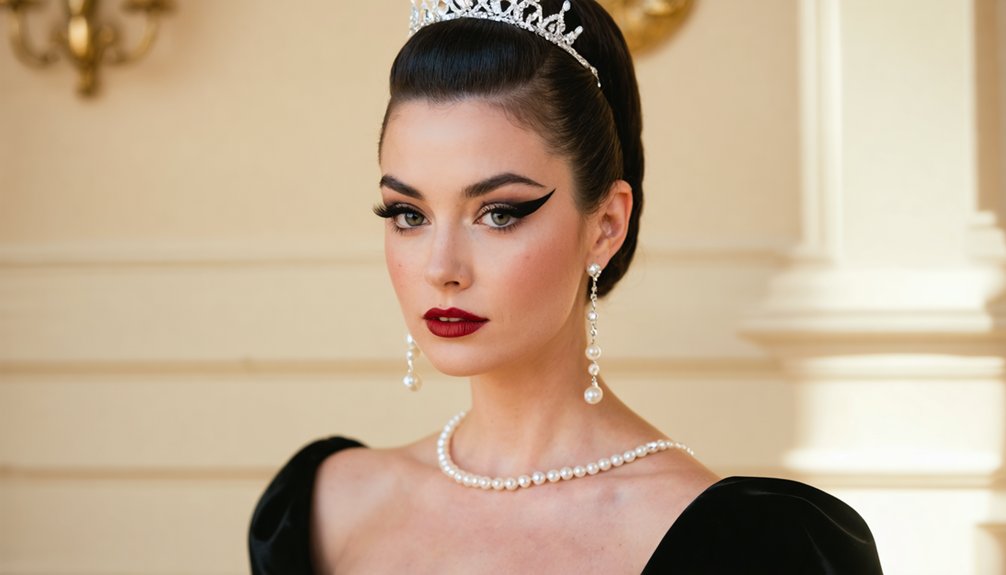
You can transform your look with bold eyeliner techniques, using sharp wings or thick lines to capture characters like Harley Quinn or classic villains.
Style your hair in braids, pigtails, or apply wash-out dye with pink and blue tips to match specific character aesthetics without permanent commitment.
For fantasy or superhero roles, you’ll want to incorporate special effects makeup, including face paint for white skin bases or red smile details, to achieve a convincing character portrayal.
Bold Eyeliner Techniques
Bold eyeliner is one of the most effective tools in a beginner cosplayer’s kit, instantly transforming a casual look into a recognizable character. Mastering bold eyeliner styles elevates your costume’s authenticity without requiring advanced skills.
Follow these techniques to achieve dramatic eye looks efficiently:
- Apply a sharp cat-eye using liquid liner for clean, precise edges that define character-specific silhouettes.
- Layer black pencil liner beneath liquid liner to intensify depth and prevent fading throughout the event.
- Use tape as a stencil along the outer corners to achieve geometrically accurate wing angles consistently.
- Smudge liner deliberately with a blending brush to recreate gritty, battle-worn characters like Jessica Jones or similar noir-inspired figures.
Practice each technique beforehand on clean skin to refine your execution before the actual cosplay event.
Hair Styling Tips
Mastering your eye makeup sets the stage, but your hair styling choices carry equal weight in selling a character’s look.
Style your hair in braids or pigtails to instantly replicate characters like Harley Quinn, applying wash-out dye for her signature pink and blue tips.
For precision, invest in character wigs, which eliminate the guesswork of achieving exact lengths, textures, and colors. Wigs provide consistency across multiple appearances and protect your natural hair from repeated chemical treatments.
Integrate targeted hair accessories — headbands, clips, or themed attachments — to reinforce character-specific details without full costume commitment.
Before any event, test your chosen style under realistic lighting conditions to identify adjustments.
Prioritizing structural accuracy over approximation guarantees your hair elements integrate seamlessly with your overall cosplay presentation.
Special Effects Makeup
Special effects makeup transforms ordinary cosplays into convincing fantasy or superhero portrayals, and it’s more accessible for beginners than it appears.
Mastering a few core makeup techniques lets you execute complex character aesthetics efficiently.
- Face Paint Application: Use white face paint as a base, then layer black and red accents for villain characters like the Joker.
- Dramatic Eyeliner: Apply bold, precise lines to define superhero or fantasy character facial structures.
- Wash-Out Hair Dye: Achieve character-accurate coloring, such as blonde pigtails with pink and blue tips, without permanent commitment.
- Special Effects Prosthetics: Use stick-on accessories and textured overlays to simulate wounds, scales, or supernatural features convincingly.
Practice each technique individually before combining them, ensuring your final look achieves professional-level character accuracy.
Frequently Asked Questions
Can I Cosplay a Film Character at a Non-Cosplay Event?
You can absolutely cosplay a film character at casual events. Prioritize costume etiquette by toning down character accuracy for comfort. At film conventions or informal gatherings, you’ll find closet cosplay techniques blend seamlessly without overwhelming non-cosplay environments.
How Do I Handle Negative Reactions to My Cosplay Choice?
Focus on confidence building by owning your cosplay choice unapologetically. You’ll deflect negativity effectively when you engage with positive communities online and offline, where innovative cosplayers celebrate creativity, validate your expression, and reinforce your commitment to the craft.
Are There Age Restrictions for Certain Film Character Cosplays?
there’s no hard rule, but you’ll want to weigh age appropriateness, character relevance, cultural sensitivity, and safety considerations when selecting film cosplays, ensuring your choice aligns responsibly with your audience and environment.
How Do I Store My Completed Cosplay Costume Between Uses?
Store your completed cosplay using smart storage solutions: hang delicate pieces, fold sturdy items, and bag accessories separately. You’ll optimize costume maintenance by keeping everything in breathable garment bags, away from direct sunlight and moisture.
Can I Sell Cosplay Costumes I Have Made Myself?
Yes, you can sell self-made cosplay costumes. Factor in costume materials costs and labor when setting cosplay pricing. Avoid trademarked designs for commercial sale, as intellectual property laws may restrict profiting from copyrighted characters.
References
- https://starstruckpanda.com/film-character-cosplays-for-beginners/
- https://closetchloecosplay.wordpress.com/category/closet-cosplay-lists/
- http://www.youtube.com/watch?v=yW3g6mK9PRw
- https://www.themarysue.com/10-easy-cosplay-ideas-for-beginners/
- https://www.geekextreme.com/cosplay-ideas-easy/
- https://www.purewow.com/entertainment/movie-character-costumes
- https://people.com/last-minute-halloween-costumes-inspired-by-movie-tv-characters-11836991
- https://www.kamuicosplay.com/startingwithcosplay/
- https://myeyebb.com/blogs/tips/easy-characters-to-cosplay
- https://www.pinkyparadise.com/blogs/news/easy-cosplay-ideas-female