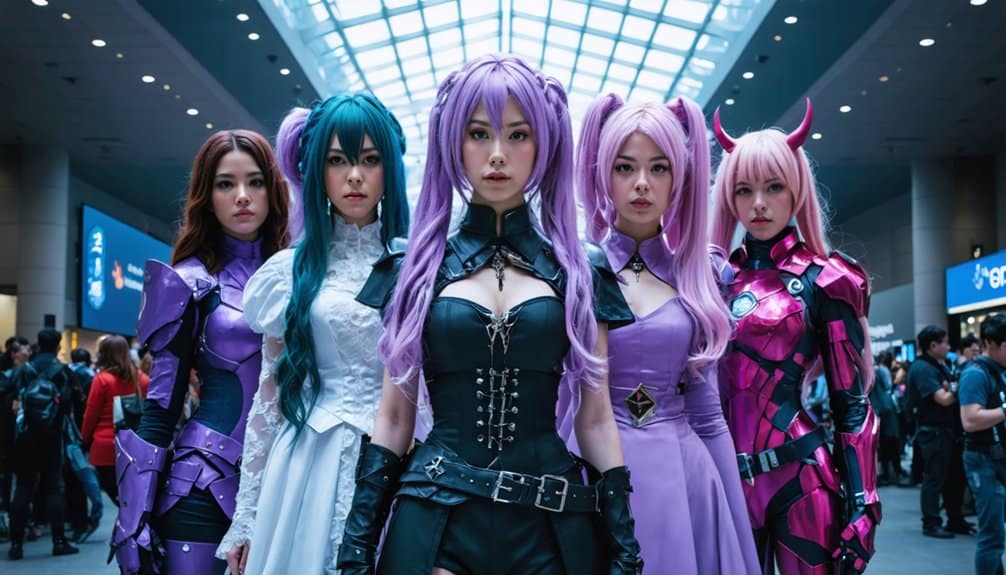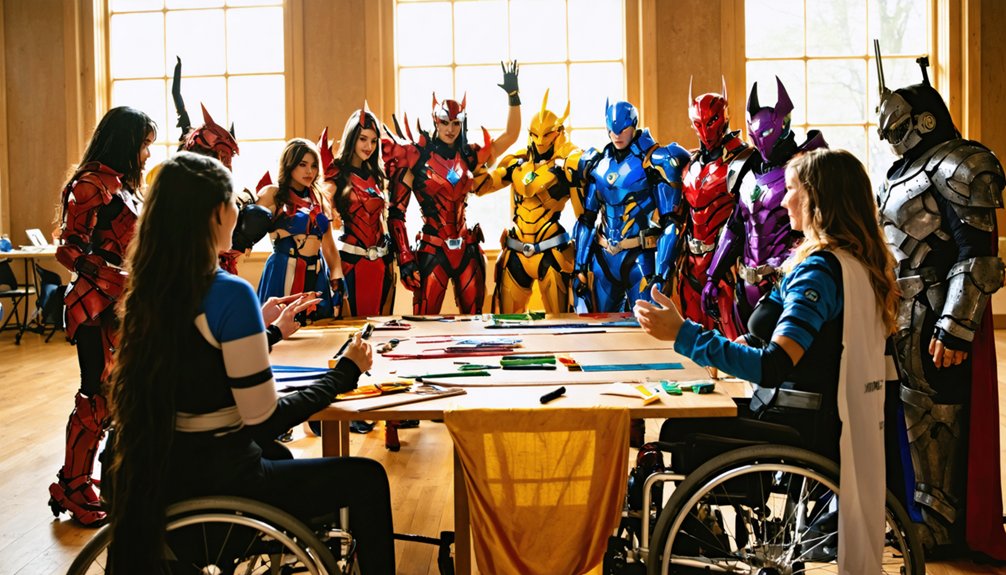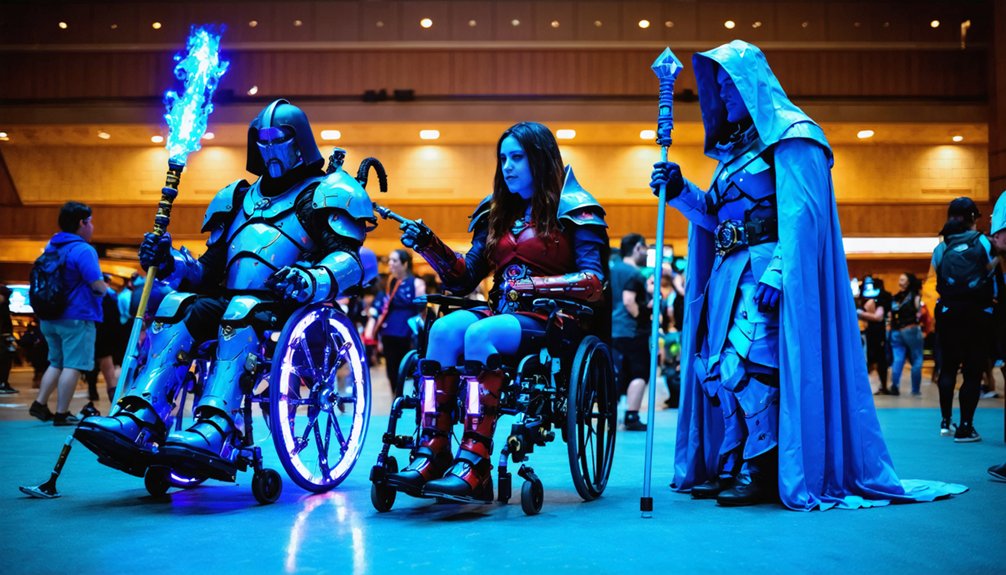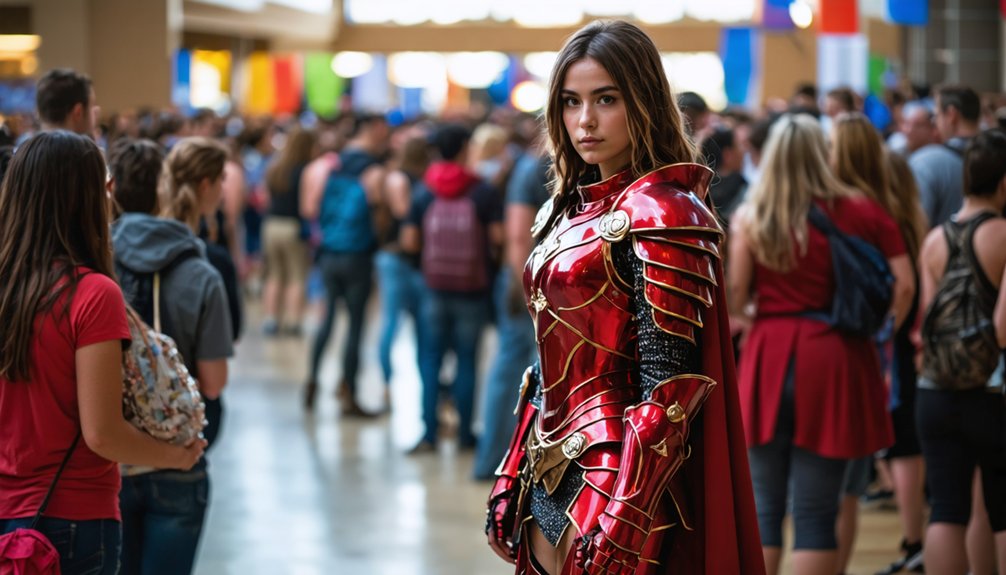
Genderbent cosplay gives you a front-row seat to cultural transformation in action. When you embody a character outside their canonical gender, you’re actively dismantling binary norms, signaling market shifts, and creating psychological safety for marginalized communities. Academic research confirms it’s a structured site of resistance, not mere spectacle. It’s reshaping convention culture, influencing publishers, and empowering queer identities globally. The full scope of its impact runs deeper than most realize.
Key Takeaways
- Genderbent cosplay dismantles binary gender norms by repositioning masculine and feminine traits as performative choices rather than fixed identities.
- Social media amplifies genderbent performances globally, normalizing fluid gender expression far beyond convention spaces.
- Publishers and game studios now design characters with interchangeable gender traits in response to cosplay-driven market pressure.
- Convention organizers implement stricter anti-harassment policies and gender-neutral merchandise lines as genderbent cosplay grows in influence.
- Participants report increased self-acceptance and reduced anxiety around gender nonconformity, with benefits extending into everyday life.
What Genderbent Cosplay Is and Why It Matters
Genderbent cosplay—the practice of portraying characters outside their canonical gender presentation—has quietly reshaped how fan communities negotiate identity, representation, and cultural belonging.
When you examine this practice ethnographically, you’ll recognize it’s not mere costume play; it’s deliberate cultural subversion operating through character embodiment.
Across conventions globally, cosplay visibility increases as practitioners challenge binary expectations embedded within source material. Community acceptance has measurably expanded, with organizers responding through stronger anti-harassment frameworks and gender-neutral merchandise lines.
Empowerment narratives emerge consistently—queer, trans, and marginalized cosplayers report genuine psychological benefits from inhabiting identities that affirm rather than constrain them.
Scholars increasingly treat gender expression within cosplay as performative resistance, applying theoretical frameworks that reveal how subcultures actively reproduce or dismantle dominant cultural orders you’d otherwise consider fixed.
How Genderbent Cosplay Challenges Binary Gender Norms
When you examine genderbent cosplay across fan cultures worldwide, you’ll find it actively dismantles binary gender norms by repositioning masculine and feminine traits as performative choices rather than fixed identities.
You’re witnessing cosplayers embody characters whose gender contradicts their own, forcing communities to confront and renegotiate the assumptions they’ve long attached to presentation and behavior.
This cross-cultural practice normalizes fluid gender expression by making it visible, repeated, and celebrated in public spaces where such expressions were once policed or marginalized.
Defying Traditional Gender Roles
At fan conventions worldwide, genderbent cosplay actively dismantles binary gender expectations by transforming how communities read, perform, and value gendered identity. When you observe a male cosplayer embodying a feminine character, you’re witnessing performance art that directly confronts rigid societal expectations. This creative expression reshapes cultural representation by making gender fluidity visible and normalized across diverse fan spaces.
Within the cosplay community, you’ll notice that gender identity becomes fluid and negotiable rather than fixed. Women adopting masculine costumes demonstrate historically male-coded traits without judgment, while male cosplayers challenge vulnerability stigmas.
These performances generate measurable personal empowerment, particularly among marginalized participants who reclaim space within previously exclusionary fan cultures. Ethnographically, genderbent cosplay functions as a cross-cultural resistance mechanism, systematically rewriting the social scripts that traditionally constrain how gender gets performed publicly.
Normalizing Fluid Gender Expression
Beyond the convention floor, genderbent cosplay‘s normalization of fluid gender expression operates through layered cultural mechanisms that extend well into mainstream social consciousness.
When you observe cosplay community dynamics ethnographically, you’ll notice identity fluidity functions less as spectacle and more as structured cultural practice.
Social media amplification accelerates this normalization, circulating genderbent performances across global audiences who’ve never attended a convention.
Organizers reinforce this shift institutionally by implementing anti-harassment policies and expanding gender-neutral merchandise lines.
Publishers and studios respond by designing characters with deliberately ambiguous gender traits, reflecting cosplay-driven market pressure.
Academic frameworks now treat these performances as legitimate sites of cultural resistance, validating what practitioners already know: genderbent cosplay systematically dismantles binary assumptions embedded within both fan subcultures and broader societal structures.
What Academic Research Reveals About Genderbent Cosplay
When you examine peer-reviewed scholarship, you’ll find that genderbent cosplay sits at the intersection of performance theory, queer studies, and subcultural resistance, revealing how fan communities actively contest dominant gender ideologies.
Ethnographic fieldwork at conventions documents cosplayers across cultural contexts using genderbent practice as a site of identity negotiation, demonstrating patterns that challenge essentialist assumptions embedded in mainstream media.
Longitudinal studies tracking convention attendees over multiple years show measurable shifts in gender perception, confirming that repeated exposure to non-normative presentations reshapes how you and other participants understand gender as a constructed, malleable category.
Gender Theory Connections
You’ll find that identity exploration here isn’t passive—it’s methodical and culturally embedded.
Cross-cultural studies reveal that gender identity shifts in meaning depending on regional fan communities, yet inclusive practices emerge consistently as stabilizing forces.
Cultural representation expands when researchers document how community empowerment drives cosplayers to challenge dominant gender narratives, producing measurable shifts in broader social perception and institutional media practices.
Cultural Resistance Studies
Longitudinal research tracks how identity exploration through genderbent performance strengthens community solidarity, particularly among queer, trans, and marginalized cosplayers reclaiming exclusionary fan cultures.
Cross-cultural analysis reveals that gender diversity expressed through cosplay reshapes cultural identity beyond subculture boundaries, influencing mainstream media production and commercial design.
Universities now integrate these findings into sociology curricula, recognizing cosplay as a measurable, theoretically significant site of contemporary cultural resistance.
Longitudinal Convention Research
Academic researchers tracking convention attendance over multiple years have uncovered measurable shifts in how attendees perceive gender norms, with genderbent cosplay functioning as a consistent variable in those changes.
Longitudinal studies analyzing demographic shifts reveal that community engagement deepens as identity expression diversifies across convention cycles.
Performance analysis highlights three critical findings:
- Social dynamics shift measurably when genderbent representation trends increase within convention spaces.
- Convention attendance data confirms broader acceptance of non-normative gender presentations across successive years.
- Cross-cultural ethnographic observation documents how genderbent cosplay accelerates inclusive community restructuring globally.
You’re witnessing a subculture actively rewriting gender’s social contract.
Researchers don’t simply observe these transformations—they’re documenting how cosplay functions as a living laboratory where identity politics, representation trends, and community engagement converge into measurable cultural momentum.
How Genderbent Cosplay Is Reshaping Fan Conventions
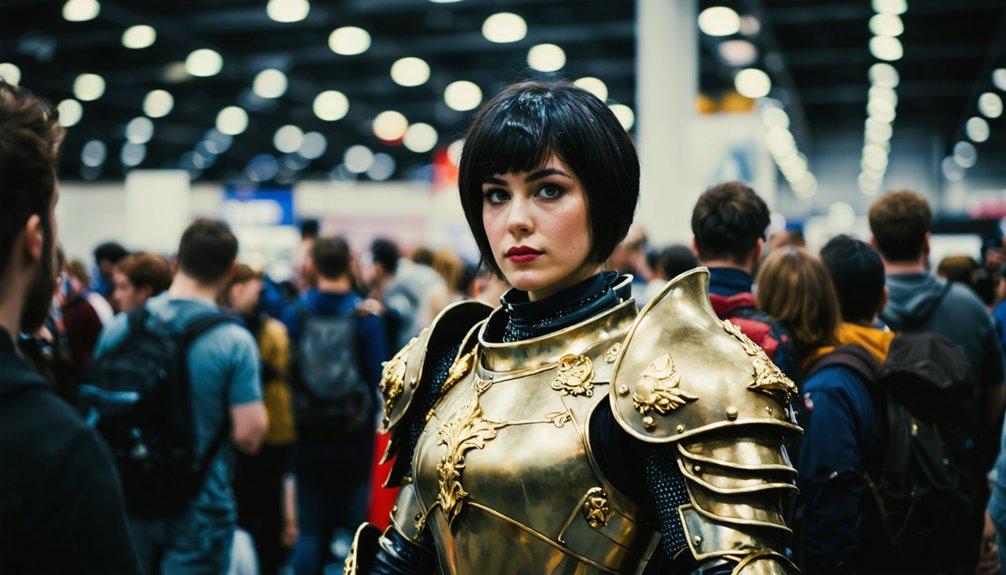
As genderbent cosplay grows in visibility, fan conventions are transforming into measurably more inclusive spaces where non-normative gender expressions aren’t just tolerated—they’re normalized.
You’re witnessing a cultural shift where community engagement drives organizers to enforce stricter anti-harassment policies, directly protecting those whose character embodiment challenges binary expectations.
This isn’t accidental. Identity exploration through performance art reshapes convention culture structurally—merchandise lines expand toward gender-neutral designs, and audience diversity increases as previously excluded communities find representation.
Social acceptance accelerates when you see creative expression celebrated rather than policed.
Ethnographically, conventions function as microcultural laboratories. Narrative innovation emerges organically when cosplayers reimagine characters across gender lines, signaling to commercial producers that fluid representation resonates.
You’re not just attending events—you’re participating in a documented restructuring of fan culture’s foundational norms.
Why Media and Brands Are Investing in Genderbent Cosplay
What was once a grassroots subculture phenomenon has become a calculable market signal—media producers and brands now actively invest in genderbent cosplay because the data from convention floors and social media metrics prove fluid gender representation drives measurable audience engagement.
You’re witnessing a structural shift in how commercial entities approach consumer inclusivity:
- Publishers and game studios design protagonists with interchangeable gender traits, directly consulting cosplay communities.
- Marketing campaigns adopt inclusive messaging that amplifies brand engagement across queer and non-normative audiences.
- Film studios cast actors across traditional gender lines, reflecting crossplay culture’s normalized fluidity.
Character designers now accommodate varied body types, while merchandise lines expand toward gender-neutral options.
These aren’t charitable gestures—they’re ethnographically informed business strategies responding to communities that have already reshaped cultural expectations from the ground up.
The Mental Health Benefits Genderbent Cosplayers Report
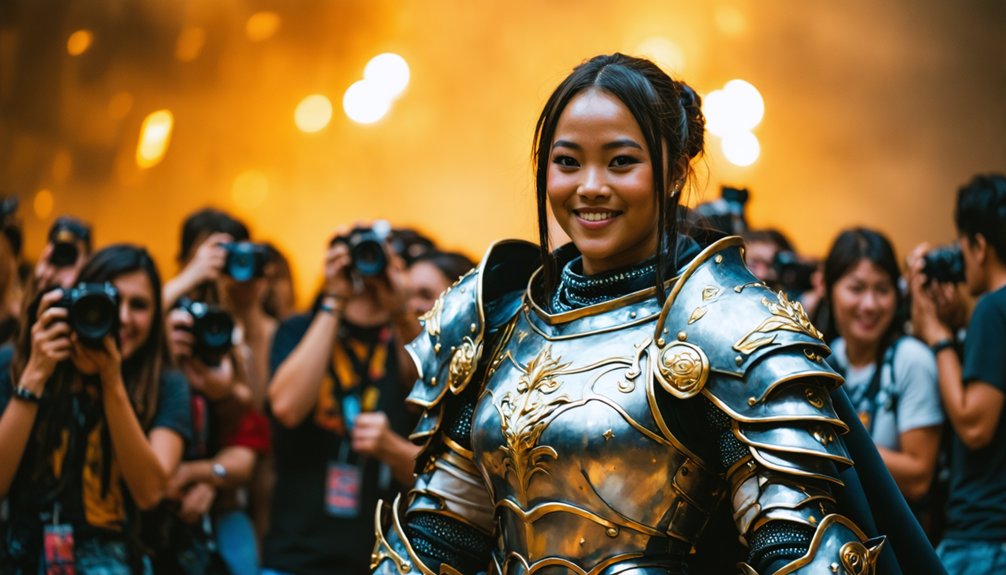
Beyond market signals and cultural visibility, genderbent cosplay delivers documented psychological returns that researchers and cosplayers themselves consistently identify. When you embody a character outside your assigned gender, you initiate self-acceptance journeys that recalibrate how you understand your own identity boundaries.
Queer and trans cosplayers report that public costume performance reduces anxiety around gender nonconformity, converting convention spaces into low-risk rehearsal grounds for authentic self-expression. You’re not simply wearing a costume; you’re stress-testing identity against real social environments.
Confidence boosts emerge consistently across ethnographic studies, particularly among women of color adopting traditionally masculine roles and male cosplayers embracing feminine characters.
These gains transfer beyond conventions, reshaping participants’ everyday negotiations with gender expectations and measurably strengthening community solidarity through shared resistance to normative gender policing.
Frequently Asked Questions
How Do Parents Typically Respond to Children Participating in Genderbent Cosplay?
Parental responses vary widely—you’ll find some offer strong parental support, embracing gender exploration, while others resist. Ethnographic data shows societal acceptance increasingly shapes parents toward openness, particularly within progressive, innovation-driven communities normalizing diverse identity expressions.
What Legal Protections Exist for Genderbent Cosplayers Facing Workplace Discrimination?
You’re protected under workplace equity laws that prohibit discrimination based on gender expression. Legal rights vary cross-culturally, but many jurisdictions extend Title VII and similar statutes to cover non-normative gender presentations, including genderbent cosplay identities.
How Does Genderbent Cosplay Differ Across Various International Cultural Contexts?
Boldly bridging boundaries, you’ll find regional variations shape cosplay acceptance dramatically. Cultural norms dictate gender expression differently—Japan embraces fluidity, while conservative regions resist it. You’re witnessing ethnographic contrasts redefining how innovation challenges traditional identities globally.
What Are the Average Costs Involved in Creating a Genderbent Costume?
You’ll find genderbent costume costs vary widely based on your cost breakdown and material choices—budget builds run $50–$150, while elaborate designs exceed $500, reflecting your creative ambition and cross-cultural design innovations you’re pursuing.
How Do Religious Communities Generally Perceive Genderbent Cosplay Participation?
Religious communities’ perceptions vary widely—you’ll find conservative groups citing religious beliefs to oppose genderbent cosplay, while progressive congregations embrace community acceptance, viewing it as creative expression that fosters empathy and challenges rigid, culturally constructed gender boundaries across diverse faith traditions.
References
- https://ir.library.louisville.edu/cgi/viewcontent.cgi?article=3785&context=etd&httpsredir=1
- https://journalofchinesesociology.springeropen.com/articles/10.1186/s40711-022-00168-z
- https://dash.harvard.edu/bitstream/handle/1/13481274/Gender-Sexuality-and-Cosplay-by-Rachel-Leng1.pdf?isAllowed=y&sequence=1
- https://mars.gmu.edu/server/api/core/bitstreams/b789456f-d2d5-4077-a197-15e4f129deae/content
- https://folklife.si.edu/magazine/cosplay-community
- https://www.academia.edu/127995919/Costuming_as_Inquiry_An_Exploration_of_Women_in_Gender_Bending_Cosplay_Through_Practice_and_Material_Culture_Dissertation
- https://intapi.sciendo.com/pdf/10.2478/tjcp-2024-0015
- https://medium.com/silk-spectator-cosplay-watchmen/cosplay-gender-5b112a19f433
- https://culturewarreporters.com/2014/07/18/my-problems-with-genderbent-cosplay/
- https://digitalcommons.usf.edu/cgi/viewcontent.cgi?article=7946&context=etd