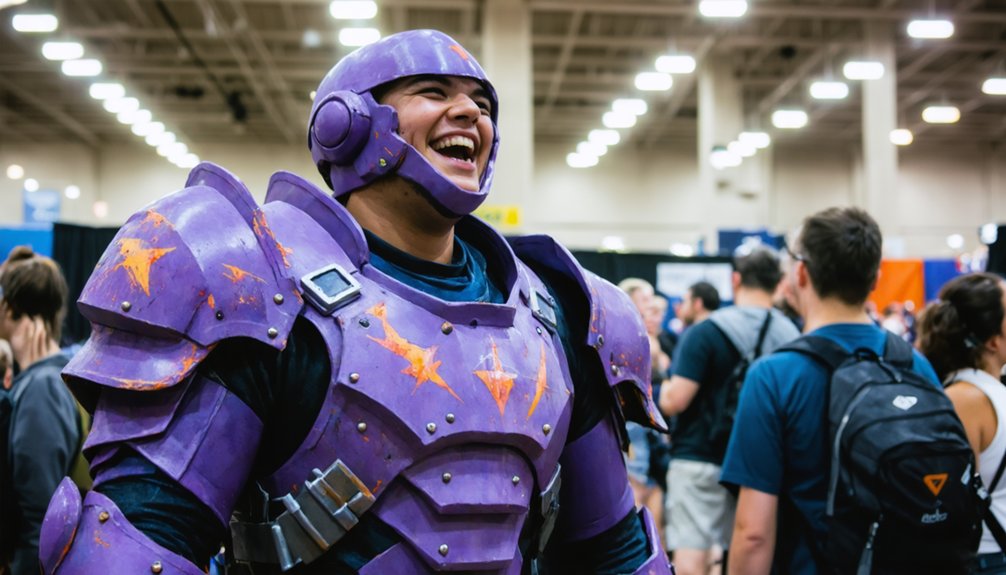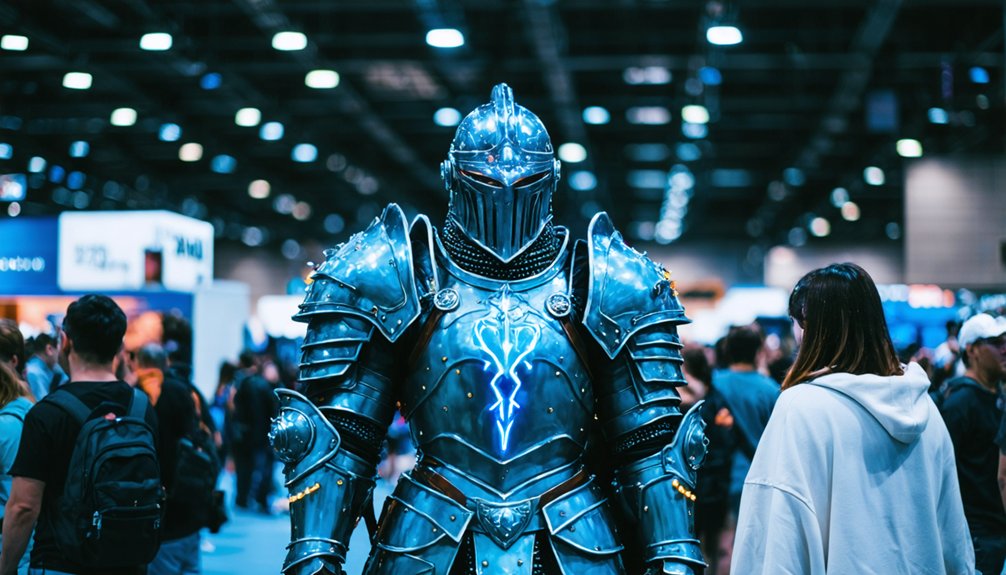
When you wear a costume that reflects an identity the mainstream has ignored, you’re already making a political statement. Cosplay lets you challenge beauty standards, reclaim representation, and build community with others who share your values. It’s especially powerful for Black, queer, and marginalized cosplayers who use conventions as platforms for cultural resistance. Combine intentional character choices with bold visuals and strategic networking, and you’ll transform cosplay into a genuine tool for change—there’s much more to unpack here.
Key Takeaways
- Cosplay empowers marginalized groups like Black and queer communities to challenge exclusion, assert identity, and build belonging within convention spaces.
- Embodying diverse characters dismantles beauty standards and gatekeeping by reframing convincing portrayal as creative expression over physical conformity.
- Scientists and activists use cosplay at conventions to communicate urgent causes, from microplastics awareness to LGBTQ+ resource-sharing.
- Bold visuals, symbolic characters, and strategic props help activist cosplayers quickly communicate powerful messages in crowded convention environments.
- Convention visibility transforms into sustained advocacy through social media documentation, hashtag communities, and collaboration with outreach-focused cosplay groups.
Why Cosplay and Activism Are Already a Natural Match
Because cosplay already operates as a space for identity exploration, resistance, and community building, it doesn’t take much to tip it into outright activism. When you choose a character, you’re making a statement—about identity, representation, and belonging. That’s artistic expression with cultural weight behind it.
Choosing a character is never just costume—it’s a declaration of identity, belonging, and cultural resistance.
Research confirms that cosplay functions as cultural commentary, particularly for Black, queer, and marginalized cosplayers who use the practice to challenge restrictive norms and reclaim visibility.
Convention spaces amplify this dynamic by concentrating thousands of engaged, fandom-literate people in one place.
You’re not starting from scratch when you blend activism with cosplay—you’re building on infrastructure that already exists. The community already shares knowledge, organizes collectively, and resists exclusion.
Activism isn’t a departure from cosplay culture; it’s a natural extension of it.
How Cosplay Challenges Identity Norms and Beauty Standards
What happens when someone who doesn’t fit mainstream beauty standards walks onto a convention floor fully embodying their chosen character? They’re actively dismantling gatekeeping. Cosplay creates a public stage where gender fluidity isn’t a disruption—it’s a design choice.
When you step into a character that mainstream culture never imagined looking like you, you’re refusing the boundaries that pop culture has historically enforced.
Racial representation within cosplay operates the same way. Black, Brown, and Indigenous cosplayers reclaim characters by inserting their own bodies into narratives that once excluded them. That’s subversion with visibility.
You’re also challenging beauty standards that conventions themselves have sometimes reinforced. Cosplay’s collective acceptance reframes what a “convincing” portrayal means—shifting the standard from physical conformity to intentional, creative self-expression.
Cosplay Activism in Action: Real Examples From the Convention Floor
From convention floors at Comic-Con to local fan gatherings, cosplayers have transformed their costumes into active instruments of education and social critique. Through fandom collaboration and deliberate costume craftsmanship, activists have turned convention spaces into classrooms and stages for change. Consider what’s already happening:
- Scientists used cosplay at Comic-Con to communicate microplastics pollution to thousands
- Queer cosplay organizations have built safe spaces and resource networks for vulnerable youth
- Black cosplayers have publicly reclaimed characters, challenging racial exclusion in pop culture
- Digital activist cosplayers have escalated from visibility to organized protest when communities face attack
You’re witnessing a movement where creativity carries consequence.
These examples prove that when purposeful design meets collective passion, cosplay becomes a precision tool for meaningful, measurable cultural impact.
Build an Activist Cosplay That Commands Attention
Knowing what activist cosplay can accomplish is one thing—building a costume that actually commands attention at a convention is another. Your character selection is foundational—choose figures whose symbolism already carries cultural weight, then layer your message onto that recognition. Audiences process meaning faster when they’re already emotionally connected to the character.
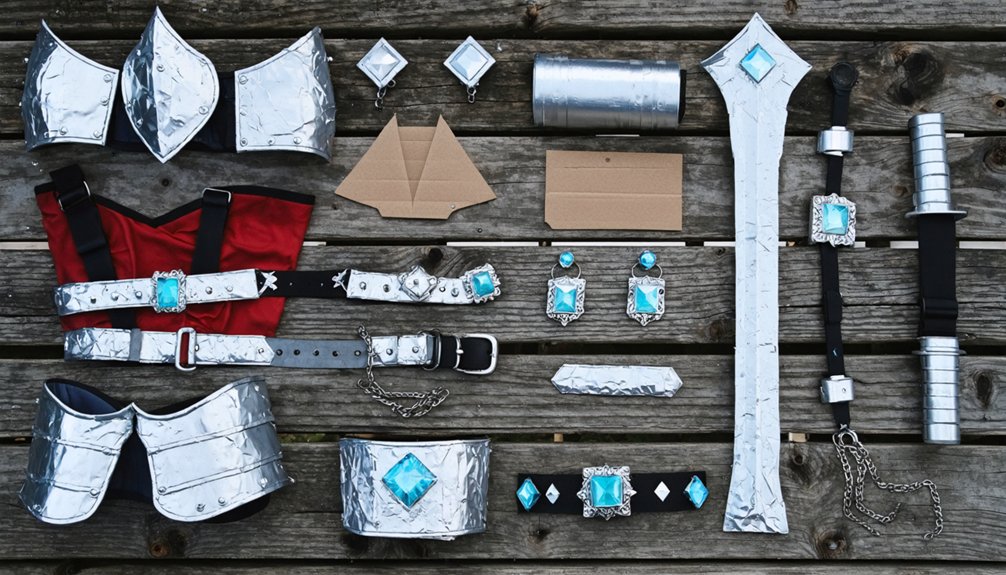
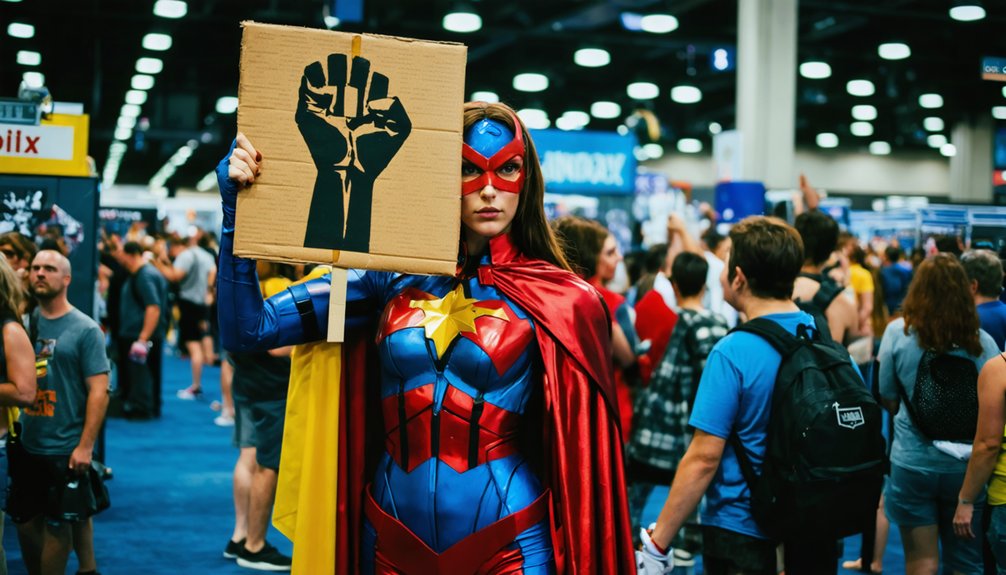
Costume craftsmanship doesn’t require perfection, but it does require intentionality. Simple, bold visual elements communicate faster than intricate details in crowded convention spaces. Pair your costume with concise props, signs, or handouts that extend the message beyond a glance.
Consider intersecting identities within your character choice—cosplaying across race, gender, or ability can itself become the statement. When craftsmanship meets strategic character selection, your costume stops being decoration and starts functioning as a political intervention.
How to Find Activist Cosplay Communities at Conventions
Building a costume is only half the work—finding your people at a convention takes its own kind of strategy. Activist cosplay communities thrive where character transformation meets collective purpose. Look intentionally, and you’ll locate networks built on skill sharing and shared values.
- Check convention schedules for activist panels, queer cosplay meetups, or social justice-themed photo gatherings
- Follow hashtags before the event—communities organize digitally before they converge physically
- Approach cosplayers whose costumes signal intersectional awareness; representation communicates alignment without words
- Visit outreach booths where organizations use cosplay to educate—these spaces attract like-minded activists
These entry points aren’t accidental—they’re infrastructural. When you locate communities that blend creativity with conscience, you’re not just networking. You’re plugging into a democratized system where belonging and resistance coexist.
How to Turn Convention Visibility Into Ongoing Advocacy
Convention visibility is a spark, not a finish line. The attention your cosplay generates at a convention holds real potential, but only if you channel it into sustained action. Document your interactions, collect contacts, and follow up with organizations aligned with your message—whether that centers cultural representation, mental health awareness, or queer safety.
Use social media strategically to extend your convention presence beyond the event itself. Share your outreach materials, tag relevant advocacy groups, and invite your audience into ongoing dialogue.
Cosplay communities function as democratized learning networks, meaning the relationships you build at conventions can evolve into collaborative campaigns.
Don’t let momentum dissolve after the convention ends. Transform each moment of visibility into a concrete next step—a workshop, a resource share, or a coalition connection.
Frequently Asked Questions
Can Children Participate in Activist Cosplay at Conventions Safely?
Yes, children can safely participate when you follow cosplay guidelines prioritizing children’s safety. You’ll want age-appropriate messaging, adult supervision, and inclusive convention policies that intersect identity, creativity, and activism—empowering young voices through innovative, community-supported self-expression.
How Do Convention Organizers Respond to Politically Charged Cosplay Displays?
Over 130,000 attend San Diego Comic-Con annually. Organizers typically balance political impact with community engagement by allowing charged cosplay unless it violates conduct policies—you’ll find they’re increasingly embracing intersectional expression as conventions recognize cosplay’s transformative social power.
Are There Costs Associated With Joining Activist Cosplay Community Groups?
You’ll find that cost implications vary widely — many activist cosplay groups don’t charge membership fees, prioritizing accessibility. Some organizations, however, may request voluntary contributions to sustain resources, safe spaces, and outreach initiatives supporting queer, trans, and marginalized communities.
How Do You Handle Negative Reactions to Your Activist Cosplay?
Like armor in battle, your community shields you. You handle online backlash by setting firm personal boundaries, leaning on collective support, and transforming negativity into fuel—turning critics into catalysts for deeper, intersectional activist engagement.
Can Activist Cosplay Efforts Influence Policy Changes Beyond Convention Spaces?
Yes, your activist cosplay can drive policy impact beyond conventions. When you harness community influence through digital activism, collective organizing, and intersectional storytelling, you’re transforming creative performance into sustained pressure that reaches lawmakers and reshapes broader cultural conversations.
References
- https://folklife.si.edu/magazine/cosplay-community
- https://netlibrary.aau.at/obvuklhs/download/pdf/7643412
- https://www.scielo.br/j/bar/a/PNpLzNtpXP7zKWxSWFD9GWH/?lang=en
- https://journals.librarypublishing.arizona.edu/jcrae/article/4761/galley/4749/view/
- https://digitalcommons.usf.edu/cgi/viewcontent.cgi?article=7946&context=etd
- https://storage.googleapis.com/jnl-up-j-ctjme-files/journals/1/articles/80/651c0546e3fd7.pdf
- https://mars.gmu.edu/server/api/core/bitstreams/1565b4a0-daf9-4e6b-b882-7338d4b5523a/content
- https://en.wikipedia.org/wiki/Cosplay
- https://stars.library.ucf.edu/etd/6493/
- https://womenwriteaboutcomics.com/2015/11/queersplay-cosplay-creates-safe-spaces-cons/