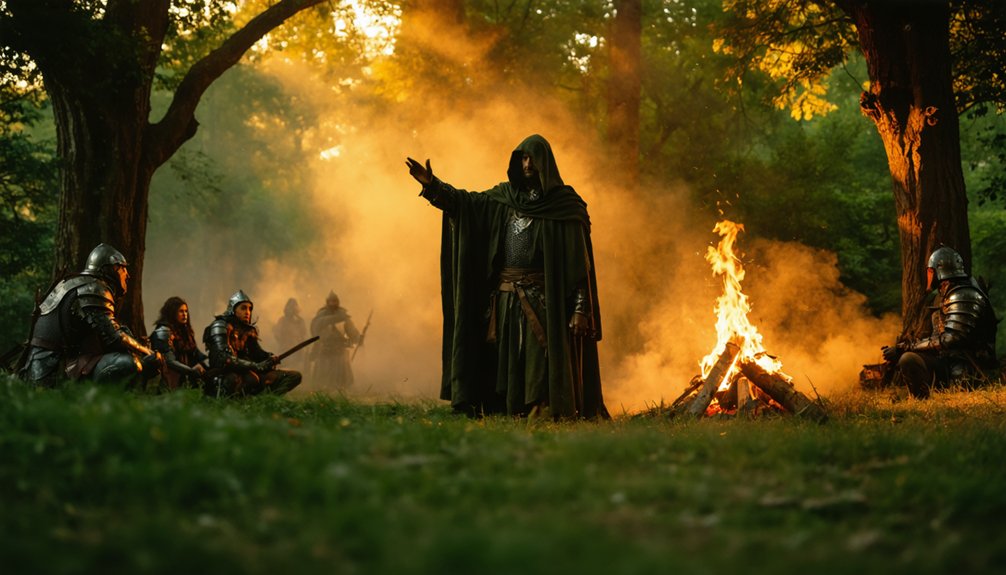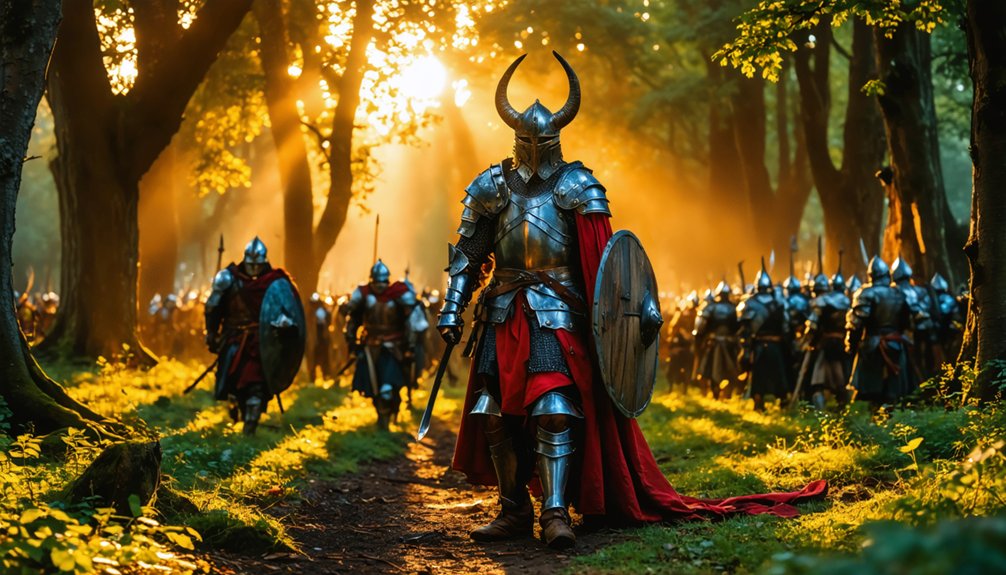
Your cosplay skills transfer directly to LARP — you just need to shift your focus from visual impact to function and durability. Redirect your costume construction techniques toward breathable fabrics, reinforced stitching, and layered systems that handle weather and movement. Match your character to your game’s faction rules before building anything. Source affordable gear from thrift stores, secure accessories with snaps or belt loops, and prioritize durable footwear. There’s much more to unpack to guarantee you’re fully prepared.
Key Takeaways
- Cosplay skills in costume construction, character backstory, and makeup translate directly and effectively into building immersive, credible LARP characters.
- Shift your design focus from visual accuracy to durability, mobility, and function to thrive in active LARP environments.
- Confirm game rules on permitted races, roles, weapons, and materials before constructing your costume or gear.
- Source affordable, period-accurate garments from thrift stores and reinforce them with breathable fabrics and secure attachments for all-day wear.
- Prepare for multi-day events by layering weather-resistant fabrics, packing repair supplies, and learning combat mechanics beforehand.
How Cosplay Skills Give You a Head Start in LARP
If you’ve spent time in cosplay, you already have a foundational skill set that transfers directly into LARP. Your cosplay techniques—costume construction, makeup application, and character presentation—map cleanly onto LARP’s core demands. The difference is context: cosplay performs for an audience, while LARP immerses you within an interactive environment.
Your character development experience gives you another measurable advantage. You’ve already practiced translating a character’s backstory into visual identity, which is exactly what LARP organizers expect from participants.
Costume-building knowledge means you understand materials, durability, and layering—all critical for all-day outdoor wear.
Where cosplay prioritizes appearance, LARP prioritizes function. Shift that mindset, apply your existing technical skills, and you’ll enter your first LARP event considerably ahead of participants starting from scratch.
How Is LARP Actually Different From Cosplay?
When you cosplay, you’re focusing on accurately representing a character through costume and appearance, often for photos or competitions.
In LARP, the costume becomes a tool for immersion rather than public performance — you’re not showing off a look, you’re inhabiting a role within an interactive, real-world setting.
That shift from character presentation to character embodiment is the core distinction you’ll need to internalize before your first event.
Character Versus Costume Focus
Although cosplay and LARP both rely on costumes and character presentation, their core goals differ in ways that directly shape how you approach each one. In cosplay, your costume carries the performance. Accuracy, detail, and visual impact matter most because you’re presenting a recognizable character to an audience.
LARP shifts that priority entirely. Fantasy elements replace source-accurate reproduction, and costume realism serves immersion rather than presentation. You’re not performing *for* observers — you’re inhabiting a character within an interactive world alongside other players.
Your gear needs to function, not just photograph well. This distinction changes your decision-making at every stage. Cosplay rewards spectacle. LARP rewards coherence, mobility, and character depth. Understanding that difference helps you build a kit that actually works when the event begins.
Immersion Over Public Performance
Because cosplay is built around public performance, your costume exists as a signal to an audience — it communicates a character that others recognize and respond to. Costume craftsmanship drives that recognition. Detail, screen accuracy, and visual impact directly support audience engagement.
LARP inverts this entirely. Your costume isn’t performing for spectators — it’s sustaining your immersion within an interactive environment. Nobody’s evaluating your construction techniques from a judging panel. Instead, your gear functions as part of a living system where other participants are characters responding to your character.
This distinction changes how you build and wear a costume. LARP prioritizes all-day durability, movement freedom, and world-consistency over photogenic presentation. You’re not posing — you’re inhabiting. That shift in purpose demands a fundamentally different design mindset from the start.
Match Your Character to the Game’s Rules First
Before investing in any costume piece or character concept, check the game’s rules to confirm what races, roles, and equipment your chosen event actually permits. Character alignment and costume customization both depend on what the system supports, not what you envision independently.
Confirm these four rule elements before building anything:
- Permitted races and species within the game’s lore
- Role restrictions tied to faction, class, or backstory
- Approved weapons, props, and foam safety standards
- Costume material or color codes assigned to specific character types
Skipping this step wastes money and forces last-minute redesigns. Contact organizers directly if the rulebook leaves gaps.
Some events also assign pre-written characters to new players, which shifts your customization scope entirely. Build smart by validating the framework first.
Where to Find Affordable LARP Gear That Actually Works
Thrift stores are your fastest route to functional LARP gear — scan racks for wool cloaks, leather belts, linen shirts, and canvas bags that photograph as period-accurate without the specialty price tag.
For footwear, prioritize black hiking boots, since they handle uneven outdoor terrain across full event days while remaining visually neutral enough to blend with most fantasy aesthetics.
Carry your foam weapons using fabric sheaths or scabbards, which keep blades secure, satisfy most event safety rules, and cost far less than rigid carriers.
Thrift Store Hidden Gems
When you’re outfitting a LARP character on a tight budget, thrift stores consistently outperform costume shops on both price and authenticity. Donated garments often reflect historical accuracy and cultural influences that mass-produced costumes simply don’t replicate.
Target these four categories on every thrift run:
- Wool cloaks and heavy coats – natural fibers perform better outdoors than synthetic alternatives
- Leather or canvas belts – structural and versatile for attaching pouches and sheaths
- Linen and cotton shirts – breathable, period-appropriate base layers
- Boots and sturdy footwear – dark leather styles integrate seamlessly into most fantasy settings
Check stitching integrity and fabric weight before purchasing. Reinforced seams survive full-day wear; decorative ones won’t. Prioritize function, then refine the aesthetic with targeted accessories later.
Durable Boot Selections
Footwear breaks LARP immersion faster than almost any other gear failure, so choose boots that survive full-day outdoor wear before worrying about aesthetics. Black hiking boots deliver footwear durability across uneven terrain, mud, and extended combat scenarios without drawing attention to your modern gear. Their neutral color integrates cleanly into most fantasy settings, letting your costume carry the visual weight.
Prioritize ankle support, waterproofing, and sole grip when evaluating options. Fabric breathability becomes critical during multi-hour events, so select boots with moisture-wicking liners to prevent blisters and foot fatigue.
Mid-cut designs balance ankle stability with movement flexibility better than full-height alternatives.
Check military surplus stores and outdoor retailers for discounted hiking boots that meet these specifications. Function must lead every footwear decision you make before your first event.
Budget-Friendly Weapon Carriers
Most cosplay veterans overlook weapon carriers until they’re standing at an event with a foam sword awkwardly tucked under one arm. Fabric sheaths and scabbards solve this immediately without draining your budget.
Source affordable carriers from these options:
- Thrift stores – Repurpose belts and leather pouches into functional scabbard rigs.
- Craft fabric remnants – Sew basic sheaths with fantasy motifs using minimal materials.
- Online LARP marketplaces – Find purpose-built carriers designed around medieval armor aesthetics.
- DIY foam and worbla builds – Construct custom pieces matching your exact weapon dimensions.
Attach carriers directly to your belt system so your hands stay free during combat mechanics. Prioritize secure attachment points over decorative elements.
A functional carrier that matches your character’s medieval armor palette communicates intentional design without compromising mobility.
Build a LARP Costume That Lasts All Day
Unlike cosplay builds designed for a few hours of photos, a LARP costume needs to hold up through a full day of walking, weather, and possible combat. Costume durability starts with your foundation—choose reinforced stitching, breathable fabrics, and layered construction that supports movement without restriction.
Weather adaptation is non-negotiable. A wool cloak handles rain and wind while maintaining your character’s visual coherence. Layer lighter pieces underneath so you can adjust as temperatures shift throughout the event.
Prioritize black hiking boots over decorative footwear—they’re durable, weather-resistant, and visually unobtrusive on most terrain. Secure accessories with belt loops or snaps rather than pins that fail under stress. Every piece you select should function reliably across hours of active roleplay, not just look good in a single shot.
Layer Your LARP Outfit for Maximum Flexibility

Building for durability gets you through the day—building for flexibility gets you through the whole event. Layering techniques let you adapt your look across shifting weather, scenes, and character moments without hauling extra gear.
Durability carries you through the day. Flexibility carries you through the entire event.
Start with a neutral base—plain tunic, fitted pants, solid boots—then build outward:
- Thermal underlayer – regulates temperature during cold mornings or wet conditions
- Mid-layer vest or gambeson – adds faction identity and practical storage
- Outer cloak or tabard – signals rank, house, or role at a glance
- Removable accessories – belts, pouches, and wraps that shift your silhouette fast
Costume versatility depends on intentional piece selection, not volume. Each layer should function independently while reinforcing the full character concept when worn together.
Use Accessories to Tell Your Character’s Story
Accessories do the narrative heavy lifting that a base costume can’t always carry on its own. Every pouch, pendant, or belt attachment functions as accessory symbolism — communicating faction, profession, and history before you speak a single line of dialogue.
Tie each piece directly to your character’s backstory rather than adding items arbitrarily.
Storytelling props work best when they’re specific. A worn leather satchel signals a traveling merchant. A bone-carved trinket suggests a ritual background. Varied textures — fur trim, hammered metal, braided cord — add visual complexity without requiring a full rebuild.
Prioritize functional accessories like water containers and belt-mounted pouches, then layer meaning over utility. When every accessory earns its place narratively and practically, your character reads as intentional, coherent, and fully realized within the game world.
What to Pack for a Multi-Day LARP Event
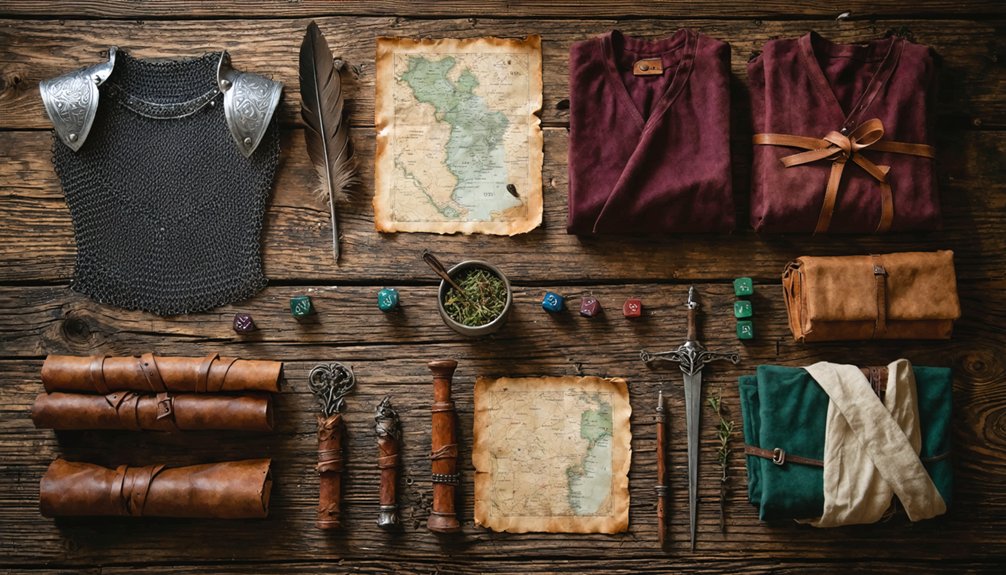
Packing for a multi-day LARP event requires balancing in-character aesthetics with genuine survival logistics. Your kit needs to perform across weather shifts, combat sequences, and extended wear. Treat camping essentials as non-negotiables, and build emergency repairs capability into your loadout from the start.
Prioritize these four categories:
- Hydration and nutrition – A period-appropriate canteen plus compact, high-energy snacks stored in belt pouches.
- Emergency repairs – Extra shoelaces, safety pins, needle and thread, and spare buckles for fast field fixes.
- Weather protection – A wool cloak, layered base clothing, and waterproof backup gear.
- Health essentials – Medications, earplugs, and backup clothing for multi-day comfort.
Every item you carry should serve a functional purpose while reinforcing your character’s visual identity.
Choose Footwear and Fabrics That Hold Up All Day
Your gear list only holds up if your body does, and that starts from the ground up. Black hiking boots are your best footwear durability option — they handle uneven terrain, log full-day miles, and blend into most fantasy aesthetics without pulling attention.
Avoid fashion boots with thin soles or rigid construction. You’ll feel every hour in those.
For fabrics, prioritize fabric breathability alongside weather resistance. Wool layers regulate temperature across shifting outdoor conditions and shed light rain effectively. Linen works well in warmer settings, moving freely without trapping heat.
Synthetic underlayers wick moisture and reduce chafing during combat or extended walking. Avoid heavy brocades or stiff theatrical fabrics built for stage, not field. Every material choice should serve function first, then visual character coherence.
Learn the Rules and Roleplay Mechanics Before You Arrive
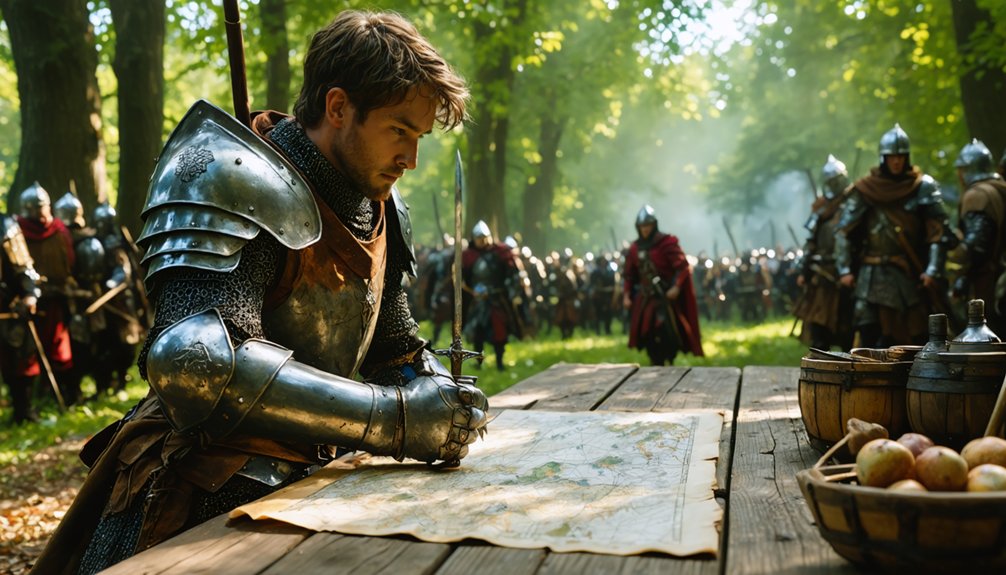
Gear alone won’t carry you through an event — knowing the mechanics will. Your cosplay craftsmanship gets you noticed, but your character backstory and rule knowledge keep you credible. Contact organizers before arrival to clarify restrictions on races, roles, and equipment.
Prioritize these four areas:
- Combat mechanics — Learn safe weapon engagement rules and approved foam weapon protocols.
- Character restrictions — Confirm whether your race, class, or role fits the event’s framework.
- Workshop structure — Understand pre-event workshops that establish consent tools and safety calls.
- Assigned roles — Some introductory scenarios use pre-written characters; request yours early.
Arriving prepared means you’ll engage immediately rather than spending the first hours catching up. Mechanics mastery transforms your costume investment into genuine, immersive participation.
Frequently Asked Questions
Can I Participate in LARP if I Have a Physical Disability?
Like a versatile tool adapting to any task, you can absolutely participate in LARP with a physical disability. Explore adaptive gear options and consult organizers for accessibility tips that fit your character’s role seamlessly.
Are There Age Restrictions or Minimum Age Requirements for LARP Events?
Age restrictions and minimum requirements vary by event. You’ll need to check each LARP’s specific policies, as some welcome players of all ages while others enforce adult-only participation due to combat mechanics or mature storytelling themes.
How Do I Find LARP Communities or Events Happening Near My Location?
Search online forums like Reddit’s LARP communities and Facebook groups to locate events near you. You’ll also find local meetups through Meetup.com, regional LARP organizations, and game-specific websites that list scheduled events by geographic area.
Is Photography or Video Recording Typically Allowed During LARP Events?
Like a double-edged sword, event photography and video restrictions vary per LARP. You’ll need to check each organizer’s rules directly, as some prohibit recording to protect immersion while others welcome documentation in designated zones.
Can I Attend a LARP Event Without Committing to a Full Character?
Yes, you can attend through casual participation, especially in introductory scenarios. You’ll often use costume improvisation with basic layers and accessories, letting organizers assign you a pre-written role without requiring full character commitment upfront.
References
- https://www.reddit.com/r/LARP/comments/mdir26/combining_larp_with_cosplay/
- https://artisansdazure.com/blogs/blogs/larping-vs-cosplay-whats-the-difference
- https://www.medievalware.com/blog/what-is-larping/
- https://www.reddit.com/r/LARP/comments/17amjki/getting_into_larpcosplay/
- https://www.reddit.com/r/LARP/comments/1gadse5/newbie_trying_to_get_into_larping_seasoned/
- https://www.nordiclarp.org/2020/12/27/navigating-online-larp/
- https://www.youtube.com/watch?v=wupWdVy4kwc
- https://www.reddit.com/r/LARP/comments/6hikp0/what_are_some_common_mistakes_in_costuming_and/