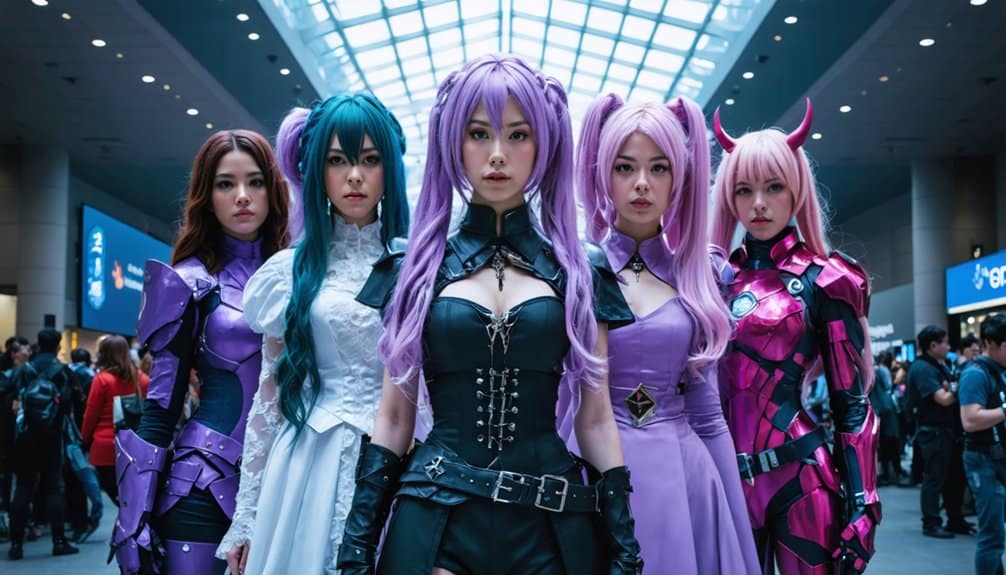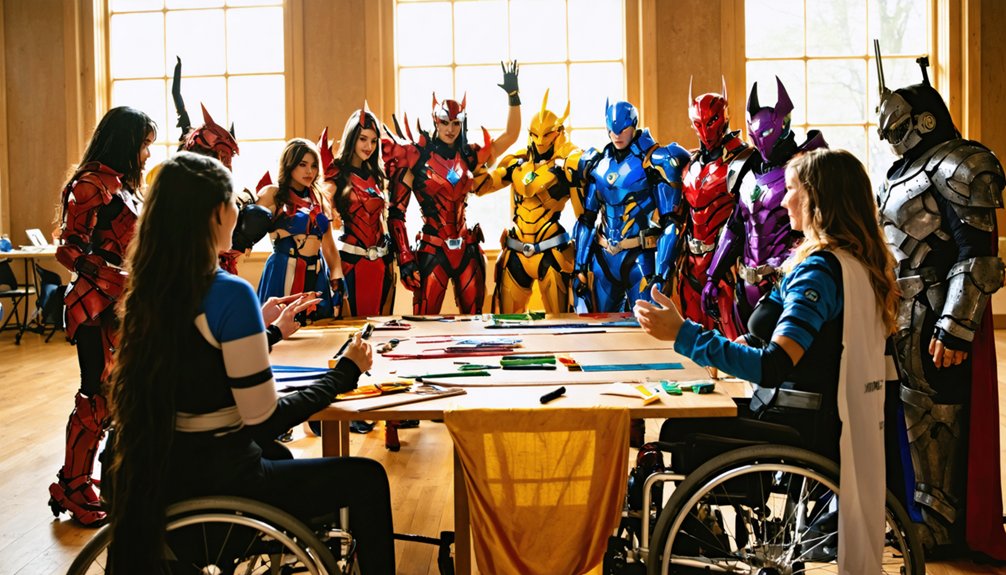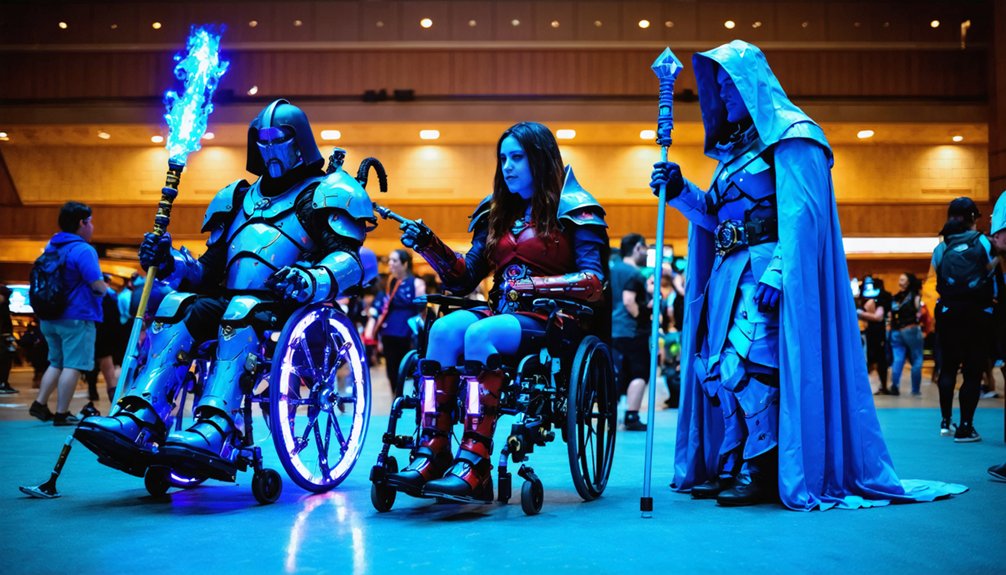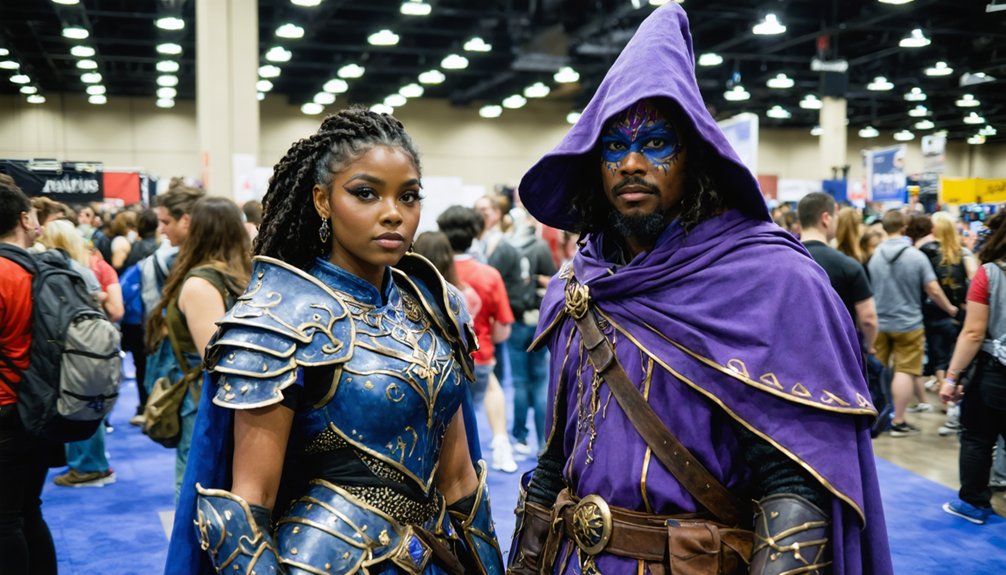
Ethnic diversity in cosplay is transforming conventions in powerful ways. You’ll see race-neutral cosplay challenging outdated expectations, letting you embody any character regardless of skin tone. POC cosplayers now represent half or more of attendees at major events like New York Comic Con. Cosplayers of color weave their cultural heritage into costumes, while racebending reclaims space without crossing into appropriation. Convention panels are championing inclusive voices—and there’s much more to uncover about each of these game-changing trends.
Key Takeaways
- Race-neutral cosplay allows people of color to embody any character, challenging outdated expectations that costumes must match a cosplayer’s skin tone.
- By 2011, persons of color represented half or more of cosplayers at New York Comic Con, reflecting growing community diversity.
- Cosplayers of color incorporate cultural heritage into costumes, blending real-world identity with fictional characters through symbolic design elements.
- Racebending empowers POC cosplayers to reclaim space by portraying white characters, while white cosplayers must avoid harmful practices like blackface.
- Convention panels champion historically sidelined cosplayers, creating inclusive spaces that celebrate diverse identities, body types, and cultural backgrounds.
What Race-Neutral Cosplay Means and Why It Matters
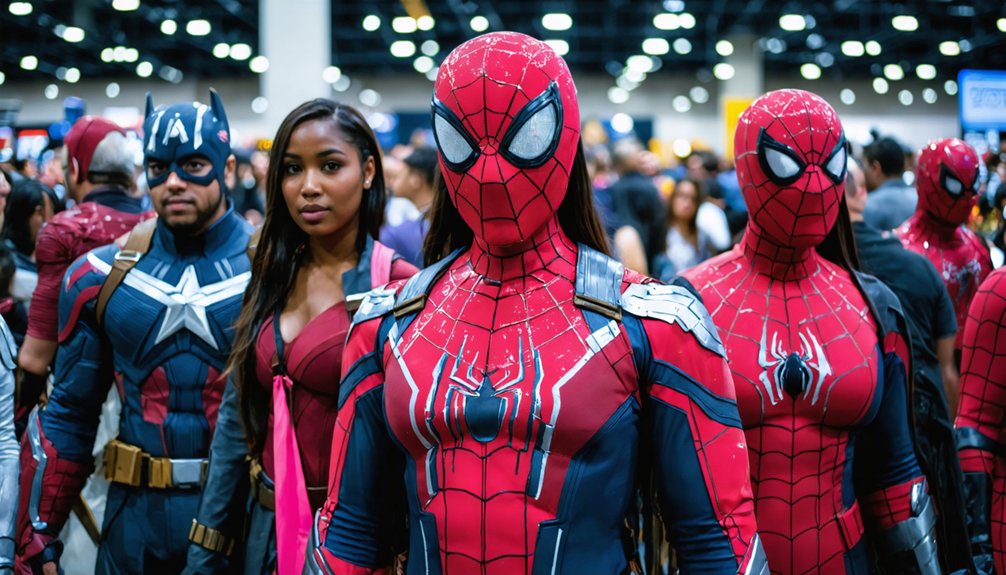
When you think about cosplay, the joy of it lies in embodying a character you love — not in matching their skin tone. Race-neutral cosplay challenges the outdated idea that you must look like a character to portray them authentically.
It’s about cosplay identity — your personal connection to a character — rather than canonical accuracy.
Historically, strict race-matching expectations demoralized cosplayers of color, limiting their choices and dampening their enthusiasm.
Racebending — portraying characters with a different racial appearance — has reshaped that narrative. Now, you can express your cultural expression freely, transforming beloved characters into reflections of your own heritage and lived experience.
This shift doesn’t erase characters; it expands them. It invites everyone into the story, making cosplay more innovative, inclusive, and genuinely empowering for all.
How POC Cosplayer Visibility Has Grown at Conventions
That cultural shift in acceptance didn’t just change how cosplayers think — it changed who you actually see at conventions. By 2011, New York Comic Con reflected that community growth visibly, with roughly half or more of cosplayers being persons of color.
By 2011, New York Comic Con told the story clearly — persons of color made up half or more of all cosplayers.
The visibility impact goes beyond numbers. Panels now celebrate non-white, plus-sized, and disabled cosplayers, creating dedicated spaces where representation becomes normalized.
African-American cosplayers, once a handful at major events, are now prominent fixtures across convention floors.
You’ll see cosplayers of every skin tone portraying heroes of any color — even green. Minority groups aren’t just attending conventions; they’re reshaping them.
That integration signals something powerful: the cosplay community isn’t a gatekept space anymore. It’s yours to inhabit fully and authentically.
How Cosplayers of Color Weave Culture Into Their Costumes
Visibility at conventions opened a door, and cosplayers of color walked through it carrying something extra — their own heritage.
You’ll notice Latina cosplayers weaving cultural symbolism directly into superhero designs, transforming standard costumes into powerful statements of identity. Black Mexican cosplayers blend real-world cultural elements into fantasy portrayals, making heritage representation central rather than incidental.
Muslim women wearing hijabs while wielding superhero swords challenge stereotypes and redefine what heroism looks like. When you align your cosplay with your personal background, you’re not just wearing a costume — you’re amplifying your story.
However, darker-skinned Afro-Latine cosplayers still face harsher criticism than lighter-skinned peers, reminding us that cultural integration in cosplay, though powerful, remains an evolving and sometimes contested space.
Racebending and Appropriation in POC Cosplay: What’s the Difference?
As cosplay grows more diverse, a nuanced debate has emerged around racebending — the practice of portraying characters whose racial appearance differs from your own.
For cosplayers of color, racebending often creates affective resonance, letting you explore identity through characters you love regardless of canonical race representation.
The critical distinction lies in cultural sensitivity. When you, as a person of color, portray a white character, you’re reclaiming space historically denied to you.
However, white cosplayers racebending characters of color must avoid skin-darkening practices, blackface, or harmful stereotypes — tactics the U.S. cosplay community firmly rejects.
Ultimately, the difference isn’t about restriction — it’s about awareness. You can celebrate any character while respecting the communities those characters represent.
How Convention Panels Are Empowering Diverse Cosplayers
Convention panels have become a powerful force for championing cosplayers who’ve historically been sidelined. Through targeted panel discussions, events like New York Comic Con create spaces where you can explore cosplay across diverse identities.
Community empowerment thrives when you see representation reflected in programming designed specifically for you.
These panels actively dismantle barriers, celebrating:
- Disability-inclusive cosplay through panels like “Cosplay and Disabilities,” showing you how to adapt costumes creatively
- Cultural and religious identity, where Muslim cosplayers wearing hijabs demonstrate that your heritage enhances rather than limits your portrayals
- Body-positive craftsmanship, encouraging you to custom-sew costumes that authentically fit and celebrate your unique physique
You’re invited to step into fictional worlds unapologetically, transforming convention floors into genuinely inclusive stages for every cosplayer’s story.
Frequently Asked Questions
How Do Cosplay Judges Fairly Evaluate Diverse Contestants at Competitions?
You can guarantee fair judging by focusing evaluation criteria on craftsmanship, creativity, and character portrayal. Actively challenge judging biases by celebrating cultural integration, racebending, and diverse interpretations—empowering every contestant’s unique, innovative expression regardless of ethnicity.
What Resources Help POC Cosplayers Find Affordable Materials Matching Their Skin Tones?
Like a treasure map guiding you home, online communities, POC beauty blogs, and ethnic fabric stores help you discover affordable fabric and inclusive makeup that authentically celebrate your skin tone and cultural identity in cosplay.
Are There Online Communities Specifically Supporting Cosplayers of Color Globally?
Yes, you’ll find vibrant community platforms like Black Girl Nerds and POC cosplay groups on Discord and Facebook, offering mentorship programs, cultural representation, and inclusivity initiatives that’ll empower you to celebrate your heritage through cosplay globally.
How Do Parents Support Children of Color Who Want to Cosplay?
You can empower your child by embracing cultural representation through costume choices that reflect their heritage. Family involvement strengthens confidence—sew costumes together, attend conventions as a unit, and celebrate their unique identity through every cosplay they create.
What Mental Health Impacts Does Racial Gatekeeping Have on POC Cosplayers?
When you face racial gatekeeping, it damages your identity validation and fuels community exclusion. You’re fighting a representation struggle, but reclaiming self expression freedom builds confidence, transforming cultural appropriation debates into powerful opportunities for confidence building and healing.
References
- https://www.refinery29.com/en-us/latina-cosplayers-reimagine-superheroes
- https://www.syfy.com/syfy-wire/cosplayers-who-are-not-white-thin-or-physically-able-thrive-at-nycc
- https://folklife.si.edu/magazine/cosplay-community
- https://www.thepopverse.com/cosplay-cultural-appropriation-cosplayers-costume
- https://www.nerdcaliber.com/the-face-of-cosplay-racism-cosplayers-of-color/
- https://cosplaymom.com/2018/08/03/remember-to-shut-up-and-listen-racebending-racefacing-and-privilege/