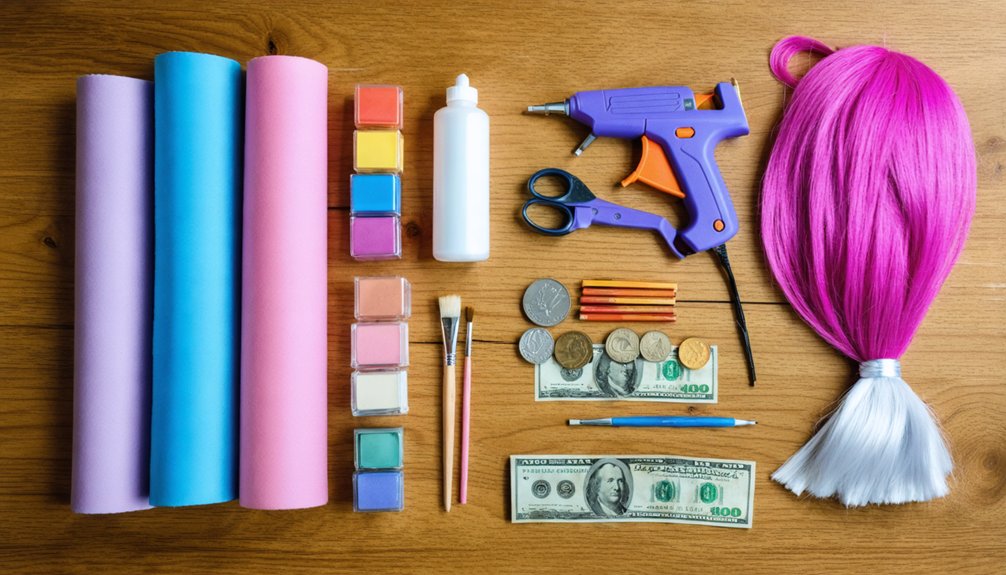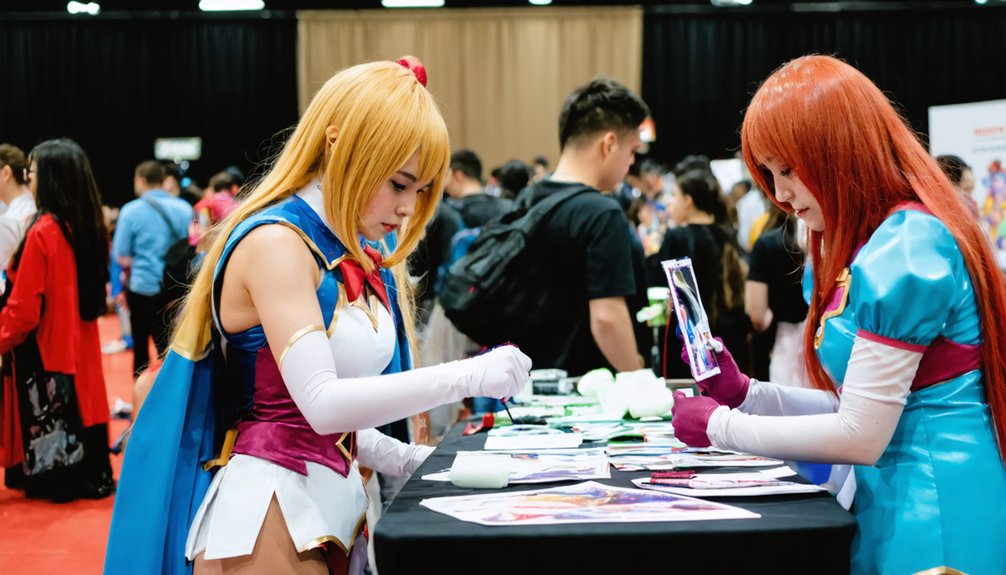
For your first cosplay, choose a character you genuinely love, then gather 15–20 reference images before buying anything. Source materials across local shops, thrift stores, and online suppliers to balance cost and quality. Build your costume in modular layers, conduct mobility tests at least two weeks before the event, and verify your convention’s prop policies in advance. The tips ahead cover everything you need to pull it all together confidently.
Key Takeaways
- Choose a character you genuinely love rather than one that’s simply trending, as personal connection sustains creative motivation throughout the build process.
- Gather 15–20 reference images from multiple sources and organize them by costume component to avoid costly construction mistakes.
- Use muslin mockups to test structural changes before cutting into final fabric, addressing fit before decorative elements.
- Conduct a full mobility test at least two weeks before the convention, simulating real conditions like sitting, crouching, and extended wear.
- Prioritize supportive, cushioned footwear and verify your convention’s prop materials policy before finalizing any accessory designs.
Pick a Character You Actually Love for Your First Cosplay
When selecting your first cosplay character, choose someone you genuinely love rather than one you think others will recognize. Your character connection directly fuels your creative endurance throughout a demanding build process.
Without emotional investment, complex projects quickly become burdensome obligations rather than fulfilling creative pursuits.
Stick within your comfort zone for this initial build. Choosing a character you’re deeply familiar with gives you intuitive insight into their design nuances, making research and fabrication decisions more instinctive.
Avoid selecting characters purely for trending popularity; resentment toward your project undermines quality outcomes.
Research Your Character Before You Buy Anything
Before you spend a single dollar, gather reference images from official artwork, screenshots, concept sketches, and existing fan cosplays to build a thorough visual library.
Once you’ve collected your references, sketch out your character’s layers and components, noting each piece you’ll need to source or construct.
Study the details closely—colors, textures, patterns, and proportions—using multiple angles to catch the subtle elements that define the costume’s accuracy.
Gather Visual Reference Images
Gathering reference images is the single most important step you’ll take before spending a dollar on materials. Pull visual inspiration from every available source — official artwork, animated screenshots, concept sketches, game renders, and high-quality fan cosplays. Each source reveals something different: official art shows intended colors, while screenshots capture real lighting and texture behavior.
Don’t rely on memory or a single image. Shoot for 15–20 references covering front, back, and side angles. Close-up shots of accessories, fabric patterns, and embellishments are non-negotiable.
Prioritize reference organization by consolidating everything into one dedicated folder — cloud-based works best for mobile access during fabric shopping or construction. Label files by component: bodice, sleeves, armor, props.
Disorganized references waste time and cause costly mistakes.
Break Down Design Components
Once your reference folder is stocked, put those images to work by breaking the costume down into individual components before purchasing a single material. Your design breakdown should dissect every visible layer — outerwear, undergarments, armor pieces, accessories, footwear, and props — into a structured list.
Conduct a thorough component analysis by sketching each element separately, annotating colors, textures, construction methods, and attachment points. Note whether each piece requires fabrication from scratch, modification of an existing garment, or a direct purchase.
Prioritize components by complexity and production time, flagging technically demanding elements early. Cross-reference multiple reference angles to catch hidden details — seam placements, pattern repeats, hardware finishes — that single images miss.
This systematic approach eliminates guesswork, prevents redundant purchases, and builds a precise fabrication roadmap before you spend anything.
Study Character Details Closely
Studying your character closely before purchasing a single material saves time, money, and frustration down the line.
Analyzing character design from multiple source angles reveals inconsistencies between official artwork and animated appearances that directly impact cosplay authenticity.
Gather references from these high-value sources:
- Official artwork and concept sketches — these expose construction details hidden in final animations
- Multiple screenshot angles — side and rear views uncover design elements front-facing images miss entirely
- Existing fan cosplays — experienced builders often solve technical challenges you’ll inevitably encounter
Cross-reference every source before committing to materials.
Note color accuracy under different lighting conditions, identify texture variations between fabric regions, and document pattern placement precisely.
These observations transform your build from a rough approximation into a technically accurate, detail-driven costume.
Source the Right Materials Without Overspending
Finding the right materials at the right price comes down to knowing three core sourcing channels: local fabric shops, thrift stores, and online suppliers.
Effective material sourcing starts with your pre-built shopping list and budget planning framework before you enter any store or browser tab.
Before browsing a single store or website, your shopping list and budget framework must already exist.
Local fabric shops let you assess texture and weight firsthand. Thrift stores supply base garments you’ll modify rather than construct from scratch, cutting both cost and labor.
Online suppliers offer specialty fabrics, foam, thermoplastics, and trims unavailable locally, often at competitive rates.
Apply the “Good, Fast, Cheap – Choose Two” principle to every purchase decision.
Prioritizing where each dollar goes prevents overspending on non-essential elements while protecting your budget for technically demanding components that genuinely require quality materials.
Modify Existing Clothes Before Building From Scratch
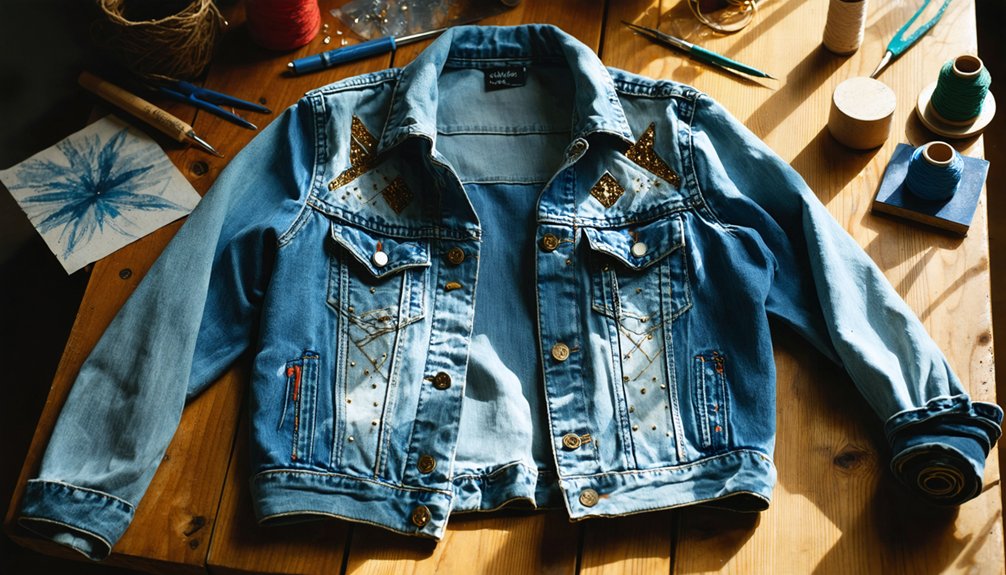
Before you attempt to build any costume element from scratch, hit your local thrift stores to source base garments like plain dresses, jackets, or trousers that match your character’s silhouette.
You’ll save significant time and money by cutting, dyeing, or reshaping secondhand pieces rather than constructing them entirely from raw fabric.
When the fit or style isn’t quite right, apply basic pattern modification techniques—dart adjustments, seam tapering, or panel insertion—to reshape the garment precisely to your character’s design specs.
Thrift Store Base Garments
Thrift stores are a first-time cosplayer‘s most underutilized resource, offering pre-sewn base garments that cut construction time considerably. These thrift store treasures eliminate foundational sewing challenges, letting you redirect energy toward creative customization that defines your character accurately.
Prioritize these garment categories during your thrift runs:
- Structured blazers and jackets – ideal frameworks for military, academic, or villain-inspired costumes
- Plain-colored dresses and skirts – versatile canvases for dyeing, trimming, or layering modifications
- Solid trousers and shirts – perfect neutral bases requiring minimal alteration before detailing begins
Evaluate each piece for fabric weight, seam integrity, and color proximity to your reference images.
You’re not buying finished cosplay components—you’re acquiring raw infrastructure. Modify aggressively, cut strategically, and add embellishments deliberately to transform secondhand finds into screen-accurate costume elements.
Pattern Modification Techniques
Once you’ve sourced your base garments, modifying existing patterns becomes your next most efficient construction strategy—faster than building from scratch and more precise than pure thrift alterations alone.
Your techniques overview should include slash-and-spread methods for adding volume, dart manipulation for reshaping silhouettes, and seam allowance adjustments for scaling proportions accurately.
For pattern adjustments, trace your original pattern onto fresh paper before cutting—preserving the master for future iterations.
Extend hemlines, add panel inserts, or eliminate unnecessary closures to match your character’s design accurately. Use muslin mockups to test structural changes before committing to final fabric.
Layer your modifications strategically: address fit first, then silhouette, then decorative elements.
This sequencing prevents compounding errors and keeps your construction timeline efficient, precise, and fully aligned with your reference imagery.
Tackle Your Costume One Piece at a Time
Breaking your costume into individual components is the most effective way to manage complexity without losing momentum. Prioritize costume layering by building from base garments outward, completing each layer before advancing. Structured piece assembly prevents overwhelm and exposes fit issues early.
Focus your build sequence on these priorities:
- Base layer first: Confirm fit and mobility before adding decorative elements
- Accessories last: Attach belts, armor, or props only after core garments are finished
- Test between stages: Wear each completed section to identify comfort and movement restrictions
This modular approach lets you troubleshoot isolated problems rather than unraveling an entire build.
You’ll maintain clearer progress benchmarks, sustain motivation, and deliver a structurally sound costume with precision at every construction stage.
Choose Props That Won’t Get Confiscated or Break Down
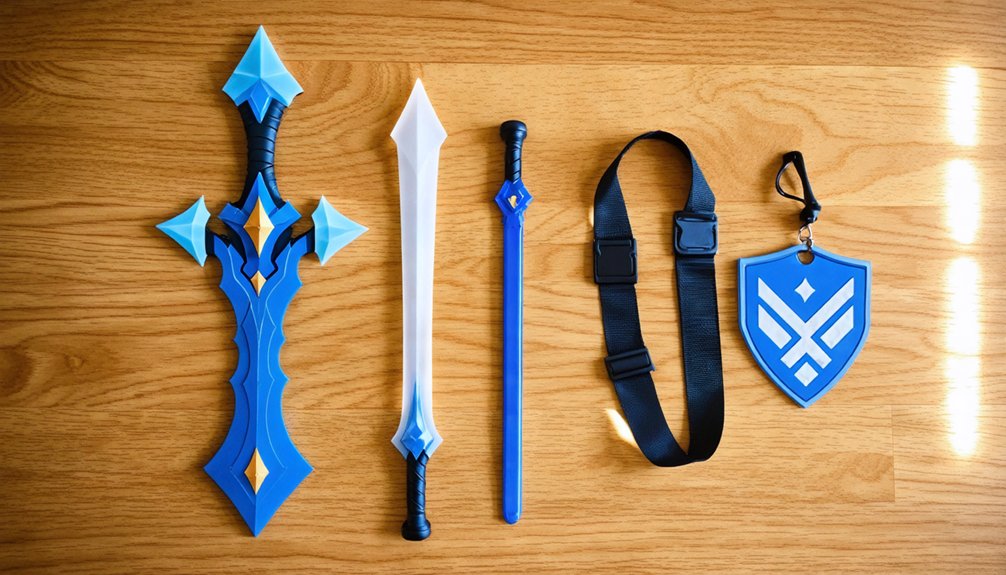
Props can make or break your cosplay presentation, so you’ll need to verify your target convention’s materials policy before you finalize any build. Most events enforce strict prop safety guidelines, prohibiting metal blades, projectile mechanisms, and rigid materials exceeding specific dimensions.
Download the convention’s weapons policy directly from their official site and cross-reference your design against every restriction.
Prioritize durable materials like EVA foam, thermoplastics, or reinforced worbla for structural components. These options survive transport, crowd contact, and repeated handling without shattering or warping.
Avoid fragile resin pieces or unsecured attachments that’ll deteriorate mid-event.
Engineer your props with breakdown capability—modular sections secured by magnets or quick-release pins allow easy disassembly at security checkpoints.
Always pack repair adhesive and spare fasteners to address on-site failures immediately.
Test Your Cosplay for Mobility and Fit Before the Convention
Wearing your completed cosplay through a full mobility test at least two weeks before the convention reveals fit issues, movement restrictions, and structural failures while you still have time to correct them.
Execute fit adjustments immediately after identifying problems—don’t wait.
During mobility testing, simulate real convention conditions:
- Sit, crouch, and climb stairs to expose seam stress points and binding areas.
- Wear it for two consecutive hours to identify pressure points, slipping components, and heat buildup.
- Practice your poses to confirm structural integrity under dynamic movement.
Document every failure point with photos.
Prioritize corrections by severity—structural failures first, aesthetic issues second.
If sitting’s impossible, develop a standing-only strategy you can sustain comfortably throughout a full convention day.
Pick Shoes That Keep You Comfortable in Cosplay All Day

Shoes determine whether you finish the convention on your feet or spend the last three hours sitting on the floor—so match your footwear to the physical demands of the day, not just your character’s design.
Prioritize supportive footwear tips like cushioned insoles, ankle stability, and arch support over pure aesthetics. Stylish yet practical solutions exist—modified boots, custom-painted sneakers, or character-accurate sandals built on memory foam bases.
Support beats style every time—cushioned insoles, ankle stability, and arch support keep you moving long after others sit down.
Seek long lasting materials like genuine leather or reinforced synthetics that resist convention floor wear across eight-plus hours. Comfort shoe options include gel-insole upgrades inserted into costume-accurate footwear, dramatically extending endurance.
If your character wears heels, test them extensively beforehand, or engineer a flat alternative that preserves visual accuracy without sacrificing structural support during prolonged standing and walking.
Find Cosplay Communities That Help You Build Better
Cosplay communities accelerate your skill development faster than solo trial and error ever will—connecting you to experienced builders who’ve already solved the problems you’re about to face.
Strategic community engagement transforms isolated effort into collaborative momentum.
Tap into these high-value community channels:
- Facebook groups and anime clubs provide resource sharing networks where members exchange supplier recommendations, pattern files, and technique tutorials.
- Maker spaces and sewing classes offer hands-on access to industrial equipment and seasoned mentors who’ll critique your construction methods directly.
- Convention-based cosplay competitions expose you to advanced builds while creating organic connections with builders who match your ambition level.
Always meet new contacts at public events with friends present.
Prioritize communities that actively share knowledge rather than gatekeep it—those environments compound your technical growth exponentially.
Enjoy the Convention Without Chasing Perfection
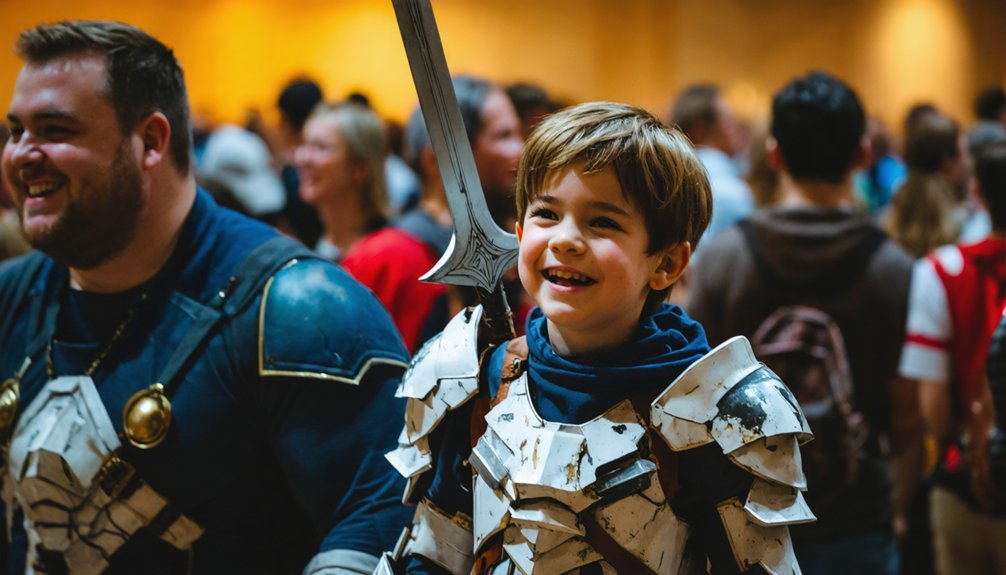
Your cosplay doesn’t need to be flawless to deserve a spot on the convention floor.
Test-wear your costume before the event to identify fit issues, mobility restrictions, or loose components, then address what you can and accept the rest.
On the day itself, take breaks when stress builds, prioritize comfort over aesthetics, and treat every imperfect moment as part of the experience rather than a failure to fix.
Prioritize Fun Over Flaws
Once you step onto the convention floor, shift your focus from imperfections to engagement — no costume is ever truly finished, and experienced cosplayers know that.
Cosplay confidence grows through interaction, not isolation. Lean into your creative expression and let the experience itself refine your perspective.
Prioritize these mindset-driven actions:
- Take breaks intentionally — step away from crowds when stress builds; protecting your mental energy sustains enjoyment longer.
- Engage with other cosplayers — trade techniques, compliment builds, and absorb real-time inspiration from what others have constructed.
- Document your experience honestly — photograph both triumphs and imperfections; they mark measurable progress for your next build.
Flaws aren’t failures — they’re data points.
Every uneven seam or mismatched color teaches a technique you’ll execute better next time.
Embrace Imperfect Cosplay Moments
When you walk onto the convention floor, the pressure to present a flawless costume fades fast against the energy of the crowd. Loose seams, uneven paint, or a crooked wig won’t define your experience — your engagement will.
Cosplay confidence isn’t built through perfection; it’s built through participation. Protect your mental health by releasing the expectation that every detail must execute flawlessly on debut day.
Experienced cosplayers revise builds across multiple conventions, iterating like any skilled craftsperson. Treat your first cosplay as version 1.0 — functional, educational, and expandable.
Document what didn’t work, photograph what did, and archive both for your next build cycle. Imperfect moments generate the most authentic memories and the strongest community connections.
Embrace them deliberately, not reluctantly.
Frequently Asked Questions
How Do I Safely Meet Other Cosplayers I Connect With Online?
Meeting strangers isn’t risky if you’re smart about it. For safety tips with online connections, always bring friends, meet at public convention events, and verify identities through established cosplay communities before arranging any in-person meetups.
What Should I Do if My Costume Malfunctions During the Convention?
Pack an emergency kit with needle, thread, dental floss, safety pins, and fabric tape. When costume repairs arise, find a quiet corner, assess the damage calmly, and apply your prepared fix—you’ll stay convention-ready without missing a moment.
How Early Should I Wake up on Convention Day for Preparation?
Rise and shine extra early — you’ll want to wake up at least 2-3 hours ahead. Build your morning routine around a thorough costume checklist, accounting for makeup, unexpected malfunctions, and travel delays before convention doors open.
Should I Enter Cosplay Competitions as a First-Time Cosplayer?
You don’t have to enter competitions yet—prioritize enjoying your debut. If you’re confident in your costume selection and can manage competition nerves, go for it; otherwise, observe first and compete when you’re truly ready.
How Do I Practice Posing Confidently Before Attending My First Convention?
Practice 3-5 character-specific poses using the mirror technique daily. You’ll refine body angles, facial expressions, and weight distribution through repetitive pose practice, building muscle memory that transforms nervous hesitation into confident, convention-ready presence.
References
- https://wigs101.com/10-tips-cosplay-beginners
- https://blahmage.com/guide-to-cosplay-for-beginners/
- https://www.youtube.com/watch?v=sjsZtFq-txU
- https://www.youtube.com/watch?v=hsbF0Pt_Ahc
- https://www.kamuicosplay.com/startingwithcosplay/
- https://www.youtube.com/watch?v=m-69898s62w
- https://www.youtube.com/watch?v=W1aOwIFgQks
- https://www.saberforum.com/index.php?topic=27637.0
- https://www.lancereis.com/photography-tips-for-beginners/cosplay-tips-for-beginners
- https://www.theodysseyonline.com/10-quick-tips-cosplay-beginners