To win a cosplay contest, you’ll need to nail both preparation and execution. Flatten your natural hair with cornrows or pin curls, then secure your wig using bobby pins in an “X” formation, toupee clips, and a wig grip band. Cut lace with pinking shears for natural-looking edges, and keep heat between 250°F and 300°F on synthetic fibers. Test everything before the event, because movement reveals every weak point. The techniques ahead will transform your entire build.
Key Takeaways
- Flatten natural hair with cornrows or pin curls, then secure your wig using bobby pins in an “X” formation for maximum stability.
- Pluck the lace front hairline gradually and cut lace with pinking shears to achieve a seamless, natural-looking hairline.
- Test heat styling on hidden weft sections before applying 250°F–300°F temperatures to the full synthetic wig.
- Apply got2b Glued freeze spray in short bursts to lock spikes and styled elements firmly in place during competition.
- Practice wearing and moving in your styled wig beforehand to identify slippage, discomfort, or shape issues needing correction.
Prep Your Cosplay Wig Before You Ever Style It
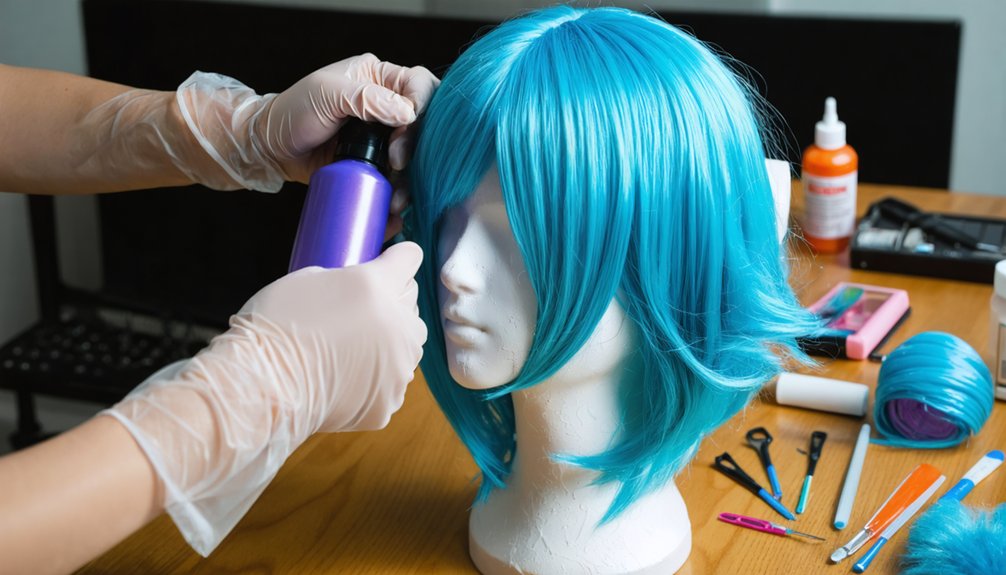
Before you touch a single strand, proper wig preparation separates a polished contest-ready look from an amateur one. Start with thorough wig care: brush the wig evenly from ends to roots, eliminating tangles before any styling techniques are applied. Neglecting this step creates uneven results that no amount of finishing product can fix.
Proper wig preparation separates a polished, contest-ready look from an amateur one — and it starts with brushing.
Next, flatten your natural hair using tight cornrows or braids, then secure everything under a nylon or mesh wig cap. This creates a smooth, low-profile base that prevents unwanted bulk.
Choose a wig head or stand appropriately sized for your wig’s volume to maintain shape during preparation.
Finally, study your reference image carefully. Understanding the exact target style before you begin prevents costly mistakes and keeps your workflow precise and efficient.
Stock These Tools Before You Start Styling
Every serious cosplay stylist needs 5 core tool categories stocked before touching a wig.
First, grab sharp shears and pinking shears — you’ll need both for precise lace cutting and customization.
Second, stock multiple comb types: rat tail, fine-tooth, wide-tooth, and medium-tooth varieties cover every wig care scenario you’ll encounter.
Third, invest in a quality flat iron with multiple heat settings to master heat-based styling techniques across different fiber types.
Fourth, keep alligator clips and extendable clips ready for controlled sectioning during complex builds.
Fifth, secure a wig clamp or stand for stable table-top work.
Without these five categories, you’re compromising precision before you’ve even started.
Professional-level results demand professional-level preparation — shortcuts here directly undermine your contest performance.
How to Secure a Cosplay Wig That Stays All Day
Before you place your wig, flatten your natural hair using tight cornrows or pin curls secured in an “X” formation with bobby pins to create the lowest possible profile against your skull.
Once your wig is aligned with your natural hairline, anchor it firmly by pressing bobby pins through the wig cap and into your pinned base underneath.
For all-day hold, layer your security by combining a wig grip band beneath the cap with toupee clips sewn into the wig’s interior, giving you multiple anchoring points that work together under contest conditions.
Preparing Your Natural Hair
Proper preparation of your natural hair creates the foundation for a wig that stays secure and flat throughout a full day of competition. Your natural hair care routine directly impacts how smoothly your wig sits against your head.
Start by flattening your hair using tight cornrows or braids, applying proven braiding techniques to distribute volume evenly across your scalp. Flat cornrows eliminate bulk that causes wigs to shift or sit unnaturally high.
Once braided, secure a nylon or mesh wig cap tightly over your hair, pressing everything close to your skull.
For longer or thicker hair, use pin curls secured in an “X” formation with bobby pins, creating a completely flat profile. This structured base prevents movement and gives your wig a natural, seamless appearance throughout competition.
Anchoring With Bobby Pins
Once your wig cap is flat and secure, bobby pins become your primary tool for locking the wig in place against your hairline. Align the wig precisely with your natural hairline before inserting a single pin.
Then, use bobby pin techniques that cross pins in an “X” formation directly against your skull, maximizing surface contact and eliminating lateral shift. Focus your wig anchor methods along the nape, temples, and crown where movement stress concentrates most.
Press each pin flat so it sits flush against the skull, preventing uncomfortable pressure points during extended wear. For heavier wigs, layer multiple “X” formations at high-stress zones rather than relying on single insertions.
This systematic pinning approach distributes tension evenly, giving your wig structural stability throughout a full competition day.
Adding Extra Hold Layers
Bobby pins alone won’t cut it for a full competition day, so layering additional hold methods transforms a wig that shifts into one that stays locked from morning registration through the final judging round.
Start with a wig grip band beneath the cap to absorb movement, then secure toupee clips directly onto your braided natural hair for mechanical anchoring.
Layering products comes next — apply got2b Glued freeze spray in targeted zones like the nape and temples where stress accumulates.
These extra hold techniques work cumulatively, not independently, so sequence matters.
Finish by misting a strong-hold lacquer over the exterior, applying sparingly to prevent synthetic fiber buildup.
Each layer addresses a different failure point, creating a redundant system that handles crowded convention floors and extended wear reliably.
Cut and Customize Your Cosplay Wig Like a Pro
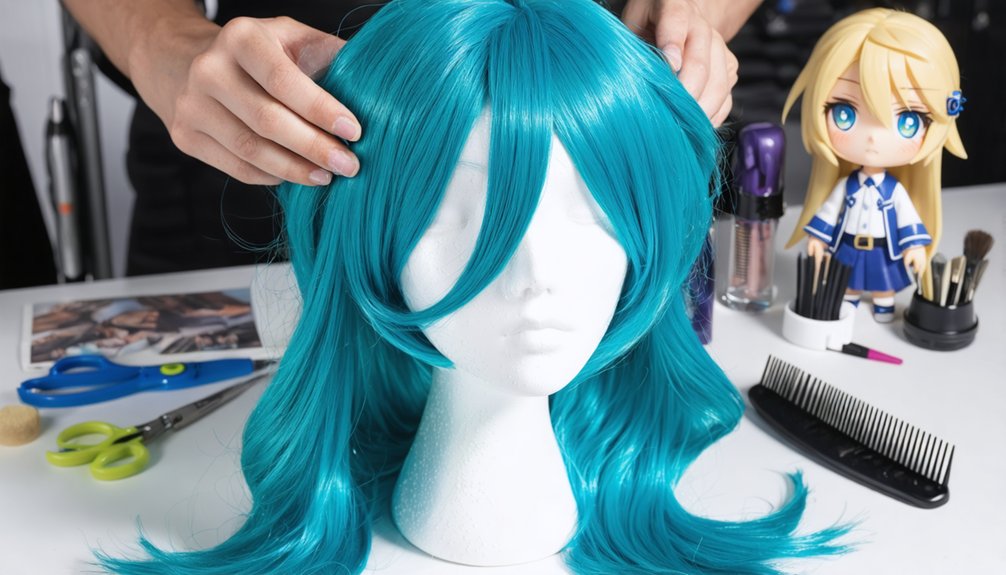
Customizing your cosplay wig separates a convincing character portrayal from an obvious costume piece, and mastering a few key cutting techniques makes all the difference. Precision wig cutting techniques and strategic customizing styles transform stock wigs into screen-accurate replicas.
- Pluck the lace front hairline gradually with tweezers, creating a natural density gradient that mimics real hairlines.
- Cut lace using pinking shears to produce zigzag edges that blend invisibly against your skin tone.
- Section and cut wefts deliberately, always brushing synthetic fibers from ends upward to prevent irreversible weft damage.
- Add wefting strategically when creating ponytails or custom parts, referencing your character image throughout every modification stage.
Always plan cuts before executing—there’s no undoing removed fiber.
Style Synthetic Wigs With Heat Without Ruining the Fibers
With your wig cut and shaped to match your character’s silhouette, heat styling locks in the texture and movement that make the look come alive.
Synthetic care starts with understanding your wig’s fiber protection limits — most synthetic strands tolerate moderate heat settings between 250°F and 300°F before melting or frizzing permanently.
Use a flat iron with adjustable heat settings and always test on a hidden weft section first. For crimping, work in small segments using controlled styling techniques, brushing between passes to distribute texture evenly.
Steam styling over foam curlers offers a gentler alternative — cover with a plastic bag and allow fibers to dry completely before removal.
Never rush drying; premature handling collapses the set and compromises structural integrity of your finished style.
Lock In Your Cosplay Wig Style for All-Day Hold
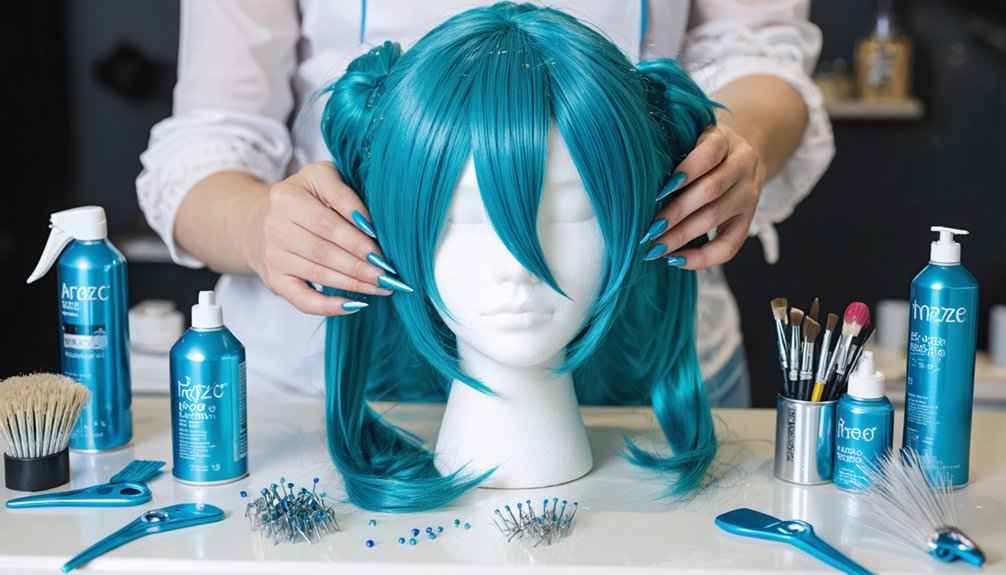
Once your style is set, three core techniques lock it in for hours of wear without mid-event slippage or collapse.
These wig maintenance tips guarantee your hard work survives a full competition day.
- Apply got2b Glued freeze spray in short, controlled bursts to spikes and shaped sections—avoid saturating fibers to prevent buildup.
- Secure toupee clips along the interior perimeter for structural hold against movement and costume adjustments.
- Pin bobby pins in an “X” formation at the skull base, keeping your profile flat and displacement-resistant.
- Skip premium hair products—cheap, strong-hold hairspray or lacquer bonds synthetic fibers effectively without degrading them.
Combining these styling techniques creates a layered hold system that resists heat, movement, and long contest hours.
Frequently Asked Questions
Can I Reuse a Cosplay Wig for Multiple Different Characters?
You can absolutely maximize wig versatility through strategic character adaptation. Restyle, recut, and recolor your wig using heat tools, custom cutting, and repositioned wefts to transform it across multiple distinct characters efficiently.
How Do I Store My Styled Cosplay Wig Between Conventions?
Keep your wig care on point—store styled cosplay wigs on a wig stand inside breathable bags. These storage solutions prevent crushing, maintain shape, and protect fibers between conventions, ensuring you’re always contest-ready.
What Wig Colors Photograph Best Under Convention Lighting Conditions?
You’ll photograph best using vibrant hues like electric blue, deep crimson, or stark white, as these maximize color contrast under harsh convention fluorescents. Avoid muddy mid-tones—they’ll wash out and lose definition in competition photos.
How Do Judges Evaluate Wig Styling in Cosplay Competitions?
Judges evaluate your wig care and styling techniques by measuring accuracy to the character, seamless hairline blending, structural integrity of spikes or curls, and overall finish quality—so you’ll need flawless execution to impress.
Can I Compete With a Store-Bought Wig Versus a Handmade One?
Over 60% of competition winners use store-bought wigs. You can absolutely compete with one—it’s your styling techniques and wig quality improvements, like heat shaping and lace customization, that’ll impress judges and elevate your overall presentation.
References
- https://www.youtube.com/watch?v=KfKHOOMYiZc
- https://www.thepopverse.com/cosplay-wig-wigs-cheap-tips-tricks
- https://www.youtube.com/watch?v=exgfWFYu_h0
- https://rogersenpai.com/cosplay-tips-for-wigs/
- https://www.youtube.com/watch?v=1sPZ68arlnQ
- https://wigs101.com/10-tips-for-wig-noobs
- https://www.epiccosplay.com/pages/tips-and-tricks