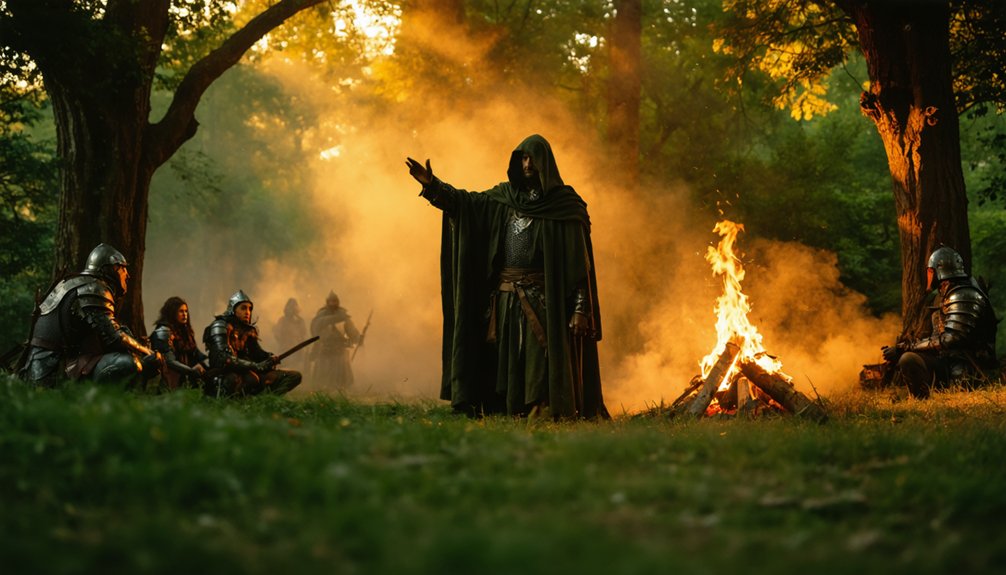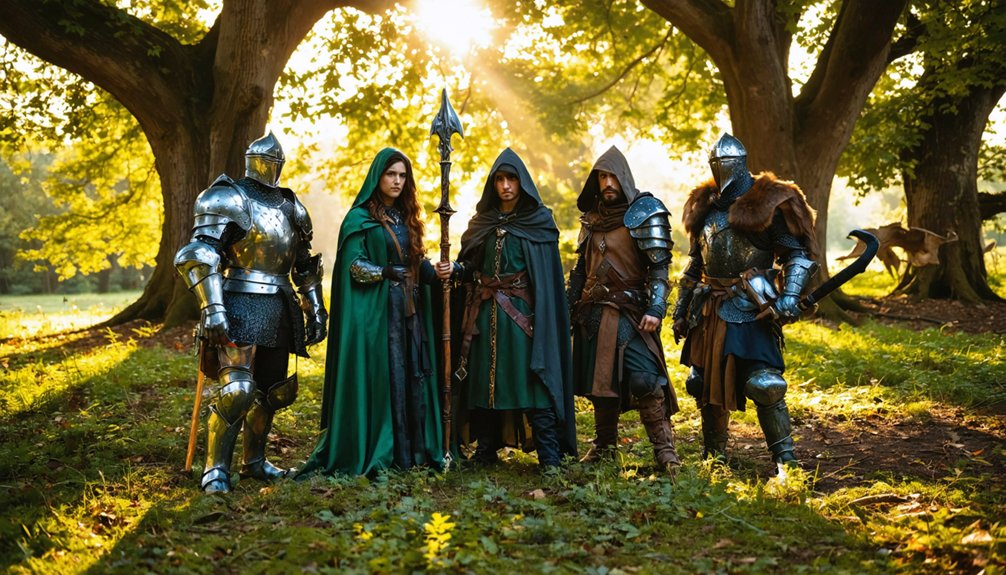
Your first LARPing costume starts with knowing your character — a ranger reaches for earthy greens and leather, while a rogue wraps themselves in shadowy blacks. Build from a core tunic, sturdy boots, and a belt that anchors your silhouette. Layer textures like wool over linen, then add bracers, pouches, and a sweeping cloak. Keep your palette to two or three tones, and every piece suddenly tells a story — yours is just getting started.
Key Takeaways
- Your character archetype should guide costume choices, with rangers favoring earthy greens and rogues preferring dark, shadowy tones.
- Build your costume around foundational pieces: a tunic, belt, boots, and cloak before adding complexity.
- Layer different textures like wool over linen to create depth and make your costume feel more authentic.
- Limit your color palette to two or three tones that reflect your character’s identity and world.
- Strategic accessories like bracers, pouches, and potion vials instantly elevate authenticity and reinforce your character’s role.
How Your Character Choice Shapes Your LARPing Costume
When you pick your character archetype, every costume decision flows from that single choice. A ranger demands earthy greens and leather bracers, while a rogue craves shadowy blacks and a concealing hood. Your character alignment steers these selections instinctively — lawful characters wear structured, polished layers, while chaotic ones embrace asymmetry and worn textures.
Don’t treat your costume as static. Costume evolution happens naturally as your character deepens through campaigns and storylines. You’ll add meaningful patches, swap accessories, or introduce weathered details that reflect your journey. Each modification tells a story without saying a word.
Start by identifying three defining traits of your character, then translate each trait into a tangible visual element. That process keeps your outfit purposeful, cohesive, and unmistakably yours from the very first event.
The 6 Essential Pieces That Build Any LARPing Costume
Once your character’s identity locks into place, the real build begins — and it starts with six foundational pieces that every strong LARPing costume shares.
You’ll need a tunic or dress as your core garment, followed by pants or a skirt that avoids anything modern. A belt or cincher defines your silhouette while holding pouches and weapons. Boots ground the entire look in authenticity.
Finally, a cloak or cape elevates your presence dramatically.
A cloak doesn’t just complete your costume — it commands every room you enter.
Across all character archetypes, these six pieces create the skeleton your costume layers build upon.
Costume layering transforms basic components into something immersive — wool over linen, leather over cotton, texture against texture. Each addition deepens your character’s world.
Start simple, stay intentional, and let every piece serve both function and story.
Which Fabrics Hold Up Best at LARP Events
Finally, your color choices should work with your fabric’s natural dye absorption.
Earthy tones anchor well in wool, while linen holds muted, realistic hues that photograph and perform authentically in any environment.
Top 5 LARPing Costume Ideas for Beginners
Stepping into LARP for the first time doesn’t mean you need an elaborate, custom-built costume — it means you need a smart, functional foundation that won’t break down mid-quest.
Start with these five beginner-friendly builds:
Five beginner-friendly builds give you everything you need to step into your first LARP with confidence and purpose.
- Ranger Archetype — olive tunic, leather belt, green cloak, bracers
- Monk Attire — long flowing robe, simple rope belt
- Rogue Design — black tunic, fitted pants, concealing hood
- Earthy Neutrals — modular tan and brown pieces adaptable across roles
- Personalized Basics — standard tunic elevated through costume customization with patches and charms
Throughout each build, intentional color selection drives character identity.
Limit yourself to two or three tones, layer thoughtfully, and you’ll command presence before you speak a single word in-game.
Bracers, Pouches, and Props That Complete Your Look
Accessories aren’t decoration — they’re the details that transform a tunic and cloak into a living character. Your bracer styles signal your role immediately: leather wraps suggest a ranger, cloth bindings evoke a monk.
Don’t overlook pouch designs — layered belt pouches add visual depth while storing your actual essentials. For prop essentials, colored potion vials are your fastest win: red for healing, blue for mana, green for stamina. Each bottle tells a story without a single word.
Follow these accessory tips to sharpen your build: keep metals consistent, match leather tones across bracers and belts, and attach charms that reflect your character’s backstory.
Every small detail compounds into authenticity, pulling observers — and yourself — fully into the world you’re inhabiting.
Frequently Asked Questions
How Much Should a Beginner Expect to Spend on a LARPING Costume?
You’ll spend $50–$150 on a solid starter LARP look! Stretch your budget tips by sourcing costume materials from thrift stores, repurposing everyday fabrics, and building modular pieces you can mix, upgrade, and reimagine across future adventures.
Are There Age Restrictions for Participating in LARPING Events?
Over 50% of LARP events welcome all ages! You’ll find that LARPing rules vary by organizer, but participation guidelines typically include youth involvement with parental supervision. Always check age recommendations before registering for your chosen event.
Can I Rent a LARPING Costume Instead of Buying One?
You can absolutely explore costume rental services for budget options! Renting lets you test different characters before committing. Try local theater shops or LARP communities—they’ll outfit you in tunics, cloaks, and bracers without breaking your gold reserves!
How Do I Clean and Store My LARPING Costume After Events?
After every epic quest, hand-wash your costume using gentle fabric care techniques, then air-dry it completely. Store your costume maintenance essentials in breathable garment bags, keeping wool, linen, and leather pieces separated to preserve their adventurous integrity!
Are There Online Communities Where Beginners Can Find LARPING Costume Advice?
Like treasure chests waiting to be opened, LARPing forums, social media groups, and costume swaps overflow with beginner tips. You’ll find passionate communities ready to guide your costume journey and spark your creative vision!
References
- https://larpvault.com/blogs/news/how-to-build-a-larp-outfit-on-any-budget-beginner-to-expert-guide
- https://www.youtube.com/watch?v=o7wczdNc2HA
- https://www.tobyandroo.com/fantasy-larp-attire-guide/
- https://www.medievalcollectibles.com/blog/beginners-guide-to-larp/
- https://www.goblinsmith.com/blogs/news/top-ideas-for-must-have-larp-accessories-for-beginners
- https://juliechantal.com/en/blogs/general/build-your-larp-wardrobe
- https://www.youtube.com/watch?v=nX76diEzhDg
- https://larpcraft.com/threads/the-art-of-costume-design-tips-for-creating-the-perfect-larp-costume.157/