When you trace genderbent cosplay back through history, you’ll find it’s rooted in centuries of performance, disguise, and survival. Masquerade balls licensed cross-gender experimentation under anonymity. Wartime gender passing proved identity could be layered and reconstructed. Early sci-fi conventions like WorldCon created structured spaces where gender expression was expected, not exceptional. What began as necessity and novelty evolved into a legitimate artistic framework. There’s far more to this cultural story than you might expect.
Key Takeaways
- Genderbent cosplay traces its roots to WorldCon’s 1939 debut, where costuming culture first created spaces defying conventional gender expectations.
- Masquerade balls historically normalized cross-gender dressing by granting anonymity, licensing behaviors society otherwise condemned and expanding perceptions of gender performance.
- Historical gender passing, driven by wartime survival, established that identity is layered and reconstructible, later inspiring cosplay’s creative framework.
- Canon genderbends in official media validate fan experimentation, establishing recognizable visual language and fostering emotional investment in reinterpreted characters.
- TikTok amplifies genderbent cosplay’s cultural reach through participatory short-form video, transforming individual creative expression into collective community interpretation.
What Genderbent Cosplay Actually Means
Genderbent cosplay reimagines a character as a different gender than their canonical portrayal, and it’s a practice that’s more nuanced than it first appears. You’re not simply swapping clothing — you’re reinterpreting a character’s essence while maintaining their recognizable traits.
A Sailor Moon genderbend replaces a sailor skirt with pants, while a Tuxedo Mask version might incorporate a fitted feminine jacket. These deliberate choices engage gender stereotypes as visual language, making the transformation immediately readable.
What distinguishes genderbending from crossplay is intentionality. Crossplay preserves a character’s gender; genderbending reconstructs it. This distinction matters because it frames genderbent cosplay as genuine creative expression rather than imitation.
Within the cosplay community, this practice drives community empowerment, encouraging you to interrogate how gender shapes character identity at its core.
How Early Cosplay Events Made Room for Gender Play
When you trace genderbent cosplay back to its roots, you find that WorldCon’s 1939 debut in New York already created space for costuming that defied conventional expectations, with attendees wearing futuristic outfits that challenged everyday social norms.
As conventions grew, you can see how masquerade events became structured arenas where participants actively tested gender expression through costume, exchanging techniques and blurring traditional boundaries.
WorldCon’s Gender-Inclusive Beginnings
The 1939 First World Science Fiction Convention in New York didn’t just launch cosplay as a cultural practice—it created an early blueprint for gender play within fandom spaces.
WorldCon inclusivity wasn’t codified, yet its experimental atmosphere allowed attendees to embody futuristic identities beyond conventional gender expression.
Consider what that openness actually enabled:
- Costumes challenged who could inhabit a character’s identity
- Futuristic aesthetics loosened rigid social expectations around appearance
- Fans discovered that imagination outweighed gender conformity
You’re looking at a foundational moment where creative freedom intersected with identity exploration before either concept had formal language.
WorldCon didn’t deliberately design gender-inclusive spaces—it accidentally built them through science fiction’s inherent rejection of present-day limitations, establishing a precedent that would later define genderbent cosplay’s cultural legitimacy.
Conventions Normalizing Gender Play
What WorldCon accidentally sparked, subsequent conventions actively sustained. As cosplay evolution accelerated through the 1980s, events began structuring safe, bounded spaces where gender experimentation wasn’t just tolerated—it was expected.
You’d notice conventions restricting costumes to designated areas, inadvertently creating concentrated zones where gender stereotypes could be challenged, subverted, or deliberately amplified.
Japan’s Comiket reinforced this momentum, importing American masquerade traditions and filtering them through anime culture’s fluid visual aesthetics.
Cosplayers exchanged passing tips openly, treating gender presentation as technical craft rather than transgression. Conventions became laboratories where identity’s performative dimensions were actively interrogated.
What makes this significant isn’t rebellion—it’s normalization. By embedding gender play into structured event culture, conventions transformed it from novelty into convention, reshaping how communities understood costume, character, and self-expression.
How Masquerade Balls Normalized Cross-Gender Dressing
Rooted in 15th-century European aristocratic culture, masquerade balls created a structured social space where anonymity licensed behaviors that rigid class and gender norms otherwise suppressed.
The masquerade significance lies in how disguise dismantled identity, enabling cross gender acceptance long before modern frameworks existed.
These events didn’t just permit experimentation — they institutionalized it:
- You could inhabit another gender’s role without social consequence, using costume as both shield and statement.
- You witnessed others doing the same, normalizing what daylight society condemned.
- You left transformed, carrying expanded perceptions of gender performance back into ordinary life.
This historical precedent directly informs genderbent cosplay’s cultural legitimacy.
Conventions didn’t invent gender-fluid expression — they inherited and amplified a tradition centuries in the making.
Why Wartime Disguise Is the Unlikely Root of Gender Cosplay
When you trace genderbent cosplay back far enough, you land in an unexpected place: the battlefield.
Long before conventions existed, women disguised themselves as men to serve in armies, driven by necessity, survival, and safety rather than any statement about identity.
That vital distinction — performing gender out of circumstance rather than creative expression — is what makes wartime passing such a provocative and underexamined ancestor of modern gender cosplay.
Women Disguised As Soldiers
Before genderbending became a celebrated creative practice at anime conventions, women were doing something far more dangerous—passing as men in wartime armies. Driven by wartime necessity rather than creative expression, these women used military disguise to survive, serve, and resist:
- They abandoned their identities entirely, not for self-expression, but for survival.
- Discovery rarely meant punishment when armies needed every soldier available.
- Their passing wasn’t performative—it carried life-or-death consequences.
You can trace a direct cultural thread between these acts of gender transgression and modern cosplay’s gender-blurring practices.
Both require mastering visual cues to convincingly inhabit another gender identity.
The difference lies in stakes and motivation—what once demanded sacrifice now fuels creative innovation within convention spaces worldwide.
Necessity Versus Identity Motivations
Motivation separates the wartime cross-dresser from the convention cosplayer more sharply than any costume ever could. When women disguised themselves as men to serve in armies, necessity motivations drove every decision — survival, access, protection. Identity expressions weren’t the point; the mission was.
You can trace a sharp conceptual break between these two practices. Wartime passing demanded invisibility, while genderbent cosplay demands recognition. One erased gender; the other interrogates it deliberately.
Yet the historical thread connecting them matters analytically. Both practices challenge what a gendered body is expected to perform in a given social context.
Understanding that distinction sharpens your reading of modern cosplay culture — not as a descendant of wartime disguise, but as its philosophical inversion, where visibility becomes the entire purpose.
Wartime Passing Meets Cosplay
Tracing genderbent cosplay back to wartime disguise feels counterintuitive until you recognize what both practices share structurally: the deliberate manipulation of gendered signifiers to control how others read a body.
Wartime disguises prioritized survival over identity exploration, yet the mechanics remained identical—swap the markers, shift the perception.
Consider what both reveal:
- Women soldiers abandoned feminized presentation not to express identity, but to access spaces denying them entry
- Modern cosplayers invert this logic, using gender markers to expand creative identity rather than escape danger
- Both practices expose gender as readable code, not biological certainty
This structural overlap repositions genderbent cosplay as culturally significant rather than frivolous.
You’re not just seeing fandom creativity—you’re witnessing centuries of gender negotiation compressed into convention-floor performance.
How Gender Passing Gave Rise to Genderbent Cosplay
Although rooted in survival rather than self-expression, historical gender passing laid the cultural groundwork for what would evolve into genderbent cosplay. When wartime women disguised themselves as men, they demonstrated that gender presentation could be reconstructed, layer by layer, through deliberate costuming choices.
Historical gender passing wasn’t self-expression — it was survival, yet it quietly taught the world that gender could be reconstructed.
You can trace that same logic directly into modern genderbending practices, where identity expression becomes the driving force rather than necessity.
What shifted wasn’t the technique — it was the intent. Cosplay transformed gender passing from a survival mechanism into a creative framework, inviting gender fluidity as an artistic statement.
Convention culture absorbed this history and recontextualized it, empowering you to reimagine characters beyond their canonical gender. Survival became performance; concealment became celebration.
Canon Genderbends That Sparked Fan Creativity
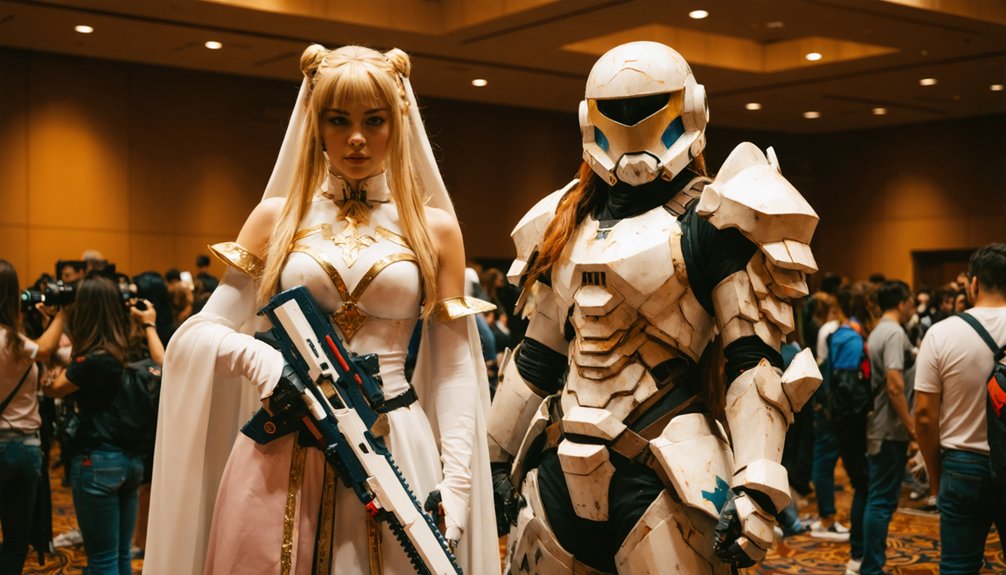
When creators themselves canonize a genderbent version of a character, they don’t just expand a fictional universe — they hand fans a creative blueprint. Hetalia’s Female France episode is a prime example, demonstrating that character reinterpretation isn’t subversive — it’s legitimate artistic territory.
Canon genderbends ignite fan creativity by:
- Validating experimentation, giving communities permission to explore genderbent aesthetics without apologizing for reimagining beloved characters
- Establishing visual language, showing exactly which traits anchor a character’s identity across gender transformations
- Sparking emotional investment, deepening your connection to characters you thought you fully understood
When official media endorses gender fluidity within storytelling, fans don’t just follow — they innovate. You’re no longer rewriting canon; you’re extending a conversation the creators themselves started.
The Visual Rules Behind a Genderbent Costume
Pulling off a convincing genderbent costume isn’t about transformation — it’s about translation. You’re not erasing a character; you’re reinterpreting their core identity through a gendered lens. The visual aesthetics must preserve recognizable markers — color palettes, signature accessories, silhouettes — while deliberately substituting gendered elements.
Swap Sailor Moon’s skirt for tailored pants, and you’ve shifted the gender without losing the character.
Costume construction becomes your analytical tool here. Hyper-feminizing or hyper-masculinizing specific design elements signals the gender swap intentionally and clearly. Ambiguity undermines the concept. Your audience needs to recognize *who* before they appreciate *how*.
This balance between familiarity and subversion is where genderbent cosplay operates — it reinforces certain stereotypes precisely to challenge others, using visual language that conventions audiences instantly decode.
Why Genderbent Cosplay Spread So Fast on TikTok
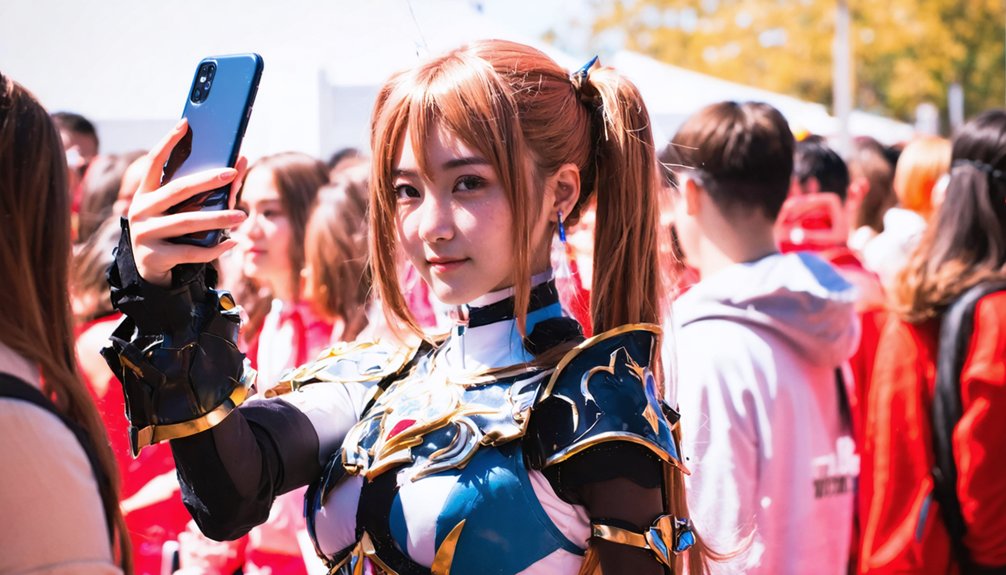
TikTok’s format didn’t just accommodate genderbent cosplay — it amplified it. Short-form video collapsed the distance between creator and audience, turning creative expression into a participatory event you could witness in real time.
TikTok trends operate through replication and variation, which mirrors genderbending’s core logic: recognize the original, then transform it.
Three forces accelerated this spread:
Three forces didn’t just accelerate the spread — they made it inevitable.
- Transformation reveals identity — watching a character shift gender exposes what made them iconic in the first place.
- The reveal moment triggers emotional investment — you don’t just see the costume, you experience the before-and-after.
- Community duets create dialogue — each reimagining invites a response, building collective interpretation.
This isn’t viral coincidence. TikTok’s architecture rewarded exactly what genderbent cosplay does best: challenge assumptions while keeping recognition intact.
What Genderbent Cosplay Reveals About Identity
Within cosplay’s ecosystem, cosplay diversity thrives because community acceptance normalizes these interpretations.
You gain artistic freedom to interrogate cultural archetypes, making genderbent cosplay less a costume choice and more an analytical, embodied argument about identity’s constructed nature.
Frequently Asked Questions
Which Anime Conventions First Officially Welcomed Genderbent Cosplay as a Category?
the knowledge doesn’t specify which anime conventions first officially welcomed genderbent cosplay as a category. You’ll find that formal cosplay categories at anime conventions haven’t been historically documented in available records.
Are There Legal Considerations When Selling Genderbent Cosplay Costumes Commercially?
When selling genderbent cosplay costumes commercially, you’re maneuvering through complex intellectual property laws. Copyright holders retain costume rights, so you’ll need licensing agreements to legally sell character-inspired designs without infringing on original creators’ protected works.
How Do Genderbent Cosplay Competitions Differ From Traditional Cosplay Contest Judging?
Ironically, you’d think judging stays identical, but genderbent competitions uniquely reward bold character interpretation and cultural impact, evaluating how creatively you’ve reimagined a character’s gender while maintaining recognizability, blending analytical costume craft with innovative identity expression.
What Materials Are Most Commonly Used in Constructing Genderbent Cosplay Costumes?
When constructing genderbent cosplay, you’ll typically use stretch fabrics, EVA foam, and worbla. Your fabric choices directly shape character interpretation, letting you innovate gender signifiers like swapping structured suits for flowing skirts to redefine canonical identities creatively.
Do Genderbent Cosplay Communities Have Dedicated Online Forums Beyond Tiktok?
You’ll find genderbent representation thriving across Reddit, DeviantArt, and Tumblr within online cosplay communities. These platforms foster interdisciplinary dialogue, connecting artists, historians, and innovators who collectively push creative boundaries far beyond TikTok’s scope.
References
- https://nerdfestblog.wordpress.com/2019/05/08/all-about-genderbending/
- https://gandt.blogs.brynmawr.edu/web-papers/final-papersprojects/you-are-now-entering-a-no-passing-zone-a-history-of-passing-and-its-contemporary-application-in-cosplay/
- https://mediacommons.org/imr/content/crossplay-vs-genderbend-how-cosplayers-play-gender
- https://www.youtube.com/watch?v=KzdwM3C2e6Y
- https://en.wikipedia.org/wiki/Cosplay
- https://folklife.si.edu/magazine/cosplay-community
- https://www.lemon8-app.com/@diavianpittmann/7449769358936523306?region=us