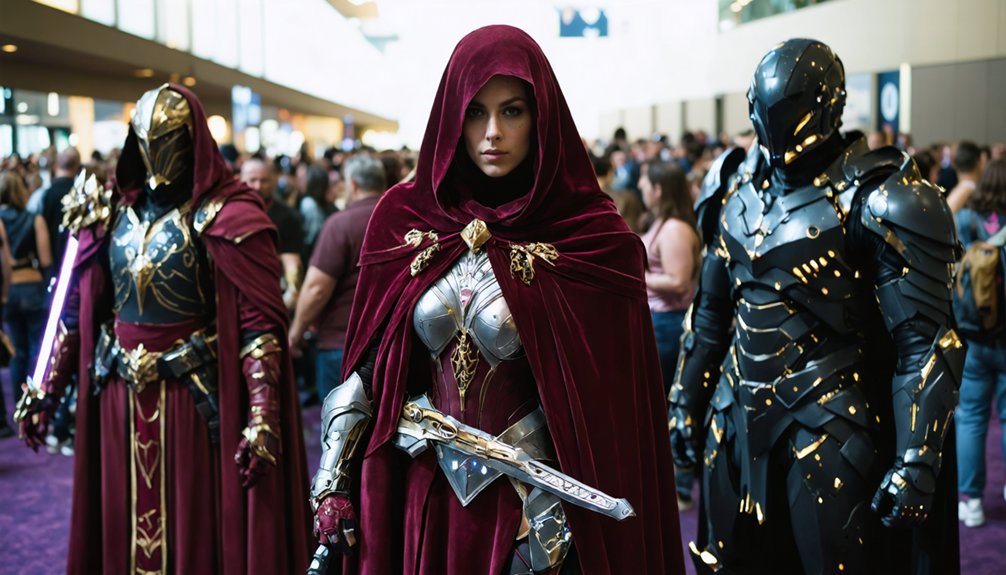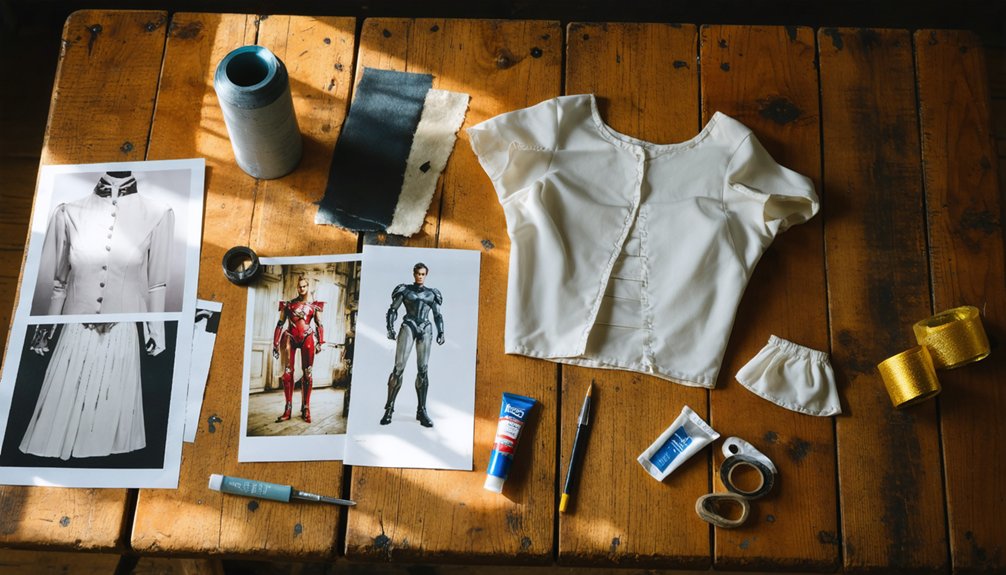
You’ll save time and avoid costly mistakes by working from solid references before making any design decisions. Gather front, side, and back views to capture seam and structural details. Test fabric swatches on camera early, modify existing patterns instead of drafting from scratch, and build multiple copies for quick changes. Strategic accessories can redefine a costume without reconstructing it entirely. The shortcuts ahead will sharpen every stage of your process.
Key Takeaways
- Modify existing commercial patterns to match a character’s silhouette instead of drafting entirely new ones from scratch.
- Use muslin mockups to verify fit and silhouette accuracy before cutting into final costume fabrics.
- Replace buttons and zippers with magnets or hook-and-bar closures to streamline construction and enable quick changes.
- Add strategic accessories like belts, headwear, and layered jewelry to elevate plain costumes without full reconstruction.
- Test fabric swatches on camera against set lighting early to avoid costly re-cuts and material replacements.
Start With References Before Any Design Decisions
Before making a single design decision, gather full-body references of the character from front, side, and back views. These angles reveal seam placement, closure positions, and structural details you’d otherwise miss. Don’t rely on promotional artwork alone—pull frame captures from multiple scenes to see how the costume behaves in motion.
Organize your references by component: outerwear, base layers, accessories, and footwear. This breakdown lets you assess fabric durability requirements for each piece before committing to materials. A heavy outer layer needs different construction priorities than a fitted underlayer.
Accessory-specific reference images capture silhouette-defining details that define the character’s recognizable shape. Sort everything before sketching or purchasing anything. Solid reference organization eliminates guesswork, accelerates construction decisions, and guarantees your design stays accurate to the source material.
Match Your Costume to the Character’s World and Silhouette
Once you’ve gathered your references, use them to confirm that your costume reflects the correct world and era of the film. Since anachronistic fabrics, silhouettes, or construction details will immediately break the character read.
Anchor your design to the character’s core outfit shape and repeat it consistently rather than introducing unnecessary variation that dilutes recognition.
A costume that locks into the established visual language of its source film communicates character identity faster and more accurately than one built on personal interpretation.
Match World And Era
When designing a film character cosplay costume, you’ll need to anchor every decision in the world and era the character inhabits. Historical accuracy isn’t optional — it’s the foundation that makes your costume read as intentional rather than generic. Research the period’s construction methods, silhouette norms, and material limitations to inform your fabric and pattern choices.
Cultural influences shape everything from embellishment placement to color symbolism, so study the film’s production design alongside the costume itself. A medieval fantasy character demands different structural logic than a 1940s noir figure or a futuristic dystopian one.
Cross-reference the film’s visual world with your design decisions at every stage. Costumes that ignore era and setting break the character’s identity immediately, regardless of how technically well-constructed they are.
Repeat Core Outfit Shape
A character’s visual identity locks in through repetition of a core outfit shape, so you’ll want to isolate the defining silhouette before committing to any construction decisions.
Consistent shape recognition depends on disciplined restraint across every version you build.
Use layering techniques and fabric durability testing to reinforce that silhouette across multiple costume copies:
- Identify the single dominant shape viewers associate with the character
- Lock proportions before varying color, texture, or finish
- Apply layering techniques to add depth without disrupting the base silhouette
- Select materials with fabric durability ratings suited for repeated wear
- Test each layered component against the full silhouette before finalizing construction
Straying from the core shape weakens recognition. Treat that shape as a non-negotiable constraint, then innovate within it.
Test Color and Texture Before You Cut Anything
Before you cut a single piece of fabric, test your swatches on camera against the actual background or set environment you’re working with. Screen appearance diverges markedly from real-world appearance, and what reads as vibrant under studio lights can flatten or disappear against a busy backdrop.
Color contrast is your priority. Strong, deliberate color decisions outperform muddied combinations every time. Use camera tests to confirm your costume separates cleanly from the environment before committing your final yardage.
Fabric durability also factors into your swatch testing phase. Heavily patterned materials require moiré testing on camera, and specialty textiles like brocade or leather-effect fabrics need lighting assessment early. Catching these issues at the swatch stage eliminates costly re-cuts and keeps your construction timeline intact.
Choose Costume Fabrics for Camera, Not Just for Feel
Fabric selection for cosplay costumes demands a camera-first mindset: how a textile behaves under lighting conditions and against a background matters more than how it feels in your hands.
Prioritize fabrics that support color coordination with your character’s environment while maintaining fabric durability through repeated takes.
- Stiff fabrics hold silhouette shape but restrict movement under physical scene demands
- Flowy materials create dynamic motion but may lose color coordination against busy backgrounds
- Stretchy textiles allow performer freedom but can distort printed patterns on camera
- Heavily patterned fabrics risk moiré interference under standard filming lights
- Specialty materials like brocade or faux leather require early sourcing to confirm screen-accurate texture
Test every fabric choice against your camera and lighting setup before committing to a cut.
Modify Existing Patterns Instead of Starting From Scratch
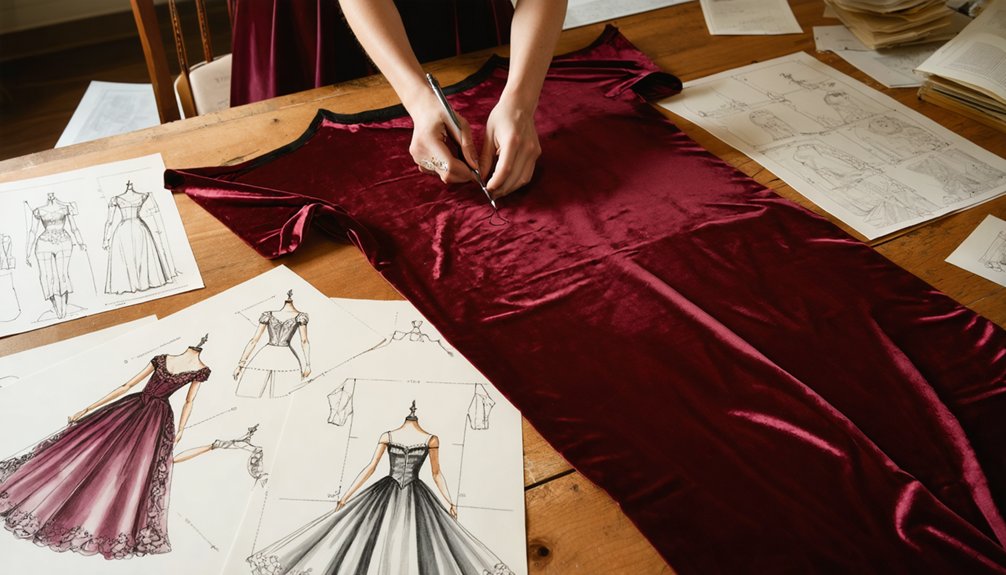
Modifying an existing sewing pattern cuts construction time considerably while still producing a screen-accurate result. Start with a commercial pattern that closely matches the character’s silhouette, then adjust the neckline, hem, or seam placement to align with your reference images. You’ll save hours compared to drafting from scratch.
Prioritize pattern alignment when working with structured fabrics or directional prints, since misaligned seams compromise both visual accuracy and fabric durability under repeated wear. Mark all modification lines clearly before cutting to avoid costly mistakes in final fabric.
Test changes in muslin first. A mockup confirms fit, movement range, and silhouette accuracy before you commit to specialty material. This step catches proportion errors early and ensures your final costume holds up through multiple takes or convention appearances.
Build Costume Copies and Plan for Fast Changes on Set
When shooting or performing in scenes that repeat or involve physical stress, you’ll want at least two identical copies of each primary costume piece to avoid production delays caused by damage or staining.
Build your duplicates simultaneously to keep fabric dye lots, stitching tension, and trim placement consistent across both versions.
For fast changes, you’ll also want to map out each costume switch in advance, replacing standard closures with hook-and-bar tape, magnets, or pre-tied elements that let you move between looks in under a minute.
Building Multiple Costume Copies
Building multiple costume copies protects your production from delays caused by damage, staining, or wear during repeated takes. You’ll want at least two versions of any damage-prone or high-contact piece.
Material durability should drive your fabric selection when producing multiples—prioritize performance textiles that withstand repetitive use. Organize costume storage by labeled bins per copy to maintain continuity across shoot days.
Prioritize duplicates for these scenarios:
- Action sequences involving physical contact or practical effects
- Costumes exposed to water, blood, or food props
- High-visibility hero pieces worn across multiple script days
- Pieces requiring precise continuity matching between takes
- Quick-change segments where a clean copy must be instantly accessible
Efficient costume storage keeps each copy shoot-ready without last-minute scrambling.
Planning Quick Change Logistics
Quick changes on set demand three things from your costume department: pre-staged copies, stripped-down closures, and a clear communication system between the dresser and the actor.
Replace buttons and zippers with magnets or hook-and-bar closures wherever speed matters. Map out accessory placement in advance so every piece has a designated spot on the body and gets added in a fixed sequence. Deviating from that sequence costs seconds you won’t recover during a tight turnaround.
Costume storage directly supports quick change success. Hang each copy in change order, labeled by scene and take, with accessories attached or clipped to the same hanger. Pre-staging eliminates search time under pressure.
Rehearse the change sequence with your dresser and actor before shooting begins so execution stays clean when the camera rolls.
Use Accessories to Complete the Look Without Rebuilding It
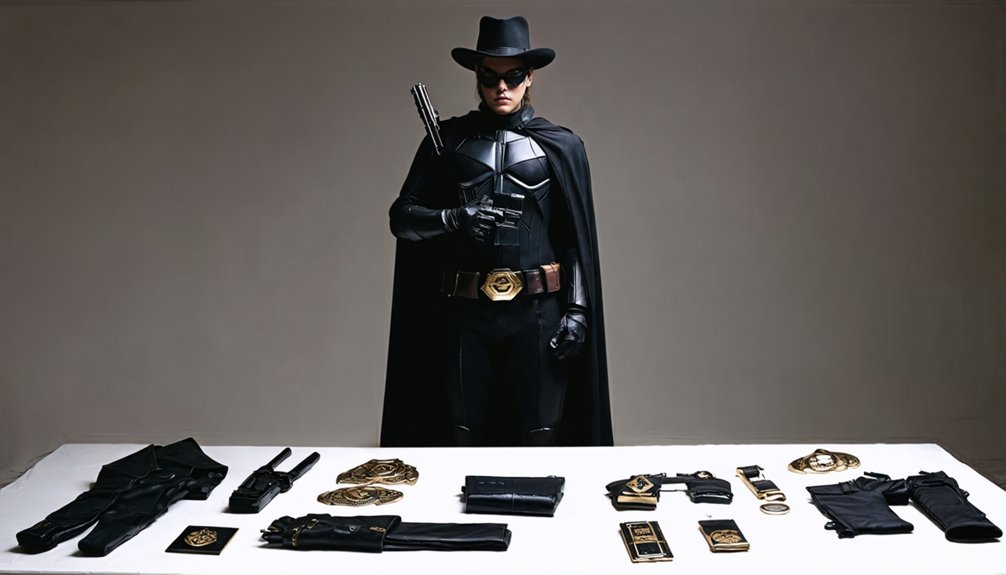
Accessories let you elevate a plain base costume without reconstructing the entire piece. Strategic additions redefine silhouette, reinforce character identity, and solve continuity gaps efficiently. Jewelry layering builds visual complexity across necklines, wrists, and ears without altering garment construction. Prop integration anchors the character’s function and world directly into the ensemble.
Prioritize these accessory categories for maximum impact:
- Belts and harnesses to restructure waistline and add layered depth
- Headwear and hoods to lock in silhouette recognition instantly
- Gloves and gauntlets to extend character detailing to extremities
- Bags, pouches, and holsters for prop integration that reads as worldbuilding
- Layered necklaces and cuffs for jewelry layering that adds screen texture
Each piece should serve a visual or functional purpose. Avoid decorating without intention.
Frequently Asked Questions
How Do I Budget for a Full Film Character Cosplay Costume Build?
Start budget planning by listing every component, then research material sourcing costs for fabrics, accessories, and specialty items. You’ll want to allocate contingency funds for mockups, swatches, and backup pieces to avoid mid-build shortfalls.
What Tools Are Essential for a Beginner Costume Construction Workspace?
You’ll need a sewing machine, sharp scissors, measuring tape, pins, and an iron. Master basic sewing techniques early, and prioritize fabric selection tools like swatches to test materials before committing to your full costume build.
How Do I Find Accurate Measurements for a Specific Film Character?
Ironically, the character won’t gauge themselves for you. Gather front, side, and back reference images, then cross-reference actor interviews for measurement accuracy. Test costume fitting against your own body measurements to ensure silhouette alignment.
Can I Sell Replica Film Character Costumes Without Legal Issues?
You can’t sell replica film character costumes without risking trademark infringement. Studios enforce intellectual property aggressively, so you’ll need to meet licensing requirements by securing official agreements before commercializing any recognizable character design.
How Long Does a Complete Film Character Costume Typically Take to Finish?
You’ll typically spend two to eight weeks completing a film character costume. Fabric selection complexity and costume durability requirements directly impact your timeline, with intricate builds demanding mockups, fittings, specialty materials sourcing, and construction refinement before achieving screen-accurate results.
References
- https://www.youtube.com/watch?v=ZJ__r8QQ7Yc
- https://www.blauwfilms.com/research/the-complete-costume-design-process
- https://www.reddit.com/r/movies/comments/1fmu9a8/how_a_character_arc_is_represented_through_the/
- https://www.spotlight.com/news-and-advice/the-industry/actor-and-costume/
- https://www.costumeable.com/
- https://www.youtube.com/watch?v=AWn5DAXc3WI
- https://www.youtube.com/watch?v=s2Z6xfTMNSs
- https://www.costumary.com/templates/costume-cosplay-garment
- https://www.instructables.com/How-to-Make-a-Cosplay-Costume/