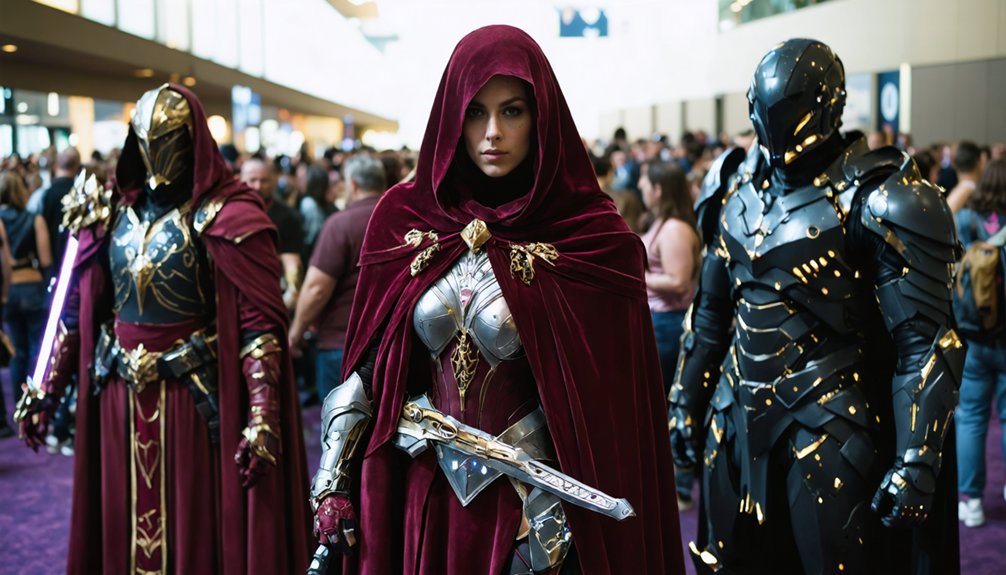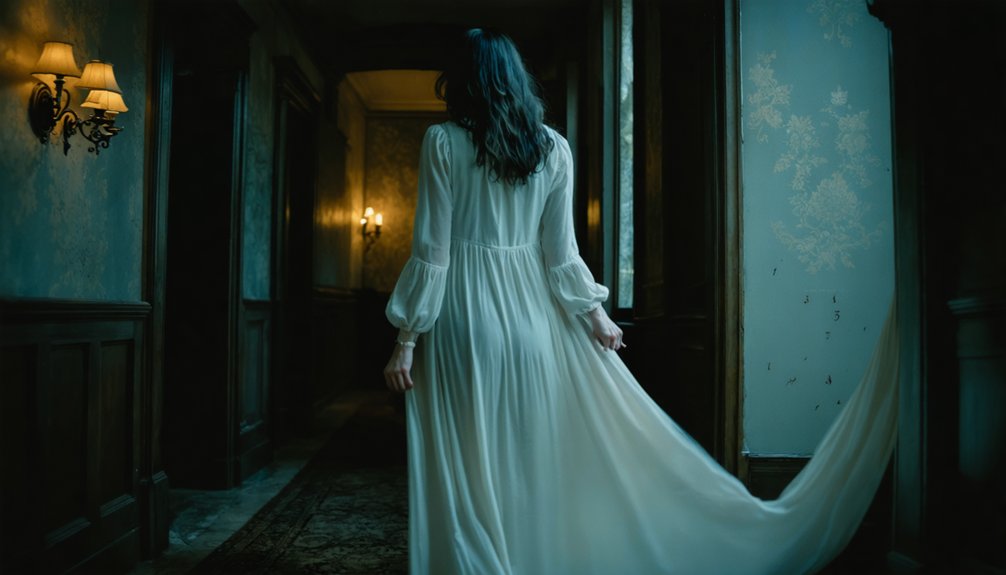
If you’re hunting for ghostly attire inspiration, *The Haunting of Hill House* is your ultimate moodboard. Olivia Crain’s velvet robes nail that haunted-regal energy, while Poppy Hill’s silk-and-lace 1920s dress drips with eerie vintage glamour. Even William Hill’s heavy wool Chesterfield coat commands spectral authority. Costume designer Lynn Falconer built every look around texture and emotional storytelling, not just aesthetics. Stick around — there’s so much more to uncover about what makes these wardrobes unforgettable.
Key Takeaways
- Olivia Crain’s velvet robes blend regal elegance with haunted emotional weight, making velvet a go-to fabric for ghostly character costumes.
- Poppy Hill’s silk dress with intricate vintage lace detailing offers historically grounded inspiration for 1920s-style ghostly attire.
- William Hill’s heavy wool Chesterfield coat and bowler hat authentically capture authoritative, period-accurate ghostly fashion from the 1920s.
- Costume designer Lynn Falconer uses texture deliberately, proving fabric choice communicates character truth beyond purely aesthetic ghostly appearances.
- Sourcing unique textures from specialty fabric stores like B&J Fabrics in NYC can elevate ghost-inspired costume authenticity significantly.
Lynn Falconer’s Approach to 70 Years of Hill House Costumes
Spanning over 70 years of fashion history, Lynn Falconer’s costume work for *The Haunting of Hill House* is a masterclass in storytelling through fabric.
You can see the costume evolution unfold across every frame, from 1920s ghostly silhouettes to early ’90s throwback looks that hit just right.
Falconer didn’t just dress characters — she built entire worlds around them. She pulled historical influences from runway observations and sourced unique textures at B&J Fabrics in New York City, blending high fashion with period authenticity.
Falconer didn’t just dress characters — she built entire worlds, sourcing textures and history to blur the line between fashion and storytelling.
Bucket hats, patchwork dresses layered over T-shirts, and lace-detailed silk gowns all serve a narrative purpose.
Every wardrobe choice deepens the story, proving that costume design isn’t just about aesthetics — it’s about revealing character truths you didn’t know you needed.
Olivia Crain’s Velvet Robes and Their Cinematic Roots
When it comes to Olivia Crain’s iconic look, velvet does all the heavy lifting. Costume designer Lynn Falconer leaned into velvet’s allure to craft those long, flowing robes that make Olivia feel both regal and haunted.
You can’t separate the texture from the character’s emotional weight — it’s doing serious narrative work.
Falconer pulled cinematic inspiration from Julie Christie in “Don’t Look Now” and Jessica Lange in “The Postman Always Rings Twice,” two performances dripping with feminine intensity.
These references sharpen Olivia’s symbolism, positioning her as a matriarch whose beauty and tragedy are inseparable. Falconer even discovered a specific velvet texture at B&J Fabrics in New York City that locked everything into place.
That one fabric find? It defines Olivia’s entire visual identity.
Inside Poppy and William Hill’s 1920s Ghost Costumes
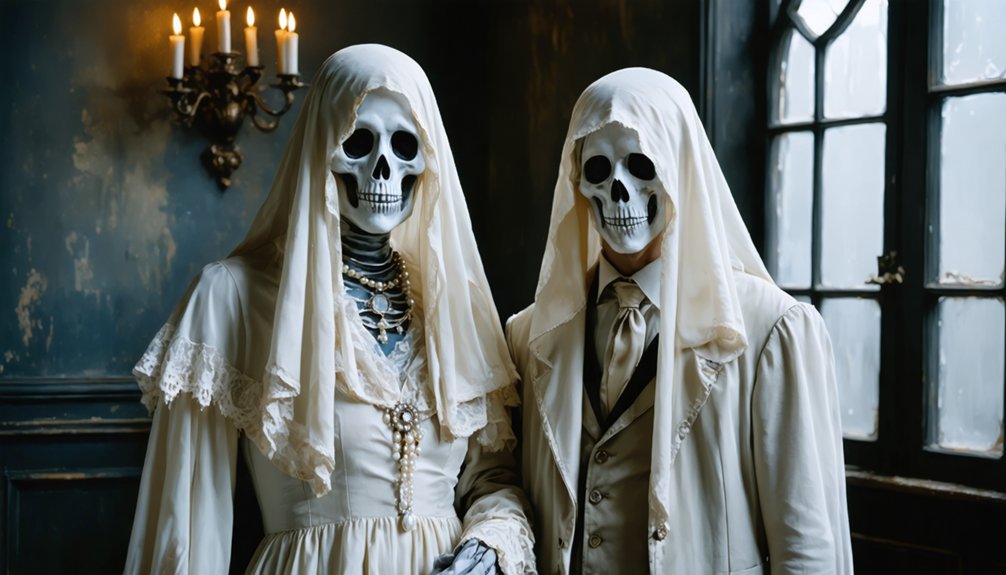
Poppy and William Hill bring two distinct 1920s silhouettes to life, and the details are worth obsessing over. Costume designer Lynn Falconer crafted each look with serious intentionality, pulling from authentic vintage sources and era-specific staples.
Here’s what defines their iconic ghostly presence:
- Poppy’s Elegance centers on a silk dress with intricate lace detailing sourced from an original vintage piece.
- The lace isn’t decorative fluff — it’s historically grounded and texturally deliberate.
- William’s Dapperness comes alive through a long Chesterfield coat paired with a classic bowler hat.
- Both silhouettes authentically represent 1920s fashion within a wardrobe spanning over 70 years of design history.
Together, they’re a masterclass in period-accurate ghostly costuming you won’t stop thinking about.
The 1990s Wardrobe Details That Make the Living Characters Feel Real
While the ghosts haunt in silk and velvet, the living characters are rooted firmly in early ’90s nostalgia — and the details are *chef’s kiss*.
Costume designer Lynn Falconer leaned hard into fashion authenticity, pulling iconic early-decade staples that’ll instantly transport you back.
You’ll spot bucket hats sitting casually on characters’ heads, a quintessential ’90s power move. Falconer also layered patchwork dresses directly over T-shirts — a texture-mixing trick that screams the era without trying too hard.
Pair those with straight-cut jeans, and you’ve got a living, breathing time capsule.
What makes these choices brilliant is their specificity. Falconer didn’t just gesture toward the decade — she committed fully, ensuring every piece reflects exactly how real people actually dressed.
That precision separates great costume design from forgettable wardrobe work.
The Fabric and Texture Choices That Define Hill House’s Wardrobe
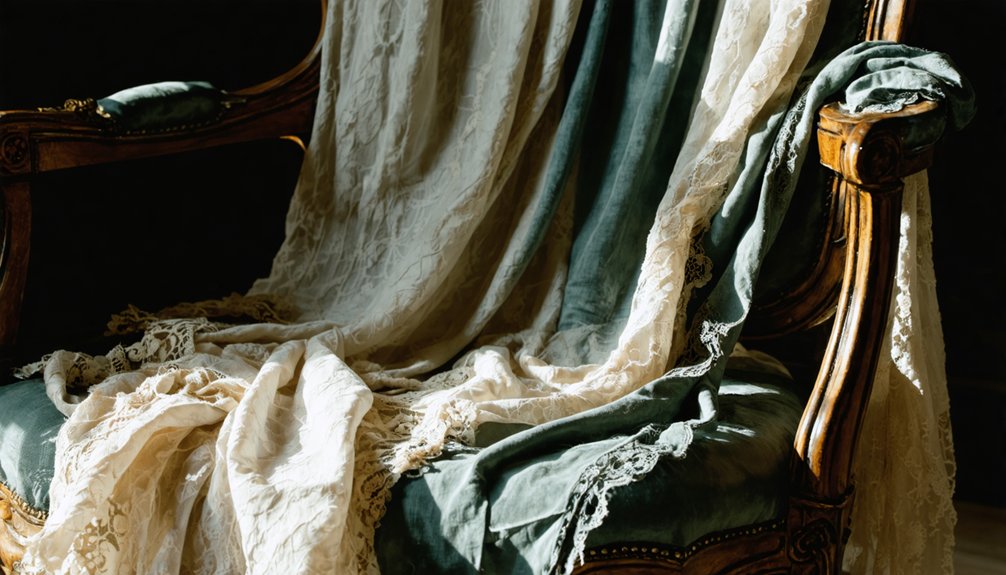
Beyond the silhouettes and decade-specific styling, the real magic of Hill House’s wardrobe lives in its fabrics. Lynn Falconer’s fabric influences pull from B&J Fabrics and runway observations, creating texture symbolism that mirrors each character’s emotional weight.
Here’s what makes the textiles unforgettable:
- Olivia’s velvet robes — stumbled upon accidentally, this rolling velvet texture channels Julie Christie’s eerie elegance from *Don’t Look Now*.
- Poppy’s silk dresses — delicate lace detailing sourced from an original vintage piece grounds her 1920s haunting.
- William Hill’s Chesterfield coat — heavy wool silhouette commands ghostly authority.
- Living characters’ patchwork dresses — layered over T-shirts, these fabrics tactilely connect you to early 90s nostalgia.
Every thread Falconer chose tells you something the dialogue doesn’t.
Frequently Asked Questions
How Many Total Costumes Were Created for the Haunting of Hill House?
The knowledge doesn’t specify an exact number, but you’ll love knowing the costume design spans 70+ years of fashion history, blending ghostly character symbolism with living characters’ wardrobes into one hauntingly innovative collection.
Did the Actors Have Input Into Their Character’s Costume Choices?
The knowledge doesn’t confirm actor input, but with 70+ years of fashion history covered, Lynn Falconer’s vision drove character development and costume symbolism — you’d appreciate how her innovative choices shaped each character’s iconic, haunting aesthetic.
How Long Did It Take Falconer to Complete the Full Wardrobe?
The knowledge doesn’t spill the tea on exactly how long Falconer’s costume design journey took, but you can imagine the wardrobe challenges were massive — she conquered 70+ years of fashion history in one groundbreaking project!
Were Any Costumes Reused or Shared Between Living and Ghost Characters?
You won’t find shared pieces, but costume symbolism brilliantly bridges both worlds — living characters rock ’90s staples while ghostly aesthetics define the dead, creating striking juxtaposition that makes each wardrobe distinctly unforgettable yet thematically connected.
What Was the Total Budget Allocated for Hill House’s Costume Department?
You won’t find a costume design budget breakdown for Hill House here — that detail isn’t available in the knowledge provided. What’s clear is Falconer’s innovative vision delivered stunning, multi-decade wardrobes that transcended any dollar figure!
References
- https://www.reddit.com/r/femalefashionadvice/comments/9q7fj8/inspiration_olivia_crain_from_haunting_of_hill/
- https://www.nylon.com/articles/the-haunting-of-hill-house-fashion
- https://www.reddit.com/r/femalefashionadvice/comments/9qvap4/inspiration_the_haunting_of_hill_house_theo_clara/
- https://www.motionpictures.org/2018/10/the-haunting-of-hill-house-costume-designer-explains-why-those-ghosts-give-you-nightmares/
- https://archive.nerdist.com/haunting-of-hill-houses-costumes-7-details/
- https://www.collegefashion.net/inspiration/book-fashion-the-haunting-of-hill-house/
- https://www.kqed.org/arts/13887719/creepy-kids-a-dark-mansion-and-80s-fashion-the-haunting-of-bly-manor
- https://www.shopyourtv.com/haunting-of-hill-house/
- https://www.reddit.com/r/HauntingOfHillHouse/comments/1g1hz4a/anybody_else_notice_the_clothing_of_olivia_and/
- https://www.syfy.com/syfy-wire/the-80s-influences-and-costume-design-clues-in-the-haunting-of-bly-manor