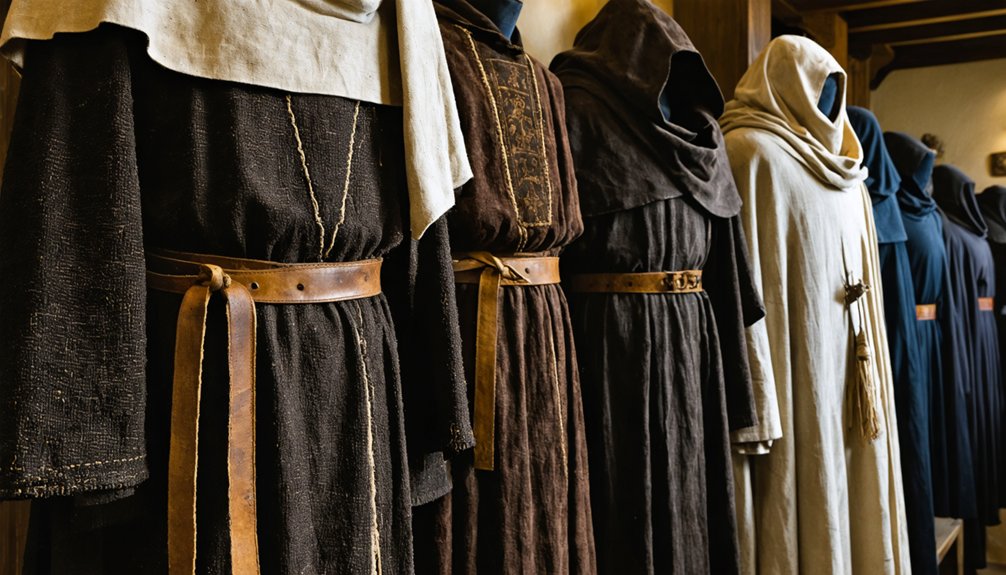
Medieval monastic habits comprised four core garments you’d recognize: the tunic as your base layer, an ankle-length cowl for daily work, a hooded frock for liturgical functions, and a scapular work apron with storage pouches. You’ll find Benedictines wore black wool symbolizing penitence, while Cistercians chose undyed white to demonstrate austerity, and Franciscans adopted brown bound with three-knotted cords. These garments evolved from 5th-century Roman dress through successive reforms, with each order’s fabric choices—wool, linen, hemp—encoding specific theological interpretations of poverty and labor that extended beyond mere clothing.
Key Takeaways
- Medieval monks wore layered garments including tunics, cowls, frocks, and scapulars, each serving distinct daily, working, or liturgical functions.
- Different orders wore signature colors: Benedictines in black wool, Cistercians in undyed white, and Franciscans in brown with knotted cinctures.
- Wool dominated habit construction for insulation and water resistance, while linen and hemp provided antibacterial properties and moisture protection.
- Monastic dress evolved from 5th-century peplos styles to standardized forms, influenced by Cluny Reforms and periodic regulation against lay fashions.
- Habit design carried spiritual symbolism: undyed fabrics signified poverty, hoods created prayer barriers, and rough textures reflected biblical humility.
Core Garment Types and Their Functions
The Rule of St. Benedict, established around 530, prescribed distinct garments serving specific functions in monastic life.
Each garment in Benedict’s system served a precise purpose, transforming clothing into a disciplined framework for spiritual and practical monastic duties.
You’ll find the tunic functioned as your foundation layer—a basic undergarment belted at the waist, with two provided for washing rotation and night wear.
The cowl served as your ankle-length working garment, featuring a hood with sleeveless or short-sleeved construction and open sides you’d tie shut during manual labor.
For prayer discipline and formal occasions, you’d don the frock—an ankle-length hooded garment with long sleeves, never worn simultaneously with the cowl.
The scapular operated as your work apron, consisting of rectangular cloth reaching your ankles front and back, worn over shoulders and belted to create practical storage pouches for daily tasks.
Distinctive Colors and Styles Across Monastic Orders
You’ll identify monastic orders by their distinctive habit colors, established through deliberate theological symbolism between the sixth and thirteenth centuries. The Benedictines’ black wool garments earned them the designation “Black Monks” and represented penitential discipline, while Cistercian reformers adopted undyed white wool in 1098 to distinguish their austere interpretation of the Rule.
Franciscans introduced the knotted three-cord cincture in 1209, binding their brown habits as a visible profession of their evangelical vows of poverty, chastity, and obedience.
Benedictine Black Monk Tradition
Around 529 CE, St. Benedict established his Rule in central Italy, mandating that you source the cheapest local cloth for habits—a specification that sparked debates between short-term economy and long-term durability. By the 8th century, you’d observe Benedictines shifting from undyed wool to distinctive black cloth composition, earning them the “Black Monks” designation. This ascetic lifestyle association through black symbolized your repentance, humility, and consecration to God while rejecting material wealth.
The cuculla—your ankle-length black wool garment—featured multiple pleats for warmth and full sleeves extending to thumbs, practical for unheated medieval churches. The cowl protected you during outdoor travel and symbolized perfection. Fourteenth-century depictions confirm this black woolen tradition, which later inspired academic gown designs and distinguished you from Cistercian white habits.
Cistercian White Wool Practice
In 1098, dissenting Benedictine monks established Cîteaux Abbey in France’s Burgundy region, rejecting what they perceived as monastic corruption and luxury within their parent order. You’ll find their reformed Cistercian Order mandated undyed woollen habits—a deliberate peasant emulation that proclaimed poverty through material authenticity.
This fiscal prudence eliminated expensive dyeing processes while their natural white, grey, or brownish hues contrasted sharply with traditional Benedictine black. Each monk received two white tunics, a protective scapular, and cowhide shoes rather than costly Cordovan leather. Chapter 55 of Benedict’s Rule governed these specifications, forbidding fur garments and fine linens.
Franciscan Rope Belt Identity
When Saint Francis of Assisi abandoned his father’s wealth in 1206, he replaced his leather belt with a rough white cord knotted around his simple grey-brown tunic—a gesture that transformed utilitarian necessity into enduring spiritual iconography.
You’ll observe that the cord’s knotted symbolism evolved into precise theological architecture: three knots corresponding to poverty, chastity, and obedience, with each containing five coils representing Christ’s wounds. This personal commitment’s visible display became standardized practice when Saint Dominic received a white cord directly from Francis himself, establishing intercommunity veneration traditions.
Fabric Materials and Construction Methods
Medieval monastic communities relied on five primary textile materials for habit construction: wool, linen, hemp, cotton, and silk. You’ll find wool dominated northern European monasteries for its thermal insulation and water repellency, while linen’s antibacterial properties made it essential for extended wear periods.
Wool and linen dominated medieval habit construction, with northern monasteries prioritizing thermal properties while antibacterial qualities enabled prolonged wear.
Hemp offered superior moisture resistance and fiber strength, maintaining structural integrity through repeated laundering cycles. Cotton construction utilized heavy weaves to replicate authentic medieval textures.
Fabric sourcing logistics varied by regional availability—monasteries cultivated flax for linen production and maintained sheep flocks for wool supply. Dyeing techniques employed vegetable-based mordants to achieve the characteristic browns and blacks of various orders.
Construction methods featured generous cuts with integrated hoods, loose flowing designs for unrestricted movement, and waist cord systems for practical adjustment during manual labor activities.
Evolution of Monastic Dress From the 5th to 15TH Century
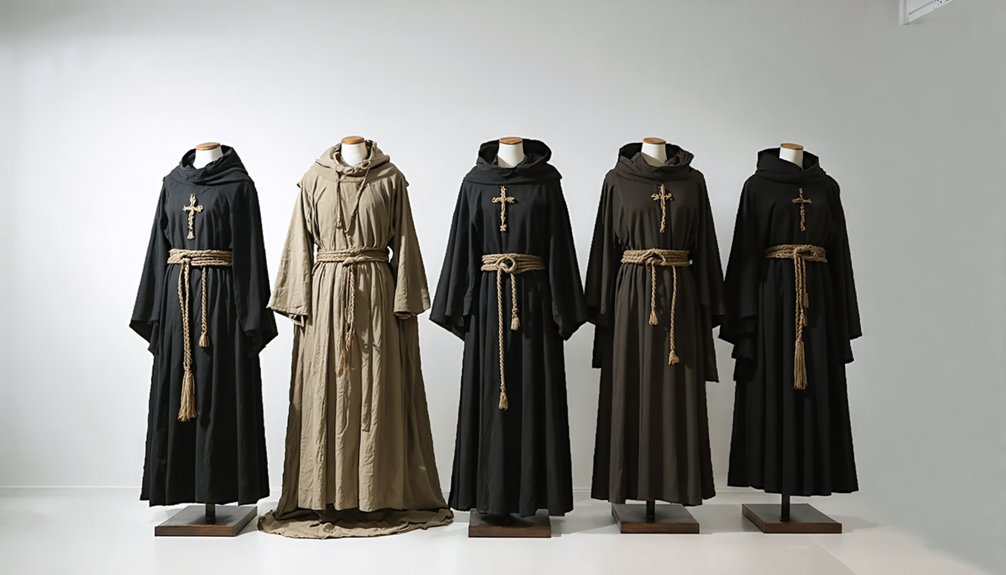
Monastic vestments underwent five distinct transformational phases between the 5th and 15th centuries, each reflecting geographical influences and regulatory reforms.
You’ll observe early peplos-inspired garments with shoulder brooches shifting to standardized Anglo-Saxon white floor-length tunics by the 8th century. The Cluny Reforms introduced liturgical adaptations through specialized cowl variations and scapular configurations during the 10th-11th centuries.
By the 13th century, influence of lay fashions created tighter, shorter tunics until ecclesiastical regulations restored conformity—Westminster’s adoption of black habits exemplifies this change.
The 14th-15th centuries witnessed Italian contacts fundamentally altering Northern Gaul traditions, reducing froccus dimensions and establishing black as the dominant color.
These evolution patterns reveal how monastic dress balanced spiritual symbolism with practical functionality while resisting secular fashion trends.
Religious Symbolism and Spiritual Significance
You’ll find that undyed wool served as the most direct material expression of monastic poverty from the 6th century forward, as orders like the Cistercians deliberately rejected dyed fabrics to demonstrate their commitment to apostolic simplicity.
The hood functioned as both practical covering and spiritual barrier—when drawn over your head during prayer, it physically separated you from worldly distractions and symbolized withdrawal into contemplative focus.
These design elements weren’t decorative choices but calculated expressions of vowed poverty and spiritual detachment, reinforcing daily devotional practice through every moment you wore the habit.
Poverty Through Undyed Wool
Cistercian monks transformed simple undyed wool into a powerful declaration of poverty during the twelfth century, deliberately rejecting the expensive dyes that marked traditional Benedictine black habits. You’ll recognize their greyish-white garments—natural fleece colors that earned them the designation “White Monks”—as calculated statements of monastic austerity rather than mere practical choices.
The cost differential between dyed and undyed materials wasn’t trivial; medieval dyes represented substantial expense that contradicted their biblical origins of humility and detachment. Their rough-textured wool simultaneously proclaimed purity through unprocessed fibers while removing distinctions of rank within communities. Even their cowhide shoes rejected luxurious Cordoba leather alternatives.
This systematic rejection of material luxury created visible equality among brothers, transforming everyday garments into theological statements that contemporaries immediately recognized as radical departures from established practice.
Hood Symbolizing Spiritual Detachment
Beyond the material choices of unprocessed fabric, the hood itself carried distinct theological weight that fourth-century Egyptian monastics first codified. Evagrius Ponticus documented how the cowl physically obscured peripheral vision, creating conditions for inward meditation by eliminating worldly distractions.
You’ll find John Cassian’s writings describe constant hood use as mimicking children’s garments—a deliberate architectural choice fostering innocence and humility. The face-obscuring design systematically veiled identity, countering vanity while establishing contemplative focus during prayer cycles. This wasn’t mere symbolism; monastic authorities understood the hood as functional technology for mystical experiences.
Embroidered crosses reinforced protective barriers against spiritual threats, while the garment’s thermal properties enabled extended meditation sessions. The cowl transformed you into a visible marker of renunciation, binding contemplative discipline to physical form through intentional design principles.
Simplicity in Daily Devotion
The Saint Benedict Rule’s sixth-century provisions explicitly demanded fabric procurement from within twenty-mile monastery radiuses, prioritizing economic debasement over garment longevity. This deliberate self denial through coarse linen or undyed wool reinforced monastics’ rejection of material ostentation during manual labor, scriptural study, and communal prayer.
You’ll notice Cistercian “White Monks” (twelfth century onward) and Benedictine “Black Monks” maintained distinct chromatic identities—white signifying purity, black representing penitential humility. The uniform construction eliminated hierarchical distinctions, fostering brotherhood through visual equality regardless of pre-monastic status.
Flowing designs enabled agricultural work while directing attention toward inner composure rather than corporeal adornment. These garments functioned as perpetual reminders of vows, anchoring spiritual discipline through tactile simplicity that permeated every devotional act.
Accessories and Practical Variations in Monk Attire
Medieval monastics augmented their basic habits with functional accessories that served both practical and symbolic purposes. You’ll find these elements enhanced daily monastic life while maintaining religious symbolism:
Monastic accessories bridged the sacred and practical, transforming simple garments into tools for both spiritual devotion and daily survival.
- Belts and cords: Franciscan cintures featured three knots representing poverty, chastity, and obedience. When worn over scapulars, they created storage pouches for carrying essential items.
- Foot protection: Monks employed seasonal adaptation through lined winter shoes and unlined summer variants. Stockings paired with simple footwear, while slippers served nighttime needs. Though barefoot walking held symbolic value, climate and safety necessitated practical adjustments.
- Cloaks and headgear: Riding cloaks in black, brown, or grey facilitated horseback travel. Deep-hooded cowls (gugels) provided warmth while enabling prayerful detachment. Some orders incorporated leather caps for additional protection against harsh weather conditions.
Frequently Asked Questions
How Often Were Medieval Monk Robes Washed and Cleaned?
You’d wash your lower robes daily, upper robes 1-3 times weekly based on seasonal fabric choices, and outer robes seldom. Forest monasteries required fortnightly washing due to time-consuming fabric dye variations, while Cistercians provided rotating tunics for continuous cleaning cycles.
Did Monks Wear Anything Underneath Their Habits for Warmth?
You’ll find that monks wore thermal undergarments beneath their habits, with documented evidence from twelfth-century rules specifying wool femoralia. They strategically employed layered clothing materials—light inner wool and loose outer garments—creating innovative moisture-wicking systems for northern climates.
What Happened to Worn-Out or Damaged Monastic Garments?
Nothing vanished wastefully—you’d witness exhaustive repair practices through darning and servant redistribution, then strategic disposal methods: shredding remnants into mud-plaster for dwelling floors. This systematic reuse cycle, documented in Theravāda Vinaya texts, maximized scarce textile resources innovatively.
Were There Punishments for Monks Who Violated Clothing Regulations?
Yes, you’d face beatings, fasting, or exclusion from prayer for violating strict monastic dress codes. Wearing secular tunics or unauthorized undergarments meant punishment before the community, eliminating any lack of individual expression through prescribed penances.
How Much Did a Complete Set of Monk’s Clothing Cost?
Historical records don’t specify exact costs, but you’ll find fabric availability and seasonal variations markedly impacted prices. Monasteries typically produced robes in-house using locally-sourced wool or linen, eliminating monetary exchange for most communities.