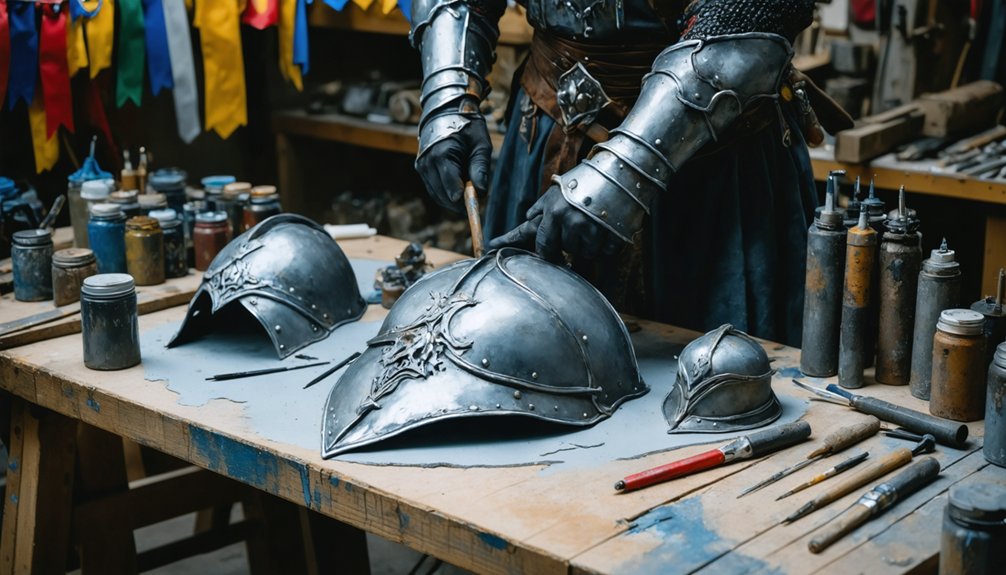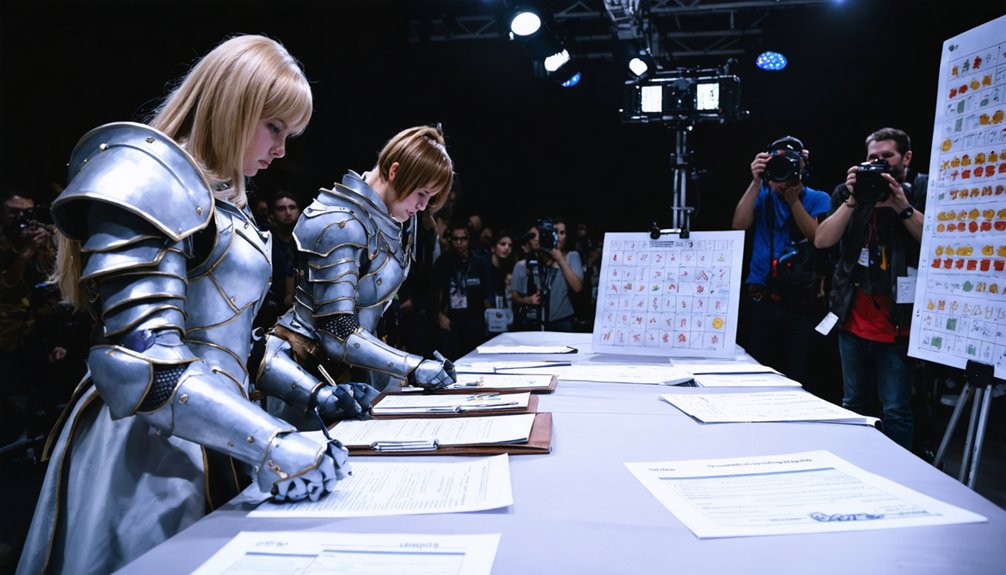
To craft a competition-grade cosplay costume, you’ll need to choose a character that matches your construction skills, meet your division’s handmade percentage requirements (typically 70–90%), and replicate your character’s design with precise accuracy. Judges score costume quality, technique, and precision across 100 points total, so every seam, paint layer, and material choice matters. Document every component before prejudging, and arrive on time or risk disqualification. The details ahead will sharpen your competitive edge considerably.
Key Takeaways
- Select a character whose complexity in armor, materials, and mechanics aligns with your construction skills to maximize competitive scoring potential.
- Ensure at least 70% of your costume is handmade, as advanced divisions may require up to 90% handmade components.
- Use comprehensive reference images to accurately replicate colors, proportions, and details, eliminating gaps or mismatched elements throughout.
- Document all handmade, modified, and pre-made components thoroughly before prejudging to ensure smooth and complete judge evaluations.
- Arrive on time for mandatory prejudging, prepared with your costume’s component breakdown and handmade percentage ready for judges.
Pick a Character Your Skills Can Actually Execute in Competition
Picking the wrong character doesn’t just waste your time—it tanks your score before you’ve sewn a single seam.
Character selection determines whether your construction skills align with what judges actually evaluate: costume quality, technique variety, and precision against source material.
Character selection is the bridge between your construction skills and what judges are actually looking for.
Start with honest skill assessment. Judges award 20 points specifically for technique complexity, meaning a character with layered armor, mixed materials, and mechanical components outscores a simple fabric build.
Cross-reference your demonstrated abilities against the character’s design demands.
Consider the 70% handmade threshold. Some characters rely heavily on purchasable components, limiting how much craftsmanship you can demonstrate.
Choose a character whose design lets your handmade work dominate—because that’s precisely what earns competitive scores.
Understand How Cosplay Competition Judging Actually Works
Before you build a single piece, you’ve got to understand exactly how judges score your costume—because the point breakdown shapes every construction decision you make.
Judging criteria splits across three weighted categories:
Costume Quality earns 40 points, covering fit, paint work, and sewing execution.
Technique earns 20 points, rewarding complex craftsmanship techniques over basic construction methods.
Level of Precision earns the remaining 40 points, comparing your finished costume directly against the original character’s design specifications.
Judges reward innovation—special mechanisms, structural modifications, and advanced surface treatments score higher than standard builds.
Closing gaps between armor plates, adding texture layers, and matching source material details precisely maximizes your score across all three categories.
Document every made, modified, and purchased component before prejudging, since judges examine construction up close during scheduled slots.
Know the Handmade Percentage Rules Before You Start Building
Clearing the handmade threshold is the first structural constraint you need to solve before committing to any build plan. Most craftsmanship competitions require a minimum 70% handmade requirement, with advanced skill divisions pushing that ceiling to 90%.
You’re working with a 30% allowance for found parts — pre-made boots, base garments, or unmodified purchased components.
Before cutting a single pattern piece, map every element against these thresholds. Identify which handmade materials you’ll construct from scratch, which components you’ll modify, and which you’ll source pre-made.
Documentation importance can’t be overstated here — judges expect a clear breakdown of made, modified, and bought elements within your application. Weak documentation undermines otherwise strong builds.
Structure your component list early, and your prejudging submission becomes a straightforward technical accounting rather than a last-minute scramble.
Match Your Costume to the Original Design Exactly
Pull every reference image available. Cross-check color values, proportions, and structural details against each panel and frame.
Gaps between armor pieces, unfinished textures, and mismatched silhouettes immediately signal incomplete execution to trained evaluators.
Your physical differences from the original character don’t factor into completeness scoring, so eliminate that concern entirely.
Focus your energy on replicating design accuracy with surgical precision—that’s where competition-grade cosplay separates itself from casual builds.
Show Up to Prejudging and Competition Registration Ready
Prejudging attendance is mandatory—miss your assigned slot and you’re out of the craftsmanship competition entirely, with no exceptions for late arrivals.
Treat your prejudging preparation as seriously as the build itself. Judges will examine your costume up close, evaluating construction quality, precision, and technique firsthand.
Your registration checklist must include a complete component breakdown: which pieces you made, modified, or purchased. Document everything clearly—vague applications weaken your standing before judging even begins.
If you’re entering a performance category, secure your slot early since spaces fill quickly.
Bring your performance sheet if applicable, noting any prop mechanisms or special features. Arrive knowing your costume’s percentage of handmade construction, because judges will ask.
Preparation separates competitive entries from impressive ones that simply don’t qualify.
Frequently Asked Questions
What Is the Maximum Number of Props Allowed in Performance Competitions?
Less is more — you’re allowed a maximum of 3 props under performance rules. Each prop limitation restricts individual weight to under 10 kg, keeping your innovative stage presence powerful, precise, and competition-ready.
How Much Can a Single Stage Prop Weigh for Performance Categories?
Your single stage prop can’t exceed 10 kg in weight. When exploring prop material considerations and prop safety regulations, you’ll want to prioritize lightweight, innovative materials that keep your design functional, mobile, and competition-compliant.
Can Physical Size Differences Between Cosplayer and Character Affect Precision Scoring?
Like a mirror reflecting light regardless of its frame, physical size differences don’t affect precision scoring. Judges evaluate your character accuracy, cosplay techniques, costume materials, and performance dynamics purely against original design specifications you’ve recreated.
What Skill Level Divisions Exist Within Cosplay Competition Categories?
You’ll compete across Novice, Journeyman, and Master skill divisions, with beginner intermediate skill division criteria separating entry-level crafters from advanced builders, ensuring judges accurately evaluate your costume’s complexity against appropriately matched competitors within each tier.
What Are the Maximum Dimensions Allowed for Individual Performance Competition Props?
Your performance prop can’t exceed 2,100mm height, 2,100mm width, and 900mm depth, weighing under 10kg. When considering prop material considerations and prop safety regulations, you’ll guarantee your innovative design meets all dimensional requirements.
References
- https://www.youtube.com/watch?v=Guc7LzRPeyA
- https://wcc.worldcosplaysummit.jp/en/championship/rule/
- https://www.animefargo.org/cosplay-contest-categories/
- https://creedleather.com/blogs/events-cons-fairs/beginner-s-guide-to-entering-a-cosplay-competition
- https://guildofnerds.org/post/backstage-pass/ready-to-shine-tips-and-tricks-for-a-standout-cosplay-masquerade-application/
- https://www.volunteervalleycomiccon.com/cosplay-contest-rules
- https://dorothythicket.com/2016/07/17/how-to-win-costume-contests/