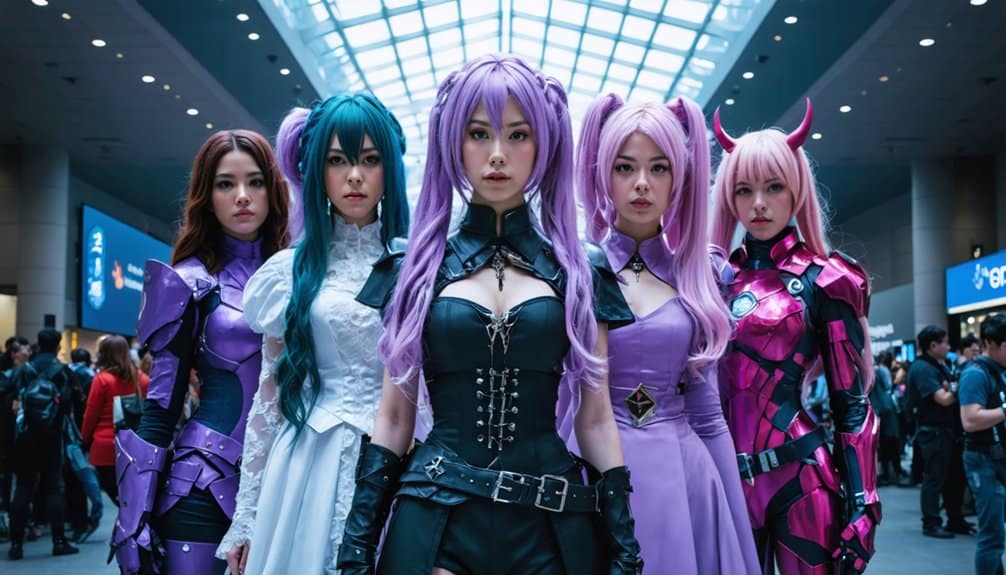
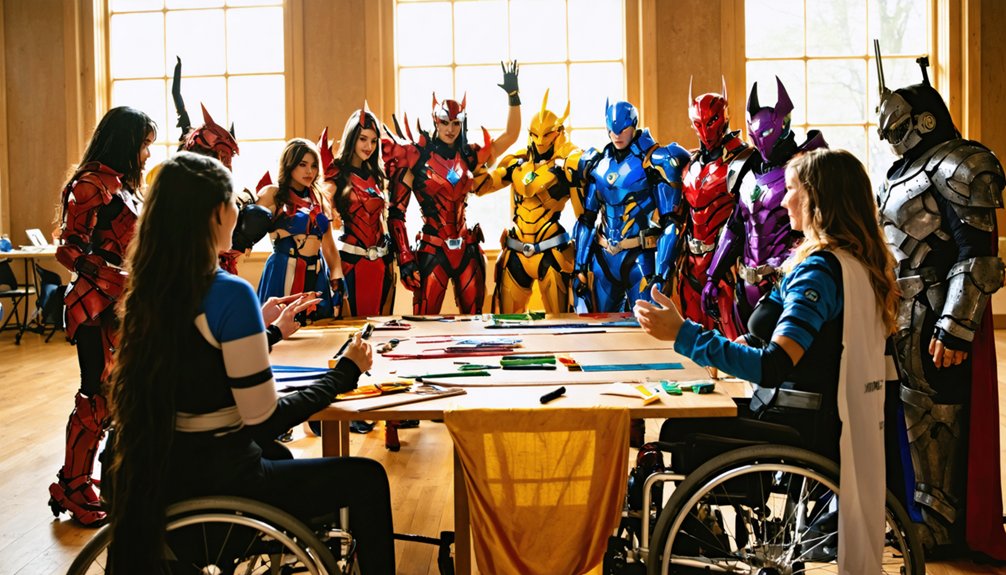
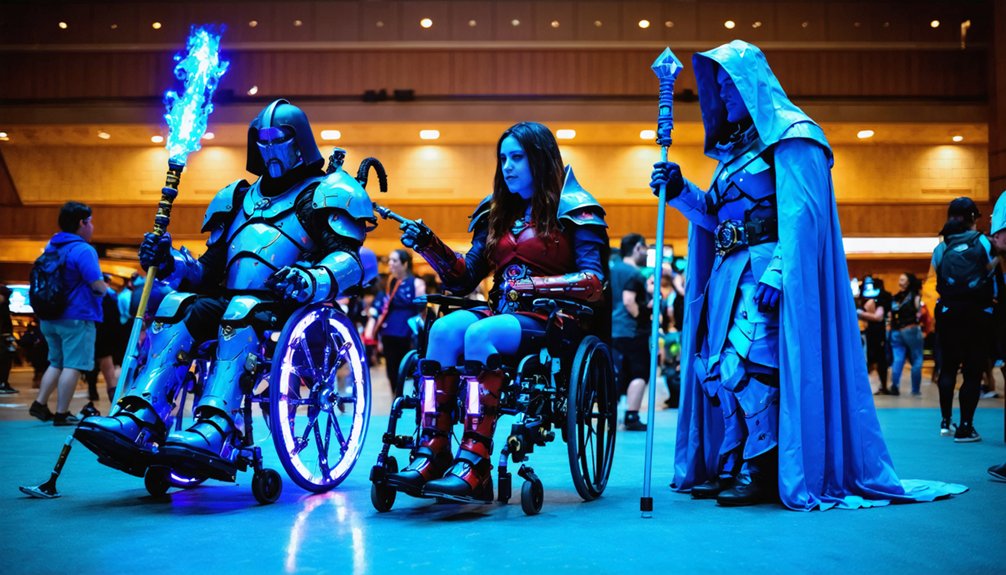
Handle body-focused negativity by recognizing it says more about the commenter’s insecurities than your worthiness to cosplay. Build your defense network through supportive online communities and local cosplay groups who celebrate all body types. Reframe hateful comments as noise from individuals who don’t represent the broader community, then set firm social media boundaries to protect your mental health. You’re part of a creative community where your passion matters more than matching impossible standards, and there are proven strategies to transform these painful moments into opportunities for advocacy and empowerment.
Key Takeaways
- Build a support network through local cosplay leaders, online moderators, and community groups who foster positive, inclusive spaces.
- Reframe hateful comments as reflections of the commenter’s insecurities rather than truths about your body or worth.
- Recognize that body-shaming stems from outdated norms and doesn’t represent the entire cosplay community’s values.
- Focus on constructive feedback that improves your craft while discarding comments with malicious or body-shaming intent.
- Document patterns in criticism to identify skill-building opportunities separate from baseless attacks on your appearance.
Understanding the Types of Criticism Cosplayers Face
While cosplay celebrates creativity and fandom, many cosplayers face harsh criticism that targets their bodies, identities, and belonging in the community. You’ll encounter comments demanding you conform to narrow beauty standards, from body-shaming about weight to accusations you’re “too fat” for certain characters.
If you’re a person of color, you might face heightened backlash for portraying characters outside your race, contradicting cosplay’s inclusive representation values. Disabled cosplayers report being questioned about using mobility aids, forced to justify medical needs.
Women experience disproportionate sexual harassment and gatekeeping that prioritizes appearance over craftsmanship. These critiques rarely reflect genuine community diversity concerns—instead, they enforce outdated norms around body type, race, gender, and ability that actively undermine cosplay’s creative foundation.
Why Body-Focused Negativity Hurts More in Cosplay Communities
Body-focused criticism in cosplay communities inflicts unique psychological damage because it attacks your vulnerability at the moment you’ve chosen to celebrate something you love. Unlike typical social situations, you’ve invested hours creating your costume, only to face judgment that contradicts the hobby’s welcoming spirit.
External pressures from fandom culture amplify this hurt—comparing yourself to famous cosplayers with “impossibly tiny” bodies, hyper-sexualized character designs, and constant social media exposure intensifies feelings of inadequacy.
What makes this particularly devastating is the unexpected nature of these attacks in supposedly supportive spaces. You’re traversing constructive costume critiques while simultaneously countering idealized character expectations that demand exact physical matches.
The financial and emotional investment compounds the distress, making each negative comment feel like rejection of both your craft and your body.
Building Your Support Network as Your First Line of Defense
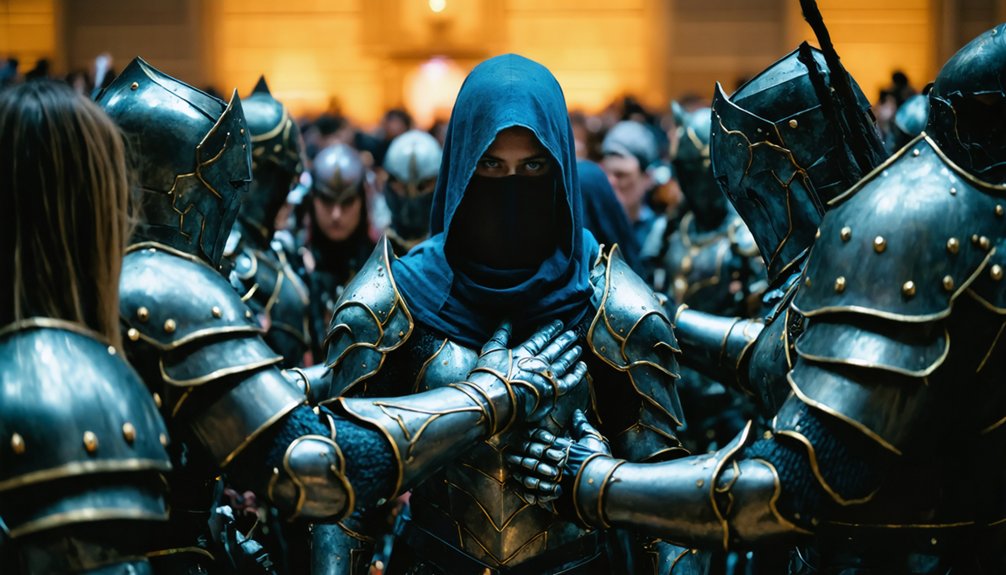
Your strongest defense against negativity starts with the people who genuinely support your cosplay journey. Surround yourself with allies who celebrate your creativity—whether they’re convention friends, Discord communities, or Instagram mutuals who hype up your work-in-progress posts.
These connections form a protective buffer that reminds you of your worth when harsh comments try to tear you down.
Identify Your Core Allies
The strongest shield against negative comments isn’t thick skin—it’s the people who stand beside you. Start by mapping your convention network: identify local community leaders who host panels, crafting sessions, and cosplay meetups. These key informants create spaces where you’ll find genuine belonging.
Next, identify online community moderators managing Discord servers, Instagram groups, and specialized networks like Cosplayer Survivor Support Network. They’ve built platforms where 25% more cosplayers found connection during 2020’s isolation.
Your core allies attend conventions repeatedly, facilitate virtual events, and understand cosplay’s mental health benefits. They’re organizing regional meetups, collaborating on projects, and conducting charity work through groups like the 501st Legion. These aren’t just friends—they’re your strategic partners in resilience-building.
Cultivate Positive Online Circles
Building authentic connections online transforms isolated cosplayers into supported community members. Join Facebook Groups where 40% of cosplayers coordinate meetups, or Discord servers that drive immediate costume decisions.
Follow community leaders who host crafting tutorials and foster uplifting role models through their content. With 92% of professional cosplayers using Instagram as their primary platform, you’ll find abundant opportunities for fostering self love within these spaces.
Engage through collaborative content—transformation videos and series-based projects that peaked with 65 analyzed videos demonstrate community strength. Follow more than 20 cosplayers to diversify your feed with positive voices.
Seek groups like Rey Cosplay Community that emphasize respect and non-toxic environments. These digital circles deliver 3x higher engagement rates than typical lifestyle content, creating protective networks that shield you from negativity while celebrating your craft.
Leverage Community Encouragement Systems
Leverage peer-based learning networks where cosplayers share techniques and review work collectively.
When you post progress photos, you’re accessing immediate support—turning isolation into collective achievement through reciprocal engagement and scaffolding.
Reframing Hateful Comments: Perspective Shifts That Work

When hateful comments land in your cosplay DMs or appear under your photos, your brain’s first instinct often involves catastrophizing—imagining that everyone agrees with the critic or that your entire costume is ruined. Cognitive framing techniques help you challenge these distortions by examining actual evidence rather than fear-based assumptions.
Building self-compassion starts with these perspective shifts:
- Question the pattern: Is this one person’s opinion representative of your entire community’s response?
- Reframe the source: Consider whether the commenter’s negativity reflects their own insecurities rather than your craft
- Neutralize the statement: Convert “Your body ruins this character” to “One person disagrees with my interpretation”
- Find the learning: Extract any constructive feedback while discarding malicious intent
These reframes transform emotional reactions into empowered responses.
Using Negativity as Fuel for Skill Development
Beyond reframing negative comments to protect your mental health, you can channel that same negativity into measurable improvements in your cosplay craft. High-performers demonstrate corrective feedback appreciation—they’re 11 times more likely to seek constructive criticism over praise because it reveals specific skill gaps.
When someone criticizes your armor weathering or wig styling, extract actionable intelligence: what exact technique needs refinement? Focus on feedback quality rather than tone. Comments from experienced cosplayers you respect build competence faster, with 90% of recipients improving skills through targeted guidance.
Transform each critique into a development plan. Document criticisms, identify patterns, then dedicate practice sessions to those weaknesses. This growth-oriented approach converts negativity into craft advancement, positioning you among creators who continuously evolve rather than stagnate.
The Role of Social Media Boundaries in Protecting Your Mental Health
Your mental health improves drastically when you establish clear social media boundaries—research shows limiting daily use to just 30 minutes reduces anxiety, depression, and loneliness in young adults.
Setting boundaries with social media isn’t just helpful—it’s essential for protecting your mental wellbeing and reducing anxiety.
Protecting yourself from negative cosplay comments requires strategic action:
- Set time limits on platforms where you share cosplay content to reduce exposure to toxic feedback
- Use platform privacy settings to control who comments on your posts and filter harmful messages
- Practice social media content curation by following supportive creators and blocking accounts that spread negativity
- Schedule regular digital detox periods to engage in offline activities that strengthen your cosplay skills
Finding and Cultivating Positive Community Spaces
You don’t have to face negativity alone—thriving cosplay communities exist both online and at conventions where body positivity and authentic expression are celebrated.
Start by exploring Discord servers, Instagram accounts, and local events that actively champion inclusivity and showcase diverse cosplayers who match your values. Once you’ve identified these spaces, engage regularly by commenting supportively, attending meet-ups, and connecting with advocates who uplift rather than tear down.
Seek Supportive Cosplay Communities
Finding the right cosplay community can transform how you experience and process criticism. When you attend local conventions like Tucson Comic-Con or Saboten Con, you’ll discover welcoming spaces where shared interests matter more than skill level. Join online cosplay groups to connect with makers who understand your journey and provide constructive feedback.
Build your support network through:
- Frequent convention participation (64% of makers attend 3+ events yearly, creating family-like bonds)
- Social media engagement where you’ll share projects and receive genuine appreciation
- Long-term community involvement that reduces self-monitoring and builds authentic confidence
- Active participation in positive, inclusive spaces that prioritize acceptance over appearance
These connections provide validation, boost self-confidence, and create lasting friendships that help you navigate criticism with resilience.
Identify Body-Positive Advocates
Body-positive advocates within the cosplay community serve as powerful role models who’ve transformed personal struggles into movements for acceptance. You’ll find champions like SharonRoseAdvocate, who turned Captain America armor-building into confidence-building, and advocates experimenting with gender fluidity through they/them pronouns. These cosplay activists’ journeys demonstrate real transformation—from overcoming eating disorders to embracing acne, body shape, and unique features as canvases for creative expression.
Diverse cosplay representation appears everywhere: plus-sized gender-bent characters on TikTok, black cosplayers proving #blackcosplayerhere, and performers showing anyone can embody their favorite characters. Following these advocates connects you with creators who’ve faced identical struggles and emerged stronger. Their visibility proves cosplay’s rated E for Everyone, inspiring others to start their own journeys regardless of appearance.
Build Your Encouragement Network
Thriving cosplay communities exist across platforms like Discord, Instagram, TikTok, and specialized Facebook groups—each offering distinct advantages for connection and growth. You’ll find real-time support, costume-making guidance, and genuine encouragement by building connections within these spaces. Prioritize communities that enforce positivity and respect while widening social network boundaries beyond geographic limitations.
Select your support network strategically:
- Join Discord servers for immediate feedback and resource-sharing during construction challenges
- Engage with Instagram communities where sharing work generates constructive responses and creative confidence
- Participate in virtual convention events that maintain bonds through photo-sharing, panels, and peer messaging
- Seek inclusive spaces that actively welcome neurodivergent, gender-divergent, and body-diverse members
These organized information infrastructures provide psychological escape during difficult periods while fostering non-toxic environments that combat body-shaming and gatekeeping behaviors.
Turning Pain Into Advocacy: Promoting Body Inclusivity
Many cosplayers transform their experiences with body negativity into powerful advocacy work that reshapes community standards. You can channel your pain into meaningful change by addressing body representation gaps within the cosplay industry. Join movements like Anyone Can Cosplay that actively challenge exclusionary practices and champion diverse body types in character portrayal.
Your advocacy matters. Share your journey through social media, amplifying inclusive cosplay narratives that counter harmful stereotypes. Engage with nonprofits focused on representation, volunteer at conventions to create safer spaces, or mentor newcomers facing similar struggles. When you reframe your body as a canvas for artistic expression rather than conforming to character proportions, you demonstrate that authenticity transcends accuracy. Your voice contributes to shifting community standards toward genuine inclusivity and acceptance.
Channeling Character Confidence to Strengthen Your Self-Image
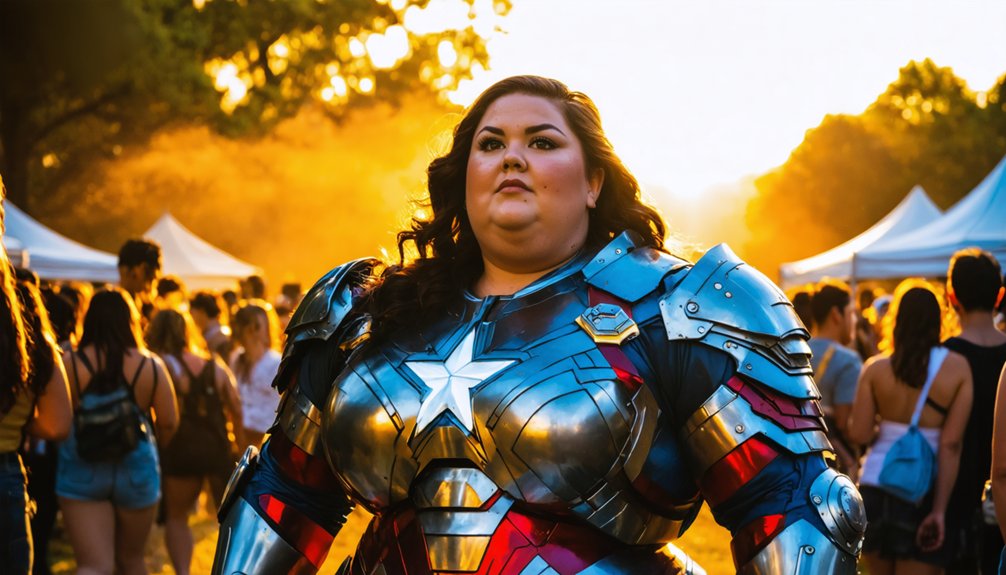
When you step into a character’s costume, you’re not just wearing fabric—you’re accessing a psychological tool that can reshape how you perceive yourself. Embracing character personas creates alignment between their strength and your evolving identity. Leveraging cosplay narratives means borrowing confidence from characters you admire until it becomes genuinely yours.
Transform character traits into personal growth:
- Practice confident body language through repeated character embodiment until assertive posture becomes habitual
- Internalize admirable qualities by consciously adopting your character’s attitude during everyday situations
- Document your transformation across multiple costumes to visualize your confidence trajectory
- Experiment with diverse presentations including gender-nonconforming characters to explore identity aspects authentically
This behavioral practice creates muscle memory for self-assurance that extends far beyond convention spaces into your daily life.
Frequently Asked Questions
Should I Disable Comments on Cosplay Photos to Avoid Body-Shaming?
You don’t need to disable comments entirely. Instead, consider enabling comment moderation to filter harmful content while keeping supportive interactions. Explore alternative ways to build self-confidence through community connections, and let passionate supporters fuel your creative innovation.
How Do I Tell if Body Dissatisfaction Requires Professional Help?
Studies show 60% of people wait years before addressing body image issues. You should seek therapy recommendations when appearance concerns disrupt daily activities, relationships, or mental health. Consult mental health professionals if obsessive thoughts persist despite community support.
Can Cosplaying Worsen Existing Eating Disorders or Body Image Problems?
Yes, cosplaying can intensify existing conditions through potential triggers like character physique demands and costume pressures. You’ll face self-acceptance challenges, but your community offers supportive resources. Prioritize mental health by setting boundaries and seeking professional guidance when needed.
What Should I Do if Friends Make Hurtful Body Comments?
You should confront friends constructively by clearly stating boundaries: “I don’t appreciate body comments.” If they persist, reconsider the friendship. Meanwhile, develop self-confidence in your body through supportive cosplay communities that celebrate all forms authentically.
Is It Healthy to Cosplay Characters With Unrealistic Body Types?
Yes, it’s healthy when you focus on creative expression over physical mimicry. Embrace body type representation that celebrates your uniqueness. Remember, character design impact shouldn’t dictate your worth—you’re redefining cosplay standards through innovative, authentic self-presentation.