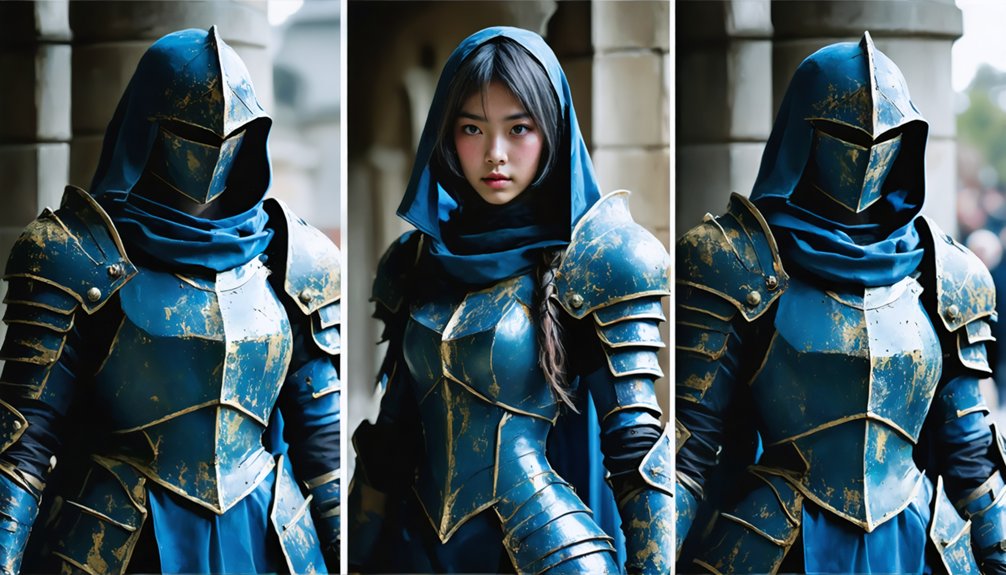
To study a character for accurate cosplay portrayal, you’ll need to analyze their behavioral patterns, emotional responses, and pivotal story moments. Observe how they move during conflict versus calm situations, and document their relationships with other characters. Collect high-resolution reference images, break down costume details by color, texture, and silhouette, and practice their signature gestures and vocal cadence. Master these foundational steps, and the deeper techniques ahead will sharpen your portrayal even further.
Key Takeaways
- Analyze behavioral patterns, emotional responses, and pivotal story moments to authentically understand the character’s core identity and personality.
- Collect high-resolution screenshots, promotional artwork, and concept art to build a structured visual reference mood board.
- Break down costume details by color palette, textures, stitching patterns, accessories, and silhouettes for accurate construction guidance.
- Study character movement, posture, vocal tone, and gestures, then rehearse and record yourself to evaluate consistency.
- Prioritize recognizable signature elements when deviating from screen accuracy, ensuring deviations still reflect the character’s core identity.
Start Your Cosplay With the Source Material
Source immersion goes beyond casual consumption. Analyze behavioral patterns, emotional responses, and pivotal story moments that define your character’s identity.
Note how they carry themselves during conflict versus calm, and study their relationships with other characters.
Document everything systematically. Screenshot key scenes, bookmark significant story beats, and annotate recurring behavioral traits.
This research phase isn’t optional—it’s the analytical backbone that separates a surface-level costume from a genuinely compelling, accurate portrayal that resonates with fellow enthusiasts and casual observers alike.
Build Your Cosplay Reference Collection Before Creating the Costume
Pull screenshots from cutscenes, pause official trailers at precise moments, and download high-resolution promotional artwork.
Don’t overlook concept art books, which reveal design intentions that final renders sometimes obscure.
Organize your Visual Inspiration into a structured mood board, categorizing materials by costume component — silhouette, color palette, textures, and accessories.
Cross-reference multiple sources because lighting and artistic style can distort perceived colors between mediums.
Label each reference image with specific construction notes.
This systematic approach eliminates guesswork during fabrication, keeping your creative decisions grounded in documented evidence rather than unreliable memory.
Break Down the Costume’s Visual Details
With your reference collection organized, you’re ready to dissect the costume’s visual components systematically. Start by identifying the character colors — both primary and secondary — that define the overall aesthetic. Note how these hues interact across different costume layers, from base garments to outer accessories.
Next, examine textures and materials closely. Determine whether fabrics appear matte, glossy, structured, or flowing, then document these observations precisely. Study stitching patterns, embroidery details, and decorative elements that distinguish the design.
Catalog every accessory methodically — weapons, artifacts, signature hairstyles, and jewelry contribute considerably to authenticity.
Finally, decompose the costume into distinct shapes and silhouettes, understanding how each layer connects structurally. This analytical breakdown transforms overwhelming visual complexity into actionable construction steps, giving you a precise roadmap before you source materials or begin building.
Capture Your Character’s Personality Through Movement and Voice
Costume accuracy only gets you halfway there — embodying your character’s personality through movement techniques and voice is what separates a great cosplay from an unforgettable one.
Study how your character walks, gestures, and reacts under pressure. Analyze their vocal rhythm, tone, and emotional range to master voice modulation that feels authentic rather than performed.
- Mirror your character’s posture and signature stances from source material
- Practice scene-specific dialogue to internalize speech cadence and emotional delivery
- Record yourself to objectively evaluate movement fluency and vocal consistency
- Rehearse reactions, not just poses, to capture genuine behavioral responses
This analytical approach transforms surface-level imitation into genuine character embodiment.
When your movement and voice align with your visual portrayal, your cosplay transcends costume and becomes performance.
When to Deviate From Screen Accuracy Without Losing the Character

Screen accuracy matters, but it’s not always the highest priority — sometimes deviating from the exact design actually strengthens your portrayal. When a character’s costume is impractical, outdated, or inconsistent across media, lean into artistic interpretation rather than rigid replication.
Consider character evolution — many beloved characters have multiple design iterations, and choosing one that resonates with your vision is completely valid. Ask yourself whether a deviation serves the character’s core identity or undermines it. Changing a color palette entirely breaks recognition; upgrading fabric quality or streamlining silhouette details doesn’t.
Your body type, skill set, and available materials also inform smart compromises. Prioritize the elements audiences immediately recognize — signature accessories, color blocking, iconic silhouettes — and let those anchor your portrayal even when other details flex.
Frequently Asked Questions
How Do I Handle Copyrighted Characters in Professional Cosplay Competitions?
When WonderCon competitors faced Disney’s character rights scrutiny, they thrived by crediting IP owners publicly. You’ll navigate competition ethics successfully by acknowledging copyrights, avoiding commercial profit from costumes, and transforming iconic designs through your innovative, original artistic interpretation.
What Budget Should Beginners Allocate for Their First Character Cosplay?
For your first cosplay, allocate $100–$300. Prioritize a smart budget breakdown: spend 60% on essential materials like fabric and foam, 30% on accessories, and 10% on finishing tools to maximize quality effectively.
How Do I Physically Transform My Body Type to Match a Character?
you don’t need a perfect match. Instead, use strategic body shaping through targeted fitness routines, padded undergarments, and tailored costumes that cleverly highlight your character’s silhouette authentically.
Which Online Communities Best Support Beginners Learning Cosplay Character Portrayal?
You’ll find Reddit’s r/cosplay and r/cosplayadvice offer excellent online resources and community feedback. Discord servers like Cosplay Workshop actively support beginners, while TikTok’s cosplay community delivers innovative, detail-oriented tutorials for authentic character portrayal.
How Do Professional Cosplayers Manage Character Fatigue During Long Conventions?
Like medieval knights donning armor, you’ll manage character fatigue by scheduling mental breaks between interactions, prioritizing character comfort through ergonomic costume adjustments, and strategically stepping out of persona briefly to recharge your focus and sustain authentic portrayal.
References
- https://dragonalley.shop/blog/cosplay-how-to-choose-and-interpret-a-character
- https://eyecandys.com/blogs/news/building-a-character-for-cosplay
- https://texappealmag.com/crafting-a-character-the-art-passion-of-cosplay-costume-making/
- https://ashweezcosplay.com/2017/03/14/cosplay-and-body-accuracy-a-personal-experience/
- https://www.youtube.com/watch?v=gSDKfob66hg&vl=en