Working with a cosplay photographer as a model means showing up prepared, communicative, and creatively invested. You’ll want to research photographers whose style matches your vision, craft a specific pitch when reaching out, and bring solid character references to the shoot. Discuss retouching preferences, image delivery timelines, and pose boundaries before the camera clicks. Whether you’re shooting at a convention or in a studio, clear collaboration always produces the strongest results — and there’s so much more to uncover.
Key Takeaways
- Review the photographer’s portfolio to ensure their lighting, editing, and storytelling style aligns with your creative vision before reaching out.
- Craft a specific, enthusiastic pitch describing your character, costume concept, and mood rather than sending a generic collaboration request.
- Discuss retouching preferences, image delivery timelines, and the number of finished images upfront to align expectations early.
- Communicate comfortable poses, physical limitations, and costume restrictions with the photographer before and during the shoot.
- Provide genuine post-shoot feedback and plan future collaborations to build a lasting, trust-based creative partnership.
How to Find the Right Cosplay Photographer for Your Style
Finding the right cosplay photographer starts with knowing what you’re actually looking for — and that means digging into portfolios before you ever send a single message.
Portfolio review reveals everything: lighting choices, editing aesthetics, and whether their visual storytelling matches your character’s energy. Finding style alignment between your vision and theirs makes every shoot stronger.
Pay attention to photographer personality through captions, behind-the-scenes content, and how they respond publicly to collaborators. Their collaboration approach should feel like a creative partnership, not a transaction.
Consider location preferences early — some photographers thrive outdoors, others in studios. Budget considerations shape what’s realistic, so be upfront.
Finally, communication style matters enormously; a photographer who responds clearly and promptly before the shoot will likely direct you just as confidently during it.
What to Say When You First Reach Out to a Cosplay Photographer
Once you’ve found a photographer whose work excites you, your first message is your strongest opportunity to make a real impression.
Skip the generic “hey, want to shoot?” approach and instead craft a specific pitch that names your character, describes your costume, and outlines the visual concept you’re envisioning.
A focused, enthusiastic message signals that you’re a serious collaborator, not just someone fishing for free photos, and that distinction matters enormously in a community where photographers receive constant requests.
Crafting Your Initial Message
When you finally spot a cosplay photographer whose work genuinely excites you, your first message can either open a creative door or get lost in a crowded inbox.
Strong initial outreach skips generic compliments and dives straight into specifics. Mention the character you’re cosplaying, your costume’s key details, and a concept or mood you’re envisioning. Reference their actual work — a specific shoot or style that resonates with your idea. This signals you’ve done your homework and aren’t mass-messaging every photographer you find.
These communication tips sharpen your pitch instantly: keep it concise, lead with your concept, and include a photo of your costume if it’s ready.
A focused, enthusiastic message respects their time and dramatically increases your chances of a real response.
Sharing Your Concept Clearly
A sharp first message gets your foot in the door, but what you say inside that message is what actually earns a photographer’s interest. Skip vague requests and lead with your vision. Name the character, describe the costume, and outline the mood or setting you’re imagining.
Bring your concept brainstorming into the message itself — reference specific scenes, color palettes, or emotional beats that define your character. Strong visual storytelling starts before the camera ever clicks, and photographers respond to cosplayers who’ve already thought through the narrative.
Mention any reference images you’ve gathered, locations you’re considering, or unique costume features worth highlighting. The more clearly you communicate your creative direction, the easier it becomes for a photographer to say yes enthusiastically.
How to Prepare Your Cosplay Costume and Character References
Before stepping in front of a camera, do your homework on the character you’re bringing to life — and bring that research with you. Character development goes beyond wearing the costume; it’s about embodying posture, expression, and emotional energy that define the role.
Compile a reference folder with screenshots, official artwork, and fan interpretations that capture the aesthetic you’re targeting. Share these images with your photographer before the shoot so you’re both visually aligned.
Equally important is costume care — arrive with everything pressed, repaired, and complete. Loose pieces, missing accessories, or wrinkled fabric create extra editing work and distract from the storytelling.
Pack a small repair kit with safety pins, spirit gum, and touch-up supplies. Preparation transforms a good shoot into a stunning one.
How Cosplay Photography Retouching and Image Delivery Actually Work
Once the shoot wraps, the real magic begins — and understanding how retouching and image delivery work will save you from frustration and mismatched expectations.
Every photographer applies different retouching techniques, so discuss your preferences upfront. Some focus on skin smoothing and lighting corrections; others refine costume details, sharpen textures, or enhance environmental backgrounds. Know what you want before editing begins.
Image delivery timelines vary widely — from days to weeks — depending on the photographer’s workload and edit depth. Ask specifically how many finished images you’ll receive, through which platform, and whether raw files are included.
Communicate clearly about body and costume adjustments you’re comfortable with. Your input shapes the final product.
When both parties align on expectations early, the delivered images genuinely reflect the character you worked so hard to bring to life.
How to Discuss Poses, Boundaries, and Expectations Upfront
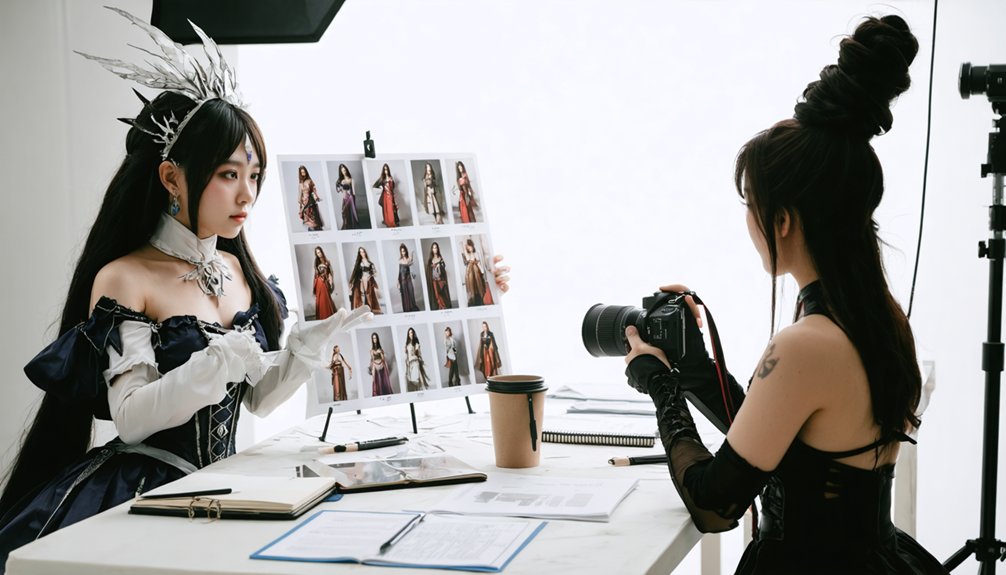
Before your shoot begins, talk openly with your photographer about which poses you’re comfortable attempting, which feel too physically demanding, and which suit your character best.
Bring up personal limits early—whether that involves touch, proximity, or costume adjustments—so both of you can work confidently without awkward mid-shoot conversations.
Lock in retouching expectations upfront too, covering specifics like skin editing, costume corrections, and body presentation so the final images actually reflect what you both envisioned.
Setting Clear Pose Expectations
Setting clear pose expectations before the shoot begins can save both you and your photographer from frustrating miscommunication mid-session.
Gather pose inspiration early—screenshot reference images that capture the emotional expression, dynamic angles, and character embodiment you’re envisioning. Share these visuals directly with your photographer so you’re both aligned on visual storytelling goals before the camera clicks.
Discuss costume details that might restrict movement, since shoot flexibility depends on knowing your physical limits upfront.
Mention which poses prioritize comfort versus which ones you’ll push through briefly for impact. Talk through setting variety so dynamic locations support the character’s world authentically.
When you arrive with clear direction and collaborative energy already established, the session flows faster, the images hit harder, and both you and your photographer create something genuinely extraordinary together.
Communicating Personal Boundaries Early
Boundaries aren’t awkward conversation starters—they’re the foundation that makes great cosplay photography possible. Before your shoot begins, speak up about your personal comfort zones with complete confidence.
Tell your photographer which poses feel natural, which feel forced, and which you’d rather skip entirely. Clear communication here isn’t limiting creativity—it’s actually enhancing it, because your photographer can craft better concepts around what genuinely works for you.
Discuss physical touch policies upfront. If costume adjustments require hands-on help, specify who may do that and how.
Address retouching preferences, outfit boundaries, and any locations that make you uneasy. Revisit these expectations mid-shoot if something shifts unexpectedly.
Photographers who respect clear communication will welcome this conversation—and those who don’t are showing you exactly who they’re before a single frame gets captured.
Aligning On Retouching Preferences
Retouching conversations can make or break a cosplay collaboration, so nail this discussion before shooting begins. Different photographers use wildly different retouching styles, from hyper-polished fantasy edits to raw, film-inspired authenticity. You deserve results that honor your vision.
Use these communication methods to align perfectly:
- Share visual references — Send edited images you love, so your photographer understands your aesthetic expectations without guesswork.
- Specify costume details — Request that intricate embroidery, weathering effects, or handcrafted elements remain untouched; these details tell your character’s story.
- Establish skin and body boundaries — Clearly state whether you want minimal retouching or enhanced editing, protecting your confidence and comfort throughout the process.
When both parties understand expectations upfront, the final images genuinely reflect your creative partnership.
Convention Shoots vs. Studio Sessions: Which Is Right for You?
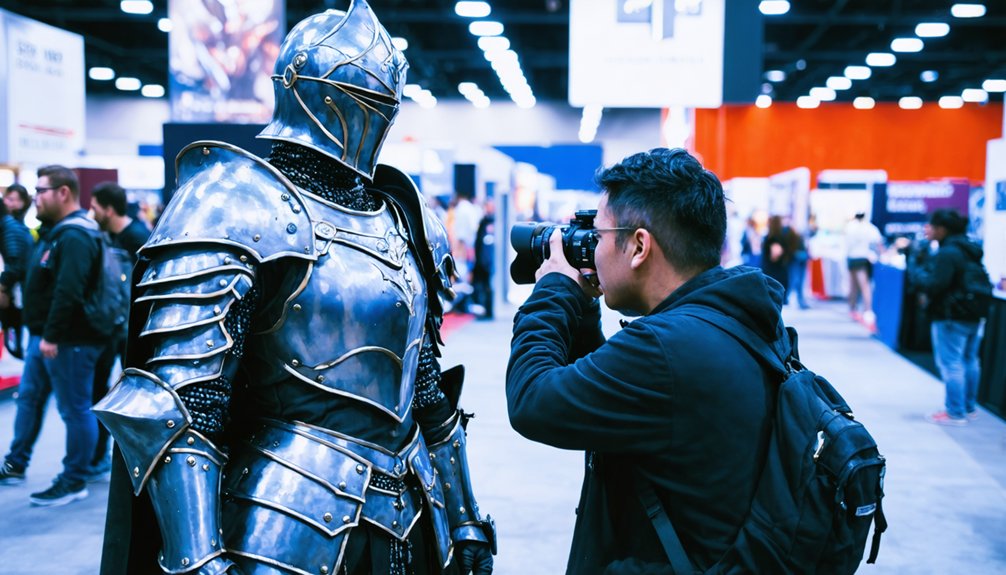
Where you choose to shoot shapes everything — the mood, the lighting, the crowd noise, and how freely you and your photographer can collaborate.
Convention dynamics bring electric energy, spontaneous crowd interaction, and authentic backdrops that no studio can replicate. However, time management becomes critical when maneuvering busy floors with limited shooting windows.
Studio advantages flip that equation entirely. You gain complete lighting considerations control, creative flexibility, and zero interruptions.
Equipment preferences expand dramatically — larger light modifiers, backdrops, and props become accessible. Location selection in a studio means designing every visual element intentionally rather than reacting to your surroundings.
Neither option dominates universally. Fast, character-driven moments thrive at conventions.
Complex, technically ambitious concepts flourish in studios. Identify your creative goals first, then let those priorities drive your environment choice confidently.
How to Pose and Communicate During Your Cosplay Shoot
Posing for a cosplay shoot feels far more natural once you treat it as active storytelling rather than simply standing in front of a lens.
Strong character portrayal starts with studying your character’s energy, then channeling that into deliberate posing techniques that reinforce the narrative.
- Speak up immediately — Share comfort levels before creative direction shifts somewhere that doesn’t serve your vision.
- Request real-time feedback exchange — Viewing shots together mid-session transforms collaborative dynamics and accelerates session flow.
- Embrace micro-adjustments — Tiny shifts in posture reveal powerful visual storytelling moments you’d otherwise miss.
Communication tips like asking clarifying questions during shoots build genuine confidence between you and your photographer.
Trust that dynamic completely, and you’ll produce innovative, emotionally resonant images every time.
How to Turn One Cosplay Shoot Into an Ongoing Partnership
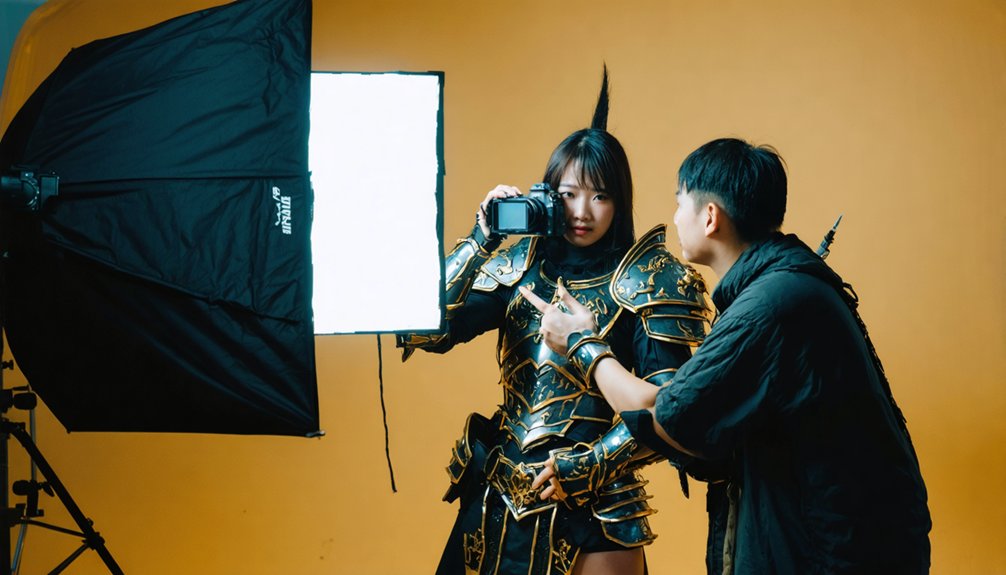
A single shoot that goes well can become the foundation for something far more rewarding than one great set of photos. Building rapport starts immediately after the session ends.
Share feedback genuinely, highlight what worked, and acknowledge what you’d refine. Maintaining communication keeps the creative momentum alive, so follow up with a thoughtful message once you’ve reviewed the gallery together.
From there, start creating concepts that push both your boundaries. Planning future shoots around new characters or themes gives each session fresh purpose.
Scheduling sessions consistently, rather than sporadically, signals that you’re a reliable collaborator worth investing in. Establishing trust grows through honesty, punctuality, and respecting each other’s creative input.
Exploring styles together, from dramatic fantasy to minimalist editorial, deepens the partnership and builds a portfolio that genuinely excites you both.
Frequently Asked Questions
Can I Bring a Friend or Chaperone to My Cosplay Shoot?
Yes, you can absolutely bring a friend! Always discuss friend permissions with your photographer beforehand to maintain shoot etiquette. Having a trusted chaperone boosts your confidence and guarantees you’re comfortable throughout every creative, innovative moment!
Who Owns the Copyright to Cosplay Photos After the Shoot?
Typically, the photographer holds copyright ownership, but you can negotiate rights through clear photographer agreements! Discuss usage terms before shooting—you’ll want written permission to post your stunning cosplay images across your creative platforms!
What Should I Do if I Feel Unsafe During a Shoot?
Over 60% of models report discomfort during shoots! Trust your safety signals—you’re empowered to stop immediately. Communicate your emotional boundaries clearly, leave without guilt, and prioritize your wellbeing above any creative outcome.
Is It Appropriate to Offer Payment to a Cosplay Photographer?
Yes, offering payment’s absolutely appropriate! Discussing payment expectations upfront shows respect and professionalism. Practice stellar photographer etiquette by openly communicating your budget—you’ll spark innovative collaborations and build lasting creative partnerships that benefit everyone involved!
How Do I Handle Negative Comments About My Cosplay Photos Online?
Congrats, you’ve accessed the internet’s “expert critics”! Don’t let cosplay critiques dim your spark. You actively seek online support communities, embrace constructive feedback, block negativity, and keep creating with unstoppable passion!
References
- https://www.reddit.com/r/photography/comments/1cgebfp/interested_in_cosplay_photography/
- https://colinmagazine.com/blogs/news/so-you-want-to-be-a-cosplay-photographer
- https://foodandcosplay.org/2018/07/12/cosplay-model-tip-for-photographers/
- https://www.youtube.com/watch?v=rzc4gTclDeU
- https://shotkit.com/cosplay-photography/
- https://www.rulison.com/2015/04/13/cosplay-photography-dos-and-donts/
- https://www.facebook.com/groups/MNCosplayers/posts/7036984783073169/
- https://www.youtube.com/watch?v=jugxaoR17aA
- https://www.instagram.com/p/DRsG_8ZEjgd/
- https://www.instagram.com/p/DW4xBtKjA0l/