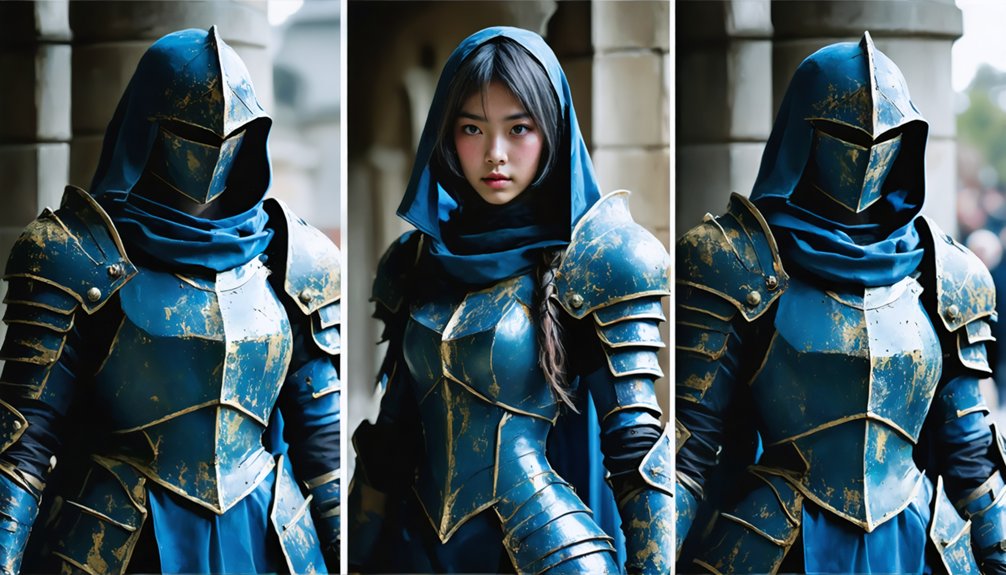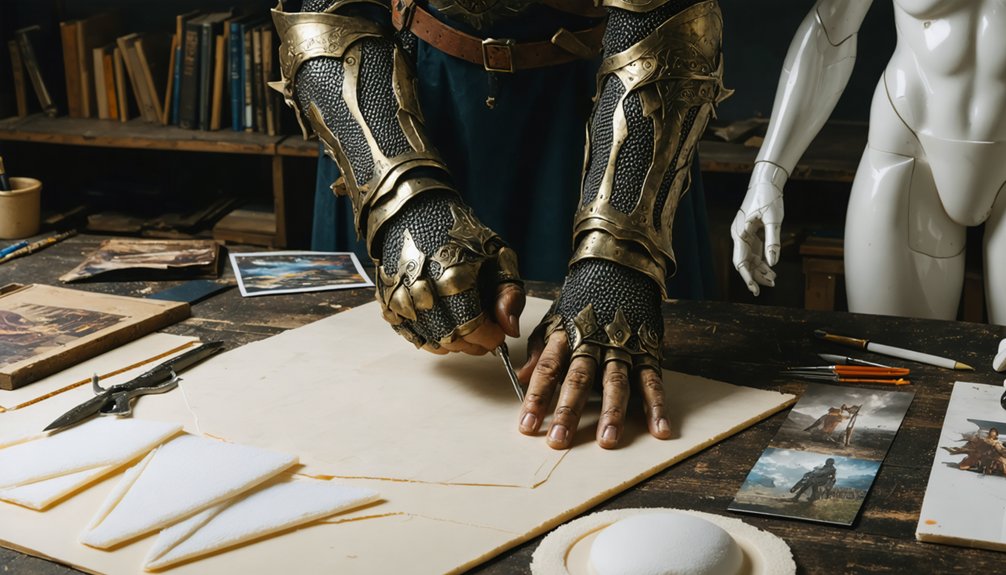
Mastering character accuracy in cosplay requires you to identify which reference sources—screen captures, concept art, or set photos—best suit your build’s goals. You’ll need to balance faithful replication with technical innovation, selecting materials that achieve screen-accurate results while remaining cost-effective. Whether you’re competing or creating for personal expression, understanding judging criteria helps you showcase craftsmanship without sacrificing creativity. Physical accuracy debates often miss the point: your technical skill and passion matter more than perfect body matching. The following sections break down proven techniques that transform research into wearable art.
Key Takeaways
- Master multiple accuracy types: screen, set, origins, and visual accuracy to match your character reference and project goals.
- Use digital modeling and prototype testing to ensure precise patterns and construction before committing to final materials.
- Balance faithful replication with strategic material substitutions that maintain screen accuracy while managing budget and wearability.
- Document your construction process thoroughly to showcase technical skill and craftsmanship in competition prejudging evaluations.
- Prioritize recognizability and craftsmanship over perfect physical matching to honor characters while maintaining creative authenticity.
Defining What Accuracy Means in Cosplay Culture
When cosplayers discuss accuracy, they’re actually traversing multiple definitions that serve different purposes within the community. Screen accuracy demands matching visible on-screen details down to the smallest elements, though post-production color grading complicates this standard.
Set accuracy prioritizes what appeared during filming, including elements later cut from final edits. Origins accuracy references concept art, while visual accuracy relies on collectibles when screen references prove insufficient.
Measuring costume authenticity varies by context—competitions enforce stricter screen-matching for canon characters, whereas casual events prioritize recognizability and enjoyment. Your physical traits shouldn’t factor into fair accuracy judgments. Instead, interpreting audience reception helps gauge success: does your work communicate the character effectively?
Personal satisfaction ultimately determines your accuracy goals outside formal evaluation, balancing technical precision with creative innovation.
Why Faithful Replication Enhances Fan Recognition and Respect
Faithful replication functions as the cosplay community’s primary recognition trigger, creating instantaneous character identification that bypasses explanation. When you nail Gojo Satoru’s blindfold and white hair, fans recognize the character immediately—generating crowd excitement like the Bayonetta cosplay at World Cosplay Summit Malaysia. This character accessibility transforms you from performer into living reference point.
Precision demonstrates respect for original creators while building emotive connectivity with fellow fans. Your dedication to details—from Deku’s gloves to accurate proportions—signals deep source material appreciation. This authenticity honors character designers who crafted the original vision.
Competition circuits reward high-fidelity work, elevating your status across conventions and digital platforms. Accurate aesthetics enable superior roleplay, combining technical innovation like 3D printing with faithful character honoring. Communities amplify exceptional accuracy through shared rituals and information exchange.
How do you balance competition requirements with your creative vision without sacrificing either? Understanding that judges assess accuracy, craftsmanship, and ambition means you’ll strategically integrate personal storytelling within established parameters. Meet the 75% handmade threshold while channeling innovation through construction techniques—laser-cut details, hybrid materials, or advanced weathering methods that showcase technical skill.
Your interpretation matters. Judges evaluate against source images but reward complexity and attention to detail. Transform mandatory safety requirements into opportunities: incorporate undergarments seamlessly, design foot coverings that enhance character authenticity, and engineer props under 10kg that maximize visual impact.
Document your process for prejudging discussions. Explain material choices, problem-solving approaches, and creative adaptations. Later, cosplay photography captures these nuanced details, proving competition standards amplify rather than constrain artistic expression when approached strategically.
Balancing Creative Innovation With Source Material Fidelity
Character authenticity demands precision, yet your artistic interpretation transforms costumes from mere replicas into personal statements. You’ll achieve this balance through strategic material selection—thermoplastics like Worbla and EVA foam deliver screen-accurate results while remaining cost effective material choices that don’t compromise quality.
Digital modeling techniques revolutionize your pre-production phase, converting 2D references into precise 3D blueprints before you invest in fabrics. AI-assisted pattern generation democratizes complex designs, enabling you to tackle advanced projects previously requiring years of experience.
Your research phase determines which elements demand absolute accuracy versus opportunities for creative reinterpretation. Mock-ups in inexpensive fabrics test design accuracy before final construction. This methodology honors source material while showcasing your technical skills, creating competition-ready costumes that authentically represent characters through your unique creative lens.
Addressing Physical Accuracy Debates and Community Gatekeeping
While technical mastery elevates your costume construction, you’ll inevitably encounter criticism targeting your physical appearance rather than your craftsmanship. This gatekeeping manifests when commenters fixate on height, ethnicity, or body proportions that differ from animated source material—ignoring that anime physics defy reality.
Such scrutiny carries mental health impacts, as studies show BMI discrepancy between cosplayers and characters correlates with body shame. You’re not obligated to match impossible proportions; your body isn’t part of the removable costume. Movements like “Anyone Can Cosplay” actively counter exclusionary standards through self esteem building practices.
Focus on recognizability over perfection—adapting designs realistically (adding structural support where physics demands) while maintaining character essence. Your participation legitimacy stems from craftsmanship and passion, not conforming to hyperidealized body standards.
Frequently Asked Questions
What Budget Range Should Beginners Allocate for Their First Screen-Accurate Costume?
You should allocate $100–$200 for your first screen-accurate costume, prioritizing budget-friendly materials like craft foam and thrifted fabrics while maintaining accurate fit considerations through careful pattern adjustments and community-tested construction techniques that deliver professional results.
How Do Photographers Collaborate With Cosplayers to Enhance Accuracy in Final Images?
You’ll collaborate through strategic lighting selection that matches your character’s aesthetic and precise pose coordination based on source material. Study references together, experiment with angles, and communicate openly to achieve screen-accurate results that honor the character’s essence.
Which Online Communities Offer Constructive Feedback on Accuracy Without Harsh Criticism?
You’ll find constructive communities on Lemon8, TikTok’s #cosplay hashtags, and convention forums where members share helpful tutorials and prioritize character passion over criticism. These platforms foster skill development through supportive feedback, celebrating your creative journey rather than demanding instant perfection.
Can Wearing Partial Costume Pieces Still Achieve Satisfactory Character Recognition at Events?
You’ll achieve recognition—48% coordinate partial costumes 2-5 times yearly with success. Your costume selection choices matter: combining key wardrobe pieces creates “you’re literally her” moments. Material quality considerations enhance authenticity, letting observers identify characters despite incomplete ensembles at conventions.
What Documentation Methods Help Track Accuracy Improvements Across Multiple Costume Versions?
You’ll want spreadsheet logs comparing planned versus actual timelines, ImageJ measurements for prop scaling, and detailed notes on materials sourcing and fit adjustments. These methods reveal patterns across versions, helping you refine techniques and share proven improvements with fellow cosplayers.