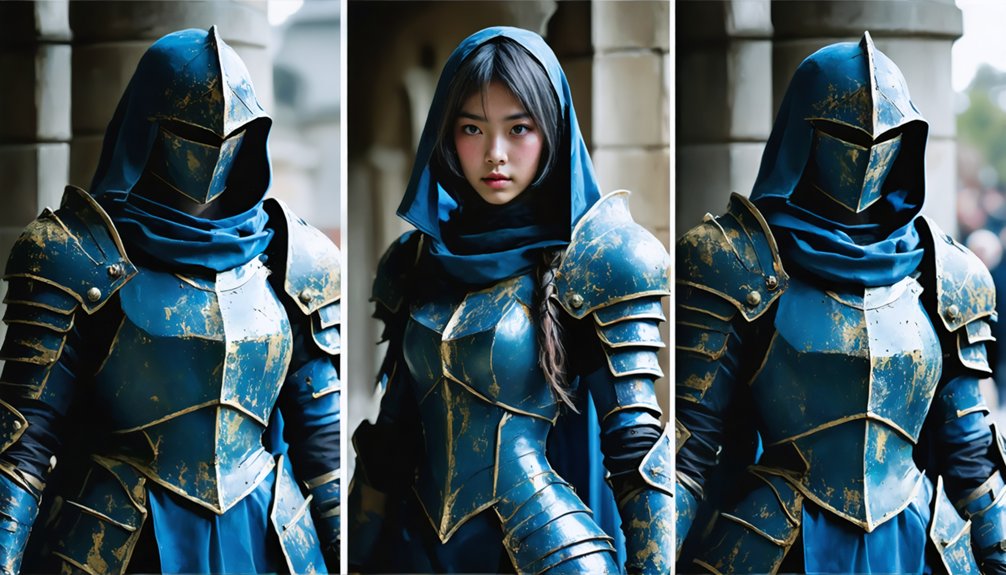
Perfecting character details starts with collecting thorough references—front, back, side, and close-up shots covering costume, hair, makeup, and props. You’ll want to match fabric textures, color undertones, and silhouette proportions precisely against source material. Build your wig volume carefully, apply makeup that mirrors the character’s facial structure, and construct props to accurate scale. Every finishing detail, from clean seams to correct accessory placement, signals craftsmanship. Keep going to master each element completely.
Key Takeaways
- Collect front, back, and side references to accurately capture costume, hair, makeup, and prop details before construction begins.
- Match fabric sheen, texture, and weight to source material, ensuring accurate color representation under both natural and artificial lighting.
- Style wigs by first matching silhouette, color, and length, then refining volume, layers, and hairline for precision accuracy.
- Study character facial features and apply contouring, prosthetics, or face paint to mirror proportions and enhance recognition.
- Practice signature poses, expressions, and movement patterns until instinctive, bridging the gap between wearing and embodying the character.
Start With Reference Gathering to Lock Down Every Detail
Before building a single piece of your cosplay, you’ll need to collect front, back, side, and close-up references that cover the costume, hair, makeup, props, and overall silhouette.
Study official artwork and source media carefully to extract accurate proportions, color palettes, and signature design elements that’ll directly inform your color theory and fabric selection decisions later.
Build a structured detail checklist that separates clothing, armor, wig, makeup, accessories, and performance cues into distinct categories.
Prioritize the strongest visual markers first, since audience recognition depends on those instantly readable character-specific details.
Compare every planned element against your source material systematically, identifying gaps before construction begins.
Catching mismatches at the reference stage costs far less time than correcting them mid-build.
Build a Cosplay Costume That Matches the Character’s Visual Style
Once your references are locked down, fabric selection becomes your first major construction decision. Match sheen, texture, and weight to what the source material communicates. A matte canvas reads differently than a glossy spandex, and that distinction affects on-camera accuracy significantly.
Apply color theory deliberately. Characters rarely wear flat, single-tone costumes, so study how light interacts with their design and select fabrics that replicate that relationship. Warm undertones, cool shadows, and midtone transitions all contribute to a believable final look.
Focus construction effort on high-visibility zones first: chest, shoulders, and outer layers. Keep panel seams clean, topstitching precise, and proportions consistent across every garment section. Your costume should hold its shape under event conditions and photograph with the same clarity your reference images demand.
Cosplay Wig Styling Tips That Nail the Right Silhouette
Wig selection starts with silhouette, and matching hair color, length, and overall shape to your reference images locks in the foundation before styling begins. Color matching demands precision—compare the wig under natural and artificial light to confirm accuracy against official artwork.
Once you’ve confirmed the right shade, use heat-resistant fibers to reshape, curl, or straighten without degrading fiber integrity. Build volume and structure with teasing, firm-hold gel, and targeted pinning.
Lace-front wigs deliver cleaner hairline framing and a more natural facial blend. Trim bangs, layers, and side pieces incrementally until the silhouette mirrors your references exactly.
Consistent wig maintenance—storing on a wig head, gentle detangling, and light product reapplication—preserves styling work through long convention days and repeated wear without compromising the character’s defining hair shape.
Cosplay Makeup and Facial Details That Sell the Character
Makeup translates facial structure into character identity, and you’ll get the strongest results by studying your reference images closely enough to identify eye shape, brow thickness, skin tone, and any defining marks before you open a single product.
Facial contouring reshapes your natural bone structure to mirror the character’s proportions, while eye enhancement through liner, shadow, and lash placement shifts how your face reads at both close range and camera distance.
- Apply prosthetics, face paint, or special effects products for nonhuman anatomy like scars, horns, or altered skin tones
- Use setting spray and powder to lock every layer against convention heat and photography lighting
- Add colored contacts only when they directly support source accuracy and meet safe wear standards
Cosplay Props and Accessories That Define Instant Recognition
Your character’s props and signature accessories carry more recognition weight than almost any other element, so you should prioritize building or sourcing those key identifiers before anything else.
Place each accessory intentionally—a mispositioned emblem, holster, or weapon shifts the silhouette away from the source design and weakens the overall read.
To keep your build portable and convention-safe, construct props from EVA foam, PVC, or 3D-printed components, since these materials let you hit accurate scale without adding unmanageable weight.
Signature Props Drive Recognition
When a crowd scans a convention floor, props and accessories often trigger recognition faster than costume construction alone. At cosplay conventions, a single signature item—a keyblade, a scythe, a specific shield—can communicate your character before anyone reads your costume’s finer details.
Prioritize these strategic decisions:
- Lead with the character’s most iconic prop, since it anchors identity when costume repair or material limitations affect other elements.
- Scale props proportionally to your body, ensuring they photograph accurately and remain manageable across full convention days.
- Limit yourself to one or two major builds when event restrictions or transport constraints apply, then execute those pieces with precision.
You’re investing construction effort where recognition pays off fastest—signature props deliver that return more reliably than any secondary detail ever will.
Accessory Placement Reinforces Identity
Placement transforms accessories from decorative additions into identity anchors. Your accessory arrangement should mirror the source material precisely, because misplaced emblems, belts, or jewelry immediately weaken character recognition.
Position each piece where it appears in reference images, maintaining correct height, angle, and layering order.
Detail emphasis matters most in high-visibility zones: the chest, shoulders, collar, and wrists. Audiences scan these areas first, so a misaligned pauldron insignia or an incorrectly worn sash disrupts the overall read.
Secure every accessory intentionally using snaps, magnets, or stitching so nothing shifts during movement or performance.
Small details compound into a cohesive identity signal when placed correctly. Treat each accessory as a functional component of the character’s visual language, not an afterthought layered onto a finished costume.
Lightweight Materials Maximize Portability
Props that define a character instantly lose their value if you can’t carry them comfortably through a full convention day. EVA foam, PVC, and 3D-printed components deliver strong visual impact without exhausting weight. Pair these materials with intentional seam finishing on fabric elements to maintain structural integrity across hours of wear. Fabric durability becomes equally critical when soft goods interact with rigid prop components.
- Choose EVA foam for large structural builds requiring both detail resolution and minimal weight.
- Apply sealed seam finishing where fabric panels attach to foam or PVC frameworks.
- Test fabric durability under repeated movement before committing to final assembly.
Selecting the right material combination keeps your prop functional, convention-compliant, and visually precise throughout every performance moment.
How Posture, Mannerisms, and Finish Quality Elevate Your Cosplay
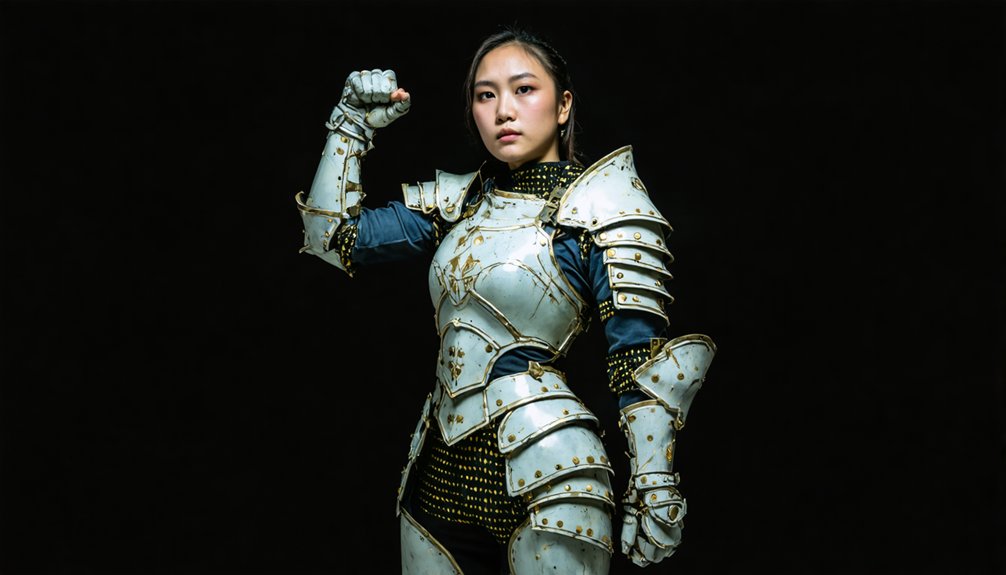
Wearing a complete costume without embodying the character leaves recognition incomplete, because judges and audiences read posture, gesture, and movement as part of the overall performance.
You strengthen the full presentation when you study how the character stands, holds props, and moves, then practice those mannerisms until they feel natural.
Finish quality in your sewing, painting, and assembly reinforces that same effort, since clean seams, smooth surfaces, and solid construction signal craftsmanship that supports the accuracy you’ve built into every other element.
Embodying Character Through Movement
Once the costume, wig, makeup, and props are complete, how you carry the character determines whether the full build lands. Facial expressions and gesture dynamics translate source material into live performance, closing the gap between costume and character.
- Study signature poses, idle stances, and combat postures directly from source media to replicate weight distribution and body tension accurately.
- Practice facial expressions specific to the character’s emotional range so every photo captures intentional, recognizable affect.
- Isolate gesture dynamics like hand placement, head tilt, and shoulder framing to reinforce personality without relying solely on costume detail.
Consistent repetition of these movement patterns builds muscle memory, so you’re not performing consciously during shoots or stage appearances. Movement is the final construction layer, and it’s where a technically complete cosplay becomes a fully realized character.
Craftsmanship Elevates Final Presentation
Finish quality and physical performance aren’t separate concerns—they reinforce each other and determine how complete your cosplay reads to judges, photographers, and convention audiences. Clean seam finishing, matched fabric textures, and precise panel alignment signal technical competence before you strike a single pose.
When your construction holds up under close inspection, your physical performance carries more authority—judges trust the full presentation rather than questioning details. Conversely, strong character posture can draw attention toward your best-constructed zones and away from weaker elements.
Prioritize seam finishing on visible outer layers, since raw or uneven edges undermine otherwise accurate builds. Match fabric textures deliberately to character design, because surface quality affects how your costume reads under photography lighting.
Together, refined construction and intentional performance create a unified, competition-ready presentation.
Frequently Asked Questions
How Do You Budget Effectively for a Detailed Cosplay Build?
You’ll master budget planning by prioritizing costume materials for high-visibility zones first. Allocate funds to chest, shoulders, and props, then source affordable alternatives for less-noticed elements, ensuring maximum visual impact without overspending.
What Storage Methods Keep Finished Cosplay Pieces in Good Condition?
Store your finished pieces using breathable garment bags, acid-free tissue, and climate-controlled spaces. Smart cosplay storage and costume preservation prevent fabric warping, color fading, and foam degradation, keeping every detail competition-ready.
How Do You Handle Cosplay Repairs Quickly During a Convention?
Over 60% of cosplayers experience mid-event wardrobe failures. You’ll survive them by carrying emergency supplies like fabric tape, safety pins, and hot glue. These quick fix tips let you restore costume integrity fast without leaving the convention floor.
Can Beginner Cosplayers Achieve High-Accuracy Results Without Advanced Skills?
Yes, you can achieve high-accuracy results by prioritizing smart fabric selection that matches your character’s visual style and mastering basic makeup techniques that recreate defining facial features, delivering standout cosplay without requiring advanced construction skills.
How Do Group Cosplays Coordinate Details Across Multiple Costumes Successfully?
Like gears in a machine, you’ll achieve group harmony through collaborative planning—assign each member matching color palettes, uniform materials, and shared references early, ensuring costume consistency ties every individual piece into one unmistakable, unified character ensemble.
References
- https://starstruckpanda.com/achieving-character-accuracy-in-cosplay/
- https://www.costumary.com/cosplay-reference-board
- https://en.wikipedia.org/wiki/Cosplay
- https://nerdbot.com/2026/07/05/finishing-the-look-how-cosplayers-nail-a-characters-signature-style/
- https://madmonster.com/masterclass-craftmanship-costume-contest/
- https://starstruckpanda.com/achieving-realistic-character-details-in-cosplay/
- https://fancymasks.com/how-to-research-your-cosplay/
- https://custhom.co.uk/news/cosplay-essentials-must-have-items-for-the-perfect-look/
- https://www.crazecosplay.com/blogs/questions/how-to-make-a-cosplay-at-home
- https://eyecandys.com/blogs/news/the-art-of-accessorizing