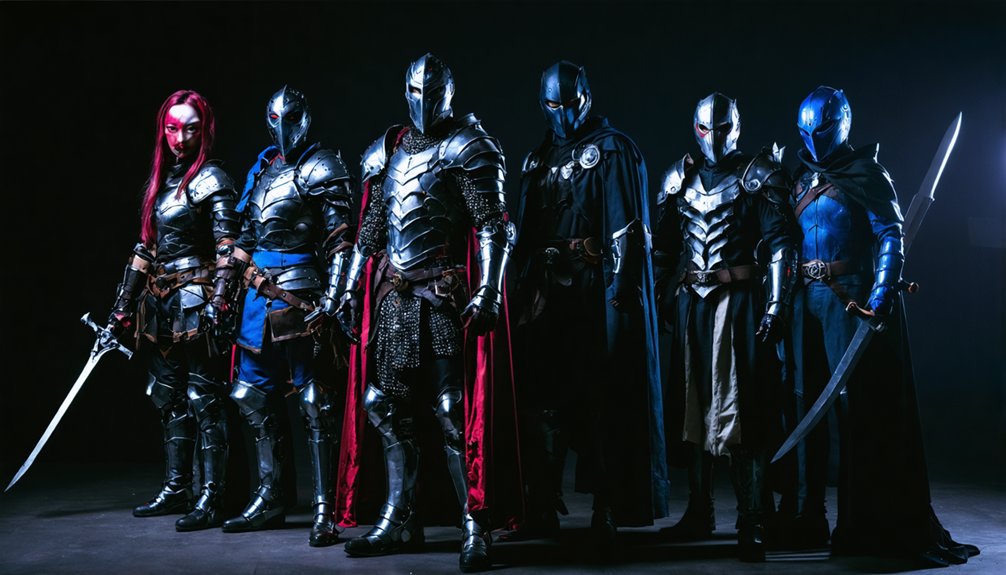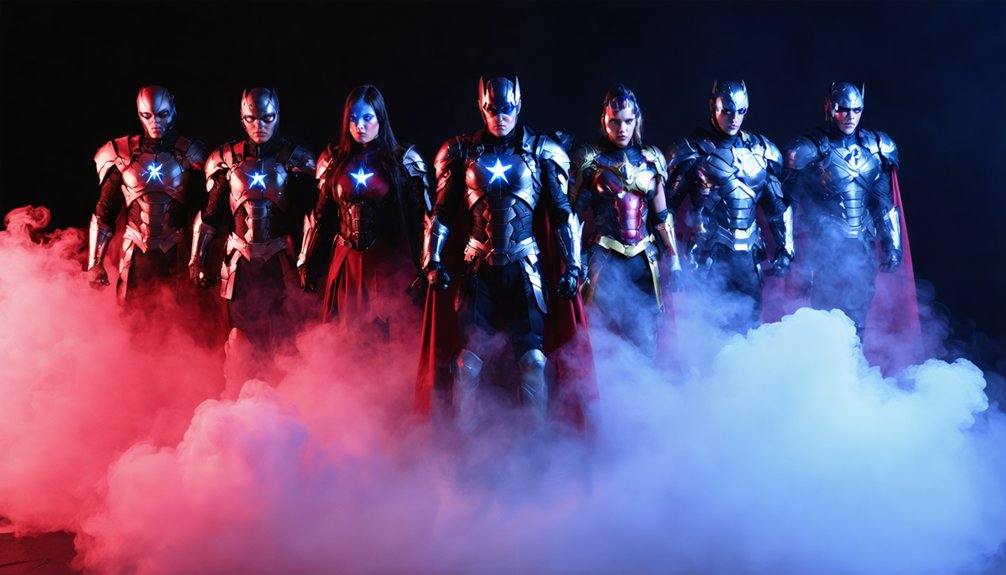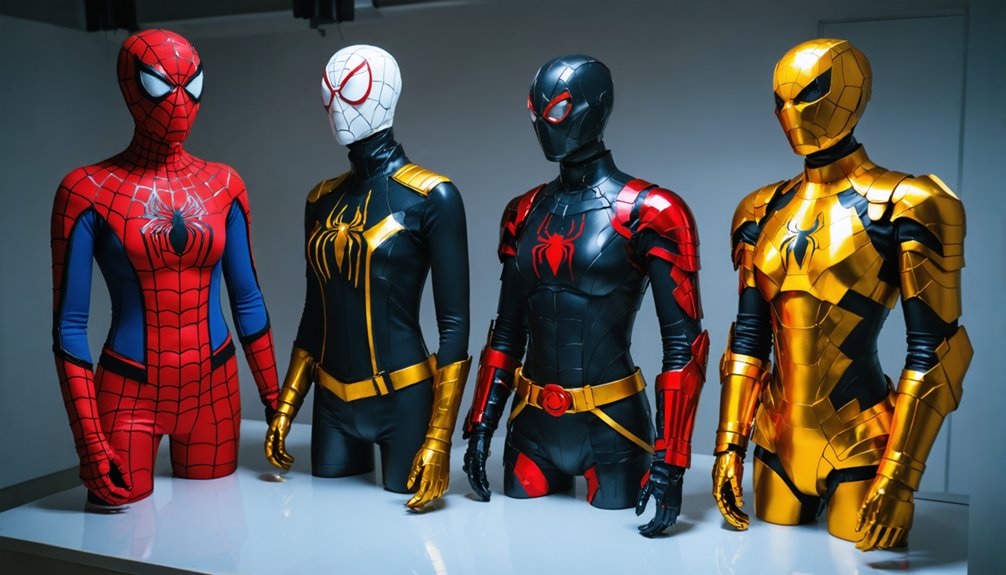
When cosplaying iconic comic book characters, you’ll need to match your skill level to costume complexity. Beginners suit up well in Spider-Man’s stretch spandex, while intermediate builders tackle Wonder Woman’s structured armor or Harley Quinn’s diamond patterning. Advanced costumers craft Batman’s thermoplastic cowl and layered foam armor. You’ll source four-way spandex, EVA foam, and 3D-printed props to nail accuracy. Each character demands specific materials, techniques, and finishing details worth exploring further.
Key Takeaways
- Match your skill level to character complexity—Spider-Man suits beginners, while Batman’s foam armor and cowl construction demand advanced crafting experience.
- Use four-way stretch spandex for body-conforming superhero suits, adding mesh panels for ventilation and durability across multiple convention wears.
- Achieve web detailing on Spider-Man costumes by combining heat-transfer vinyl for texture and screen printing for crack-resistant, flexible designs.
- Batman cosplay requires three core elements: a rigid thermoplastic cowl, weighted cape for dynamic draping, and layered heat-shaped EVA foam armor.
- Source materials from specialty retailers, Etsy, or EZCosplay, and commission 3D-printed props for character-accurate accessories like claws or batarangs.
Which Comic Cosplay Fits Your Skill Level?
Choosing the right cosplay starts with an honest assessment of your current skill set, because a mismatch between ambition and ability often results in an unfinished or poorly executed build.
Spider-Man and Robin offer strong entry points, as their costume design relies on stretch fabrics, basic color blocking, and minimal structural components. Both deliver solid character accuracy without demanding advanced fabrication skills.
Intermediate builders can tackle Wonder Woman or Harley Quinn, where metallic finishes, diamond patterning, and structured bodices require more deliberate construction.
Batman and Wolverine sit at the advanced tier, demanding foam armor work, prop fabrication, and precise silhouette shaping.
Matching your technical capacity to each character’s complexity guarantees you’ll complete a build that holds up under convention conditions and represents the character effectively.
Spider-Man Cosplay: Suit Materials and Web Detailing
When building a Spider-Man suit, you’ll want to use four-way stretch spandex to achieve the tight, body-conforming silhouette the character demands.
For web detailing, you can apply heat-transfer vinyl or screen-printed patterns directly onto the fabric to replicate the raised webbing across the torso and legs with precision.
The suit’s bold red-and-blue color contrast works in your favor, making the finished build instantly recognizable even without additional props or accessories.
Spandex For Suit Fit
Spandex remains the go-to fabric for Spider-Man cosplay suits because it delivers the tight, body-conforming silhouette that defines the character’s look. Four-way stretch spandex allows full range of motion without fabric bunching or pulling at stress points, which is critical during long convention wear.
When you’re selecting your base material, prioritize 80/20 spandex-nylon blends for durability and shape retention.
Web patterning applied over spandex responds best when you use heat-transfer vinyl or sublimation printing, both of which bond cleanly to the fabric’s surface without cracking under movement.
For suit ventilation, consider incorporating mesh spandex panels at the underarms and back, where heat accumulates most. These panels maintain visual consistency while actively managing airflow, keeping your performance level high throughout extended wear.
Web Detailing Techniques
Web detailing transforms a plain spandex suit into a recognizable Spider-Man costume, and your method choice directly affects durability, visual clarity, and wearability. Two primary techniques dominate cosplay builds: heat-transfer vinyl and screen printing.
Heat-transfer vinyl delivers sharp, raised web patterning with strong edge definition, making it ideal if you want tactile costume texture that photographs well under convention lighting.
Screen printing bonds ink directly into the fabric, producing a flatter but more flexible result that moves naturally with your body. If you’re prioritizing long-term wear, screen printing reduces cracking and peeling during extended use.
For advanced builds, combining both methods—printed base texture with vinyl overlay on high-visibility panels—gives you layered depth that elevates the suit’s overall accuracy and visual impact.
Color Contrast And Recognition
Beyond the detailing work, color contrast carries equal weight in making your Spider-Man costume instantly readable from across a convention floor. Color psychology confirms that red and blue sit far apart on the visible spectrum, creating immediate visual tension that draws the eye. This separation isn’t accidental — it’s core to costume symbolism, reinforcing Spider-Man’s dual identity through distinct zones of tone and hue.
When sourcing your fabrics, prioritize saturated, high-chroma reds and true navy blues rather than faded or off-tone alternatives. Desaturated colors collapse under convention lighting, flattening the contrast that makes the silhouette readable at distance.
Matching dye lots between separate fabric panels also prevents tonal inconsistencies that undermine the costume’s visual cohesion. Precision in color selection directly impacts character recognition.
Batman Cosplay: Cowl, Cape, and Foam Armor Builds
Batman’s cowl, cape, and foam armor are the three construction pillars that define any successful build of the character. You’ll want to approach each element with technical precision to achieve a silhouette that reads instantly across cosplay photography tips and convention floors alike.
The cowl, cape, and foam armor are the three pillars of any Batman build worth wearing.
Focus your build on these three priorities:
- Cowl – Use rigid thermoplastics or reinforced foam for structural ear placement and clean jaw definition.
- Cape – Select weighted fabric that drapes with authority, especially during martial arts training-inspired dynamic poses.
- Foam Armor – Layer EVA foam with heat-shaped muscle definition, then seal and paint for a tactical finish.
Each component compounds the others. When executed together, they create a Batman silhouette that commands presence in any environment.
Wonder Woman Cosplay: Recreating the Colors and Armor

Wonder Woman’s costume demands precision across three interdependent elements: color, structure, and finish. You’re building around a red, blue, and gold palette rooted in her Amazonian superhero origin stories, so color accuracy isn’t optional — it’s foundational.
Start with an armored bodice using thermoplastic or craft foam shaped to suggest warrior-grade structure, then apply metallic paint or vinyl for the gold finish.
Her tiara and bracers need rigid construction; Worbla works well for both.
Choose between comic or film-inspired silhouettes early, since each version affects pattern decisions dramatically.
For costume maintenance tips, store metallic pieces separately to prevent surface scratching, and reinforce seams on high-movement areas before convention wear.
Precision in fabrication separates an effective Wonder Woman build from a generic imitation.
Harley Quinn Cosplay: Classic Jester vs. Modern Red-and-Black
Harley Quinn’s cosplay versatility stems directly from her two dominant costume identities, and choosing between them shapes every fabrication decision you’ll make. Each Harley Quinn variation demands a distinct technical approach for successful costume adaptation.
Harley Quinn’s two iconic looks drive every costume decision, demanding distinct technical approaches for accurate, successful adaptation.
- Classic jester build: Prioritize structured two-tone fabric panels in red and black, incorporating diamond-pattern detailing through heat-transfer vinyl for accuracy.
- Modern red-and-black suit: Source four-way stretch spandex to support extended convention wear while maintaining a clean, body-conforming silhouette.
- Accessory differentiation: The jester version requires a collar and cap with bells; the modern look shifts focus toward layered streetwear elements and prop weapons.
Analyzing reference material from both eras before committing to materials ensures your build stays visually precise and technically sound.
Wolverine Cosplay: Bold Color Blocking and Claw Props
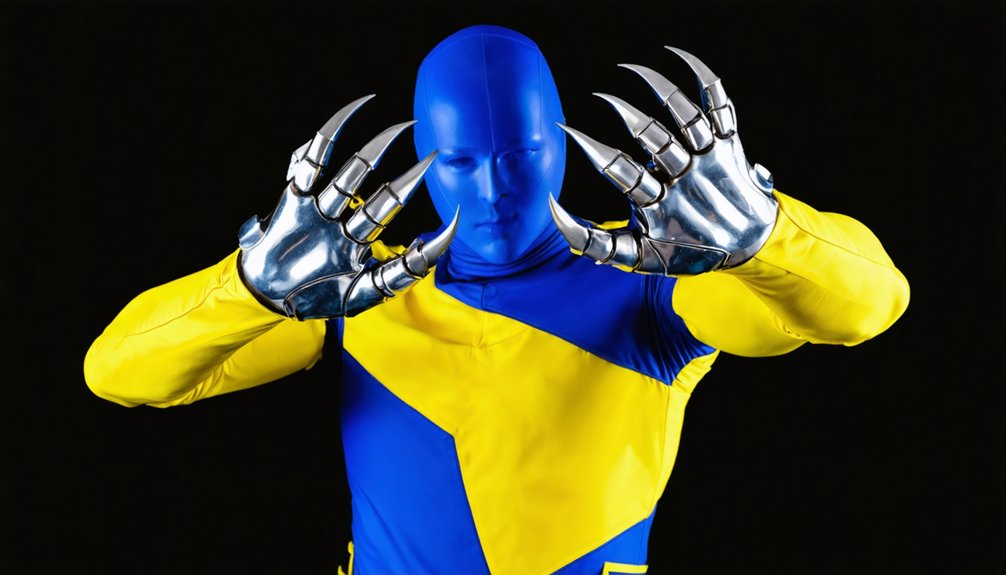
Wolverine’s yellow-and-blue suit relies on bold, clean color blocking to achieve instant character recognition, so you’ll want to source high-quality fitted fabrics that hold their shape under convention wear.
Four-way stretch materials work best for replicating the suit’s structured yet flexible silhouette, while resisting the fading and distortion that comes with extended use.
For claw props, you can use rigid foam, thermoplastics, or resin casting to craft lightweight but visually accurate retractable-style claws that won’t compromise mobility or safety.
Wolverine’s Iconic Color Blocking
Among Marvel’s most visually distinct heroes, Wolverine carries a costume identity built almost entirely on aggressive color blocking and silhouette. His yellow-and-blue suit relies on high-contrast separation to define form without complexity.
When you’re building this look, precise superhero costume layering determines whether the final result reads as authentic or flat.
Focus on these three structural priorities:
- Use bold yellow panels against deep blue to replicate classic comic-accurate color separation
- Apply iconic emblem placement at the chest or belt zone to anchor the character identity visually
- Select fitted, structured fabric that suggests durability while supporting full movement
Each decision reinforces the costume’s stripped-down power. You’re not adding decoration—you’re engineering a silhouette that communicates strength through disciplined contrast and intentional construction.
Crafting Realistic Claw Props
Claw props define the Wolverine costume more than any other single element, and crafting them with structural integrity separates a finished build from an incomplete one. You’ll want to use high-density EVA foam or thermoplastics like Worbla for rigid, lightweight blades that hold shape under convention conditions.
Sand and seal each claw before applying metallic paint for a convincing finish. Secure your mounting system to a fitted glove base, ensuring the claws align naturally between your knuckles.
While you’re refining prop work, revisit your mask customization for cohesion—sharp prop execution reads poorly against a sloppy cowl. Even if your build skips a superhero cape, structural consistency across every element strengthens the overall silhouette.
Precision in fabrication communicates intent and elevates your Wolverine build beyond surface-level recognition.
Fabric Choices For Durability
Fabric selection determines how well your Wolverine build holds up across a full convention day, so prioritizing durability from the start saves you costly rebuilds later.
Costume durability depends heavily on material choice, and fabric flexibility keeps your range of motion unrestricted during long wear.
Prioritize these three fabric options for ideal results:
- Four-way stretch spandex – delivers consistent fabric flexibility while maintaining bold color blocking across yellow and blue panels.
- Moisture-wicking performance knit – resists sweat degradation, extending costume durability through extended convention hours.
- Reinforced tricot or scuba knit – adds structural integrity at high-stress seams around the shoulders and thighs without restricting movement.
Selecting the right base fabric prevents premature wear and keeps your build looking sharp across multiple events.
Robin Cosplay: Hitting Every Key Visual Without Sacrificing Comfort
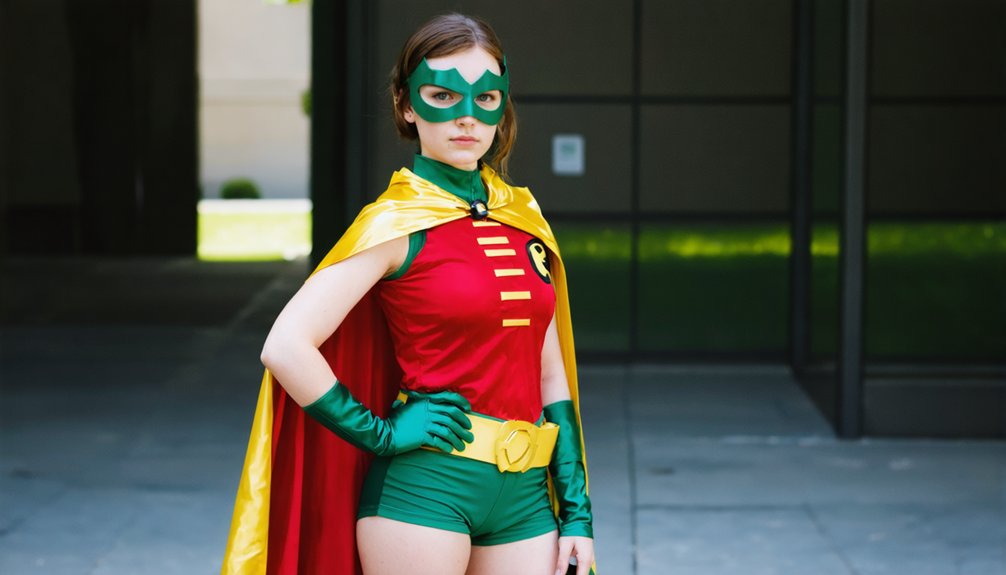
Robin’s costume translates well to cosplay because it balances strong visual identity with practical wearability. You’ll build the foundation on a black bodysuit or fitted tunic, then layer red, green, and yellow accents with precision to hit color accuracy across every continuity detail.
Robin’s costume balances strong visual identity with practical wearability, making it an ideal cosplay choice.
Prioritize four-way stretch fabric to maintain costume comfort through extended convention wear without restricting movement.
The yellow utility belt is non-negotiable — it anchors the character’s visual identity instantly. Add a fitted mask, structured cape, gloves, and boots to complete the silhouette.
Version-specific differences across continuities give you flexibility, so select the iteration that best suits your build.
Incorporate non-functional props — a bo staff, batarangs, or a grapnel gun — to sharpen authenticity without compromising mobility or structural integrity during wear.
How to Source Fabrics, Foam, and Props for Comic Cosplay
Sourcing the right materials separates a polished comic cosplay from one that reads as incomplete or inaccurate. For characters like Batman or Wolverine, you’ll need to match fabric weight, foam density, and prop finish to the character’s visual identity.
- Fabrics: Source four-way stretch spandex from specialty retailers for Spider-Man or Harley Quinn builds. Heat-transfer vinyl adds accurate surface detailing.
- Foam: EVA foam in 6mm and 10mm densities handles armor construction for Batman or Wonder Woman’s armored bodice with structural precision.
- Props and costume accessories: Commission or 3D-print character-specific pieces like batarangs or Wolverine claws for clean, safe replicas.
Pair your build with cosplay makeup that reinforces character accuracy, particularly for masked or stylized looks requiring defined facial contouring.
Where to Buy Ready-Made Comic Cosplay Pieces Online
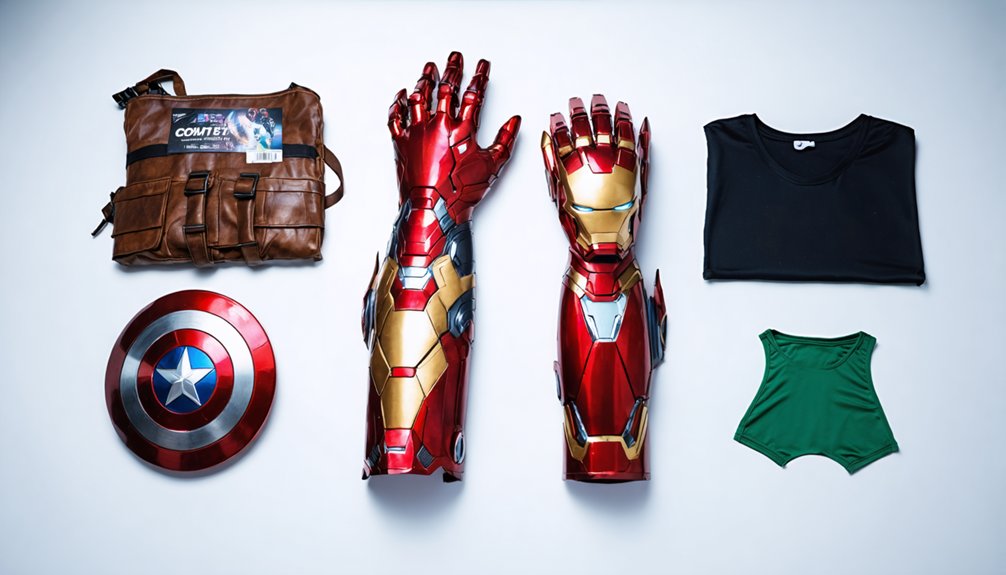
When sourcing ready-made comic cosplay pieces online, you’ll find the strongest selection across platforms like Etsy, Amazon, and dedicated cosplay retailers such as EZCosplay and CosplaySky. Each platform serves a different need.
Etsy connects you with independent makers who offer costume customization options, letting you specify sizing, colorways, and material upgrades.
EZCosplay and CosplaySky stock full character builds with version-specific detailing that supports stronger character authenticity across characters like Spider-Man, Batman, and Wonder Woman.
Amazon works best for individual components such as utility belts, claw props, or bracers when you’re assembling a hybrid build.
Always cross-reference product photos against reference images of your target character, and prioritize sellers who list fabric types, construction methods, and accurate sizing charts to avoid costly fit errors.
Frequently Asked Questions
How Do I Keep My Cosplay Costume Comfortable During Long Convention Days?
Choose fabrics prioritizing fabric breathability and costume flexibility, like four-way stretch spandex. You’ll reduce fatigue by ensuring seams don’t restrict movement, layering moisture-wicking underlayers, and securing props lightly so they won’t strain your body throughout long convention days.
Can Comic Cosplay Costumes Be Adapted for Different Body Types?
You’re unique, not a template—and that’s your strength. Body type adaptation drives the best costume customization: adjust foam armor thickness, alter spandex cuts, and modify silhouettes so your build authentically embodies any comic character you choose.
What Is the Best Way to Store and Transport a Cosplay Costume?
Roll soft pieces, pack armor flat, and use garment bags for costume storage. For transportation tips, you’ll want hard-shell cases protecting foam builds, while vacuum-seal bags compress spandex suits efficiently during travel.
Are There Copyright Concerns When Selling Handmade Comic Cosplay Costumes?
With 758,449 Harley Quinn hashtags proving cosplay’s massive market, you’re steering real risks. Copyright legality and trademark concerns mean selling handmade comic cosplay costumes without licensing can expose you to intellectual property infringement claims from major publishers.
How Do I Weatherproof or Protect My Cosplay From Outdoor Convention Elements?
Apply weatherproofing fabrics spray like Scotchgard for outdoor protection against moisture. You’ll want to seal foam armor with Plasti-Dip, use UV-resistant paint on props, and store your costume in a breathable bag between convention sessions.
References
- https://starstruckpanda.com/best-comic-book-character-cosplay-ideas/
- https://www.cbr.com/comics-best-iconic-costumes/
- https://www.cbr.com/dceu-cosplays-real-thing/
- https://costumewall.com/category/comics/
- https://screenrant.com/2023-best-comic-cosplay-dc-marvel-image-batman/
- https://www.comicsbeat.com/trick-or-beat-avoid-spirit-with-these-comic-closet-cosplays/
- https://www.retrojunk.com/a/Z-E1Vnravw/my-top-50-comic-costumes
- https://www.halloweencostumes.com/blog/p-1051-the-top-10-comic-con-costume-ideas.aspx
- https://www.cbr.com/best-superhero-costumes-ranked/
- https://www.procosplay.com/marvel-costumes-collection-2