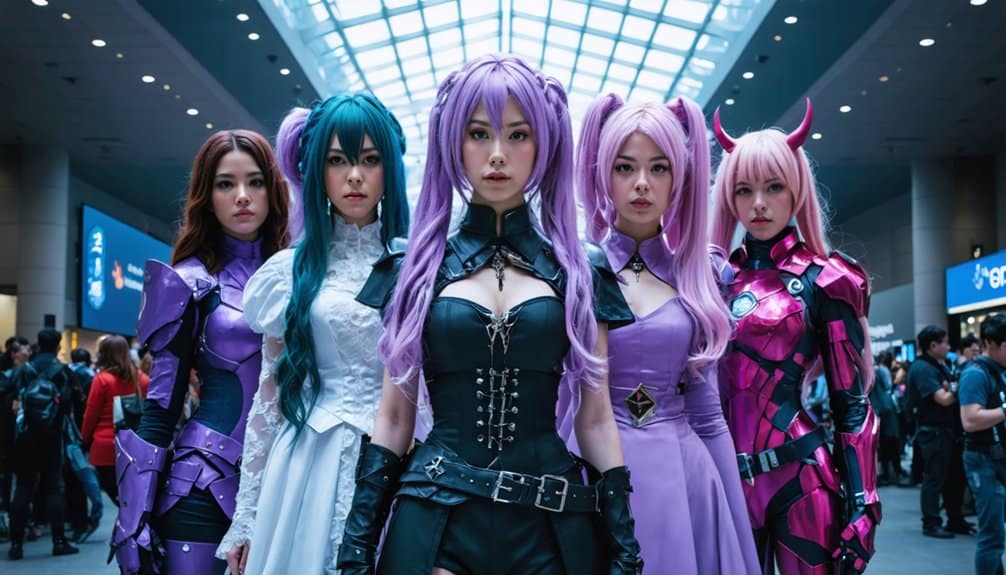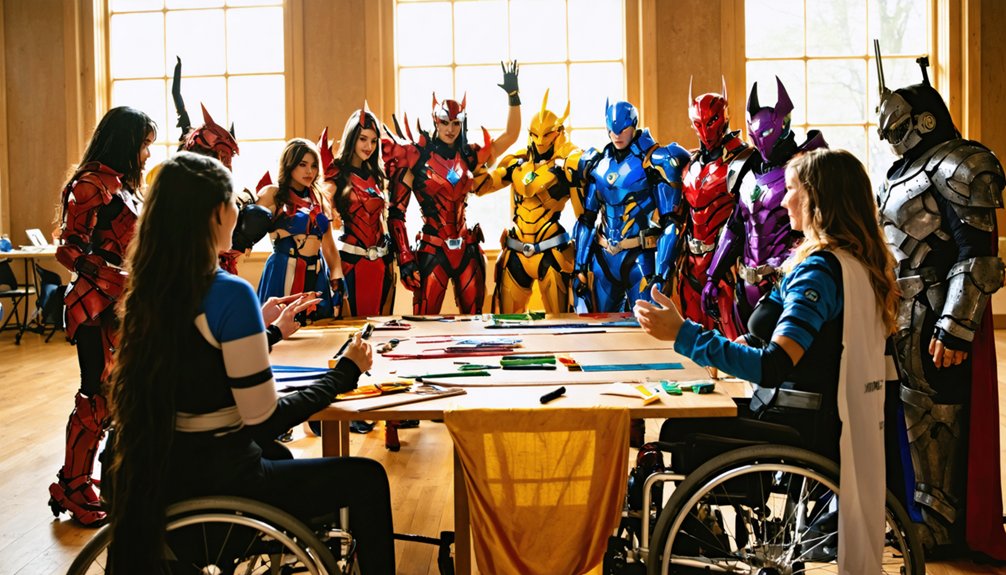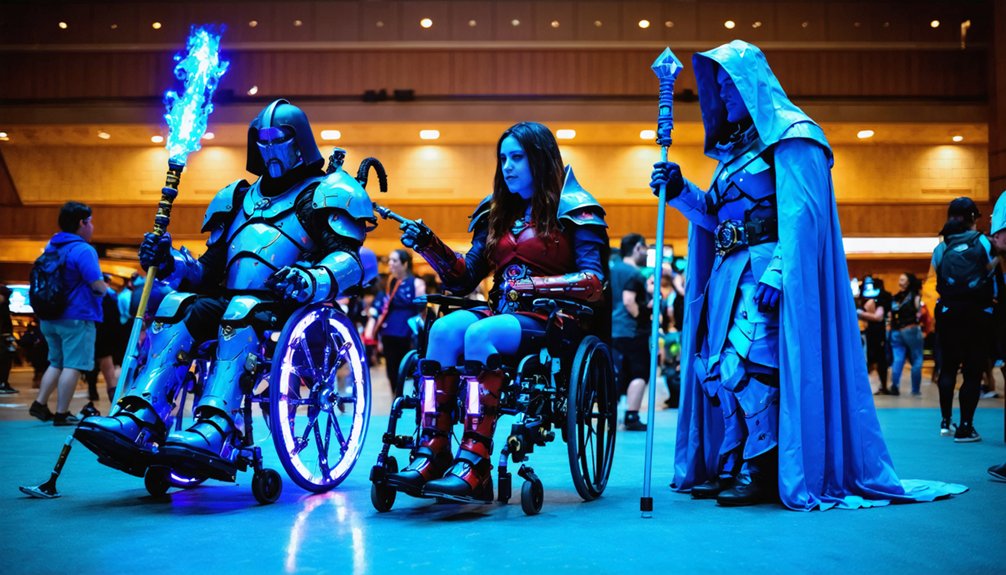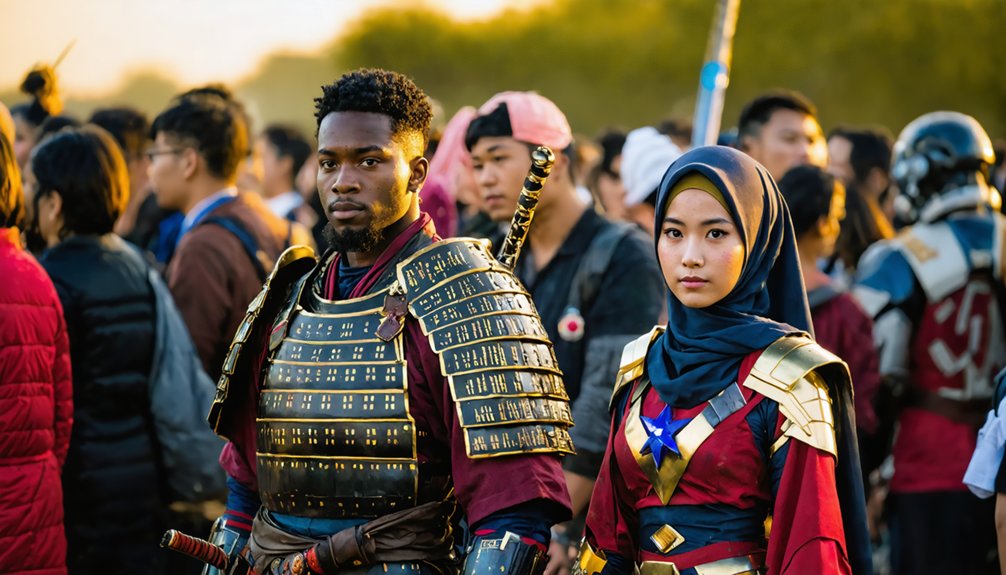
You can promote cultural diversity in cosplay by creating accessible spaces through sensory-friendly convention hours, body-inclusive costume options, and digital platforms that extend beyond geographic barriers. Embrace gender-inclusive expression—34% of cosplayers already practice cross-play—while actively featuring BIPOC creators in panels and media coverage to combat racial battle fatigue. Support emerging markets through mentorship programs and regional training initiatives that celebrate intersectional identities. The strategies ahead will show you how to transform these principles into actionable community-building practices.
Key Takeaways
- Reject skin-tone matching norms and embrace decolonizing practices that allow cosplayers to portray any character regardless of race.
- Establish financial support and mentorship programs specifically designed to empower BIPOC and marginalized cosplayers facing systemic barriers.
- Feature underrepresented creators prominently in convention panels, media coverage, and decision-making roles rather than tokenistic invitations.
- Collaborate with local communities to identify region-specific cultural sensitivities and create genuinely inclusive event spaces.
- Leverage digital platforms and online vendors offering body-inclusive costumes to democratize participation beyond urban convention centers.
Understanding the Current State of Diversity in Cosplay Communities
Global cosplay trends show remarkable geographic expansion, with North America leading through Comic-Con events, Japan dominating Asia Pacific manufacturing, and emerging markets in South America, the Middle East, and Africa.
Diversity and inclusion panels have surged 300% since 2015, while conventions like Anime Expo actively address disparities for people of color. This data confirms you’re witnessing a community that’s actively dismantling traditional barriers and embracing authentic representation.
Breaking Down Geographic and Cultural Barriers to Participation
You can’t participate in what you don’t know exists, and many cosplayers face this reality when conventions cluster in urban centers while rural communities remain disconnected from these creative spaces.
Building accessible convention networks requires intentional outreach to underserved regions and leveraging digital platforms that extend participation beyond physical geography. When you combine strategic convention placement with robust online engagement tools, you create multiple entry points that welcome diverse cultural perspectives into cosplay communities.
Overcoming Regional Awareness Gaps
While cosplay thrives as a worldwide phenomenon, geographic and cultural boundaries create stark disparities in who participates, how they’re perceived, and whether they’re celebrated or marginalized. You’ll find darker-skinned cosplayers struggling to secure photographers skilled in lighting their skin tones, while conventions primarily invite white guests except for diversity quotas.
Regional photography training programs can bridge these technical gaps, ensuring photographers master techniques for all skin tones. Meanwhile, inclusive talent scouting practices must replace tokenistic panel invitations with genuine representation.
Cultural differences further complicate these issues—Chinese cosplayers’ makeup practices face Western criticism despite local acceptance, highlighting how awareness gaps perpetuate misunderstanding. By investing in region-specific education and dismantling geographical hierarchies that determine whose creativity gets showcased, you’re creating pathways for equitable participation across all communities.
Building Accessible Convention Networks
Addressing awareness gaps represents only part of the solution—physical and logistical barriers still prevent many cosplayers from participating in convention spaces. You’ll find that expanding technological integration now enables remote participation, with digital pattern sales increasing 150% since 2018 and over 2 million monthly #cosplay posts fostering international collaborations.
Convention organizers are transforming accessibility through designated queues, sensory-friendly hours at events like El Paso Comic-Con, and formal repair stations now available at one in five conventions. These stations process 500 props hourly while eliminating costume malfunction barriers.
Meanwhile, 40% of cosplayers leverage Facebook Groups for local organizing, creating networks beyond physical venues. Online vendors like Our Procosplay democratize access through body-inclusive ready-made costumes, while diversity programming has surged 300% since 2015, proving that inclusive infrastructure drives meaningful participation across geographic and cultural boundaries.
Supporting Gender-Inclusive and Cross-Play Expression
As cosplay continues evolving beyond traditional boundaries, gender expression has become one of its most transformative aspects. You’ll find that 34% of cosplayers actively practice cross-play, while 12% identify as non-binary or genderqueer.
Gender-neutral designs now dominate 42.3% of the costume market, reflecting demand for inclusive costume design that accommodates diverse identities and body types.
You can leverage online communities and convention spaces as essential platforms for advancing community dialogue around gender exploration. Convention diversity panels have increased 300% since 2015, demonstrating institutional commitment to representation.
Whether you’re adopting a character’s gender or reimagining characters to reflect your identity, cosplay provides a low-stakes environment for authentic expression. By rejecting limiting terminology and embracing inclusive language, you’re helping create safer spaces where all gender identities receive recognition and support.
Creating Accessible Convention Spaces for All Demographics
You can’t fully celebrate cultural diversity in cosplay when physical barriers prevent disabled attendees from participating in conventions. Evidence shows that simple accommodations—like Otakuthon’s designated queues and priority access, or El Paso Comic-Con’s sensory-friendly hours—significantly improve inclusion for attendees with disabilities.
Beyond removing physical obstacles, you must also address regional cultural concerns that affect how different communities experience and access these spaces.
Removing Physical Accessibility Barriers
Physical accessibility barriers at cosplay conventions prevent many disabled attendees from fully participating in events they’re passionate about. You can transform these spaces through thorough venue assessments that identify obstacles before they exclude community members. Implementing flexible scheduling options like sensory-friendly hours creates welcoming environments for diverse needs.
Essential accessibility improvements include:
- Installing stage ramps so wheelchair users can compete in cosplay competitions alongside their peers
- Widening pathways and removing unnecessary barriers like cones that block mobility device users
- Providing backstage amenities including seating, water, and storage in cosplayer preparation areas
- Hiring dedicated accessibility staff who respond immediately to navigation challenges and accommodation requests
Financial investment in these modifications demonstrates your commitment to building truly inclusive cosplay communities where everyone belongs.
Addressing Regional Cultural Concerns
While anime conventions have expanded globally to over 40 countries, each region brings distinct cultural considerations that organizers must navigate thoughtfully. You’ll find that successful events balance traditional anime elements with local cultural flavors, creating authentic experiences that resonate with diverse attendees.
Through community collaboration, organizers can identify region-specific sensitivities around representation and appropriation, ensuring programming reflects local perspectives.
You should explore regional funding sources that support culturally inclusive initiatives, from dedicated diversity panels to accessibility programs. Events like Japan Expo in France and Anime Friends in Brazil demonstrate how conventions can honor anime’s Japanese origins while celebrating their host culture’s unique contributions.
Amplifying Voices From Underrepresented Cultural Backgrounds
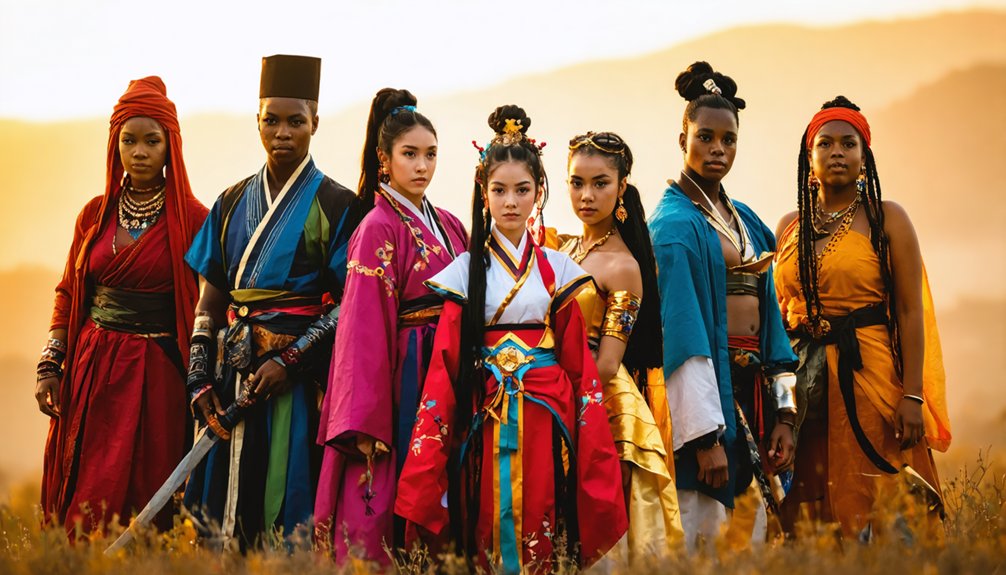
Creating space for underrepresented voices in cosplay requires acknowledging the systemic barriers that have historically silenced them. You’ll need to actively champion BIPOC cosplayers who face racial battle fatigue and disproportionate backlash—especially Black women experiencing the highest criticism levels. Decolonizing cosplay norms means dismantling expectations that cosplayers match character skin tones and celebrating intersectional identities instead.
Amplify marginalized voices through:
- Platform sharing – Feature BIPOC cosplayers in conventions, panels, and media coverage they’ve been historically excluded from
- Financial accessibility – Reduce convention costs preventing lower-class participation
- Active moderation – Enforce strict anti-racism policies against colorism and cultural appropriation
- Representation advocacy – Demand diverse character creation in source media, expanding cosplay options beyond tokenized roles
You’re creating sustainable change by centering those who’ve resisted marginalization while building community.
Building Educational Programs and Awareness Initiatives
Educational programs transform cosplay from recreational hobby into powerful pedagogical tools that develop technical skills, cultural awareness, and inclusive mindsets. You’ll find school-based initiatives like CosTechPlay successfully integrating costume design with coding, textile work, and upcycling, while fostering gender inclusivity and body positivity.
Consider sponsoring maker workshops that bring cosplay community experts into classrooms to teach sewing, foamwork, and sculpting techniques. Middle school programs use historical figure cosplay to develop empathy and multicultural understanding, while university courses like THTR 492 encourage research into ethnic costumes and global dress styles.
You’re empowering local organizers by supporting student-led comic-cons and convention partnerships with cultural resource groups. These initiatives demonstrably increase diversity in traditionally homogeneous spaces, particularly computer science programs, while building confidence and belonging across age, gender, and cultural boundaries.
Leveraging Social Media to Celebrate Global Cosplay Traditions
Social media platforms have revolutionized how cosplayers share their craft across borders, with over 2 million #cosplay posts uploaded to Instagram monthly and TikTok videos surpassing 150 billion total views. You can amplify diverse voices by strategically using these platforms to showcase global traditions while exploring content monetization strategies and sponsorship opportunities that support underrepresented creators.
Social media transforms cosplay into a global phenomenon, creating unprecedented opportunities for underrepresented creators to monetize their cultural interpretations and connect worldwide.
Build authentic connections through:
- Feature Filipino, Brazilian, and Middle Eastern cosplayers whose cultural interpretations bring fresh perspectives to beloved characters
- Share transformation videos that honor traditional craftsmanship techniques from different regions
- Create Discord communities where creators exchange cultural knowledge and collaborative opportunities
- Partner with brands that prioritize diverse creator portfolios, ensuring equitable sponsorship opportunities across all regions
This approach transforms social media into bridges connecting traditions worldwide.
Fostering Economic Opportunities in Emerging Cosplay Markets
While established markets in Japan and North America have long dominated the cosplay industry, emerging regions now represent unprecedented economic potential worth billions in untapped revenue. You’ll find Latin America, particularly Brazil, Mexico, and Argentina, driving substantial growth through passionate fan communities and expanding conventions. These markets excel at empowering local economies by creating accessible vendor opportunities for first-time participants seeking affordable alternatives.
The Middle East, Africa, and Southeast Asia demonstrate rising engagement from youth populations increasingly influenced by global pop culture. By incubating minority entrepreneurs through strategic licensing partnerships and ready-to-wear solutions, you’re lowering traditional entry barriers.
China and South Korea’s expanding middle classes particularly offer significant opportunities, with the global market projected to reach USD 12.81 billion by 2030—creating sustainable economic pathways for diverse communities worldwide.
Frequently Asked Questions
How Can I Respectfully Cosplay Characters From Cultures Different Than My Own?
You’ll need cultural sensitivity training and respectful research methods to understand a character’s origins deeply. Don’t change your skin tone, avoid sacred items, and prioritize authentic representation over aesthetics. When uncertain, choose different characters instead.
What Resources Exist for Low-Income Cosplayers to Participate in Conventions?
You’ll find crowdfunding opportunities on platforms like GoFundMe and Ko-fi, plus local community workshops often offer free costume-making classes. The Twitch Student Scholarship covers convention travel, while programs like Brooklyn Arts Exchange provide sliding-scale assistance without documentation requirements.
How Do I Handle Negative Comments About My Body Type in Cosplay?
Studies show 60% of cosplayers face body criticism. You’ll thrive by cultivating self-confidence through supportive communities and responding thoughtfully to negativity—remember, cosplay celebrates creative expression beyond physical limitations, empowering you to challenge narrow beauty standards innovatively.
Where Can Beginners Find Mentors From Diverse Cultural Backgrounds in Cosplay?
You’ll find mentors by connecting with diverse cosplayers through online communities like Cosplay of Color, attending multicultural conventions, and joining cultural cosplay communities on social media platforms. These spaces prioritize finding cultural cosplay communities where experienced creators actively support beginners.
What Safety Measures Protect Minority Cosplayers From Harassment at Conventions?
You’ll find protection through thorough security protocols including zero-tolerance policies, trained staff, and reporting systems. Sponsor partnerships with advocacy groups like Geeks for CONsent strengthen enforcement, while community networks and visible “Cosplay is Not Consent” signage create safer, more inclusive spaces.