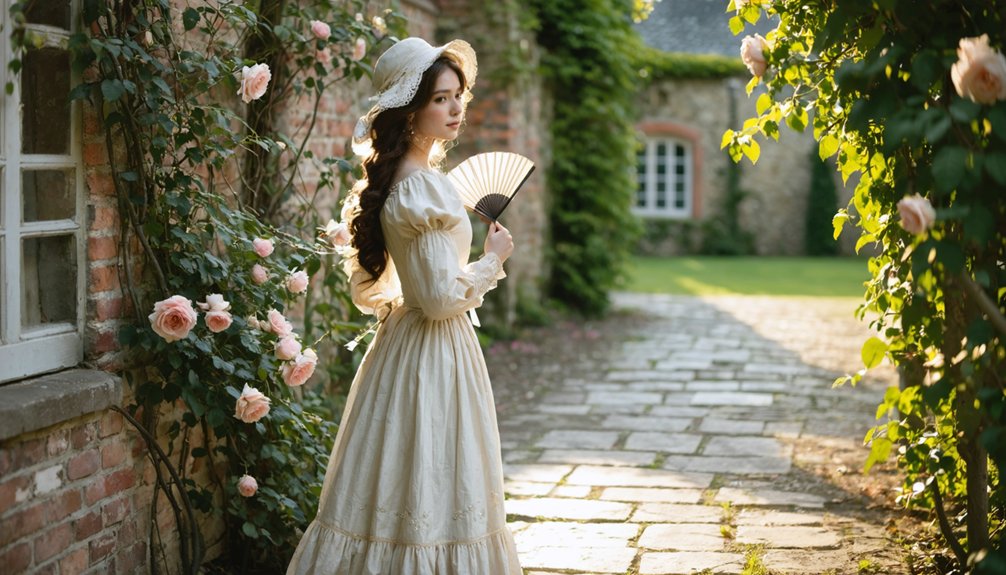
To build an authentic Jane Austen dress, you need to understand Regency fashion’s structural logic, not just its aesthetic. You’ll start with soft stays and layered undergarments that create the empire silhouette’s signature high waistline. You’ll then select fabrics according to occasion—matte muslin for daywear, luminous silk for evening—while matching necklines, sleeves, and embellishments accordingly. Hair ornaments and accessories reinforce these same social codes. Every deliberate choice you make deepens your accuracy considerably.
Key Takeaways
- Regency-era dresses feature a high empire waistline beneath the bust, with flat fronts and pleated backs creating elegant architectural contrast.
- Daywear uses lightweight muslin or cotton with modest necklines and long sleeves, while evening gowns feature silk, plunging necklines, and embellishments.
- A layered undergarment system—including soft stays, shifts, and petticoats—provides structure without restrictive corseting, defining the silhouette authentically.
- Hair styling includes classical buns, ringlets, or ornamented height, coordinated with dress material and occasion for period-accurate presentation.
- Regency dresses can be sourced from specialty brands, Etsy sellers, or sewn using vintage Simplicity and Butterick patterns with authentic materials.
The Empire Silhouette Behind Every Jane Austen Dress
The empire silhouette defines Regency-era fashion so completely that it’s nearly impossible to separate Jane Austen’s world from its signature high waistline. Sitting just beneath the bust, this structural line eliminates tight lacing entirely while projecting classical refinement. Soft stays push the bust upward into a shelf-like form, creating the foundation every fashion illustration of the period captures with precision.
When you study this silhouette analytically, you’ll notice how outer layers consistently terminate at or emphasize the empire line, maintaining visual coherence from bodice to ankle-length skirt. Flat fronts contrast deliberately with pleated backs, producing subtle architectural tension.
Pairing this silhouette with vintage jewelry completes the aesthetic vocabulary — delicate pieces echo the era’s restraint and elegance without competing against the gown’s defining structural geometry.
How Undergarments Create the Foundation of a Jane Austen Dress
Beneath every empire silhouette lies a layering system that makes the signature Regency shape structurally possible. You begin with a knee-length shift, which protects your skin and anchors the layers above.
Every empire silhouette begins with a single knee-length shift—the structural anchor beneath everything the eye admires.
Over this, you apply soft stays that provide corset support without tight lacing, pushing the bust upward into the characteristic shelf-like presentation. Unlike earlier boned constructions, these softer stays align with classicism’s preference for natural, unforced silhouettes.
Next, petticoat layers add dimensional volume beneath the outer gown while reinforcing the flat-front, pleated-back skirt structure. A second petticoat sits directly over the stays, shaping the dress’s fall from the high empire waistline to the ankle.
Knee-high stockings complete the system below. Each layer serves a precise structural function, making the foundation as analytically deliberate as the silhouette it supports.
Best Fabrics for an Authentic Jane Austen Dress
Fabric selection defines how authentically your finished dress captures the Regency aesthetic. For daywear, choose lightweight cotton prints or sheer muslin, both period-accurate choices that reflect classicism’s clean, uncluttered ideals. These materials drape naturally against the empire silhouette, reinforcing the flat-front, pleated-back skirt structure without adding unwanted bulk.
For evening occasions, you’ll want fine silk or satin, as their inherent sheen communicates the luxury formal settings demanded. Consider incorporating silk embroidery along necklines or hem edges to elevate visual complexity while remaining historically grounded.
White muslin remains your most versatile option, shifting effectively between daytime modesty and evening elegance depending on accessories and layering. Matching your fabric weight to the occasion ensures your construction decisions stay analytically sound and period-precise.
Jane Austen Dress Codes for Daywear and Evening Events
When dressing for daywear in the Regency period, you’ll find that lightweight muslin and cotton are your most authentic choices, as they reflect the era’s classicism ideals while offering practical adaptability.
For evening events, you should shift to fine silk or satin, which provide the sheen and formality that period dress codes demanded.
You’ll also notice that these fabric distinctions reinforce broader sartorial rules: modest, covered necklines define your daytime presentation, while plunging necklines and richer materials signal your shift into evening formality.
Daywear Fabric Choices
During the Regency era, lightweight cotton and sheer muslin dominated daywear fabrics for their adaptability and alignment with classicism ideals. When selecting your daywear textiles, you’ll find that muslin’s breathability and fabric durability made it the practical foundation of a well-constructed wardrobe.
Its versatility allowed it to shift seamlessly between casual and semi-formal occasions without sacrificing structural integrity.
Textile dyes of the period produced soft, muted tones that complemented muslin’s delicate weave, reinforcing the era’s preference for understated elegance over ornamentation. White remained the dominant choice, though subtle dyed variations emerged as dyeing techniques advanced.
You should recognize that these fabric selections weren’t arbitrary — they reflected a deliberate cultural shift away from the heavy silks and wools that characterized pre-Regency dress toward a cleaner, more refined aesthetic.
Evening Dress Distinctions
While muslin defined the daywear wardrobe through its practicality and lightness, evening dress operated under an entirely different set of material and structural expectations. You’d select fine silk or satin for formal occasions, prioritizing sheen and elegance over fabric durability. These materials signaled luxury while supporting the empire silhouette‘s structured demands.
Evening necklines plunged noticeably lower, removing the fichus or chemisettes you’d rely on during the day. Sleeves shortened considerably, emphasizing the arms and décolletage. Lace embellishments frequently adorned hemlines, necklines, and sleeve edges, elevating the gown’s decorative complexity without compromising its classical lines.
Trains occasionally extended from the back for particularly formal events.
Understanding these distinctions lets you reconstruct period-accurate evening dress with analytical precision, honoring the Regency Era’s deliberate separation between functional daywear and ceremonial evening attire.
Jane Austen Dress Details That Change by Occasion
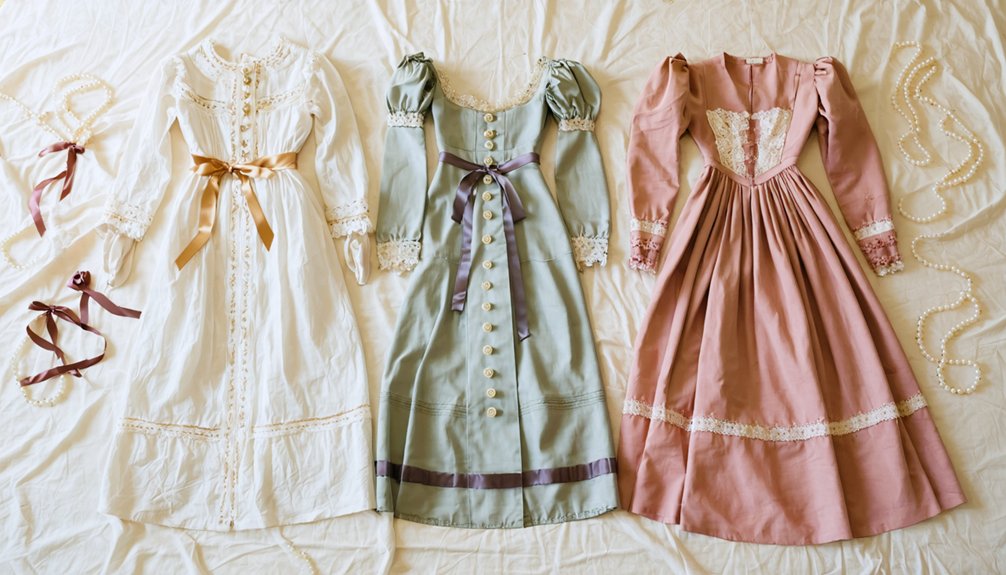
Whether you were stepping out for a morning visit or attending an evening ball, the occasion dictated nearly every detail of a Regency-era dress.
Historical costume accuracy demands recognizing these distinctions as structural, not merely decorative. Fabric texture comparison reveals how muslin’s matte softness served daywear while satin’s luminous sheen elevated evening silhouettes.
Key occasion-driven distinctions include:
- Necklines: Modest fichus or chemisettes covered daytime décolletage; evening gowns featured deliberate plunging cuts
- Sleeves: Long sleeves defined daywear functionality; short sleeves signaled formal evening intent
- Fabric weight: Lightweight cotton absorbed daylight activity; fine silk and satin commanded candlelit rooms
You’d select each element purposefully, understanding that Regency dressing operated as a precise visual language communicating context, status, and social awareness simultaneously.
Hair and Accessories That Finish a Jane Austen Dress
To complete a Jane Austen-inspired look, you’ll need to address the hair with the same period accuracy you’ve applied to the gown itself.
You should style your hair upswept into a bun at the back of the head, using curling tongs or overnight foam curlers to frame the face with ringlets.
Once the structure is set, you can finish with feathers, flowers, tiaras, or ribbons to reflect the ornamental elegance that defined Regency-era feminine aesthetics.
Classic Upswept Hair Styles
Hair and accessories carry as much historical weight as the dress itself, and three defining elements shaped the Regency woman’s upswept look: structured height, framing ringlets, and deliberate ornamentation.
Historical hairstyle techniques relied on curling tongs and foam curlers to produce precise ringlets that softened structured updos.
Elegant fabric selections in your dress should inform your hair choices—silk evening gowns pair best with tiaras or feathers, while muslin daywear suits ribbons or flowers.
Consider these three foundational upswept approaches:
- The classical bun: hair piled high at the crown, anchoring formal silhouettes
- Ringlet framing: curled sections falling beside the face for softness
- Ornamented height: feathers or floral pins elevating the overall architectural effect
Each choice analytically mirrors period-accurate aesthetic priorities.
Ringlets And Curling Techniques
Ringlets defined the Regency woman’s silhouette from the neck up, and replicating them accurately requires understanding two period-authentic methods: curling tongs applied with heat and foam curlers set overnight.
Both historical hair techniques yield distinct results. Heat tongs produce tighter, more defined coils suited for evening accessory styling, where feathers, tiaras, or ribbon embellishments demand structured framing.
Overnight foam curlers generate softer, more relaxed ringlets that complement modest daywear necklines and fichus.
You’ll want to section hair deliberately, curling pieces that fall forward to frame your face while pinning the remaining volume upward into a bun.
This dual structure—loose ringlets cascading at the temples, secured mass at the crown—mirrors documented Regency styling conventions and creates an anatomically accurate foundation for any period-inspired accessory placement.
Period-Appropriate Hair Ornaments
Once your ringlets frame your face and your bun sits secured at the crown, the ornaments you place within that structure carry as much historical weight as the curl pattern itself.
Regency women treated hair ornamentation as a sophisticated visual language, selecting pieces that communicated status, occasion, and aesthetic alignment.
You’ll want to draw from these period-accurate categories:
- Feathers and flowers anchored to combs for evening assemblies
- Vintage jewelry pieces like pearl-set tiaras and jeweled pins that caught candlelight deliberately
- Hat embellishments including ribbon rosettes and silk blooms for daytime presentation
Each ornament you select should correspond directly to your occasion and dress material.
Evening silk demands vintage jewelry with luminous stones; daytime muslin invites softer, botanical embellishments that reinforce classicism’s naturalistic ideals.
Where to Buy or Sew a Jane Austen Dress Today
Whether you’re drawn to the empire silhouette’s high waistline or the delicate sheen of period-accurate silk and satin, sourcing an authentic Jane Austen dress today requires exploring a range of commercial and craft-based options.
Dedicated Regency costumers like Jas. Townsend and Son offer historically informed ready-to-wear pieces, while Etsy sellers specialize in custom muslin and silk constructions.
If you prefer crafting your own, vintage patterns from Simplicity and Butterick provide period-accurate templates.
Essential sewing tips include selecting lightweight cotton or fine silk, incorporating soft stays rather than boned corsetry, and pleating the back skirt correctly to achieve the flat-front silhouette.
Both routes demand attention to material authenticity, ensuring your finished gown accurately reflects Regency-era construction principles.
Frequently Asked Questions
What Shoes Were Typically Worn With a Regency Era Jane Austen Dress?
Over 90% of Regency fashion footwear featured flat, ribbon-tied slippers. You’d typically wear delicate kid leather or satin flats as essential Jane Austen accessories, complementing the empire silhouette’s grounded, classical elegance perfectly.
How Much Does an Authentic Jane Austen Dress Costume Typically Cost?
You’ll find authentic Jane Austen costumes ranging from $150 to over $1,000, depending on historical accuracy and fabric choices. Fine silk or muslin constructions command premium prices, reflecting the innovative craftsmanship that period-accurate Regency silhouettes genuinely demand.
Are Jane Austen Dress Styles Appropriate for Modern Formal Occasions Today?
Over 60% of formal events now embrace historical accuracy. You’ll find Jane Austen’s empire-line silhouettes offer remarkable fashion versatility—their high waistlines, elegant fabrics, and refined necklines translate seamlessly into contemporary galas, weddings, and sophisticated modern formal occasions.
Did Jane Austen Herself Have a Favorite Dress Color or Style?
You won’t find definitive records confirming Jane Austen’s favorite color within historical fashion sources, but her Jane Austen wardrobe favored white muslin gowns, reflecting the era’s classicism ideals and her practical, understated personal aesthetic.
How Long Does It Take to Fully Dress in Regency Era Clothing?
Like weaving history onto your body, you’d spend 30–60 minutes layering shifts, stays, petticoats, and gowns. Historical fashion demands patience, and costume accessories like tiaras and fichus add precious finishing time to your transformation.
References
- https://www.uvm.edu/~hag/regency/tips/
- https://janeausten.co.uk/pages/festival-regency-clothing-1