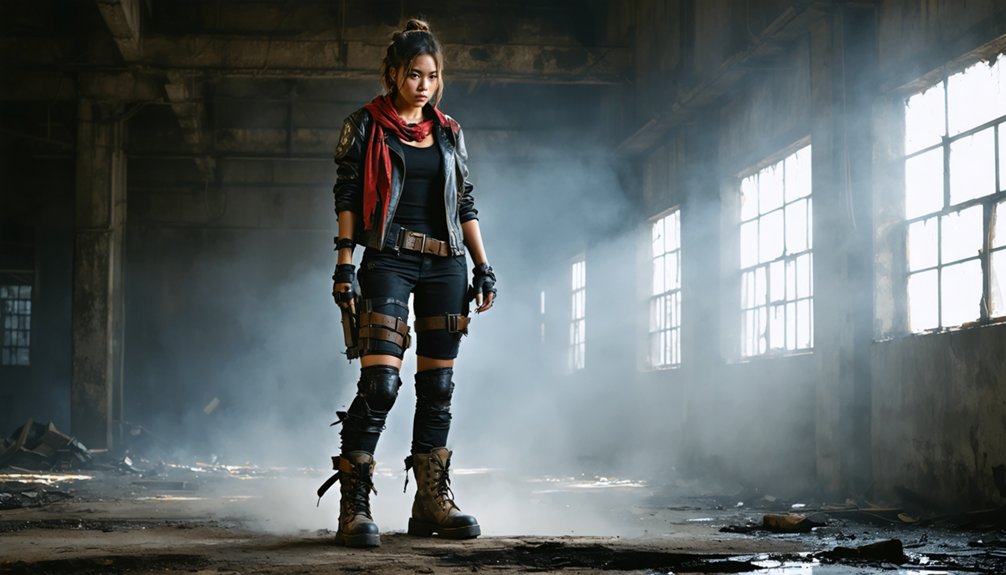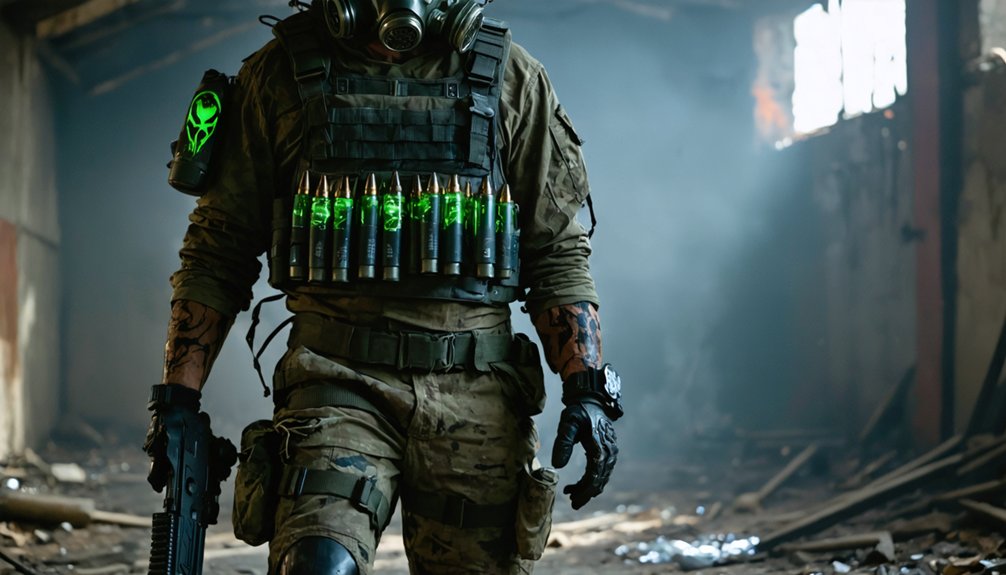
Your alien invasion survivor cosplay stands out when you nail the details others skip. Start with distressed camo fatigues or a battle-worn exosuit, then layer in UV-reactive face paint for killer convention lighting effects. Draw inspiration from *Edge of Tomorrow*, *District 9*, or *Nope* for iconic, story-rich looks. Add modular MOLLE webbing and EMP grenade belts for authentic survivor grit. The real secrets to competition-worthy builds are just ahead.
Key Takeaways
- Distressed camo fatigues, battle-worn exosuits, and UV-reactive face paint create visually compelling alien invasion survivor costumes for conventions.
- Movie-inspired looks from *Edge of Tomorrow*, *District 9*, and *Independence Day* offer recognizable, layered cosplay potential with iconic details.
- Essential props include MOLLE survival backpacks, EMP grenade belts made from painted ping-pong balls, and holographic smartphone map projectors.
- EVA foam armor crafted with heat guns, metallic paint, and weathering effects like scorch marks enhances realism and authenticity significantly.
- Group cosplay with assigned roles like Tech Specialist and Combat Veteran, combined with choreographed reenactments, impresses judges through synchronized storytelling.
The Alien Invasion Survivor Looks Everyone Is Wearing Right Now
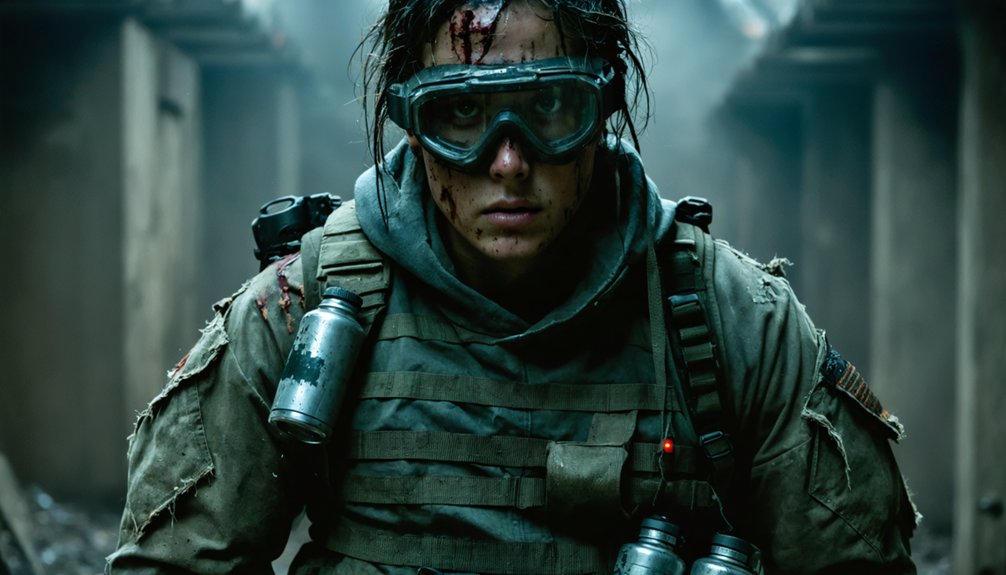
Alien invasion cosplay is having its moment, and the survivor aesthetic is leading the charge at every major convention floor. You’re seeing distressed camo fatigues, battle-worn exosuits, and UV-reactive face paint dominating group lineups at Comic-Con 2024 and New York Comic Con 2025.
These aren’t random outfit choices — they’re deliberate costume adaptation strategies that signal your character’s resourcefulness under extraterrestrial siege.
Every piece you wear tells a story — your character didn’t just survive the invasion, they *planned* for it.
The smartest builders are coding alien survival tactics directly into their wearables: MOLLE backpacks loaded with fake MREs, EMP grenade belts, and holographic map projectors.
You’re not just wearing a costume; you’re embodying a calculated response to invasion. Thrifted tactical vests, sandpaper-distressed fabrics, and embedded LED implants transform budget materials into high-concept storytelling that consistently earns judging recognition at every major competitive showcase.
Movie-Inspired Survivor Costumes Worth Recreating
Whether you’re channeling the retro terror of H.G. Wells’ tripod-haunted survivors or suiting up in Edge of Tomorrow’s mud-caked exosuit, cinema’s best alien invasion films hand you a blueprint for unforgettable cosplay.
You’ll want to study each costume’s key details carefully — the heptapod symbols stitched into Arrival’s hazmat suit, the blood-stained denim of Nope’s UFO rancher, or the tattered American flag cape nod to Independence Day all signal how precision separates a great build from a forgettable one.
From classic black-and-white era inspiration to modern blockbuster survival gear, these film looks reward your analytical eye and creative ambition in equal measure.
Classic Films Worth Recreating
From the panic-inducing 1938 Orson Welles broadcast to the gritty exosuits of *Edge of Tomorrow*, classic films pack a goldmine of cosplay potential that’s both immediately recognizable and deeply layered with storytelling detail.
You can channel iconic scenes directly into wearable art — reconstruct H.G. Wells’ tripod-era survivor with a retro radio operator aesthetic, or recreate the 1953 film’s sleek metallic cone-shaped elements for an otherworldly silhouette.
Each classic film offers costume logic rooted in its era’s fears and technology. *District 9*’s scrap-metal exoskeleton armor rewards builders who love problem-solving, while *Independence Day*’s tattered flag cape screams cultural defiance.
You’re not just wearing a costume — you’re embodying a cultural moment that resonates across generations of sci-fi enthusiasm.
Modern Blockbuster Survivor Looks
Modern blockbusters deliver survivor aesthetics that feel visceral, urgent, and immediately wearable — and you’ve got an incredible lineup to pull from.
Channel *Signs’* crop circle survivor with a hooded poncho and alien-etched fabric, embodying modern survival strategies against iconic alien encounters.
*Battle: Los Angeles* demands camo fatigues, a gas mask, and drone fighter patches for authentic military grit.
Prefer mobility? *Edge of Tomorrow’s* foam-plate exosuit with a mud-splattered helmet screams tactical precision.
*Arrival* offers something cerebral — modify a hazmat suit with heptapod symbol embroidery for intellectual intensity.
*Nope* delivers pure Americana: bloodstained denim overalls, a cowboy hat, and a weaponized lasso.
Each look communicates urgency, character depth, and unmistakable cinematic identity — pick your battle and build accordingly.
Iconic Costume Key Details
Recreating a movie-inspired survivor costume with real staying power comes down to nailing specific, character-defining details that go beyond the obvious.
Study your character’s arc — survivors evolve, and your build should reflect that journey visually. Edge of Tomorrow’s Cage starts helpless; his mud-caked, battle-worn exosuit tells that story instantly.
Master costume layering techniques by building depth into every piece. Stack distressed tactical vests over thrifted cargo pants, then add EVA foam armor painted with deliberate scorch marks.
Survivor character arcs demand visual storytelling — a torn sleeve, a cracked visor, or blood-stained denim overalls signals hard-won resilience rather than fresh heroism.
Prioritize character-specific props like weaponized lassos or heptapod-embroidered hazmat modifications.
These precise, intentional choices transform a generic outfit into an unmistakable, competition-worthy tribute.
Build Your Survivor Base Layer on a Budget
You don’t need a Hollywood budget to look like you’ve survived an extraterrestrial apocalypse — thrifted cargo pants and tactical vests from secondhand stores give you an authentic, battle-worn foundation for next to nothing.
Grab some sandpaper and start distressing those fabrics by scrubbing seams, knees, and elbows until they scream “I crawled through an alien warzone.”
A basic tactical vest becomes a customized survival rig when you strip it down, rearrange its MOLLE pouches, and hot-glue on weathered patches or fake ammo clips for that gritty, functional edge.
Thrifted Base Layer Essentials
Building a convincing alien invasion survivor look doesn’t require a Hollywood budget—thrifted cargo pants and tactical vests are your best allies, forming the rugged base layers that’ll anchor your entire costume.
Master thrift store techniques by hunting military surplus sections for authentic olive-drab tones and reinforced stitching that factory-distressed alternatives simply can’t replicate.
Your layering strategies should build intentional narrative depth: start with a moisture-wicking base shirt, add a flannel mid-layer torn at strategic stress points, then lock everything together with that tactical vest.
Grab sandpaper and distress every seam, pocket, and hem aggressively—survivors don’t look pristine.
Mix textures deliberately; canvas over cotton creates dimensional visual interest that photographs brilliantly under convention lighting, signaling authenticity to fellow cosplayers instantly.
Distressing Fabrics Affordably
Once you’ve assembled your thrifted base layers, distressing them convincingly transforms clean fabric into battle-hardened survivor gear without draining your wallet.
Master cost effective distressing by grabbing sandpaper, steel wool, and a cheese grater—these household tools shred fibers brilliantly, mimicking prolonged alien warfare exposure. Focus abrasion on high-wear zones: knees, elbows, and collar edges.
Your fabric aging techniques should layer multiple effects. Brew strong black tea for overall yellowing, then dab diluted bleach selectively for acid-burn patterns.
Torch edges briefly with a lighter for charred perimeters—work carefully outdoors. Drag fabric across concrete to create authentic texture inconsistencies that no store-bought costume replicates.
Finally, seal distressed areas with watered-down brown acrylic paint, locking in that post-invasion grime while preventing further unintended fraying during convention wear.
Budget Tactical Vest Hacks
With your distressed base layers looking suitably ravaged by alien warfare, the tactical vest is your next battlefield upgrade—and thrift stores are your armory.
Hunt military surplus stores or online resale platforms for under $15 vests, then transform them through budget friendly modifications.
Hot-glue EVA foam panels onto chest sections, mimicking captured alien tech armor. Stitch paracord loops across MOLLE webbing for attaching fake ammo clips molded from hot glue and spray paint.
Tactical gear layering becomes visually dynamic when you add LED strips beneath collar edges, simulating bioluminescent scanning devices.
Spray-paint selective sections gunmetal gray or acid green, then dry-brush with silver for battle-worn depth.
Suddenly, your $12 thrift-store find reads as authentic xenomorph-war-hardened survivor kit—innovative, affordable, undeniably convincing.
DIY Alien Armor With EVA Foam and 3D Printing
Creating DIY alien armor with EVA foam and 3D printing is one of the most rewarding challenges in cosplay, blending craftsmanship with sci-fi imagination.
You’ll transform raw materials into battle-worn extraterrestrial gear that commands attention at any convention.
Master these essentials:
- EVA foam techniques — Heat-seal cut foam sheets using a heat gun, then layer metallic silver or green paint for convincing alien tech plating.
- 3D printing tips — Print flexible tentacle appendages using TPU filament, attaching them via Velcro for dynamic, realistic movement during poses.
- Material fusion — Combine both mediums strategically: 3D-printed structural joints reinforce foam panels, creating armor that’s durable yet lightweight enough for full-day wear.
Your build’s credibility depends on precise execution, so embrace experimentation and iteration throughout every construction phase.
Must-Have Props Every Survivor Cosplay Needs
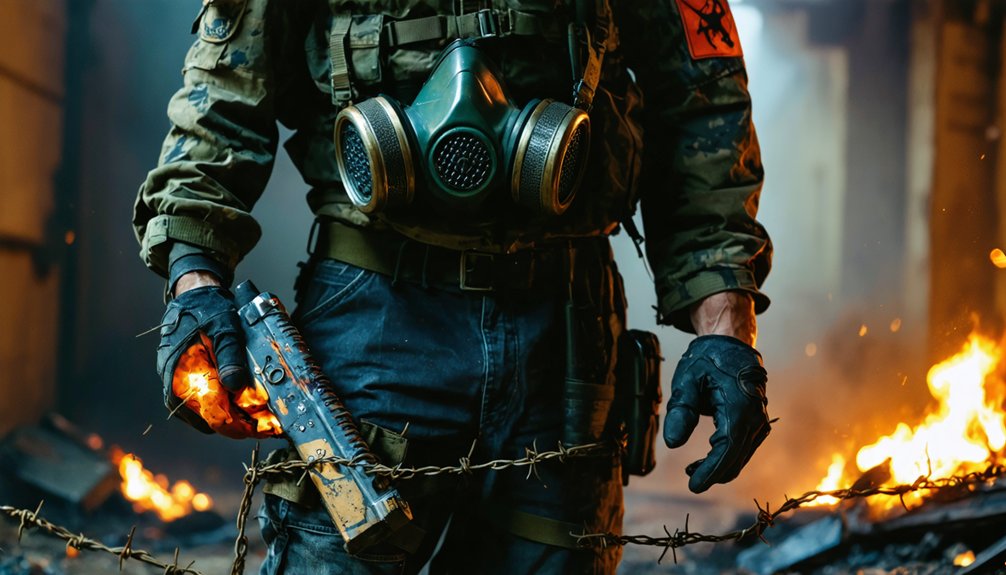
Your survivor build isn’t complete without props that sell the story—grab a survival backpack loaded with MOLLE webbing, fake MRE pouches, and a distress antenna to anchor your authenticity.
Weapon replicas like a PVC-core plasma rifle with battery-powered acrylic energy cells instantly signal you’ve been in the fight.
Round everything out with a hologram projector pin looping alien abduction footage and an EMP grenade belt, because every detail screams “I made it out alive.”
Essential Survival Gear Props
Every survivor cosplay lives or dies by its props, so let’s break down the essentials that’ll transform your outfit from a simple costume into a battle-hardened story.
Smart survival tactics demand props that are both visually striking and practically wearable throughout convention floors.
- Survival Backpack – MOLLE-webbed with fake MRE pouches and a radio antenna; doubles as actual prop storage for spare accessories.
- EMP Grenade Belt – Painted ping-pong balls with LED flash activation sell your combat readiness instantly.
- Holographic Map Projector – A smartphone inside a modified ammo box displaying invasion zone graphics signals tactical intelligence.
Each prop tells a layered narrative.
You’re not just wearing a costume—you’re embodying someone who *strategized*, *adapted*, and *survived*.
Iconic Weapon Replicas
Weapons define your survivor’s story—and the right replica communicates exactly how many alien encounters you’ve lived through. Iconic weapon designs elevate your build from costume to character study.
Start with Halo’s plasma rifle: a PVC pipe core wrapped in acrylic energy gems and battery-powered glow transforms thrift-store materials into battlefield credibility. For cosplay prop techniques, consider an EMP grenade belt using painted ping-pong balls with LED flash activation—it’s functional theater.
Want something cinematic? Weaponize a lasso like Nope’s UFO rancher, adding blood-stained rope for narrative punch. Each prop signals strategic survival thinking, not random accessorizing.
Layer weathering effects—scratches, scorch marks, UV-reactive paint—onto every piece. Your weapon’s damage history tells convention crowds you’ve fought hard and survived harder.
Distress Signal Accessories
While weapons broadcast aggression, distress signal accessories tell a richer story—you’re not just surviving, you’re fighting to be found. Incorporating emergency communication gadgets into your build transforms your costume from reactive to strategic, signaling genuine human ingenuity against overwhelming odds.
Master these distress signal techniques through three essential props:
- Survival Backpack Antenna — Mount MOLLE-webbed radio gear with blinking LEDs, simulating active distress frequencies cutting through alien jamming fields.
- Holographic Map Projector — Embed a smartphone inside a modified ammo box displaying invasion zone graphics, visualizing coordinated rescue intelligence.
- EMP Grenade Belt — Attach painted ping-pong ball grenades with LED flash activation, doubling as communication disruptors forcing enemy signal blackouts.
Each accessory layers narrative depth, proving your survivor isn’t just enduring—they’re orchestrating humanity’s comeback.
UV Paint, Dog Tags, and Details That Sell the Battle-Worn Look
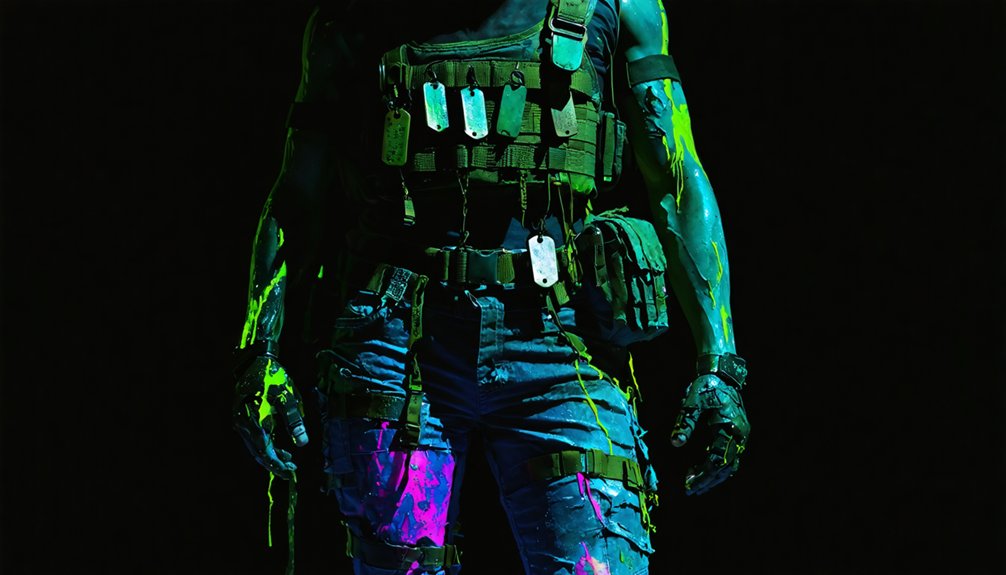
Small details transform a good cosplay into an unforgettable one, and the battle-worn alien invasion look lives or dies by its finishing touches.
UV Techniques elevate your costume dramatically — apply UV-reactive body paint along your neck and hands to simulate glowing alien vein implants that ignite brilliantly under blacklight. The effect reads as genuinely otherworldly rather than theatrical.
Dog Tag Customization adds critical narrative depth. Laser-etch “Xeno War 2027 Survivor” onto weathered metal tags, personalizing your character’s backstory instantly.
Combine these with multi-tool belt pouches holding hot-glue-molded fake ammo clips, and hologram projector pins looping public domain abduction footage.
Each micro-detail compounds authenticity — judges and fellow attendees recognize the commitment, pushing your build from impressive costume into lived-in survival artifact.
Build a Group Alien Invasion Squad That Wins Contests
Group cosplay dominates contest floors when every member’s costume tells a unified story — and building an alien invasion squad that actually wins requires strategic role assignment before you touch a single foam sheet.
Each role should reflect distinct survival tactics and alien technology countermeasures.
- The Tech Specialist — carries reverse-engineered alien technology props like glowing EMP grenades and holographic map projectors, signaling scientific resistance.
- The Combat Veteran — wears distressed exosuit armor with battle damage, communicating frontline survival tactics through visual storytelling.
- The Field Medic — displays hybrid human-alien medical gear, suggesting adaptation and resourcefulness under extraterrestrial threat.
Judges reward narrative cohesion, so choreograph an invasion reenactment sequence where roles interact dynamically.
Judges crave narrative cohesion, so choreograph a dynamic invasion sequence that makes every role interaction count.
Your squad’s synchronized storytelling transforms individual costumes into an unforgettable, contest-winning spectacle.
Where to Buy Materials for Solo and Group Survivor Builds
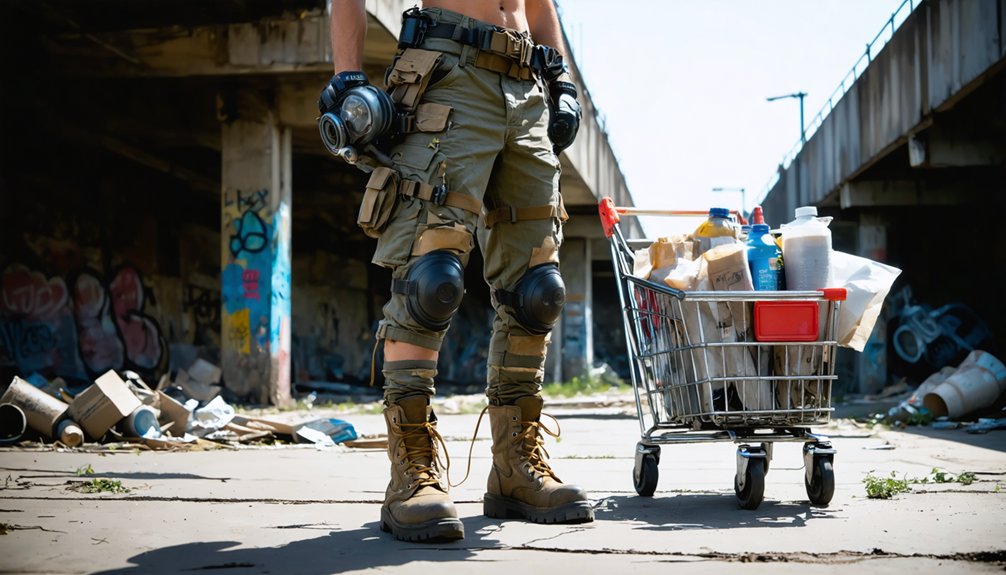
Once your squad’s roles are locked in, sourcing the right materials separates a forgettable build from a contest-floor standout. Hit thrift stores first for cargo pants and tactical vests, then distress them with sandpaper to sell those character backstories visually.
EVA foam sheets from craft retailers handle armor fabrication beautifully, while 3D-printing services on platforms like Etsy deliver flexible TPU tentacle appendages or custom weapon parts. For LED strips and UV-reactive body paint, electronics suppliers and specialty FX shops are your best allies.
Amazon and AliExpress stock MOLLE webbing, paracord, and PVC pipe for prop construction at budget-friendly prices. Tackling costume challenges becomes far less intimidating when you map your shopping list directly against each character’s functional needs before spending a single dollar.
How to Adapt Your Survivor Costume for Different Conventions
Different conventions demand different versions of your survivor build, so adaptability isn’t optional—it’s part of your cosplay strategy. Mastering costume versatility means engineering modular components that swap out based on venue constraints, crowd density, and event themes.
- Comic-Con spaces: Strip your rig down to lightweight EVA foam armor and LED accents—tight corridors punish bulky builds.
- Outdoor festivals: Add weatherproofing via sealed paint layers and swap magnetic boot grips for traction soles against uneven terrain.
- Competitive showcases: Elevate convention adaptation by integrating functional hydraulics or synchronized group choreography, targeting judges who reward technical innovation over aesthetics alone.
Your survivor costume isn’t a static creation—it’s a living system. Treat each convention as a new invasion scenario requiring tactical reconfiguration.
Quick LED, Hydraulic, and Paint Upgrades That Complete Any Build
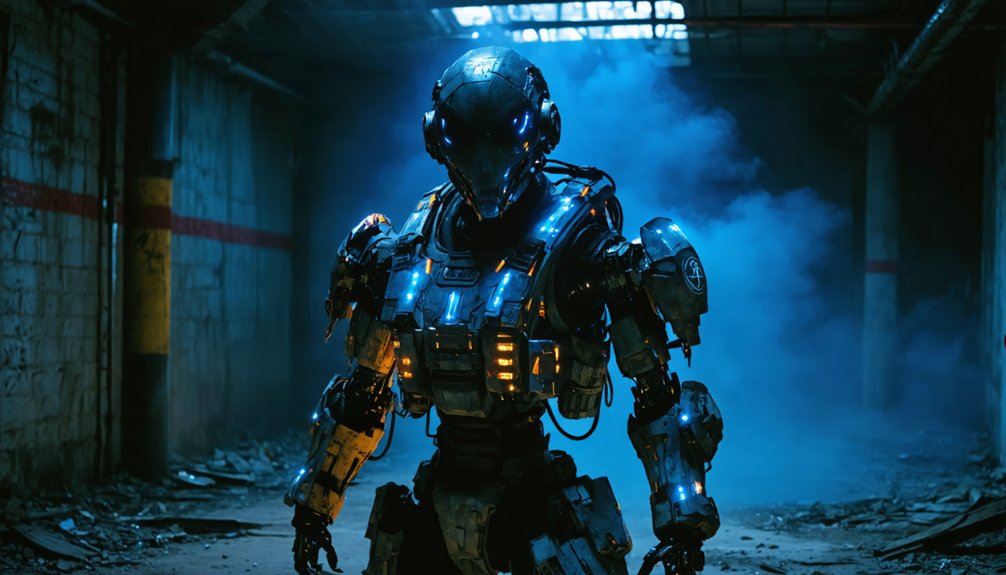
Three targeted upgrades—LEDs, hydraulics, and paint—can transform a half-finished build into a showstopper without gutting your timeline or budget.
Start with LED enhancements: strip lighting embedded in helmet seams or chest armor creates bioluminescent alien implant effects instantly.
Next, hydraulic effects don’t require engineering degrees—flexible tubing filled with colored fluid mimics functional exosuit mechanics beautifully.
For paint techniques, UV-reactive acrylics layered over weathered base coats add dimensional depth that photographs stunningly under convention lighting.
These budget upgrades integrate seamlessly with costume layering strategies you’ve already built.
Prop modifications like glowing EMP grenades or scanning devices reinforce your narrative.
Coordinate accessory additions across themed groups—matching LED colors or paint schemes creates visual cohesion that judges notice immediately.
Small investments, massive impact.
Frequently Asked Questions
Are Alien Invasion Cosplays Appropriate for Family-Friendly Conventions With Young Children?
Yes, they’re perfect! You’ll want to prioritize family-friendly themes by softening gore elements and ensuring costume safety with rounded prop edges, bright colors, and age-appropriate alien designs that spark kids’ imaginations without frightening them!
Can Survivor Costumes Be Safely Worn in Extreme Outdoor Festival Weather Conditions?
Yes, you can rock survivor costumes outdoors! Choose weather resistant materials like sealed EVA foam and moisture-wicking base layers. Follow outdoor festival tips: waterproof LED components, ventilate helmets, and layer strategically—you’ll conquer any climate like a true alien war veteran!
What Are the Weight Limits for Cosplay Props on Convention Center Escalators?
Convention centers don’t publish universal escalator weight limits, so you’ll want to check prop regulations with each venue directly! Prioritize escalator safety by keeping builds under 50 lbs and distributing weight evenly across your innovative costume!
How Do You Store Large Alien Invasion Group Costumes Between Annual Convention Events?
Like a starship docking bay, you’ll master costume storage by vacuum-sealing EVA foam armor, labeling each piece digitally, and applying preservation techniques—silica gel packets prevent moisture damage, keeping your alien invasion group costumes convention-ready annually!
Are There Official Cosplay Competitions Exclusively Dedicated to Alien Invasion Survivor Themes?
You won’t find competitions exclusively dedicated to alien invasion themes, but you’ll discover events like World Cosplay Summit embracing alien aesthetics! Sharpen your survivor strategies—Comic-Con and Dragon Con actively reward innovative, genre-specific ensembles through specialized judging categories.