When designing an animal cosplay costume for your pet, you’ll need precise measurements of neck circumference, chest girth, and back length before selecting anything. Choose breathable, four-way stretch fabrics like jersey or spandex blends, and keep eyes, ears, and nose completely unobstructed. Remove all chewable embellishments, limit signature design elements to one or two, and always test the full costume before your event. The details ahead will sharpen every decision.
Key Takeaways
- Prioritize breathable, four-way stretch fabrics like jersey or spandex to ensure comfort, airflow, and unrestricted movement during wear.
- Limit design to one or two signature elements, using color and silhouette to instantly communicate the intended species.
- Always measure neck, chest, and body length accurately, avoiding reliance on standard size labels for proper fit.
- Keep eyes, ears, and nasal passages fully unobstructed, and remove all dangling or chewable embellishments for safety.
- Conduct a short test session before the event to identify stress signals, fit issues, and structural adjustments needed.
Measure Your Pet Before Choosing a Costume
Before browsing any costume listings, grab a soft measuring tape and record three key numbers: your pet’s neck circumference, chest girth, and back length from the base of the neck to the base of the tail. These measurements form the foundation of smart costume coordination, eliminating guesswork that leads to ill-fitting designs.
Don’t rely on standard size labels—manufacturers use inconsistent sizing charts that rarely account for breed-specific proportions. A snug, precise fit prevents slipping, snagging, and tripping during wear.
Factor in your pet’s current coat condition too, since pet grooming schedules affect body volume. A freshly groomed pet measures differently than one mid-growth cycle.
Record measurements digitally for quick reference across multiple vendors, and recheck sizing if your pet’s weight fluctuates before the event.
Choose Breathable, Stretchy Fabrics for Safe Movement
Once you’ve got your measurements locked in, your next priority is selecting fabrics that work *with* your pet’s body rather than against it—opt for soft, four-way stretch materials like jersey or spandex blends that flex naturally with movement.
Steer clear of thick fleece layers, synthetic foam padding, or tightly woven fabrics that trap body heat and restrict airflow, since overheating can escalate quickly during event wear.
Before the big day, drape or pin a fabric swatch against your pet’s coat and skin for at least 15 minutes to check for irritation, static buildup, or allergic response.
Prioritize Soft, Flexible Materials
When selecting fabric for your pet’s cosplay costume, the material choice directly impacts both safety and wearability. You’ll want to prioritize soft, flexible textiles like jersey knit, fleece, or spandex blends that move naturally with your pet’s body. These fabrics reduce friction against skin, minimize irritation, and support unrestricted motion across all four limbs.
Fabric durability matters equally — choose materials that withstand active wear without fraying or stretching out of shape after repeated use. When adding costume embellishments, secure them with reinforced stitching rather than adhesives, since flexible base fabrics require anchoring methods that move with the material rather than against it.
Avoid stiff wovens, heavy canvas, or rigid synthetics that resist natural movement. Flexibility in your fabric foundation makes every additional design decision safer and more effective.
Avoid Heat-Trapping Fabrics
Fabric flexibility gets you halfway there — breathability closes the gap. Heat-trapping materials like thick polyester blends, dense foam backings, and non-woven synthetics restrict airflow and accelerate overheating — especially during active wear.
Instead, prioritize spandex-nylon composites, moisture-wicking jerseys, or open-knit stretch fabrics that regulate your animal’s body temperature without sacrificing fabric durability. These materials hold their structure across multiple uses and simplify costume storage since they resist compression damage and don’t require rigid packaging.
Avoid fleece-lined interiors or rubberized coatings that seal in heat. If your design demands layering, engineer airflow gaps between layers rather than stacking solid panels.
Breathable construction isn’t a compromise — it’s a precision choice that extends wear time, protects your animal, and keeps your costume performance-ready event after event.
Test Fabric Before Events
Before committing to any costume fabric, run a contact test on a small patch of your animal’s skin — typically the inner foreleg or belly — and monitor for redness, scratching, or behavioral agitation over 24 hours. This step directly validates fabric durability under real biological conditions, not just handling.
Stretch the material repeatedly to simulate movement stress, checking for fiber breakdown or pilling that could shed irritants. Evaluate costume accessories using the same protocol — dyes, adhesives, and embellishments can trigger delayed reactions that mid-event removal won’t easily reverse.
Pre-event wear trials lasting 15–20 minutes reveal fit failures, friction zones, and overheating patterns before they escalate. Document each test systematically, noting material composition and your animal’s response, so you build a reliable reference for future costume iterations.
Keep Eyes, Ears, and Nose Completely Clear
Masks, hoods, and full-face headpieces might look striking on a costume, but they can block your pet’s vision, muffle their hearing, and obstruct airflow through the nose—three functions your animal relies on constantly to interpret its environment.
Prioritizing eye protection and ear visibility isn’t optional; it’s foundational to responsible costume design.
Build your design around these non-negotiable clearance principles:
- Leave the full orbital area unobstructed to preserve unfiltered sightlines
- Maintain ear visibility by keeping fabric away from the ear canal opening
- Allow nasal passages to remain fully exposed for scent detection and thermoregulation
- Confirm your pet can vocalize without restriction before the event
Innovative cosplay design never sacrifices sensory function for visual impact.
Remove Any Parts Your Pet Could Chew Off
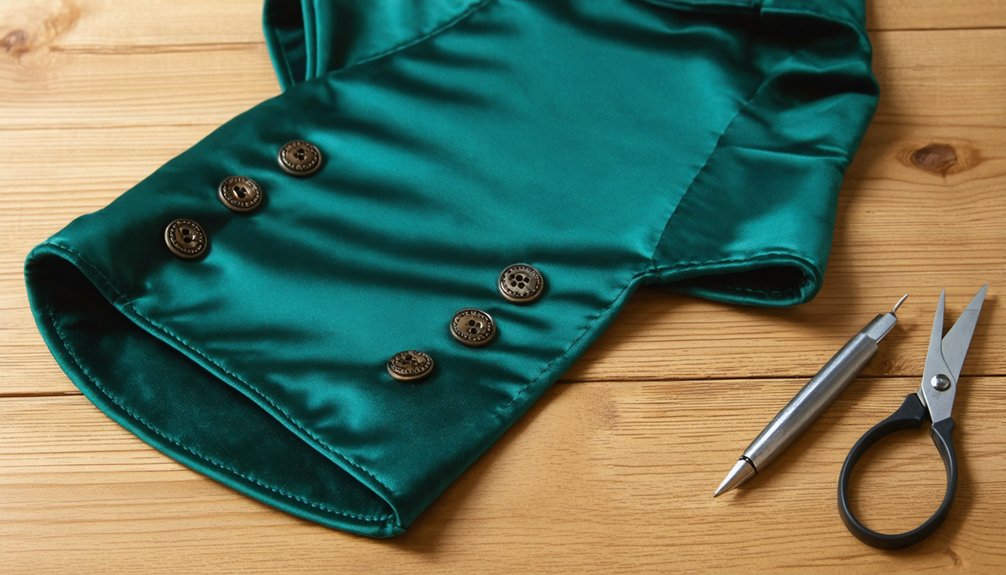
Dangling bells, decorative bones, extra limb attachments, and loose ribbon ends all share one critical flaw—they’re chewable, detachable, and potentially swallowable.
When designing your pet’s costume, treat every component as a chewing hazard until proven otherwise. Audit each element by asking: can this be bitten off within seconds? If yes, eliminate or redesign it.
Decoration safety depends on construction integrity. Favor tightly sewn embellishments over glued or clipped-on alternatives. Secure all seams with reinforced stitching, and eliminate dangling elements near the neck and face entirely.
Avoid toxic paints, metallic finishes, or chemical-treated materials that introduce ingestion risks beyond physical obstruction.
Simplicity isn’t a creative limitation here—it’s a design constraint that sharpens your concept. One well-executed, secured signature detail outperforms ten poorly attached decorative elements every time.
Pick One or Two Signature Design Elements for the Animal
When designing an animal costume, you’ll achieve more visual impact by committing to one or two signature elements rather than layering on excessive details.
Choose a color palette and texture that instantly communicate the species—a scaled fabric for a reptile or spotted print for a leopard reads faster and cleaner than a fully constructed replica.
These focused choices let the silhouette do the work, keeping the costume lightweight, recognizable, and wearable.
Signature Elements Over Complexity
Choosing one or two signature design elements does more for your animal cosplay than layering on every detail you can think of. Focused design communicates character instantly while preserving silhouette clarity.
Lean into thematic symbolism and cultural references to make each element carry real visual weight.
Prioritize these high-impact design decisions:
- Color palette: Match species-accurate tones or stylized hues that register immediately
- Texture markers: Incorporate scales, fur patterns, or feather details in targeted zones
- Symbolic accessories: Use one culturally resonant prop or motif to anchor the concept
- Silhouette shapers: Define ears, tails, or fins as the costume’s primary structural statement
Restraint isn’t limitation—it’s precision. When each element serves a clear visual purpose, your design reads faster, stronger, and far more intentionally than an overbuilt concept ever could.
Color And Texture Choices
Color and texture do the heaviest lifting in any animal cosplay design, so locking in one or two signature choices early keeps your concept focused and visually sharp. Lean into color symbolism intentionally — deep amber signals a big cat, iridescent blue-green communicates peacock instantly. Your palette shouldn’t just decorate; it should identify.
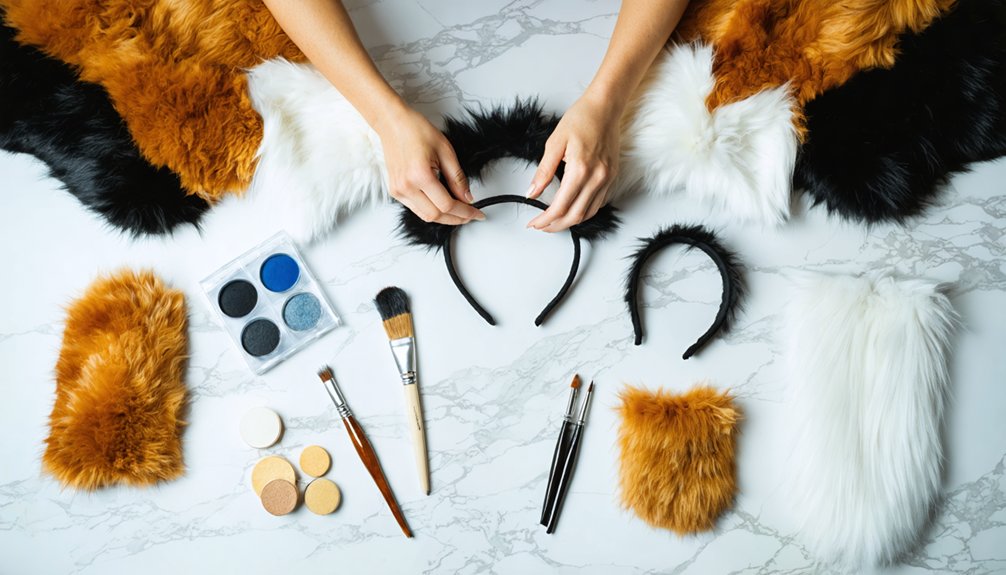
Layer texture patterns with equal precision. Scaled fabric reads reptile, brushed fleece reads mammal, holographic mesh reads fantastical creature. Combining both elements creates a design language your audience decodes within seconds.
Avoid stacking multiple competing textures or colors, since that fragments the visual story. Select the one material and one dominant hue that define your animal’s silhouette, then build every supporting detail around reinforcing that core identity.
Match Colors and Textures to Your Target Species
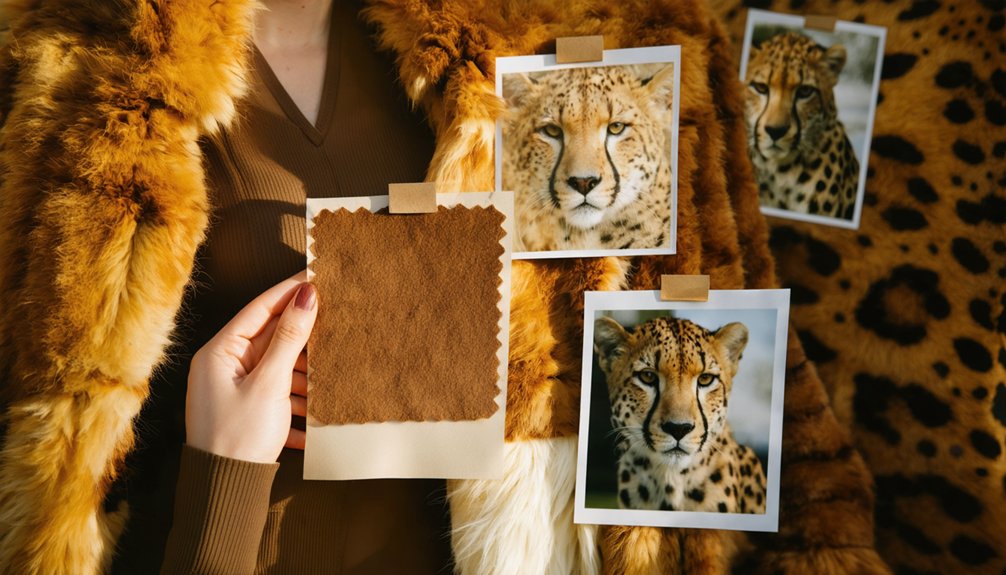
Nailing the visual read of your animal cosplay comes down to two core elements: color and texture. Precise color matching and intentional texture selection separate a convincing costume from a generic one. Reference actual species photography, not cartoon interpretations, when locking in your palette.
Prioritize these design decisions:
Prioritize design decisions that define your costume’s success before worrying about anything else.
- Base coat accuracy: Match dominant body color using fabric swatches against reference images under natural light.
- Texture selection: Choose materials that mimic fur grain, scale pattern, or feather layering specific to your target species.
- Contrast mapping: Identify secondary markings—patches, stripes, gradients—and replicate their placement anatomically.
- Color matching consistency: Extend your palette across accessories and details to maintain visual cohesion throughout the full costume.
Two well-executed elements outperform ten poorly researched ones every time.
Avoid Full-Body Costumes in Warm or Humid Conditions
Visual accuracy gets your costume noticed—thermal management keeps your animal safe. Full-body builds, whether you’re layering vintage costume styles or constructing dense fur suits, trap heat and restrict airflow dangerously fast in warm or humid environments. You’ll want to prioritize breathable, lightweight fabrics that allow natural body-temperature regulation without sacrificing design integrity.
When incorporating space themed accessories or dimensional elements, mount them externally on minimal base layers rather than encasing your animal in sealed coverage. Opt for open-back panels, mesh inserts, and segmented construction that ventilate actively.
Monitor your animal’s breathing rate, paw temperature, and behavior throughout wear periods—early overheating signs demand immediate removal.
Short wear sessions, shaded environments, and pre-event temperature checks aren’t optional safeguards; they’re technical requirements for responsible costume deployment.
Confirm the Fit Is Snug Without Any Pressure Points
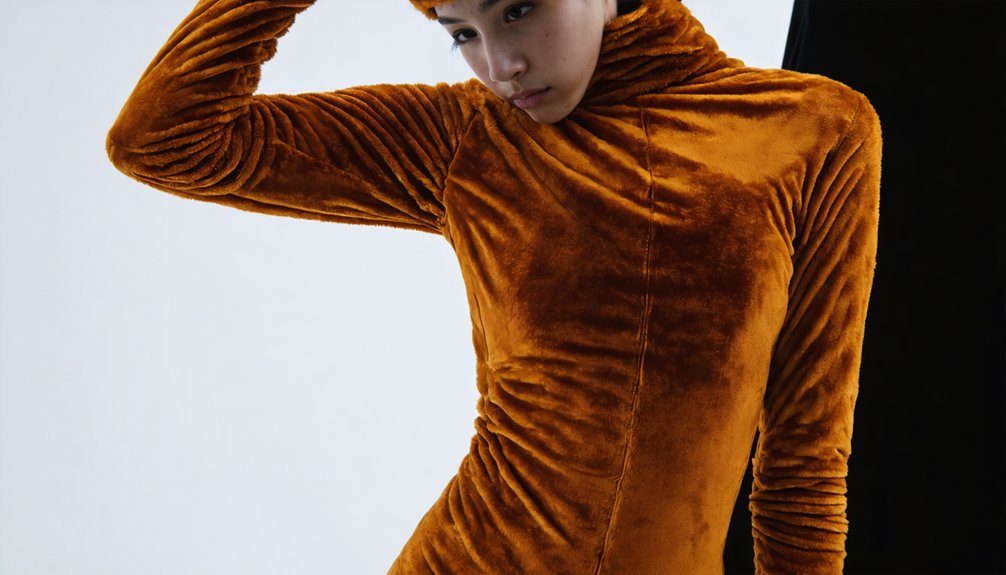
Fit determines whether your animal wears the costume comfortably or spends the session fighting it. You’ll want a snug fit that eliminates excess fabric while avoiding compression against muscles or joints. Measure neck, chest, and body length before selecting any size, since labels alone won’t guarantee accuracy.
Prioritize these fit checkpoints before the event:
- No pinching: Press along seams to detect hidden pressure points at shoulders and chest
- Material breathability: Confirm fabric allows airflow against the skin during movement
- Full range of motion: Watch your animal walk, sit, and turn without restriction
- Costume durability: Snug construction reduces snagging, which weakens seams over repeated wear
Run a short test session early. You’ll catch fit problems before they compromise the costume or your animal’s comfort.
Test the Costume Before the Event
Before the event, run a dedicated test session that mimics real cosplay conditions—duration, environment, and activity level included.
Dress your pet in the full costume and observe how they move, sit, lie down, and navigate turns. Watch for stress signals: pawing at the outfit, freezing, excessive panting, or refusal to walk.
Monitor costume maintenance needs during the trial—check for loose seams, shifting accessories, or fabric bunching under the legs.
Time the session realistically, keeping it short to prevent overheating. Prioritize pet hydration throughout, offering water breaks every fifteen minutes.
Document what needs adjustment and make corrections before the actual event. A controlled test eliminates surprises, letting you troubleshoot fit, comfort, and structural integrity while your pet still has recovery time.
Limit Wear Time to Prevent Fatigue and Overheating
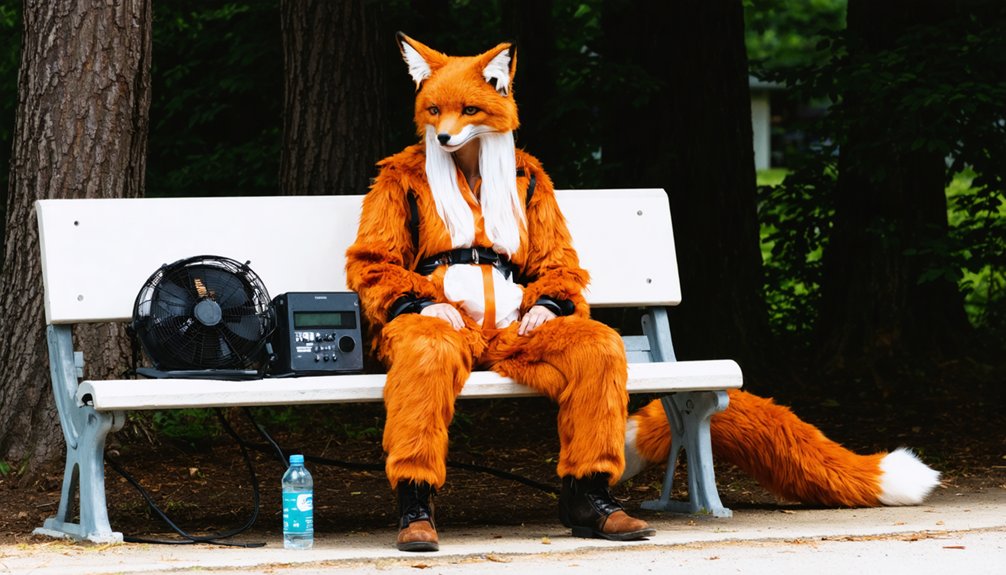
Even the best-fitting costume becomes a hazard when worn too long—heat builds, stress compounds, and fatigue sets in faster than most owners anticipate.
Elaborate fur patterns and layered materials accelerate heat retention, while suppressed animal sounds signal mounting distress you can’t afford to ignore.
Monitor your pet’s wear sessions using these precision checkpoints:
- Cap sessions at 15–20 minutes, especially in warm environments or under lighting
- Watch for panting, stillness, or silence—disrupted animal sounds indicate thermal or psychological stress
- Remove costumes between appearances to allow full sensory and temperature recovery
- Inspect fur patterns post-wear for matting or friction points that worsen with extended contact
Treat wear time as a design variable, not an afterthought—your pet’s endurance threshold is part of the costume’s technical spec.
Frequently Asked Questions
Can I Use Fabric Paint or Dye on My Pet’s Costume?
You can use fabric paint, but prioritize fabric safety by avoiding toxic chemicals near your pet’s skin. Explore dye alternatives like pre-colored, pet-safe materials to innovate boldly while keeping your pet’s comfort and health protected.
Are Certain Animal Costume Styles Better Suited for Specific Pet Breeds?
Over 70% of pet costumes fail due to poor fit. Yes, breed-specific accessories and costume fit considerations matter—you’ll want snug designs for long-bodied breeds like Dachshunds, while broader cuts suit Bulldogs better.
How Do I Clean or Wash My Pet’s Cosplay Costume Safely?
Check your costume material safety labels first—hand-wash delicate fabrics in cold water, machine-wash durable ones on gentle cycles, and air-dry everything. Remove pet costume accessories before washing to prevent damage or tangling during the cleaning process.
Should I Consult a Veterinarian Before Dressing My Pet in Costume?
Yes, you should consult a vet before prioritizing pet safety and costume comfort. They’ll identify allergies, mobility restrictions, and stress triggers, ensuring your cosplay design innovates without compromising your pet’s physical and behavioral well-being.
What Age or Health Conditions Make Cosplay Costuming Unsafe for Pets?
Like fragile glass, very young, elderly, or ailing pets can’t handle costume stress. You’ll want to avoid costuming them due to pet allergy risks, respiratory issues, or costume size safety concerns that worsen existing conditions.
References
- https://starstruckpanda.com/animal-inspired-cosplay-costume-design-concepts/
- https://www.animalhumanesociety.org/resource/seven-tips-safe-pet-costumes
- https://www.edmontonhumanesociety.com/wp-content/uploads/2024/05/2022-Costumes-Pets-EHS-Resource-Guide.pdf
- https://www.everhartvet.com/your-guide-to-safe-pet-costumes/
- http://www.beltonvetclinic.com/services/cats/blog/6-scary-good-pet-costume-safety-tips
- https://askavet.com/blogs/news/vet-guide-to-2025-halloween-pet-costume-safety-comfort-hazards-calming-tips-🐶🐱
- https://hospital.cvm.ncsu.edu/resources/animal-safety-tips/
- https://www.avma.org/resources-tools/pet-owners/petcare/halloween-pet-safety
- https://www.dahnc.com/articles/safety-guidelines-for-pet-costumes
- https://vetmed.tamu.edu/news/pet-talk/pet-costumes-the-good-the-bad-and-the-ugly/