The most iconic comic book wig styles do more than look good — they encode character identity into every strand. Rogue’s white streak signals absorbed trauma, Storm’s white mane broadcasts elemental royalty, and Wolverine’s pointed silhouette works as a wearable logo. Doctor Strange’s silver temples warn you of earned consequence, while Jean Grey’s Phoenix red signals psychological collapse. Each style functions as visual shorthand, and there’s much more to unpack about how these designs actually work.
Key Takeaways
- Rogue’s dark hair with white streak is one of the most recognizable comic wig styles, symbolizing absorbed trauma and psychological complexity.
- Storm’s flowing white mane represents elemental power and royal heritage, making it iconic across comics, film, and cosplay.
- Wolverine’s pointed hair and mutton chops create an instantly recognizable silhouette functioning as a wearable logo without a mask.
- Medusa’s deep crimson prehensile locks double as a weapon, capable of lifting over 1.6 tons and ensuring instant visual recognition.
- Mystique’s flame-red hair contrasts dramatically with blue skin, creating a biologically integrated aesthetic that defines her shape-shifting identity.
What Makes a Comic Book Wig Style Truly Iconic?
When you look at the most memorable comic book characters ever created, their hair almost always doubles as a signature — a visual shorthand that communicates personality, power, and identity before a single word of dialogue appears.
Iconic hairstyles achieve this through deliberate artistic expression, where every sculpted spike or dramatic streak carries character symbolism. Visual identity locks into cultural impact when a design remains consistent across decades of design evolution.
Deliberate artistic expression transforms every spike and streak into character symbolism that resonates across decades of evolving design.
You’ll notice that the strongest examples balance superhero aesthetics with thematic representation, ensuring each silhouette reads instantly across comics, animation, and film.
Narrative significance deepens when hair shifts alongside character arcs — reinforcing transformation rather than decorating it. True character recognition demands that the style feel inseparable from the character themselves, making every strand a purposeful, irreplaceable creative decision.
Rogue’s White-Streaked Hair Is Pure Mutant Drama
When you look at Rogue’s hair, that bold white streak cutting through dark brunette locks hits you immediately as a masterclass in contrast-driven character design.
The streak functions less like a natural hair feature and more like a costume element, giving her a wig-ready silhouette that cosplayers, animators, and filmmakers can replicate with near-perfect fidelity across every medium.
You’re looking at one of Marvel’s most technically efficient visual choices, where a single two-tone design does the identity work that most characters need an entire costume to achieve.
The Streak’s Visual Power
Few visual choices in comic book design hit as immediately as Rogue’s white-streaked hair — a single, boldly placed contrast element that turns a natural brunette base into something unmistakably mutant. That streak symbolism runs deep, communicating absorbed trauma, untouchable power, and psychological complexity without dialogue.
It’s streak-as-scar, streak-as-signal, and it anchors her entire visual identity across every medium.
- The streak’s placement above the part line creates an asymmetrical tension that draws your eye instantly.
- High contrast between dark brown and white maximizes silhouette readability at any panel scale.
- No mask, no cowl — the hair is the costume’s anchor point.
- The design translates cleanly into wigs, cosplay, and film without losing recognition value.
You’re looking at surgical visual economy dressed as drama.
Rogue’s Wig-Ready Design
Rogue’s design is practically a wig kit handed to you with instructions already included. That bold white streak cutting through dark brunette waves isn’t decorative — it’s structural. It defines the silhouette before you even register the green-and-yellow costume. You’re replicating mutant identity the moment you separate those two tones. The contrast does all the heavy lifting.
Rogue’s rebellion lives in that streak’s placement — always forward-framing her face, always deliberate. You don’t bury it. You let it lead.
Whether you’re working with a two-tone wig or hand-painting highlights into synthetic fiber, the design logic stays consistent: dark foundation, stark white arc, volume with movement.
Across comics, animation, and film, that streak never disappears. It’s the one element every adaptation protects.
Iconic Across Every Medium
That white streak doesn’t just survive adaptation — it anchors every version of Rogue that’s ever reached a screen or page. Its wig versatility makes it a design innovation worth studying across stylistic evolution and medium adaptation.
- Visual storytelling sharpens instantly: one streak communicates danger, isolation, and power simultaneously.
- Cultural symbolism runs deep — untouchability rendered through hair becomes narrative significance you can’t ignore.
- Character transformation tracks visibly across comics, animation, and film without losing design coherence.
- Medium adaptation proves that strong wig-ready choices outlast trend cycles and production constraints.
You’re watching a masterclass in how character design survives translation. That streak isn’t decorative — it’s structural.
Every costume update, every casting choice circles back to protecting that single defining visual element.
Storm’s White Mane Redefined the Superhero Wig Style
When Marvel designers gave Storm her cascading white mane in the 1970s, they didn’t just create a hairstyle — they engineered a visual identity that would outlast every trend in superhero costume design.
Storm’s Evolution from Kenyan royalty to X-Men powerhouse hinged heavily on Hair Symbolism: that white mane communicated Elemental Identity before she ever summoned lightning.
You can trace her Iconic Transformations — cropped mohawk, flowing cape-length waves — and recognize that each shift carried Narrative Function, signaling psychological turning points.
The Visual Impact of Regal Presentation made her silhouette immediately readable across comics, animation, and film.
Style Versatility kept the design culturally adaptable, ensuring Cultural Influence that extended beyond comics into fashion runways.
Her hair wasn’t decoration — it was architecture.
Wolverine’s Points-and-Chops Combo Works Without a Mask
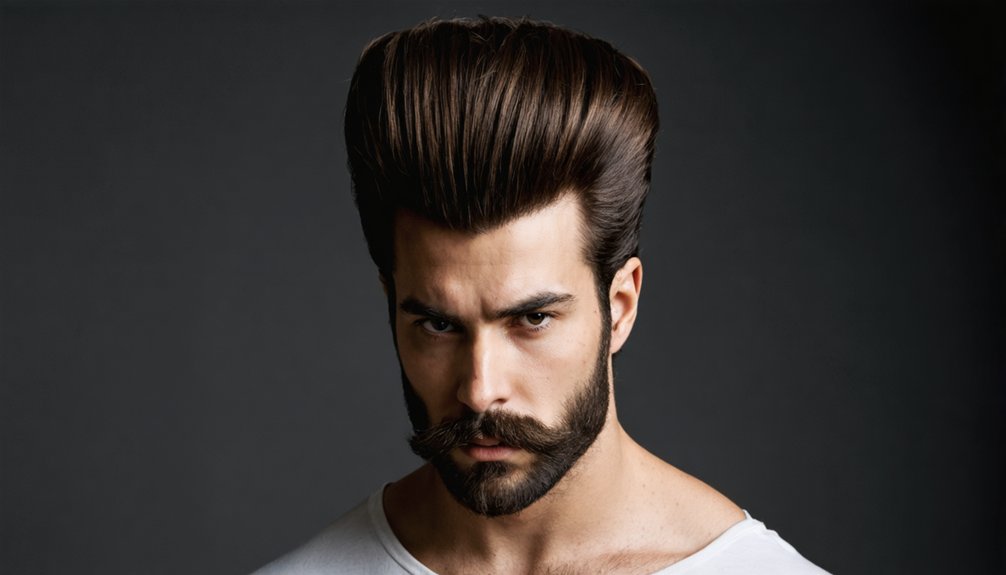
Few superhero designs solve the unmasked recognition problem as efficiently as Wolverine’s two-point hair-and-mutton-chops combo — a silhouette so structurally deliberate that you’d identify him in a crowd without the yellow suit, the claws, or a single panel of context.
Wolverine’s silhouette functions as a wearable logo. The twin points echo the mask’s ears, creating mask synergy even when the mask is absent. Iconic mutton chops anchor the jawline, framing rugged grooming as intentional character architecture rather than aesthetic accident.
Hair symbolism runs deep here — wildness controlled into precision.
- Points mirror the cowl’s geometry exactly
- Chops define facial structure independently of costume
- Rugged grooming signals feral discipline simultaneously
- The combo reads instantly across comics, film, and animation
Doctor Strange’s Silver Temples Are a Wig Style and a Warning
Doctor Strange’s silver-templed hair operates less like a personal style choice and more like a credential — the visual shorthand that separates a former hotshot surgeon from a Sorcerer Supreme.
Those silver temples aren’t just aging gracefully; they’re warning signs etched directly onto his silhouette. You read the mystical aura before he speaks a single incantation.
Those silver temples don’t whisper age — they broadcast consequence, visible before the first spell is cast.
The visual contrast between his dark hair and silver edges creates immediate narrative depth, signaling both mastery and cost. His character evolution is written into the hairline — arrogance surgically removed, replaced by earned wisdom.
The iconic style functions as a wig designer’s dream: structured, symbolic, and instantly transferable across comics, film, and animation.
Hair symbolism doesn’t get more precise than Strange’s temples quietly announcing, “I’ve already seen what you’re about to attempt.”
Medusa’s Living Red Hair Is a Wig Style Built Into Her Power
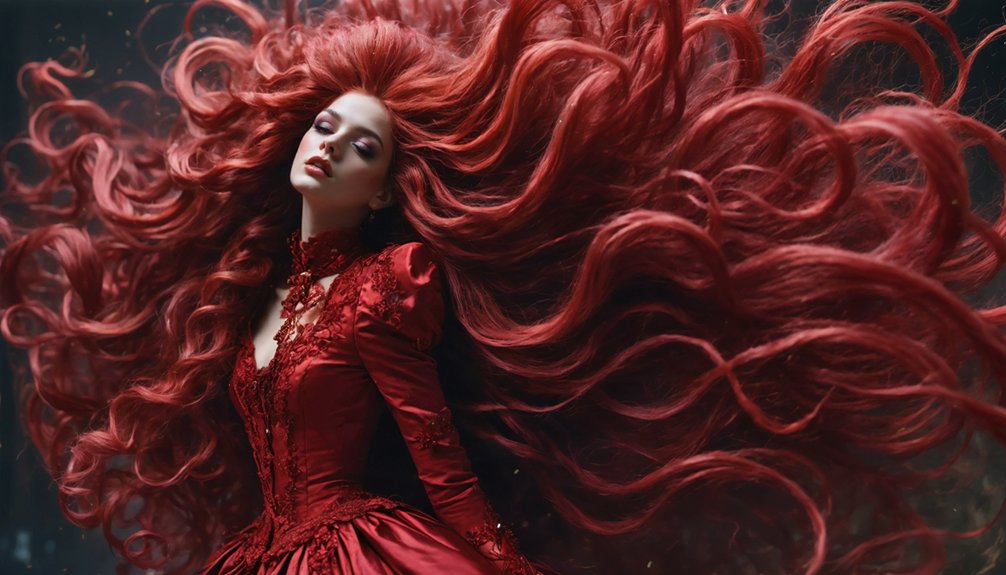
When you look at Medusa of the Inhumans, you’re seeing a wig style that doesn’t just sit on the head — it moves, strikes, and grapples with full prehensile control across hundreds of individually animated strands.
Her deep red hair functions as both a visual anchor for the Inhumans’ royal design language and an active combat weapon, capable of lifting vehicles, restraining enemies, and executing precise manipulation tasks.
You can’t separate the hair from the power, which makes her the rare comic character whose wig-style identity is structurally fused to her ability set rather than simply framing her face.
Medusa’s Prehensile Red Locks
Medusa’s hair isn’t decorative—it’s a weapon, a tool, and a full-body extension of her will. Her prehensile locks move independently, respond to thought, and generate crushing force. You’re looking at a wig style that functions as living architecture.
- Medusa’s hair contains over 70,000 strands, each individually controlled.
- Her prehensile locks can lift objects exceeding 1.6 tons.
- The deep crimson coloring creates instant visual recognition without a mask or costume gimmick.
- Her hair operates as both offense and mobility tool in combat scenarios.
No stylist constructs this look—Medusa’s hair constructs itself around her intention.
It’s the rare comic design where biology, power, and aesthetics collapse into one inseparable system you can’t replicate without the superpower attached.
Hair As Living Weapon
The result? Stylistic diversity that no wig replicates—because Medusa’s hair isn’t worn.
It *performs*.
Iconic Inhumans Visual Identity
Few comic characters wear their power as visibly as Medusa does—her cascading red hair isn’t a stylistic accessory but a structural extension of her identity as queen of the Inhumans. Through visual storytelling, her hair evolution reinforces superhero identity and narrative function simultaneously.
Inhumans legacy demands elemental design, and Medusa’s influence delivers exactly that—hair symbolism rendered as weaponized architecture.
When studying iconic transformations in character recognition, Medusa’s silhouette teaches you something essential: design clarity communicates power before dialogue ever can.
- Her crimson mass signals royalty and danger instantly
- Each strand functions as both costume element and offensive tool
- Hair color consistency strengthens cross-media character recognition
- Elemental design choices make her readable across every adaptation
She’s a wig style that breathes.
Black Canary’s Blonde Look Has Always Been Part of the Costume
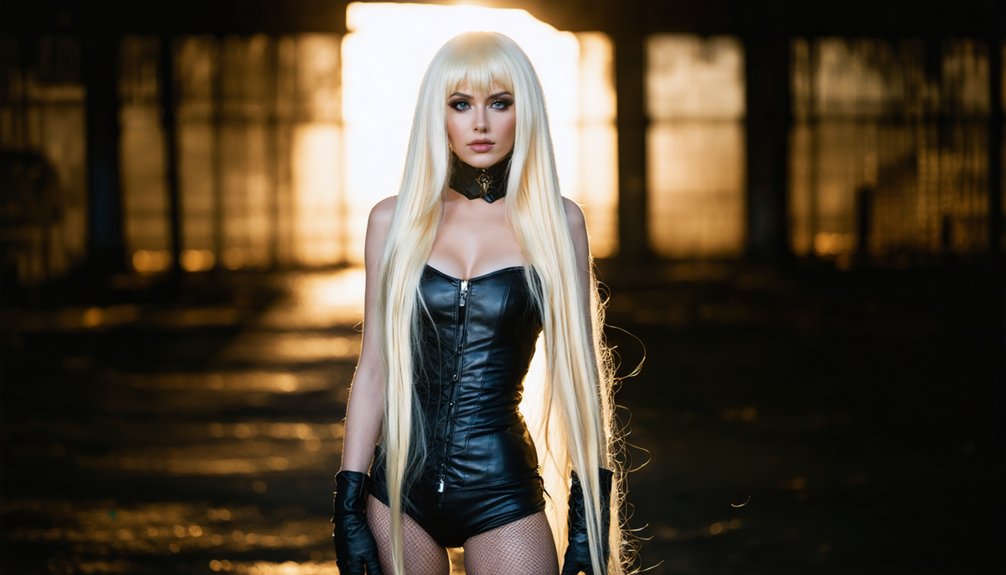
Black Canary’s signature blonde hair isn’t just a stylistic choice — it’s a functional piece of her costume, and that distinction matters more than casual readers might realize.
Her blonde look operates as costume synergy, merging hair identity with visual representation in a way few characters achieve. You’re looking at a design where color symbolism carries real weight — the platinum blonde reads as bold, combative, and unapologetically feminine, reinforcing her street-level authority.
Within superhero aesthetics, that hair functions like a logo. Strip away the fishnet stockings, and the iconic styles still land because her hair anchors recognition.
Black Canary channels feminine power through deliberate design choices, not decorative ones. For wig-style research, she’s a masterclass in how a single color decision defines an entire heroic identity.
Jean Grey’s Dark Phoenix Red Is Comics’ Most Dramatic Hair Shift
When Jean Grey transforms into the Dark Phoenix, her hair doesn’t just change — it becomes a narrative weapon, shifting from warm auburn to a blazing, saturated red that visually signals the complete collapse of her moral restraint. This color transformation carries enormous narrative significance, encoding her identity shift and cosmic power into a single design decision.
- Her red hair operates as hair symbolism made literal — beauty weaponized.
- The visual storytelling communicates character evolution without dialogue.
- Dramatic flair escalates through contrast between her two distinct phases.
- Jean Grey’s design proves that color alone can carry emotional weight.
You’re watching a character redefined through pigment. Dark Phoenix doesn’t need exposition — her hair announces the catastrophe.
Ms. Marvel’s Blonde Streak Made a Lightning Bolt Into a Wig Style
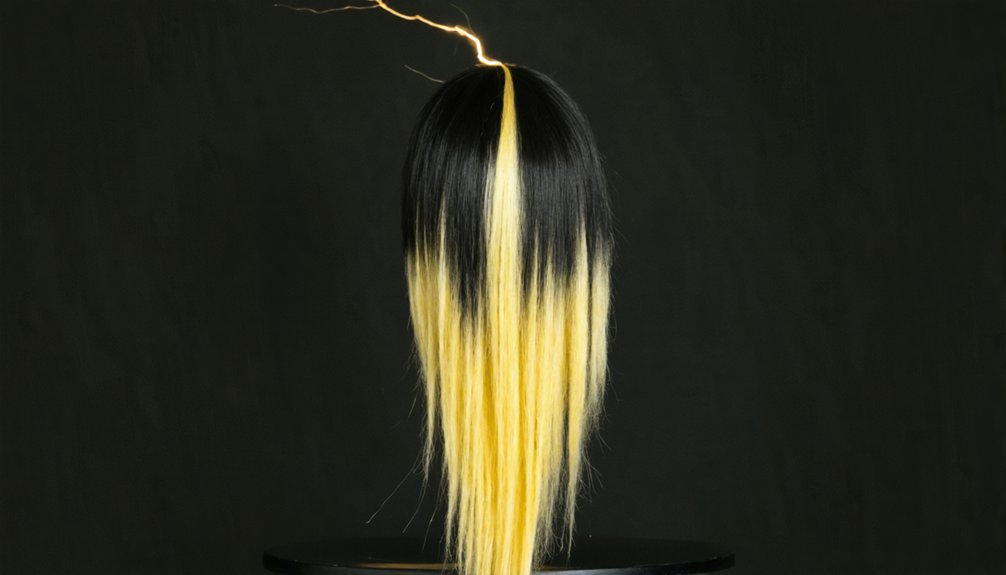
When you look at Carol Danvers in her classic Ms. Marvel costume, you can’t miss how her blonde hair and the lightning bolt sash work together as one unified design system.
The sharply defined blonde streak running through her dark hair functions less like a natural highlight and more like a graphic element—something a wig designer would engineer specifically for stage readability.
If you’re building a wig around her look, you’re fundamentally recreating a two-tone color split that mirrors the costume’s own bold geometric language.
Carol’s Iconic Blonde Look
Few comic book hairstyles convert as cleanly into wig territory as Carol Danvers’ signature blonde look—specifically the version where a dramatic dark streak cuts through her golden hair like a lightning bolt frozen mid-strike.
Carol’s Transformation from soldier to superhero embedded this iconic color contrast into visual culture permanently. You’re not just wearing hair—you’re wearing a symbol.
What makes this wig style technically compelling:
- The contrast ratio between platinum blonde and deep brown creates immediate silhouette recognition.
- Layered styling keeps movement dynamic, avoiding flat costume-wig syndrome.
- Root definition techniques can replicate the streak’s sharp geometric entry point.
- The cut’s length hits shoulder-adjacent zones, balancing boldness with versatility.
Recreate this look and you’re channeling something structurally precise, narratively loaded, and unmistakably Carol.
Lightning Bolt Hair Design
Carol Danvers didn’t just wear a streak—she encoded a lightning bolt into the DNA of blonde wig design. That diagonal flash of contrasting color transforms ordinary hair symbolism into visual storytelling with structural precision.
You’re looking at design innovation that uses color psychology deliberately: warm blonde grounds the look in accessibility, while the streak introduces tension, speed, and elemental force.
This isn’t decoration. It’s character evolution rendered through hair geometry. The lightning bolt shape signals power before a single panel of dialogue.
Across media representation, that streak has driven iconic transformations in costume cosplay, animation, and live-action adaptations, amplifying cultural significance far beyond comics. Its aesthetic impact lies in simplicity—one angled line reframes an entire silhouette, making the wig style immediately readable and electrically unforgettable.
Wig-Worthy Visual Impact
Because the lightning bolt streak doesn’t just suggest power—it manufactures it at the follicle level. Ms. Marvel’s blonde streak transforms a biological feature into wearable iconography. You’re witnessing dynamic hair evolution operating as character architecture, not decoration.
This streak delivers visual storytelling impact by functioning as a costume element without requiring one:
- Contrast engineering: Dark-to-light voltage reads instantly across print, screen, and cosplay
- Silhouette precision: The streak anchors facial recognition without a mask or cowl
- Symbolic compression: One streak communicates transformation, energy, and identity simultaneously
- Wig replication demand: It’s one of comics’ most-requested single-element costume accessories
You don’t need the full suit. That streak alone signals Ms. Marvel—proof that targeted hair design outperforms elaborate costuming when executed with technical intentionality.
Mystique’s Blue-and-Red Look Proves a Wig Style Can Be a Disguise
Mystique doesn’t wear a wig — she *becomes* one. Her default blue skin and flame-red hair aren’t a costume; they’re a biological design system built around disguise dynamics.
That red hair functions as a visual anchor — bold, saturated, instantly memorable — while her blue complexion creates maximum contrast, amplifying color symbolism at every appearance.
That red hair is a visual anchor — bold, saturated, unforgettable — engineered for maximum contrast against blue skin.
When she shifts identities, she’s fundamentally cycling through a wardrobe of wig styles by rewriting her own cellular structure.
You’re watching a character whose “natural” look is already a constructed aesthetic performance. That’s what separates Mystique from every other entry on this list.
Her red hair isn’t styled — it’s *deployed*. It signals danger, deception, and identity fluidity simultaneously, making it the most technically sophisticated wig-style concept in comics.
Frequently Asked Questions
Can Real Wigs Recreate Comic Book Character Hairstyles Accurately at Home?
Like an artist wielding a brush, you can master wig styling techniques to bring character hair inspiration to life at home, using heat tools, teasing, and color sprays for accurate comic recreations.
Which Comic Book Wig Styles Are Easiest for Cosplay Beginners to Attempt?
For beginner tips, you’ll find Rogue’s white-streaked brunette and Storm’s sleek white styles easiest to recreate. Both require minimal styling, and simple wig maintenance—regular brushing and proper storage—keeps these iconic looks fresh and cosplay-ready.
How Do Comic Artists Decide When a Character Needs a Hair Redesign?
Like Phoenix rising, you’ll notice artists trigger hair redesigns when character evolution demands fresh design symbolism—signaling trauma, power shifts, or identity transformation through bold visual cues that instantly communicate change without requiring narrative explanation.
Are Comic Book Wig Styles Ever Influenced by Real-World Fashion Runway Trends?
Yes, you’ll find runway inspiration shaping comic hair constantly. Artists embrace fashion crossover by translating haute couture silhouettes, bold color blocking, and avant-garde textures directly into character designs, keeping visual storytelling culturally relevant and visually electrifying.
What Materials Work Best for Recreating Sculpted Comic Book Hair Shapes?
For sculpted comic hair shapes, you’ll want thermoplastic foam, wefted synthetic fiber, and hard wax. They’ll lock hair texture into dramatic spikes while keeping color vibrancy bold, sharp, and authentically panel-perfect across every ambitious, innovative recreation.
References
- https://www.cbr.com/best-hairdos-marvel-universe/
- https://bookriot.com/gettin-wiggy-best-worst-wigs-current-comics-tv/
- https://www.marvel.com/articles/comics/marvel-s-top-10-heroic-hairstyles-of-the-1980s
- https://womenwriteaboutcomics.com/2018/09/hottest-hair-in-comics/
- https://ifanboy.com/articles/the-top-10-most-fashionable-comic-book-characters/
- https://www.reddit.com/r/comics/comments/8hyq8o/name_the_iconic_hairstyles/
- https://www.facebook.com/groups/2223643067889016/posts/2689073861345932/
- https://uk.pinterest.com/1203luckystar/comic-book-super-heroes-hairstyles/
- https://www.marvel.com/watch/digital-series/marvel-top-10/1980s-super-hero-hairstyles-marvel-top-10
- https://numehair.com/blogs/default-blog/its-time-to-level-up