Heat-resistant wigs built from fibers like Futura can handle temperatures up to 410°F, giving you real styling flexibility for complex cosplay looks that actually hold. You’ll get the best results styling between 270°F and 340°F, where curls and straight styles set cleanly without fiber damage. Brands like Arda Wigs, Epic Cosplay, and Jon Renau lead the pack for durability and realism. Stick around, because there’s a lot more to uncover about choosing and maintaining the perfect wig.
Key Takeaways
- Heat-resistant fibers like Futura tolerate up to 410°F, allowing safe styling between 270°F–340°F without melting or permanent deformation.
- Top brands include Arda Wigs, Epic Cosplay, and Jon Renau’s Heat Defiant line, each offering unique benefits for cosplay styling.
- Heat-resistant wigs provide matte finishes and varied textures, appearing more natural on camera than standard high-shine synthetic alternatives.
- Look for thick fiber density, lace fronts, and low-shine finishes to achieve realistic hairlines and minimize glare in photos.
- Apply heat protectant sprays, work in small sections, and store on a stand to maximize a wig’s 3–4 month lifespan.
What Fibers Make a Wig Actually Heat-Resistant?
Not all synthetic fibers handle heat the same way, and understanding the difference determines whether your styling session ends in a perfect curl or a melted disaster.
Standard synthetic fibers melt around 180°F, making them incompatible with most styling tools. Heat-resistant fiber types, like Futura — a high-grade Japanese Kanekalon variant — tolerate temperatures up to 410°F, though you’ll get the best results styling between 280°F and 340°F.
Standard synthetic fibers melt around 180°F. Heat-resistant options like Futura handle up to 410°F without flinching.
Manufacturers treat these fibers during production to raise their thermal threshold considerably.
Wig construction also matters here. A wig built with heat-resistant fibers throughout its cap — not just surface strands — gives you consistent styling results across every section.
Futura fibers specifically offer a sleeker, softer texture that responds predictably to curling irons and flat irons, making them ideal for technical character builds.
Heat-Resistant vs. Standard Synthetic Wigs
When you place a standard synthetic wig near a curling iron, you’re risking melted, fused fibers because those untreated strands typically can’t handle temps much above 180°F, while heat-resistant fibers push that ceiling to 270°F–410°F.
That wider tolerance means you can restyle curls, waves, and straightened sections repeatedly without locking yourself into a single look, though heat-resistant wigs do wear faster—around 3–4 months versus roughly 6 months for standard synthetics.
You’ll also notice a stark texture contrast: standard synthetics often carry a plasticky, high-shine finish that photographs poorly under convention lighting, while heat-resistant fibers like Futura offer a sleeker, lower-shine surface that reads far more realistically on camera.
Fiber Heat Tolerance Differences
Although both heat-resistant and standard synthetic wigs look similar on the shelf, their fibers behave completely differently the moment a hot tool touches them.
Standard synthetic fiber composition typically melts or frizzes at temperatures as low as 180°F, severely limiting your styling techniques.
Heat-resistant fibers, however, undergo specialized manufacturing treatments that push their tolerance to between 270°F and 410°F.
Epic Cosplay’s Futura fiber exemplifies this innovation — it’s a high-grade Japanese Kanekalon variant with a sleeker, softer texture engineered specifically for repeated heat exposure.
You can curl, straighten, and reshape it without triggering irreversible damage.
That expanded thermal range means you’re not locked into one style.
You can rework sections as your character design evolves, giving you real creative control throughout your cosplay season.
Restyling And Durability Compared
Key durability and restyling comparisons:
- Heat-resistant fibers reset shape after cooling, enabling multiple style changes.
- Standard synthetics permanently deform under direct heat.
- Repeated high-heat passes accelerate fiber breakdown in both types.
- Heat protectant sprays extend fiber lifespan during active restyling sessions.
- Lower heat settings preserve texture longer across multiple conventions.
Prioritize smart heat management to maximize both performance and longevity.
Shine And Texture Contrast
One of the most immediately noticeable differences between heat-resistant and standard synthetic wigs is shine, and it directly affects how convincing your cosplay looks under convention lighting or on camera.
Standard synthetic fibers produce a high shine intensity that reads as artificial in photos, immediately breaking immersion. Heat-resistant fibers, particularly Futura from Epic Cosplay, offer a sleeker yet noticeably more matte finish that photographs closer to natural hair.
Beyond shine, texture variety expands dramatically with heat-resistant options. You’re not locked into a factory-set style—you can straighten, curl, or wave sections to create dimension that standard synthetics simply can’t hold.
That ability to build layered, multi-textured looks without sacrificing fiber integrity makes heat-resistant wigs a technically superior choice for detail-driven cosplay builds.
Which Features Matter Most When Buying a Cosplay Wig?
When shopping for a heat-resistant cosplay wig, knowing which features actually matter can save you from a frustrating purchase.
Prioritize these key specs before clicking “buy”:
- Fiber heat tolerance: Look for ratings between 270°F–410°F for reliable styling flexibility.
- Fiber density: Thicker fibers eliminate visible cap gaps under convention lighting.
- Lace fronts or skin tops: These deliver seamless hairlines and natural-looking partings.
- Low-shine finish: Matte textures photograph realistically and reduce artificial-looking glare.
- Wig color options: Broad palettes let you match exact character references without compromising fiber quality.
Don’t overlook compatibility with your styling accessories, including heat protectant sprays and flat irons rated for synthetic fibers.
Brands like Arda Wigs and Epic Cosplay consistently deliver on these technical benchmarks.
Best Heat-Resistant Cosplay Wigs Right Now
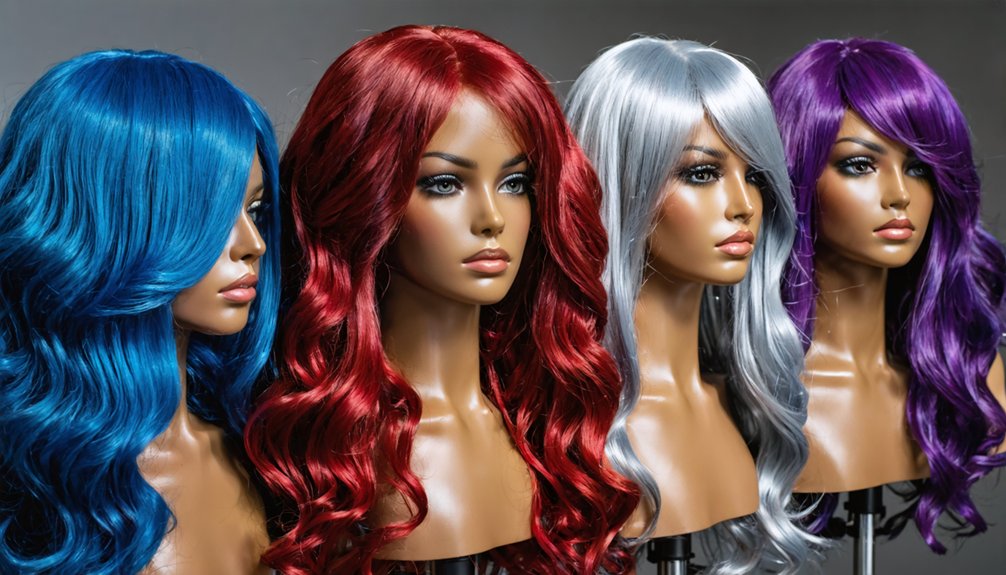
Finding a heat-resistant wig that balances fiber quality, styling range, and cosplay-specific performance narrows the field quickly, but a few standout options consistently earn top marks.
Arda Wigs remains the go-to for heavy restyling work, delivering thick fiber density, minimal shine, and reliable heat tolerance that holds up across repeated convention wears.
Epic Cosplay’s Futura-based wigs support temperatures up to 410°F, though you’ll want to keep your flat iron dialed between 280°F–340°F to protect texture integrity. Their extensive wig color options make character-accurate matching straightforward.
Jon Renau’s Heat Defiant line adds lace-front construction and low density for seamless hairlines, expanding your styling techniques beyond basic straightening into layered, dimensional looks.
Each brand targets a specific performance tier, so matching your pick to your actual restyling demands is essential.
Top Heat-Resistant Wig Brands Compared
Key differentiators worth tracking:
- Fiber density and shine levels
- Maximum heat tolerance ratings
- Lace front and cap construction quality
- Color catalog depth for character accuracy
- Compatibility with heat protectant products across wig styling techniques
What Temperature Should You Actually Use?
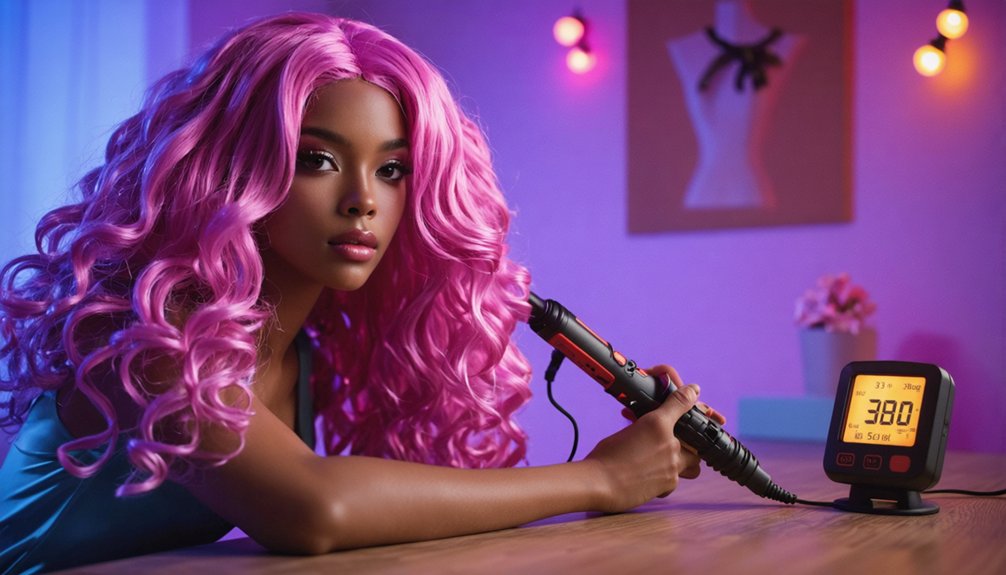
Even though your heat-resistant wig may technically tolerate up to 410°F, you’ll get the best results by keeping your styling tool dialed between 280°F and 340°F for most Futura and high-grade Kanekalon fibers.
Start closer to 270°F and increase only if needed, since many tools run 20–30°F hotter than their display shows. Before applying any heat, use synthetic-safe heat protection products to shield fibers from texture breakdown.
Work section by section, applying heat briefly and letting each section cool completely before restyling. These wig styling techniques lock your shape in place more effectively than rushing through strands.
Skip chi irons entirely—they run dangerously hot for synthetic fibers. A basic flat iron with precise temperature control gives you the most reliable, damage-free results every session.
How to Style Heat-Resistant Wigs Without Damage
Start your styling session by setting your tool between 270°F and 340°F—even if your fiber can technically handle up to 410°F, staying in that lower range protects texture and extends the wig’s life.
Work in small, manageable sections, applying heat briefly and evenly rather than lingering on a single strand, since repeated high-heat passes are the fastest way to degrade synthetic fibers.
Once you release each section, hold the curl or straightened shape in place and let it cool completely before touching it again, because that cooling phase is what actually locks the style into the fiber.
Choosing The Right Temperature
Because heat-resistant fibers can still sustain damage at the wrong temperature, dialing in the right setting before you touch your wig is critical. Precise temperature control separates a flawless restyle from irreversible texture loss.
Start low, test a hidden strand, and scale up only when necessary for effective heat application.
- Begin near 270°F; many tools run 20–30°F hotter than displayed
- Stay between 280°F and 340°F for most heat-resistant fibers
- Futura fibers tolerate up to 410°F, but lower settings protect longevity
- Apply heat briefly, section by section, never lingering on one strand
- Always verify your tool’s actual output with a thermometer when precision matters
Controlled, methodical heat application keeps fibers performing across multiple restyling sessions.
Sectioning And Heat Application
Working in sections is the key to even, damage-free styling that holds its shape across multiple wears. Start by clipping the wig into manageable horizontal layers, typically one-inch sections, before applying any heat. Precise sectioning techniques prevent overlapping passes, which dramatically reduces cumulative fiber stress.
For heat application, run your flat iron smoothly from root to tip in a single, controlled motion rather than hovering or backtracking. Keep each pass brief — roughly two to three seconds — then release and let the fiber cool completely before touching it again. Cooling locks the shape into place, so rushing this step undermines your results.
Always apply a synthetic-safe heat protectant spray beforehand, and never repeat high-heat passes on the same strand. Consistent technique here extends your wig’s restyling lifespan considerably.
Cooling And Shape Retention
Once the heat leaves the fiber, the real shaping happens. Cooling methods directly determine whether your styling techniques lock in or fall flat. Don’t move a curled section until it’s completely cool — rushing this step collapses the shape immediately.
Follow these cooling and retention essentials:
- Hold each curl pinned or clipped against the cap until fully cooled.
- Use a cool-shot blast from a hair dryer to accelerate setting.
- Never stack warm sections — heat transfers and distorts adjacent fibers.
- Let straightened panels hang freely before touching or combing through.
- Apply synthetic-safe heat protectant before each pass to reduce fiber fatigue.
Patience here isn’t optional — it’s technical strategy.
Once fibers cool, they lock into position with impressive durability, letting you restyle repeatedly without degrading your wig’s structure.
How Well Do These Wigs Perform After a Full Convention Day?
After a full convention day—hours of movement, humidity, and repeated contact—heat-resistant wigs hold up noticeably better than standard synthetics, though they’re not immune to wear.
Their denser fiber construction and lower-shine finishes contribute directly to convention endurance, maintaining shape integrity even as temperatures rise on the floor. You’ll notice that curls styled the night before stay defined rather than drooping by noon.
Cosplay comfort improves too, since heat-treated fibers tend to be softer against the scalp than standard Kanekalon. Lace fronts remain relatively secure with proper adhesive, and matte finishes continue photographing cleanly under harsh convention lighting.
Expect minor frizz near the nape after prolonged wear, but a quick pass with a detangling brush restores most of the original structure fast.
How Long Do Heat-Resistant Cosplay Wigs Last?
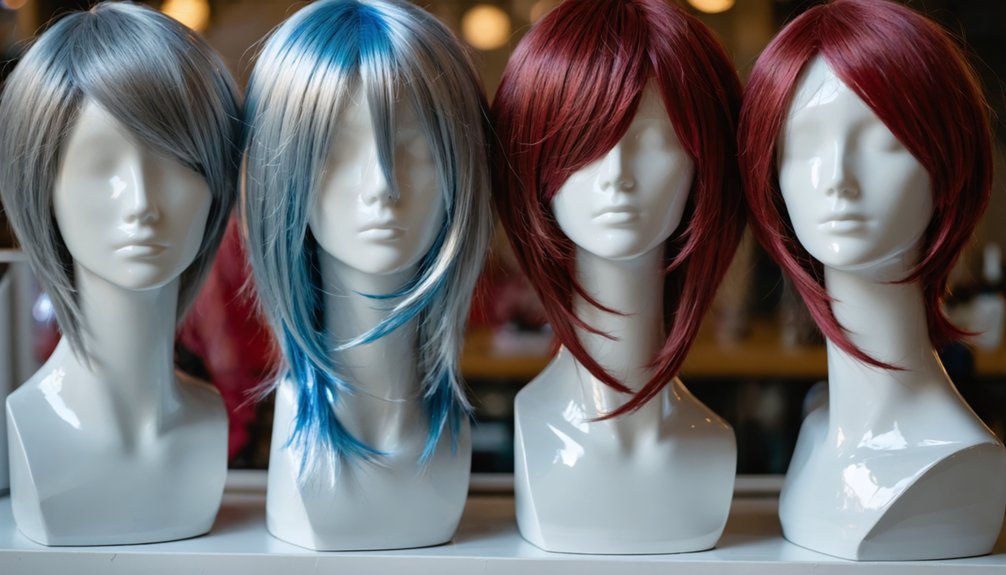
How long a heat-resistant cosplay wig lasts depends heavily on how often you style it and how aggressively you apply heat.
With smart styling techniques, you can push wig longevity further than you’d expect—but repeated high-heat passes degrade fibers faster than anything else.
Expect roughly 3–4 months with regular use, compared to 6 months for standard synthetic wigs.
Heat-resistant cosplay wigs typically last 3–4 months with regular use—half the lifespan of a standard synthetic wig.
Maximize that lifespan with these habits:
- Apply a synthetic-safe heat protectant before every styling session
- Keep temperatures between 280°F and 340°F
- Style section by section, never re-passing until fibers cool
- Store on a wig stand to preserve cap structure
- Detangle from ends to roots to minimize fiber stress
Treat your wig precisely, and it’ll deliver convention-ready results consistently.
How to Store and Maintain Heat-Resistant Wigs Between Wears
Protecting your investment doesn’t stop when the convention ends—proper storage directly determines how well your wig holds its shape and fiber integrity between wears.
Mount your wig on a stand or mannequin head immediately after use; folding or bagging it crushes fiber density and distorts the cap structure. For storing techniques, keep it away from direct sunlight and humidity, both of which degrade synthetic fibers faster than heat styling will.
Your maintenance tips routine should include detangling from ends to roots using a wide-tooth comb, never pulling from the scalp down.
Apply a synthetic-safe heat protectant before every styling session, and always let heat-styled sections cool completely before touching them. These precise habits dramatically extend performance across multiple convention cycles.
Frequently Asked Questions
Can Heat-Resistant Wigs Be Worn Outdoors in Hot or Humid Weather?
Yes, you can wear them outdoors! They’ll dance gracefully through warm breezes, but humidity effects may loosen styled curls. Monitor your outdoor comfort closely, as heat and moisture can challenge fiber integrity over extended wear.
Are Heat-Resistant Cosplay Wigs Safe for People With Sensitive Scalps?
Heat-resistant cosplay wigs can work for sensitive scalps, but you’ll want to examine wig materials carefully! Look for hypoallergenic cap linings to minimize scalp irritation, and always test new synthetic fibers before committing to extended wear sessions.
Can You Dye or Tint Heat-Resistant Synthetic Wig Fibers at Home?
Say you’re customizing a Rem cosplay — you can’t effectively dye heat-resistant synthetic fibers using traditional wig dyeing techniques, since they repel standard dye. Instead, you’ll use alcohol-based inks for innovative synthetic fiber care results!
Do Heat-Resistant Wigs Work Well With Cosplay Helmets or Headpieces?
Heat-resistant wigs offer solid wig compatibility with helmets! You’ll want low-profile caps for ideal helmet comfort. Pre-style fibers before wearing, secure the wig tightly, and let heat-locked styles hold their shape innovatively beneath any headpiece!
Are Heat-Resistant Wigs Suitable for Children Wearing Cosplay Costumes?
Like a safety net beneath a tightrope walker, heat resistance adds protection, but you’ll want adult supervision during styling. For child safety, these wigs work wonderfully when you keep tools away from kids entirely!
References
- https://us.my-best.com/4311
- https://www.uniqso.com/products/cosplay-wig-vermeil-in-gold-vermeil-cs-523a
- https://www.epiccosplay.com/pages/using-heat-tools
- https://cosplayadvice.com/how-to-find-wigs-for-cosplay/
- https://www.amazon.com/COSPLAZA-Cosplay-Short-Resistant-Synthetic/dp/B00G2AX7R0
- https://jonrenau.com/wigs/collection/heat-defiant-hd/
- https://romanceuniversity.org/blog/heat-resistant-lace-front-wigs/
- https://wigreports.com/best-cosplay-wigs/
- https://www.etsy.com/nz/listing/4328533493/customizable-matte-heat-resistant
- https://www.dhgate.com/goods/1010667172.html