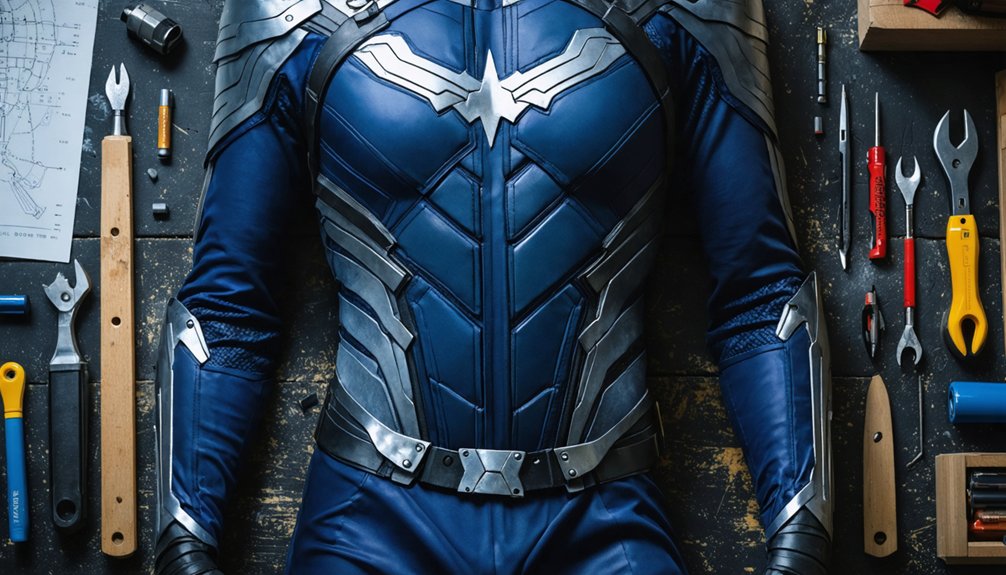
Designing a superhero costume starts with defining your character’s powers, psychology, and movement before you touch a pencil. You’ll want to anchor every visual decision to a single governing theme, build a silhouette that reads instantly in pure black, and limit your color palette to three tones for maximum recognition. Assign one dominant focal point, strip out details that add clutter rather than character, and iterate through sketches until every surviving element feels inevitable. Keep going to master each technique.
Key Takeaways
- Ground costume design in the character’s powers, motivations, and movement to ensure every visual choice feels purposeful and narratively justified.
- Prioritize a bold, clean silhouette by eliminating visual noise, anchoring the design with one dominant shape for instant recognition.
- Limit the color palette to three colors, applying color psychology to communicate personality while maintaining strong visual contrast and readability.
- Identify and protect the costume’s three strongest defining features, cutting competing elements that dilute character identity and thematic clarity.
- Use iterative sketching, color testing, and critical feedback loops to continuously refine designs until every surviving element feels visually inevitable.
Define Your Character’s Powers Before Drawing Anything
Before putting pencil to paper, you need a clear picture of what your hero can actually do. Powers exploration isn’t optional — it’s the foundation every visual decision builds on.
Ask yourself how your character moves, fights, and survives. Do they generate heat, manipulate gravity, or strike with impossible speed? Each answer informs structural choices: reinforced plating suggests impact absorption, aerodynamic silhouettes suggest velocity, and exposed hands suggest tactile precision.
Character motivations matter equally. A hero driven by justice reads differently than one driven by vengeance or science.
These psychological layers shape color palette, armor weight, and emblem placement. You’re not decorating a figure — you’re engineering a visual language.
Lock in your character’s core capabilities and driving purpose before a single line hits the page.
Let Your Theme Drive Every Visual Choice in Your Superhero Costume Design
Once you’ve locked in your character’s powers and psychology, every visual decision should flow from a single governing idea: your theme.
Theme exploration isn’t decorative—it’s structural. If your hero draws power from deep-sea environments, their armor’s texture, color palette, and silhouette should echo bioluminescent creatures, pressure-resistant plating, and fluid movement.
Theme isn’t decoration—it’s architecture. Every visual choice should structurally reinforce the hero’s core concept.
Visual symbolism works the same way. A fire-based hero shouldn’t just wear red—their suit’s contours should suggest rising flames, heat distortion, or combustion dynamics.
Every seam, panel break, and material choice becomes a narrative statement.
Think of your theme as a filter. Run every design element through it before committing. If a detail doesn’t reinforce the central concept, cut it.
Thematic discipline separates iconic costume design from visually scattered attempts.
Build a Superhero Costume Silhouette That Reads Instantly
After theme locks in your character’s identity, silhouette becomes your most powerful communication tool. Strong silhouette clarity guarantees immediate recognition even in shadow, at distance, or mid-action. You’re communicating character essence before color or detail registers.
Build your outline around these four principles:
- Prioritize bold forms — use iconic shapes that define your hero’s role instantly.
- Cut excess geometry — design simplicity removes visual noise while preserving memorable outlines.
- Engineer movement flow — streamlined features let the silhouette suggest motion dynamically.
- Anchor one dominant shape — a single powerful visual impact point prevents competing contours.
Test your design in pure black. If the character reads clearly without detail, you’ve achieved something genuinely iconic.
If it doesn’t, strip it further until that outline speaks on its own.
Give Your Costume One Strong Focal Point
Silhouette locks in recognition, but focal point is what makes a costume *memorable*. You’re building visual hierarchy the moment you assign one element dominance over the rest.
That element—whether a chest logo, mask, or symbolic motif—carries your character branding forward across every panel, frame, and product. Logo significance goes beyond decoration; it anchors central theme and communicates identity before dialogue starts.
Without a deliberate attention grabber, your design reads as assembled rather than intentional. Design intention means every surrounding detail should *serve* the focal point, not compete with it. Treat your focal point as the costume’s narrative core.
Memorable motifs stick because they’re specific, not generic. Choose one strong idea, commit to it visually, and let everything else support that singular, defining moment of recognition.
Pull References That Reflect Your Hero’s World
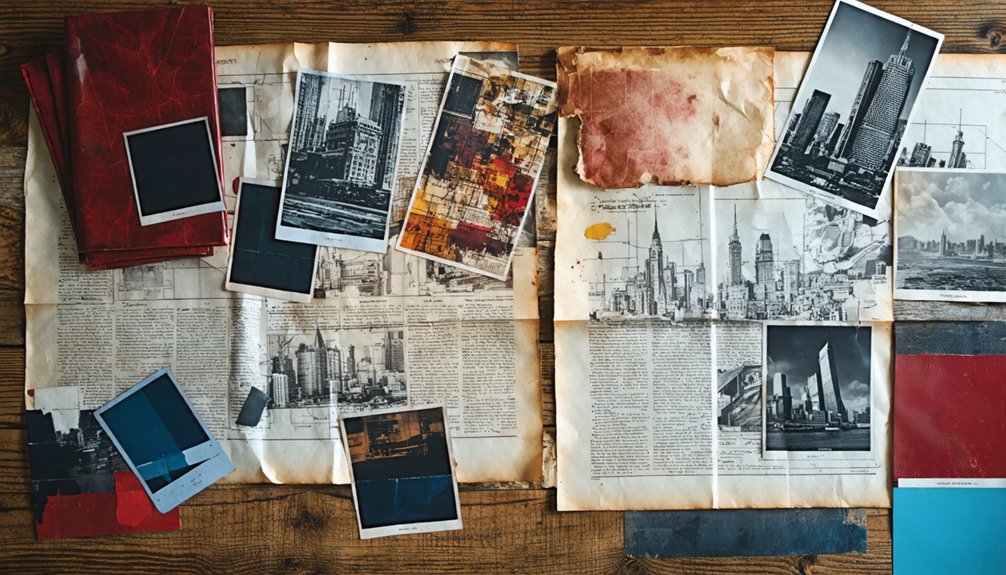
With your focal point locked in, the next step is feeding your design with references that actually belong to your hero’s world. Strong reference sources sharpen thematic consistency and prevent arbitrary choices.
Pull references from these four directions:
- Cultural influences and historical context — research civilizations, mythologies, or eras tied to your hero’s origin for authentic visual symbolism.
- Environmental factors and material choices — let your hero’s habitat dictate textures, whether industrial, aquatic, or wilderness-based.
- Artistic inspiration and narrative alignment — pull from fine art movements or comic traditions that mirror your character’s tone and story arc.
- Character evolution — gather references showing costume progression, ensuring each design stage reflects growth rather than arbitrary updates.
Cross-referencing these layers builds costumes with layered meaning rather than surface decoration.
Choose a Color Palette That Works at a Glance
Color does three jobs in superhero costume design: it identifies your hero instantly, communicates personality before a single line of dialogue, and holds the costume together visually across wildly different contexts—comic panels, merchandise, animation, and screen adaptations.
Lean into color psychology deliberately—bold primaries signal confidence, muted tones suggest stealth, and desaturated palettes imply moral complexity. Limit yourself to three colors maximum; iconic combinations like blue-and-gold or red-and-black succeed because palette harmony reduces visual noise.
Apply visual contrast strategically between your base, accent, and detail tones to strengthen readability factors across distances. Emotional impact sharpens when your palette reinforces your hero’s mission rather than contradicting it.
Strong brand recognition and character cohesion emerge naturally when every color earns its place.
Design Everything Around How Your Hero Actually Moves
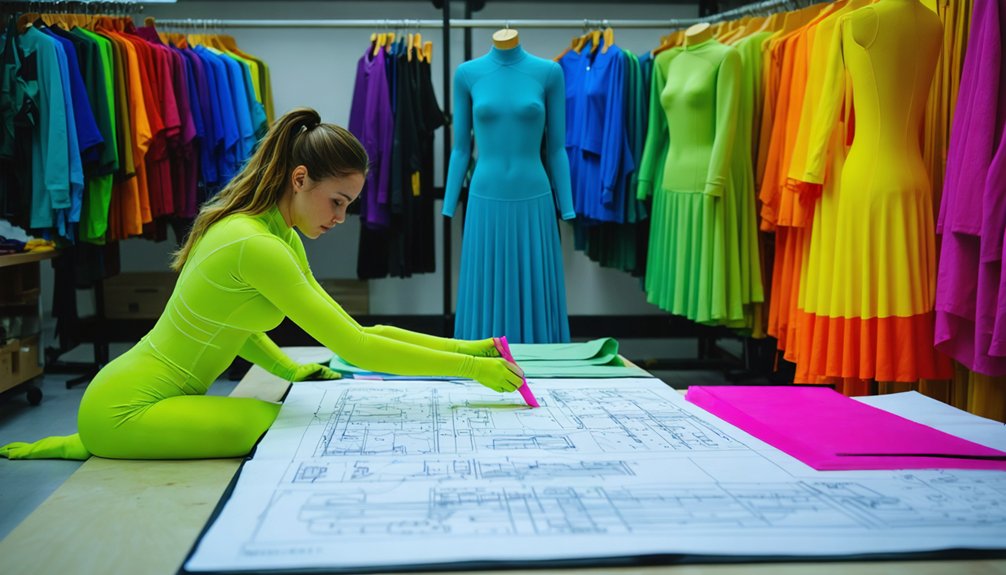
Every design decision should answer one question first: how does your hero move? Movement dynamics shape every seam, panel, and silhouette you choose.
Skipping pose exploration early means discovering problems late.
Rushing past early pose tests guarantees painful redesigns when your deadline is already breathing down your neck.
Run these four motion analysis checks before finalizing anything:
- Agility considerations — sketch your hero mid-leap, arms extended; reveal where fabric would bind or bulk unnecessarily.
- Combat readiness — test fighting stances to confirm functionality balance between armor protection and unrestricted striking range.
- Costume flexibility — identify joints requiring stretch zones, reinforced panels, or articulated segments.
- Environmental adaptation — consider whether the costume performs across terrain types, weather conditions, or zero-gravity scenarios.
Your costume shouldn’t just look built for action — it should prove it through every deliberate structural choice you’ve stress-tested against real movement demands.
Cut the Details That Create Clutter, Not Character
When you review your costume sketches, ask yourself whether each element communicates something specific about your hero’s identity, powers, or role — if it doesn’t answer that question clearly, cut it.
Streamlining isn’t about stripping the design bare; it’s about ensuring every remaining piece carries intentional weight, so the silhouette reads faster and the character registers more sharply.
The difference between meaningful detail and visual noise comes down to function: a textured panel on an armored suit implies protection, but an extra strap with nowhere to go just fragments the eye’s path across the design.
Identifying Purposeless Design Elements
Clutter creeps into a costume design the moment you start adding details for their own sake rather than for the character’s sake. Spotting these design flaws early protects visual coherence and identity clarity.
Ask whether each element earns its place through thematic relevance or functional aesthetics.
Watch for these unnecessary embellishments that undermine aesthetic balance:
- Decorative buckles that serve no structural or narrative purpose
- Repeated geometric patterns that dilute character consistency
- Layered textures competing without contributing to design evolution
- Asymmetrical accents added purely for visual variety
Practical considerations demand that every detail either reinforces the character’s identity or supports movement and readability.
Strip anything that doesn’t meet both standards. What remains will reflect disciplined design thinking, where every line, shape, and texture carries deliberate meaning.
Streamlining Without Losing Identity
Stripping purposeless detail is only half the work—the harder task is knowing what to keep. Every retained element should earn its place by reinforcing character identity, supporting movement, or anchoring the visual focal point.
This is where identity balance becomes critical: you’re editing toward clarity, not minimalism for its own sake.
Start by isolating your costume’s three strongest defining features—the mask shape, chest emblem, or color structure. Protect those. Cut anything that competes with them.
Functional aesthetics guide this process well. A texture choice, seam line, or panel break can simultaneously reinforce theme and reduce visual noise.
When each decision serves two purposes—narrative and structural—you streamline the design without dissolving the character beneath it.
Detail Versus Visual Noise
Cut the Details That Create Clutter, Not Character
Not every detail weakens a design—only the ones that compete without contributing. Maintaining visual hierarchy means each element earns its place by guiding the eye, reinforcing theme, or communicating function.
Ask yourself these filtering questions before committing any detail:
- Does this element support the character’s identity or powers?
- Does it strengthen the costume’s focal point rather than fragment attention?
- Does it serve functional aesthetics—appearing usable, not decorative?
- Does it remain readable at thumbnail scale?
If a detail fails two or more of these tests, cut it.
Texture, paneling, and line work should build cohesion, not complexity. Every surviving element should feel inevitable—like removing it would cost the design something real.
Sketch Your Superhero Costume Design, Test Colorways, and Revise
Once you’ve locked in your character’s theme and identity, it’s time to put pencil to paper and start sketching. Use quick gestural sketching techniques to explore silhouettes rapidly without committing to detail.
Grab your pencil and sketch fast — silhouettes first, details later, ideas always leading the way.
Prioritize visual exploration over perfection — generate costume variations freely, letting each sketch push a different design idea.
After your initial drafts, begin color testing using markers or digital tools. Apply limited palettes and compare colorways side by side to identify which combinations reinforce character alignment most effectively.
Strong contrast, cohesive tone, and readability should guide each decision.
Design iteration isn’t optional — it’s the engine of concept refinement. Build feedback loops by reviewing sketches critically, identifying weak focal points, then revising deliberately.
Each revision cycle sharpens the costume until every visual element earns its place.
Frequently Asked Questions
Can Beginner Artists Successfully Design Professional-Quality Superhero Costumes Without Formal Training?
Yes, you can achieve professional-quality results through dedicated creativity exploration and consistent skill development. You’ll refine your silhouettes, master color strategy, and iterate boldly—transforming imaginative concepts into technically polished, innovative superhero costumes without requiring formal academic training.
How Do You Protect an Original Superhero Costume Design From Being Copied?
You’ll protect your original superhero costume design by pursuing trademark registration, filing costume copyrights, securing design patents for unique structural elements, and clearly defining Creative Commons licensing terms to control how others legally reproduce your innovative creation.
Should Superhero Costume Designers Collaborate With Writers Before Finalizing Visual Concepts?
You’re ahead of the game when you collaborate with writers first—understanding character alignment and visual storytelling goals guarantees your costume concepts authentically reflect narrative intent, preventing costly redesigns and creating cohesive, innovation-driven superhero identities.
How Often Should a Superhero Costume Be Redesigned or Updated Over Time?
You should update a costume whenever character growth demands it. Let costume evolution reflect story shifts, power upgrades, or tonal changes—don’t redesign arbitrarily. Treat each revision as intentional visual storytelling, reinforcing identity while signaling meaningful transformation.
Are Digital Tools or Traditional Sketching Methods Better for Costume Design?
Over 70% of designers blend both approaches. You’ll maximize design efficiency by combining digital tools with traditional sketching methods, letting your creative preferences drive innovation. Neither dominates—they complement each other powerfully.
References
- https://www.instructables.com/Superhero-Costume-Design/
- https://www.reddit.com/r/comicbooks/comments/wz1vox/when_creating_a_superhero_whats_the_best_advice/
- https://springhole.net/art_tutorials/better-superhero-and-supervillain-costumes.htm
- https://mythcreants.com/blog/questions/how-do-you-design-a-superhero-costume/
- https://www.morphsuits.com/blog/superhero-costumes-guide-epic-picks-pro-tips/
- https://carlshinyama.substack.com/p/how-to-design-a-superhero-costume
- https://www.vogue.co.uk/article/superhero-costume-designer-wonder-woman-batman
- https://www.youtube.com/watch?v=eW9HgV5jqJI
- https://www.youtube.com/watch?v=QZLRhmyexkE
- https://www.youtube.com/watch?v=c2KSm1_SNLE