You’ll want to match your construction method to your replica’s purpose—choose 1095 high-carbon steel with full tang construction for functional swords, or opt for EVA foam with metal rod reinforcement for lightweight cosplay pieces. Damascus steel delivers both visual appeal and authentic strength, while titanium alloys replicate mythical metals’ weight-to-balance ratios. Test functional blades by flexing them on 1-inch branches; they shouldn’t permanently warp. The sections below explore advanced material selection, heat treatment techniques, and authentication methods for achieving museum-quality results.
Key Takeaways
- Choose 1095 high-carbon steel for functional replicas requiring edge retention, or stainless steel alloys for decorative pieces needing rust resistance.
- Ensure functional swords feature full tang construction with proper heat treatment for balanced flexibility and authentic performance characteristics.
- Select Damascus steel or titanium alloys to achieve both visual authenticity and structural integrity in high-quality reproductions.
- Match construction methods to intended use: display pieces utilize zinc alloy while battle-ready replicas demand carbon steel.
- Balance aesthetics with functionality using EVA foam reinforcement or wood cores for lightweight durability without sacrificing visual impact.
Understanding Quality Tiers for Fantasy Weapon Reproductions
Quality tiers in fantasy weapon replicas span from decorative wall-hangers to functional museum-grade reproductions, each defined by specific material standards and construction methods. Studio-approved replicas meet strict craftsmanship requirements, utilizing high-carbon steel between 0.45% and 0.95% carbon content for functional combat readiness. You’ll find 1060 carbon steel offering excellent flexibility, while 1095 provides superior edge retention. High-tier equipment features full tang construction and historically accurate balance points—typically 3-6 inches from the guard.
Mid-range pieces deliver premium accuracy while serving budget conscious alternatives, maintaining proper heat treatment and flex characteristics. Cosplay variants prioritize safety through blunt edges and lighter materials. Each tier requires specific sourcing from trustworthy manufacturers who guarantee documented material compositions and construction techniques matching your intended application.
Selecting Appropriate Materials for Mythical Blade Construction
You’ll need to match your material choices to whether you’re crafting a display piece or a functional replica that can withstand handling. Stainless steel alloys like 440 suit decorative blades requiring rust resistance, while 1095 high-carbon steel delivers the edge retention and durability that functional swords demand.
Your selection process must balance the weapon’s mythical appearance with real-world structural requirements—Damascus steel, for instance, provides both patterned authenticity and genuine strength.
Fantasy Metal Equivalents Selection
When selecting materials for mythical weapon replicas, you’ll need to match real-world metals to their fantasy counterparts based on specific performance characteristics. Material property comparisons reveal titanium alloys effectively replicate Adamantite’s strength-to-weight ratio, while tungsten carbide delivers armor-piercing hardness for legendary blades. Telstang’s Mithril analog combines copper, platinum, and silver for lightweight durability.
Your metallurgy considerations should prioritize balanced properties—palladium/silver metallic glass offers superior edge retention without brittleness, though it demands extended forging time.
For Arandur-inspired elven blades, you’ll require rare alloys processed through specialized techniques. Zardazik’s ferromagnetic properties translate to magnetic adhesion effects in practical applications. Each fantasy metal equivalent increases crafting complexity and material costs, but achieves authentic performance characteristics.
Balance hardness, toughness, and flexibility through proper heat treatment to optimize your replica’s structural integrity.
Decorative Versus Functional Durability
Material selection fundamentally determines whether your mythical blade serves as a wall decoration or withstands actual handling stress. Display pieces utilize zinc alloy or stainless steel for economic viability, prioritizing corrosion resistance over mechanical strength. These materials test below 50 HRC hardness with rat-tail tang construction—adequate for aesthetics but structurally compromised under impact.
Functional replicas demand high-carbon or Damascus steel with full tang extensions, ensuring torque recovery and edge retention during handling. Modern alloys surpass historical equivalents in reliability while maintaining authenticity. Legal considerations often restrict sharp edges, making stainless steel an acceptable compromise for ceremonial pieces.
Testing reveals quality: functional blades flex without warping on 1-inch branches, while decorative variants bend permanently. Your application dictates material choice—titanium advances lightweight durability, whereas traditional folded steel honors historical construction methods while meeting contemporary performance standards.
Balancing Aesthetics With Authenticity
Authentic mythical weapon construction requires matching materials to your replica’s intended purpose and visual fidelity. You’ll need to evaluate experimental materials alongside traditional options for excellent results.
Material Selection Framework:
- Display replicas: Damascus steel patterns or aluminum castings via lost-foam method deliver visual impact without functional demands
- Cosplay props: High-density EVA foam (5mm-10mm layers) with metal rod reinforcement provides durability and customized articulation for movement
- Functional pieces: Carbon steel blades with hot-peened tangs guarantee authentic medieval construction techniques
- Hybrid builds: Wood cores (3/4-inch pine) combined with foam clay detailing balance weight and sculptural precision
You’re achieving authenticity through material-appropriate techniques—contact cement for foam assemblies, super glue for wooden guard reconstruction, and PVC pipe reinforcement for rigid handle support. Match your construction method to your replica’s final use.
Balancing Historical Inspiration With Creative Design Elements
Every successful mythical weapon replica requires you to navigate the tension between documented historical precedent and imaginative embellishment. You’ll draw mythical inspiration authentication from sources like Tolkien’s texts, Weta’s film designs, and historical metallurgy techniques.
Authentic mythical replicas demand careful balance: respect documented historical craft while honoring the legendary narratives that inspire them.
Consider how Andúril merges Elvish runes with functional blade geometry, or how He-Man’s sword integrates bold geometric patterns while maintaining practical weight distribution.
Your curated design considerations should blend verifiable elements—Greek xiphos variations, Nepalese ceremonial forms—with legendary symbolism. Apply differential hardening to custom hand-forged pieces, ensuring structural integrity beneath decorative damascening or gilding.
Museum-molded proportions provide your foundation, while hand-sculpted pommels that avoid CNC symmetry deliver authentic medieval character. You’re creating functional art where high-carbon steel meets imaginative detail, transforming film props into weapons that honor both historical craft and legendary narrative.
Authentication Methods for Verifying Replica Craftsmanship
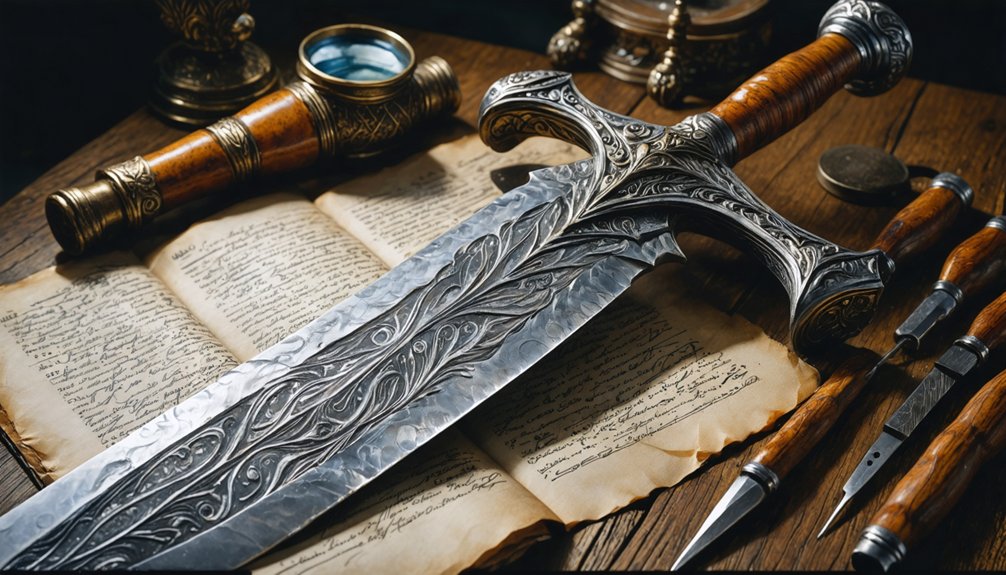
You’ll need systematic testing methods to distinguish quality mythical weapon replicas from inferior imitations. Start with physical flex tests—authentic replicas use spring steel or folded carbon steel that returns to true after controlled bending, while cheap versions employ brittle metals that crack or permanently deform.
Examine the construction materials under magnification: genuine craftsmanship shows consistent grain patterns in wood components, properly peened tangs, and hand-finished edges rather than cast seams or painted-on details.
Physical Flex and Balance Tests
Essential verification protocols include:
- Ground-point flex test: Press downward to confirm appropriate thickness without excessive force requirements
- Balance assessment: Grip at handle and point simultaneously to evaluate weight distribution for both thrusting and cutting
- Return-to-true check: Guarantee blade straightens completely after flexing, indicating proper heat treatment
- Center-flex observation: Quality steel flexes smoothly from the blade’s middle section
These practical trials separate functional replicas from mere decorative pieces, validating metallurgical integrity before acquisition.
Examining Construction and Materials
Authentic replica verification demands methodical examination of core construction elements that distinguish quality craftsmanship from mass-produced imitations. You’ll need to assess steel composition through material certificates specifying treatment processes—high-carbon steel guarantees blade durability standards matching historical weapons, while stainless varieties suit display purposes.
Employ metallurgical analysis techniques like microscopic examination to reveal forging methods; genuine differential hardening creates dimensional hamon lines, whereas replicas show surface-etched patterns. Machine uniformity signals mass production, contrasting handmade variations.
Request manufacturer documentation proving design authorization, including studio approval statements and serial numbers verifiable through official databases. Advanced verification employs computed tomography for non-destructive internal structure assessment.
Reputable makers combine traditional techniques with scientific precision, providing detailed certificates documenting authenticity markers you can cross-reference against authorized seller listings.
Weight Distribution Considerations for Display and Cosplay Use
When selecting a mythical weapon replica, weight distribution determines whether you’ll maintain comfortable handling during eight-hour convention days or face mounting arm fatigue within the first hour. Striking the right weight balance requires understanding how material choices affect performance.
Foam replicas at 1.15 lbs favor hilt-weighted construction for agile maneuvering, while full metal versions at 2.1kg demand neutral balance points to prevent strain. Achieving proper weight distribution involves:
- Hilt-focused mass enables quick swings without compromising control during dynamic poses
- Neutral placement prevents forward lean on wall mounts and display stands
- Counterweighted pommels in stainless steel blades mimic authentic sword handling
- Reinforced mounting bases support heavier replicas during long-term exhibition
Tip-heavy designs sacrifice both realism and wieldability, breaking immersion in character portrayals while increasing drop risks in crowded conventions.
Evaluating Decorative Features and Period-Appropriate Details
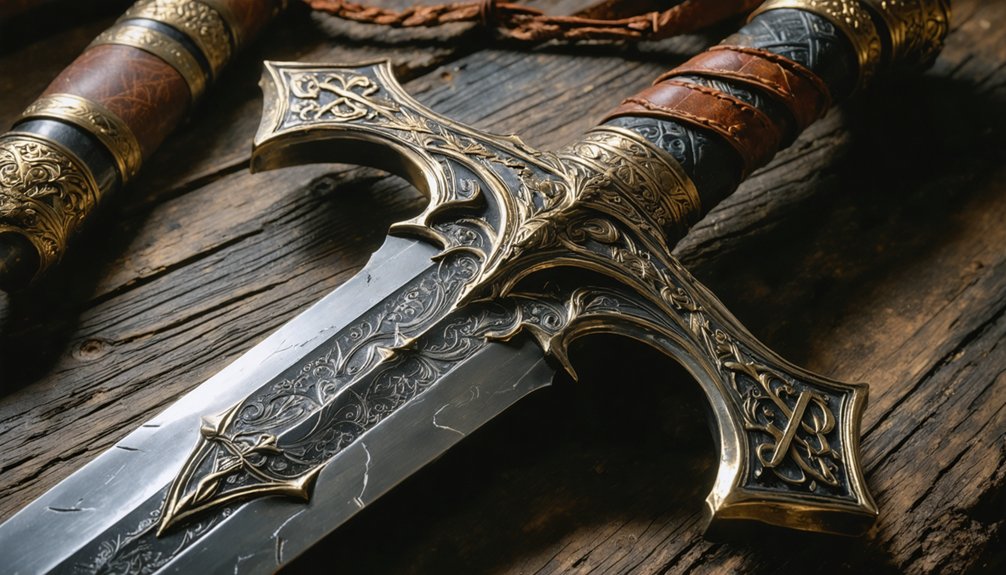
Decorative features separate mass-produced props from collector-grade replicas that capture the essence of their fictional or historical counterparts. You’ll find authentic detailing in Latin inscriptions etched onto Colt barrels, numbered bullet casings matching series specifications, and intricate hilt ornamentation in Kit Rae’s Mithrodin and Valermos designs.
Period-appropriate elements include 16th-17th century gun decorations, medieval European rapier styling, and traditional Japanese katana artistry in samurai sets.
Museum-quality finishes and T10 steel construction guarantee your pieces integrate seamlessly into themed environments. Examine surface etchings across barrel components, decorative screw placements, and segmented designs like Zabimaru’s flexible whip-blade configuration.
For ideal display techniques, prioritize full-tang construction and unsharpened metal blades that maintain visual authenticity while emphasizing their role as conversation-starting showcase pieces rather than functional weapons.
Price Ranges and Value Assessment for Collector Pieces
Understanding the financial investment required for mythical weapon replicas starts with recognizing three distinct price tiers that correlate directly with construction methods, material quality, and licensing authenticity.
Price Point Considerations by Category:
- Entry-level replicas ($40-$115) feature decorative-grade materials like stainless steel with basic finishes, ideal for display-focused collectors
- Mid-range pieces ($150-$280) incorporate carbon steel construction with licensed authenticity certificates and improved detailing
- Premium museum-quality swords ($280-$600) utilize forge-folded steel, hand-finished engravings, and historically accurate specifications
- Retailer specialization matters considerably—Kult of Athena offers grade-tiered options, while True Swords focuses on official United Cutlery licensing
Watch for 30-65% discounts on select franchises, particularly Lord of the Rings collections. Blemished-grade options provide budget flexibility without compromising structural integrity.
Testing Blade Flexibility and Structural Integrity
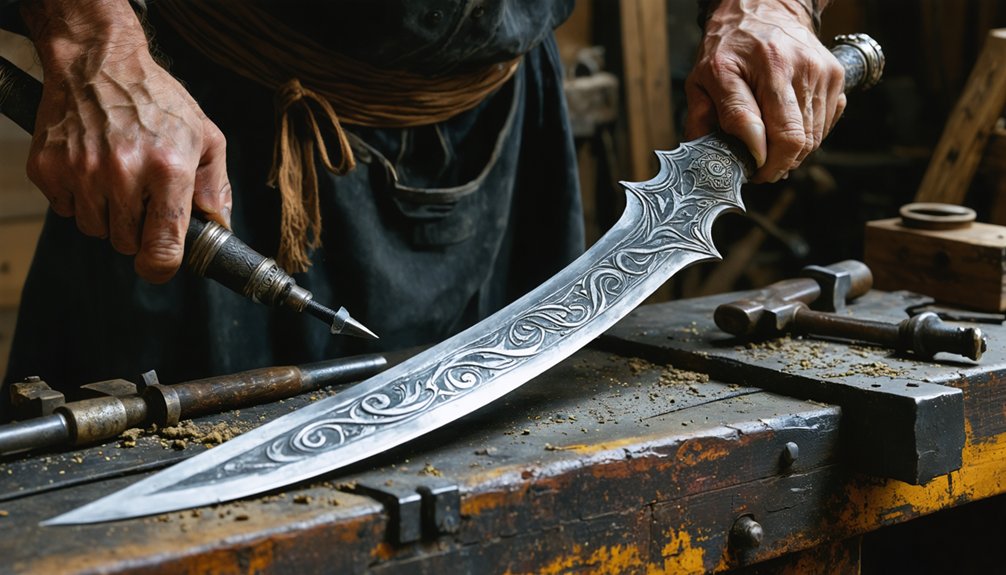
Beyond establishing your replica’s authenticity and price point, you’ll need to verify that the blade performs as its specifications promise. Scale-based flex testing provides quantifiable data—place the tip on a digital scale, grip the pommel with both hands, and record the force at flex onset. Lower readings (0.81 kg) indicate flexibility; higher values (11.12 kg) show stiffness. HEMA standards cap testing at 20 kg maximum.
Impact testing methods complement static measurements by revealing dynamic properties missed by numbers alone. Manual techniques—like the post-tempering 25-degree flex check—confirm proper hardening when blades return straight. Vibration response analysis through thumb-fulcrum tests isolates deflection zones, while file testing verifies steel hardness. Multiple trials average out inconsistencies, ensuring your mythical replica balances authentic performance with structural safety.
Frequently Asked Questions
How Do I Safely Store Mythical Weapon Replicas Long-Term?
Like preserving ancient artifacts, you’ll maintain replicas by ensuring proper humidity control below 60% and keeping them within a suitable temperature range under 120°F. Store horizontally in foam-lined cases with silica gel packets for maximum longevity.
Can Fantasy Weapon Replicas Be Legally Transported Across State Lines?
You can legally transport fantasy weapon replicas across state lines if they’re not concealed weapons or used fraudulently. When traveling with mythical weapon replicas, guarantee proper legal documentation for mythical weapon replicas and research destination state blade laws beforehand.
What Insurance Coverage Applies to High-Value Mythical Replica Collections?
You’ll need specialized inland marine or monoline collectibles insurance since standard homeowner’s insurance coverage won’t protect high-value replicas at full appreciated value. These policies cover property damage risks, accidental breakage, and irreplaceable pieces up to $1-4 million.
How Do I Commission Custom Mythical Weapons From Artisan Smiths?
Contrary to mass-production myths, you’ll commission superior pieces by researching experienced artisan recommendations first, then discussing your vision, budget, and timeline. Prioritize quality material selection—EVA foam, resin, or hand-sculpted elements—ensuring convention-safe, innovative craftsmanship.
Are Mythical Weapon Replicas Suitable for Theatrical Stage Combat Use?
Mythical weapon replicas aren’t suitable for stage combat unless you’ve commissioned them with proper handling techniques in mind. Material authenticity concerns matter less than blunted edges, balanced weight distribution, and high-carbon tempered steel construction meeting safety standards.