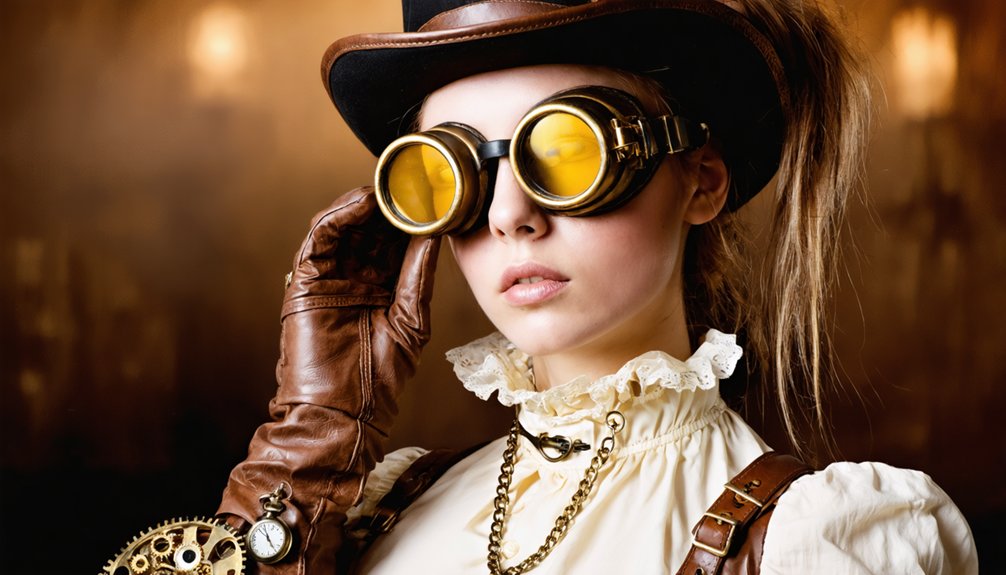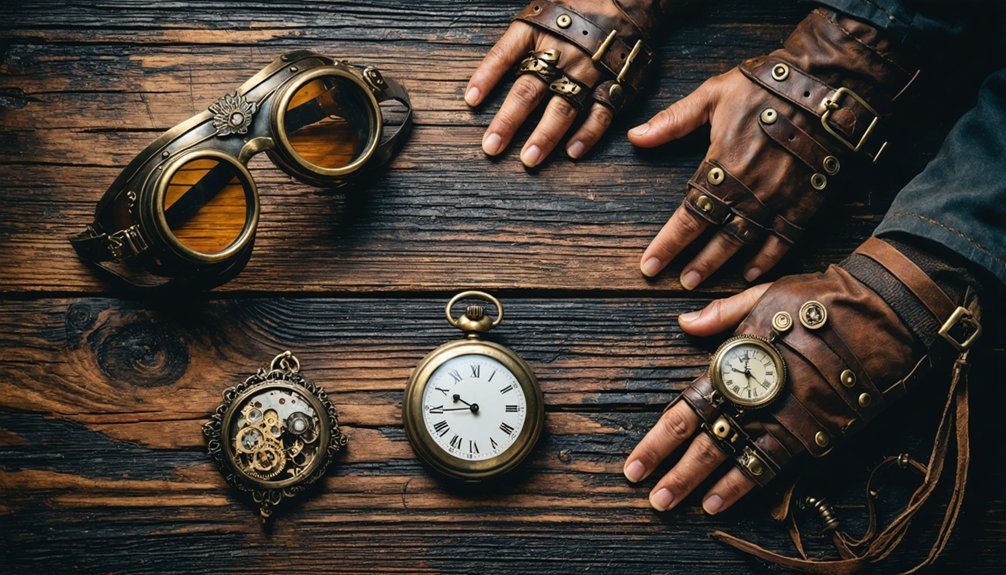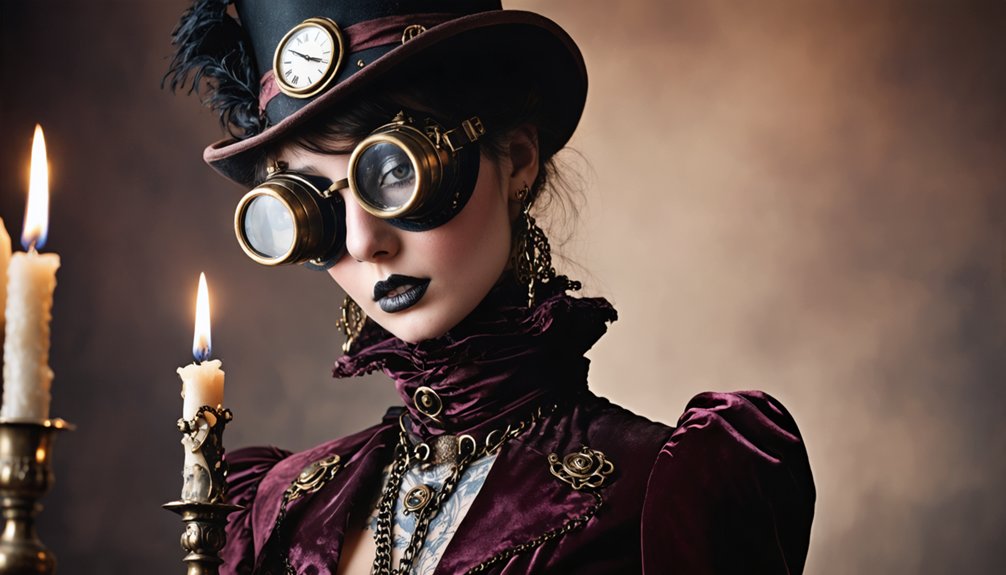
To transform into a gothic steampunk character effortlessly, you’ll need to anchor your look around a clear archetype—airship pirate, gothic alchemist, or aristocratic inventor. Build your base with dark Victorian tailoring, then layer brass hardware, clock gears, and aged leather for industrial depth. Contrast soft lace against rigid copper fittings, and finish with dramatic copper-toned makeup and a structured wig. Every detail ahead will sharpen your transformation into something truly theatrical.
Key Takeaways
- Anchor your look around a specific archetype like airship pirate or gothic alchemist to guide material, makeup, and accessory choices cohesively.
- Build a base outfit using Victorian-inspired dark clothing layered with brass hardware, cogs, and industrial textures for authentic steampunk structure.
- Source authentic materials like aged lace, genuine leather, and brass fittings from estate sales, vintage markets, and industrial salvage yards.
- Attach copper cogs, clock gears, and brass pipe fittings to lapels, cuffs, and hats using adhesive or rivets for mechanical depth.
- Use theatrical makeup with dramatic lashes, muted skin tones, and copper-anchored color to complete the gothic steampunk transformation effectively.
Choose a Gothic Steampunk Character Type to Anchor Your Style
Before diving into materials and makeup, you’ll need to anchor your entire look around a single character archetype — because Gothic steampunk isn’t one aesthetic, it’s several.
Are you the brooding airship pirate, commanding leather-clad authority? The aristocratic inventor, fusing Victorian elegance with mechanical innovation through brass fittings and exposed clockwork? Or perhaps the gothic alchemist, channeling repressed societal darkness through hybrid, creature-inspired costuming?
Each archetype demands a distinct visual language. Heroes carry redemption-driven narratives expressed through weathered materials and purposeful accessories.
Gothic figures lean into darkness and taboo, drawing from Victorian mourning traditions.
Your chosen archetype isn’t decorative — it’s structural. Every material selection, makeup palette, and mechanical detail you’ll layer on must serve that singular character foundation deliberately and precisely.
What Makes Gothic Steampunk Different From Standard Goth?
Once you’ve locked in your archetype, you’ll immediately face a question that trips up most newcomers: what actually separates Gothic steampunk from standard goth?
Standard goth pulls exclusively from Victorian mourning fashion, darkness, and taboo symbolism. Gothic steampunk, however, layers mechanical innovation directly onto those Gothic motifs.
You’re not just wearing black lace — you’re embellishing it with clock gears, brass fittings, and copper accessories that signal Industrial Revolution ingenuity.
Victorian symbolism remains central, but steampunk recontextualizes it through a lens of creativity and intellectual ambition rather than melancholy.
Where standard goth embraces darkness as an endpoint, Gothic steampunk treats it as a launching pad.
Your accessories do the heavy lifting here — gear-decorated jackets and mechanical embellishments immediately distinguish your look from conventional goth aesthetics.
Build Your Base Outfit With Dark Victorian Pieces
With your aesthetic philosophy established, it’s time to assemble the physical foundation of your Gothic steampunk transformation — the base outfit. Think of your clothing as Victorian architecture made wearable — structured, intentional, and layered with mechanical symbolism.
Start with these three essential components:
Start with three essential components — your Gothic steampunk foundation begins here, built with intention and mechanical purpose.
- A three-piece dark suit featuring a gear-decorated jacket in black or deep brown leather
- A Victorian-inspired dark shirt with brass or copper button detailing at the collar
- A raw fabric waistcoat embellished with functional-looking cogs and steam-pipe hardware
Each piece communicates purpose beyond aesthetics. You’re constructing a narrative through fabric and metal — every seam reinforces your character’s world.
Layer these strategically, ensuring mechanical accessories visually interrupt the Victorian silhouette, creating deliberate tension between elegance and industrial grit.
Choose the Right Materials: Leather, Lace, and Brass
When sourcing authentic Victorian materials, you’ll want to prioritize leather, lace, copper, and raw fabrics from specialty costume suppliers, vintage shops, or repurposed garments.
Layer contrasting textures strategically — pair the rigidity of brass fittings and steel hardware against the softness of lace underlayers to create authentic visual tension.
You’re not just dressing; you’re engineering a wearable narrative where every material choice reinforces the mechanical-elegance contradiction at steampunk’s core.
Sourcing Authentic Victorian Materials
Sourcing the right materials separates a convincing steampunk or Gothic transformation from a costume-store knockoff. Hunt deliberately for Victorian textiles like raw silk, brocade, and aged lace at estate sales, vintage markets, and specialty fabric retailers.
Gothic symbolism demands authenticity — synthetic substitutes betray the aesthetic immediately.
Prioritize these three sourcing channels:
- Estate sales and antique markets — uncover genuine leather goods, brass hardware, and period-accurate lace with authentic patina.
- Specialty fabric suppliers — source brocade, raw silk, and distressed cotton in black, brown, and deep purple tones.
- Industrial salvage yards — locate copper fittings, steel components, and brass gears that mechanical accessories demand.
You’re constructing a narrative through material, so every textile choice must communicate intentional craftsmanship and historical reverence.
Combining Textures Effectively
Once you’ve hunted down those raw silks and brass fittings, the real craft begins — layering them against each other with deliberate contrast. Press soft lace directly against cold leather; the tension between fragility and toughness creates immediate visual drama. Victorian elegance demands that every fabric choice carries intention — silk doesn’t simply exist beside steel, it challenges it.
Work copper and brass hardware into seams where raw fabric edges meet finished panels. Industrial innovation lives in those collision points. You’re not decorating; you’re engineering a wearable narrative. Pin gears where lace panels overlap leather bodices, letting mechanical elements interrupt organic texture deliberately.
Prioritize contrast in weight, sheen, and rigidity. Dark matte fabrics amplify the metallic brightness of brass fixtures, making each component sharper, bolder, and unmistakably purposeful.
Balance Victorian Structure With Rugged Steampunk Textures
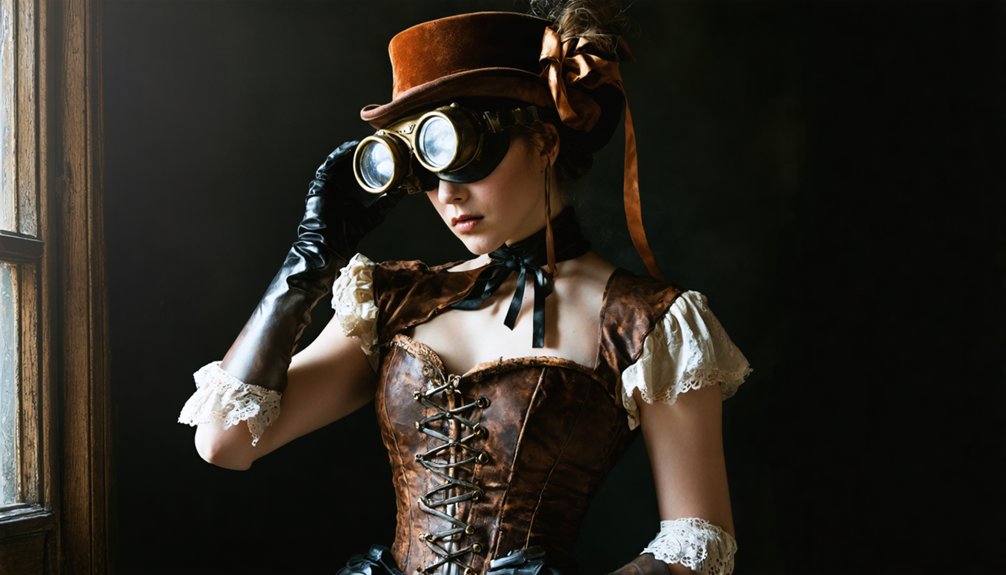
Balancing Victorian structure with rugged steampunk textures means layering refined elegance against raw, industrial grit. You’re fusing historical accuracy with mechanical rebellion, pairing tailored silhouettes against leather, copper fittings, and exposed steel.
Color coordination becomes your blueprint — dark browns anchor the palette while brass and black create dramatic contrast.
Follow this construction hierarchy:
- Foundation layer — Start with a structured Victorian three-piece suit or corseted bodice as your architectural base.
- Mechanical embellishment — Attach gear-decorated accessories, brass fittings, and raw fabric accents directly onto refined garments.
- Texture contrast — Introduce lace against leather, or polished copper against weathered cotton, creating deliberate visual tension.
Each decision you make should feel purposeful, technically sound, and narratively charged — a walking monument to industrial innovation.
Add Gothic Steampunk Mechanical Accessories That Define the Look
Your accessories aren’t just decorations—they’re the mechanical soul of your Gothic steampunk identity, so reach for brass fittings, clock gears, and interlocking cogs to anchor every outfit with industrial authenticity.
You’ll embellish jackets, hats, and collars by hand, soldering or gluing gear clusters onto fabric and leather surfaces to simulate a working mechanical system.
Combine a brass octopus throat piece, a gear-decorated tricorn hat, and a copper-fitted waistcoat to build the signature layered accessory combination that separates true steampunk from standard gothic costuming.
Gears And Brass Fittings
Gears and brass fittings aren’t merely decorative—they’re the mechanical heartbeat of any Gothic steampunk ensemble. Rooted in Victorian aesthetics and time travel narratives, these components signal intellectual ambition and industrial mastery. You’re not just accessorizing; you’re engineering a persona.
Integrate these elements strategically:
- Jacket embellishments – Attach copper cogs along lapels and cuffs using industrial adhesive or rivets for authentic mechanical texture.
- Brass pipe accents – Weave miniature fittings through belt loops or strap them onto goggles for functional-looking detail.
- Gear clusters – Layer clock gears of varying sizes onto hat brims or shoulder pieces, creating dimensional mechanical focal points.
Each fitting you add transforms fabric into machinery, elevating your costume from costume to crafted statement.
Mechanical Accessory Embellishment Techniques
Once you’ve secured your base garments, mechanical accessory embellishment transforms the entire silhouette into something architecturally intentional. Draw inspiration from Victorian architecture’s structural precision — riveted columns, ornate ironwork, layered facades — and apply that logic to every accessory you craft.
Attach clock gears directly onto jacket lapels, hat brims, and leather cuffs using industrial adhesive or hand-stitched wire. Position brass octopuses at the throat, mimicking steam powered machinery valve configurations.
Layer copper pipes as decorative shoulder details, securing them with leather cord wrapped tight.
Each embellishment should feel purposeful, not decorative noise. Stack gear sizes deliberately — large behind small — creating mechanical depth. Your accessories must communicate function, as though removing one piece would collapse the entire contraption you’re wearing.
Signature Steampunk Accessory Combinations
Signature accessory combinations in Gothic steampunk follow a strict architectural logic — every piece you select must anchor the overall mechanical narrative. You’re constructing a wearable machine, layering Victorian jewelry with cybernetic enhancements that signal both elegance and industrial rebellion.
Build your combination using these three defining elements:
- Brass octopus throat piece paired with a Victorian-collared shirt, establishing torso dominance
- Clock gear-embellished jacket worn over a dark three-piece suit, reinforcing mechanical credibility
- Mini tricorn hat adorned with feathers, signaling airship pirate authority at the crown
Each component communicates a specific narrative function. Your cybernetic enhancements shouldn’t feel decorative — they must appear structurally necessary. Victorian jewelry grounds the futuristic tension, preventing the look from collapsing into costume chaos rather than deliberate, calculated transformation.
Craft Your Own Gear-Embellished Gothic Steampunk Accessories at Home
Crafting your own gear-embellished accessories transforms raw materials into wearable mechanical art, and you’ll need only a few core supplies to start: clock gears, brass fittings, leather scraps, and strong adhesive.
Drawing from historical influences like Victorian industrial craftsmanship, you’ll layer gears onto leather cuffs, hat brims, and collar pieces using precise adhesive placement. Sand each gear edge slightly to expose raw metal, then seal with copper or brass spray for authentic patina depth.
Victorian craftsmanship inspires every layered gear, sanded edge, and copper-sealed surface — history worn deliberately.
Modern adaptations push this further — embed LED filaments beneath gear clusters for illuminated mechanical effects. Attach brass octopus charms or pipe fittings to distinguish your piece from generic goth accessories.
Each handcrafted element carries an intentional mechanical narrative, transforming ordinary materials into striking, story-driven wearable sculpture that commands attention immediately.
Style a Gothic Steampunk Hat the Right Way
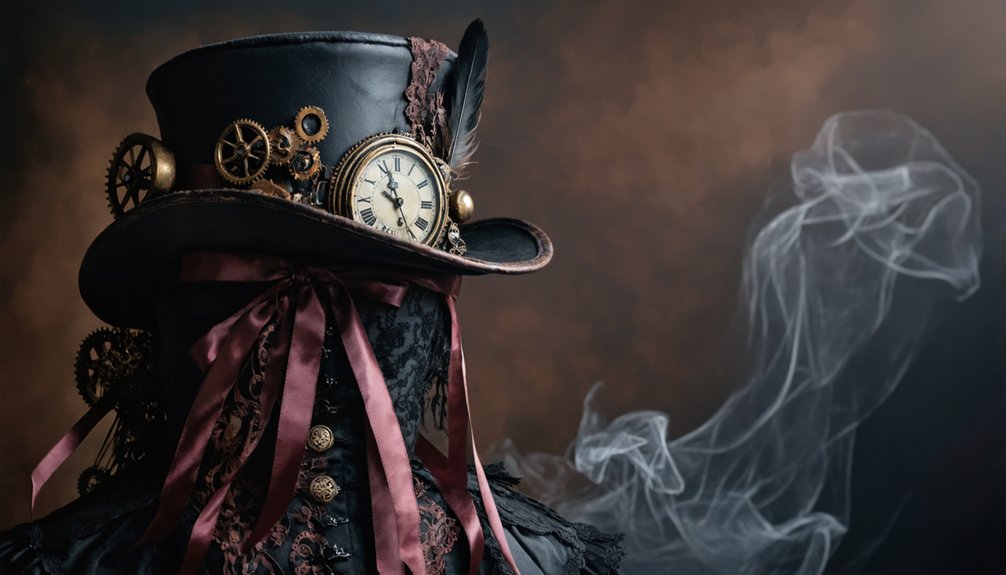
Your base hat sets the entire tone—choose a wide-brimmed top hat or mini tricorn in black or deep brown to anchor the Gothic steampunk aesthetic properly.
Once you’ve secured your foundation, attach brass fittings, clock gears, and copper cogs using industrial adhesive or small rivets.
Position heavier mechanical pieces along the brim’s edge for structural balance.
Finally, layer your feathers asymmetrically behind the gear clusters, letting dark plumes cascade at an angle that draws the eye upward and reinforces the Victorian drama of the complete look.
Choosing Your Base Hat
When choosing your base hat, the silhouette you select will define the entire character you’re building. Victorian architecture directly inspires the structural drama you’ll want—think commanding vertical lines and ornate angular forms.
Consider these three foundational options:
- Mini tricorn hat – perfect for airship pirate personas, offering compact authority
- Top hat – commands theatrical presence, ideal for mounting vintage jewelry and mechanical embellishments
- Wide-brim hat – provides dramatic shadow framing your face like a Gothic cathedral entrance
Your hat’s material matters enormously. Choose structured felt, weathered leather, or stiffened fabric that holds decorative weight without collapsing.
Dark tones—black, deep brown, or charcoal—establish your Gothic steampunk foundation immediately.
Whatever silhouette you select, it must withstand layered accessories like gears, feathers, and brass fittings.
Adding Mechanical Embellishments
Once your base hat is chosen, mechanical embellishments transform it from a simple accessory into a storytelling artifact. You’ll want to anchor Industrial motifs—gears, cogs, brass fittings—directly onto the brim or crown using strong adhesive or hand-stitching for durability.
Layer clock gears in ascending sizes to create visual depth, then add copper pipes or miniature pressure gauges for authentic Victorian fashion drama. Position a brass octopus or winged rivet cluster as your focal statement piece, ensuring asymmetrical placement for dynamic tension.
Feathers woven between mechanical components bridge the gothic elegance with industrial grit effectively. Each element should serve a narrative purpose—every gear suggests function, every fitting implies history. You’re not decorating a hat; you’re engineering a character’s entire backstory.
Feather And Gear Placement
Placement transforms a collection of parts into a cohesive character statement, so treat your hat’s surface as a compositional stage with deliberate zones of tension and release.
Your mini tricorn demands intentional feather placement and gear positioning to read as authentic Gothic Steampunk rather than costume-store generic.
Follow this staging sequence:
- Anchor gears first — fix your largest clock gear at the hat’s left quadrant, creating a mechanical focal point before adding secondary pieces.
- Layer feathers diagonally — position feathers sweeping rightward from behind the gear cluster, generating visual movement across the brim.
- Balance with brass details — finish opposite corners with smaller gears, preventing compositional heaviness.
You’re engineering visual storytelling, not decorating randomly. Every element earns its position.
Apply Gothic Steampunk Makeup Step by Step
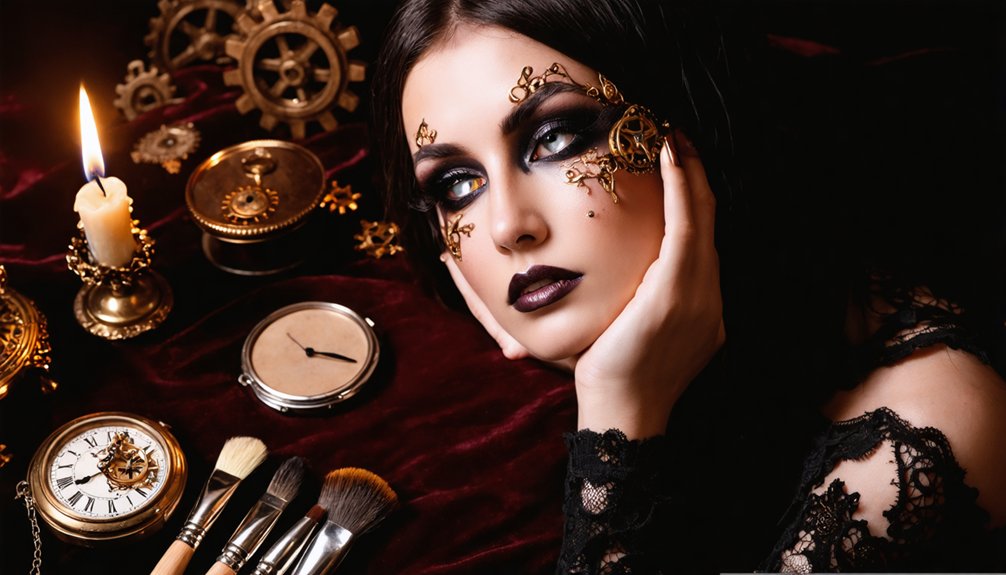
Achieving the Gothic steampunk makeup look demands a deliberate layering process that blends dark drama with industrial warmth. Start by covering your entire eyelid with a black eye crayon, establishing the Gothic symbolism central to this aesthetic.
Layer brown eyeshadow over it, then press gold pigment powder strategically to introduce metallic contrast inspired by Victorian fashion’s ornate sensibilities.
Build copper and brass tones across your crease, deepening the industrial dimension.
Finish your eyes with precise black winged eyeliner and coat your lashes with mascara for theatrical definition.
Keep your skin tone muted and slightly dramatic to anchor the mechanical warmth of the copper tones above.
Every product choice should feel intentional, commanding, and technically executed to honor both subcultures authentically.
Transform Your Hair With Wigs and Steampunk Styling Tricks
With your eyes rimmed in copper drama and your skin anchored in Gothic depth, the stage shifts upward — your hair demands equal theatrical command. Wigs release transformative potential that natural hair rarely permits. Execute your steampunk hair conversion with precision:
- Secure your natural hair flat beneath a wig cap, then apply red pigment directly over the cap to eliminate visible contrast lines.
- Select structured wigs that evoke Victorian elegance — deep browns, dramatic blacks, or rich burgundies perform strongest.
- Crown the wig with a mini tricorn hat or feather-adorned topper, anchoring Industrial innovation into your silhouette’s apex.
Each layer compounds the transformation. Your hair isn’t decoration — it’s architectural storytelling that completes the mechanical, darkly romantic world you’re constructing.
Frequently Asked Questions
Can Children Participate in Gothic Steampunk Fashion and Costume Events?
Yes, children can absolutely participate! You’ll dress them in age-appropriate vintage accessories and modern adaptations, blending Victorian-inspired layers with playful mechanical details. They’ll embrace creativity, crafting imaginative steampunk costumes that spark innovation and theatrical expression effortlessly.
Are There Gothic Steampunk Communities or Conventions to Connect With Enthusiasts?
You’ll find thriving conventions where enthusiasts unite! Events like SteamCon celebrate historical influences through Victorian innovation. You can showcase alternative accessories, forge creative alliances, and immerse yourself in communities that champion intellectual artistry and transformative self-expression.
How Much Does a Complete Gothic Steampunk Outfit Typically Cost to Build?
You’ll spend $100–$500 on a complete cost breakdown, balancing DIY craftsmanship with purchased costume accessories. Layer lace, leather, and brass gears strategically — your innovative hands transform affordable raw materials into magnificently theatrical, mechanically-inspired Gothic steampunk mastery.
Is Gothic Steampunk Fashion Considered Appropriate for Professional or Workplace Settings?
Clearly, boardrooms *adore* corsets and cogs! Gothic steampunk’s historical accuracy and costume durability impress creativity-driven spaces, but you’ll find it’s better reserved for conventions, events, or workplaces actively celebrating innovation over conventional professional dress codes.
Where Can Beginners Purchase Pre-Made Gothic Steampunk Pieces Before Crafting Their Own?
You’ll find pre-made gothic steampunk pieces at specialty costume shops, Etsy, and conventions. Explore curated vintage accessories and handcrafted steampunk jewelry there, igniting your creative foundation before you’re ready to engineer your own extraordinary mechanical masterpieces.
References
- https://my-steampunk-style.com/blogs/steampunk-blog/steampunk-gothic
- https://elflands2ndcousin.com/2010/09/07/is-steampunk-the-new-gothic/
- https://www.youtube.com/watch?v=1rGEIoojTIU
- https://wilkiecollinssociety.org/the-transformation-of-victorian-monsters-wilkie-collins-heart-and-science-and-gail-carrigers-neo-victorian-parasol-protectorate-series/
- https://www.thegothiclibrary.com/is-steampunk-just-goth-with-gears/
- https://steampunkstore.fr/en/blogs/blog-du-vaporiste/pourquoi-melanger-style-gothique-steampunk
- https://aesthetics.fandom.com/wiki/Steampunk