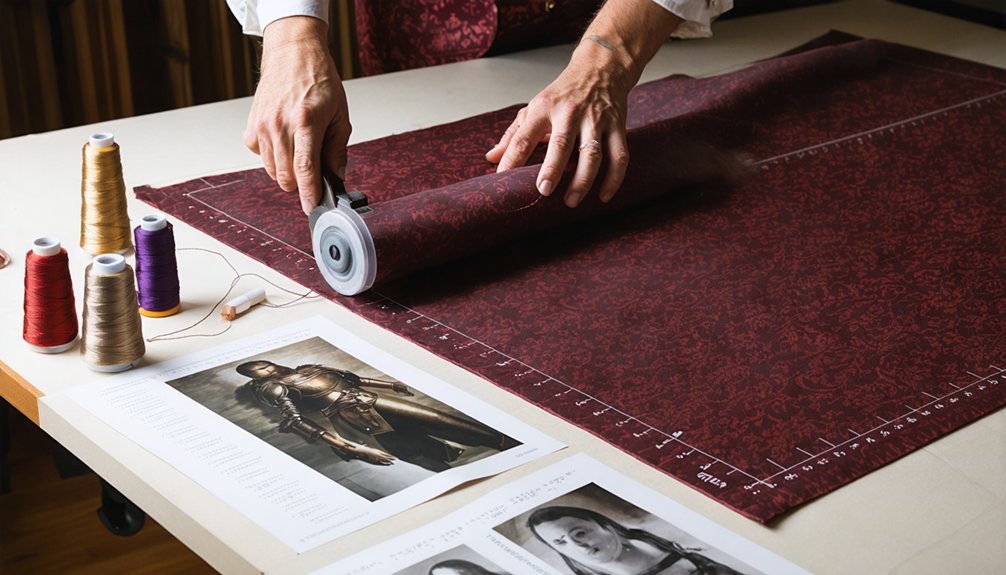
To build a convincing pirate costume, you’ll start with a billowy white shirt, dark trousers, and a layered waistcoat in rich nautical tones. Distress your fabrics using tea-staining, sanding, and strategic tearing to achieve a genuinely sea-worn finish. Prioritize 2-3 bold accessories over cluttered layering, and pair everything with tall buckle boots for instant authority. Master the makeup, hair, and posture — and the full picture becomes something far more commanding than you’d expect.
Key Takeaways
- Start with a loose white shirt and layered waistcoat, choosing dark trousers or skirts that allow full freedom of movement.
- Distress fabrics using sandpaper, tea-staining, and jagged cuts to authentically replicate the worn, sea-battered look of a real pirate.
- Select 2-3 bold accessories like a tricorn hat, leather pouch, or toy sword to build character without cluttering the costume.
- Apply smoky eyeliner, bronzer, and sea-salt spray to hair for a weathered, sun-exposed nautical appearance that enhances authenticity.
- Choose tall buckled boots in rugged leather to instantly signal pirate identity while sharpening your overall costume silhouette.
Start With the Core Pirate Costume Silhouette
Because the silhouette sets the foundation for everything else, you’ll want to get it right before adding a single accessory. Pirate history reveals a costume symbolism rooted in rebellion, freedom, and functional seafaring—and your silhouette must honor that.
Start with a loose, billowy white or off-white shirt. Layer a waistcoat or vest over it in red, brown, navy, or black. Choose dark trousers, cropped pants, or a long skirt that allows full movement.
Fabric matters enormously—cotton breathes, while weathered felt or leather adds tactile authenticity.
Deliberately distress your pieces. Faded tones, visible patches, and jagged hems communicate a life lived at sea.
Size up slightly to accommodate layering without restriction. Every element you choose should feel purposeful, not decorative—because in pirate styling, structure always precedes spectacle.
Cut Costs Before You Buy a Single Piece
Before you spend a single dollar, raid your own wardrobe—you’ll likely find the bones of a convincing pirate costume already hanging there. Loose shirts, dark trousers, and layered vests already mirror pirate history’s rugged maritime aesthetic.
Skip specialty retailers and instead distress what you own—cut hems jagged, fray edges deliberately, and sand fabric for a weathered finish that actually improves costume durability over multiple wears.
Prioritize one or two standout accessories rather than overloading every layer. A bold sash or battered tricorn delivers immediate visual impact without inflating your budget.
Mix neutral base layers with a single strong accent color to coordinate effortlessly.
Check sizing and layering early—ill-fitting pieces cost you more in last-minute fixes than smart upfront planning ever would.
Which Fabrics Work Best for a Pirate Costume?
Your fabric choices can make or break a pirate costume’s authenticity, so you’ll want to prioritize cotton, lightweight woven cloth, or weathered felt for the most convincing results.
Cotton breathes well, drapes naturally, and holds distressing techniques better than synthetic alternatives.
Once you’ve selected your base material, you can age it deliberately through strategic tearing, jagged hemming, and sandpaper scrubbing to achieve that hard-won, sea-worn finish.
Best Fabrics for Pirates
The fabric you choose can make or break your pirate costume’s authenticity. Cotton and lightweight woven materials deliver breathability and movement for shirts and layered pieces.
For structured components like vests and coats, weathered felt or leather elevates your pirate costume colors beyond generic Halloween territory.
Historical accuracy demands deliberate distressing. Jagged hems, frayed edges, and strategic tears communicate a life actually lived at sea. You’re not wearing new clothes — you’re wearing survival.
Darker woven fabrics in navy, black, and deep brown anchor your layered silhouette with visual weight. Avoid synthetic blends that catch light unnaturally.
When fabric behaves authentically, your entire costume gains credibility. Choose materials that age well under convention lighting and hold their shape across long hours of wear.
Weathered Fabric Finishing Techniques
Distressing your fabric transforms a basic costume into a convincing relic of the open sea. To honor maritime history authentically, you’ll want to sand cotton and linen with coarse-grit paper until fibers fray naturally along stress points.
Tear edges deliberately rather than cutting them clean, mimicking real wear from rigging and rough seas.
Tea-staining creates instant age, giving white fabric the yellowed, salt-crusted appearance embedded in pirate folklore. Steep strong black tea, submerge your garment unevenly, then air-dry without rinsing for a blotchy, sun-faded effect. Add strategic ink or charcoal smudges near cuffs and hems.
Burning fabric edges lightly with a lighter produces authentic scorched fraying. Work slowly, control each pass, and prioritize safety. The result reads as genuinely lived-in rather than costume-store manufactured.
Distress and Weather Your Pirate Costume for a Worn Look
Weathering your costume transforms it from a clean, store-bought piece into something that looks genuinely battle-tested and sea-worn. Pirate mythology demands visual storytelling, and historical accuracy lives in the details you deliberately destroy.
Apply these three distressing techniques with precision:
- Sand and scrape fabric edges using coarse sandpaper to fray seams and thin high-wear areas like elbows and knees.
- Stain strategically using diluted brown or black tea, dabbed unevenly across the shirt and trousers for authentic grime patterns.
- Cut jagged hems along trouser legs and sleeve cuffs using sharp scissors, then pull threads to deepen the ragged effect.
You’re not damaging your costume—you’re building its history. Every worn patch tells the story of a pirate who actually sailed.
Layer Your Pirate Costume Without Losing Mobility

Layering’s your secret weapon for depth and character, but only if you choose fabrics that move with you rather than against you. Reach for lightweight cotton base shirts and reserve heavier felt or leather for outer vests and belts, keeping bulk where it reads visually without restricting your arms or torso.
Size up on layered pieces, then cinch everything with a wide sash so you control the silhouette without sacrificing a single step.
Smart Fabric Choices
When layering your pirate costume, fabric choice determines whether you move freely or fight your own outfit all night. Every pirate legend earned their reputation through action, not restriction. Treat your build like a treasure hunt — select materials that reward precision.
- Cotton and lightweight woven fabrics breathe well and flex naturally under vests or waistcoats without bunching.
- Weathered felt or leather accents add structural authenticity without trapping heat or limiting arm movement.
- Avoid stiff synthetics — they resist movement, wrinkle awkwardly, and betray the lived-in, sea-worn silhouette you’re building.
Distress your fabrics deliberately. Jagged hems and worn edges signal character without adding bulk. Choose materials that cooperate with your body, keeping every layer purposeful, mobile, and visually commanding throughout the entire event.
Flexible Fit Strategies
Fit determines freedom — size up on every layer you plan to stack, and you’ll move like someone built for action rather than dressed for display. Tight seams restrict every gesture, every dramatic turn, every moment your pirate crew expects command from you.
Before finalizing anything, wear all pieces simultaneously. What feels right standing still often locks up the moment you crouch, reach, or stride purposefully across a convention floor. Cropped trousers paired with tall boots demand room at the knee. Waistcoats layered over billowy shirts need chest clearance.
Think of your full outfit like a treasure map — each layer guides you toward the complete picture. Prioritize mobility first, then refine aesthetics around that structural foundation.
Accessories That Complete a Pirate Costume
Accessories don’t just finish a pirate costume—they define it. Each piece you add transforms basic clothing into a character with history, menace, and hidden treasure. Choose deliberately—every detail signals your creative command.
- Hat or bandana – A tricorn hat or knotted bandana instantly establishes your pirate identity before you speak a single word.
- Waist sash or bandolier – A wide sash anchors your silhouette, while an over-the-shoulder bandolier layers in a commanding, captain-level authority.
- Character props – A ship’s wheel medallion, leather pouch, hook, or toy sword builds depth and invites storytelling.
Prioritize two or three bold accessories over cluttered layering. Restraint creates impact. You’re not decorating—you’re constructing a persona that commands every room you enter.
Pirate Costume Makeup and Hair for a Finished Look

Makeup and hair finish what fabric alone can’t—they pull your costume from dressed-up to fully inhabited. Apply dark eyeliner with smoky makeup techniques to sharpen your gaze into something weathered and commanding. Layer bronzer strategically across your forehead, nose, and cheekbones to simulate years of sun exposure at sea.
Makeup transforms a costume into a character—smoky eyes and bronzer build the weathered, sun-hardened look of a seasoned sailor.
Add rosy pigment to your cheeks for a flushed, active energy that suggests constant movement and salt wind.
Your hair styling choices carry equal weight. Tousle your natural hair with sea-salt spray, or commit to a long, windswept wig if your length doesn’t cooperate. Loose waves and intentional disorder read as authentically nautical.
Combine deliberate makeup techniques with precise hair styling, then adopt a confident, grounded stance—your posture is the final detail that seals the character completely.
Choose the Right Boots for Your Pirate Costume
Boots carry more visual authority in a pirate costume than almost any other single piece. You’ll want footwear that delivers both boot comfort and footwear durability across long convention hours without sacrificing authenticity. Choose deliberately.
- Prioritize tall shafts and buckle details — these silhouette choices signal pirate identity instantly and elevate your entire presentation.
- Select rugged leather or leather-adjacent materials — they withstand repeated wear while maintaining that weathered, sea-hardened aesthetic you’re building toward.
- Avoid laces entirely — laceless boots read as period-accurate and streamline your overall silhouette with clean theatrical authority.
Pair cropped trousers with tall boots and long socks to sharpen that classic pirate proportion. Your footwear isn’t an afterthought — it’s your foundation.
Frequently Asked Questions
Can Children Wear a Simplified Version of a Pirate Costume Safely?
Picture tiny pirates sailing safely through Halloween — you’ll guarantee children’s safety and costume comfort by choosing soft fabrics, avoiding sharp accessories, sizing up for easy movement, and keeping designs wonderfully simple yet authentically swashbuckling.
How Do I Keep a Pirate Costume Intact During an Outdoor Event?
Secure your pirate costume maintenance by pinning loose fabric, reinforcing seams beforehand, and tucking accessories tightly. Follow these outdoor event tips: layer smartly, avoid oversized pieces, and you’ll command every scene with theatrical, storm-proof confidence.
Are There Pirate Costume Options Suitable for Warmer Weather Conditions?
Light as a sea breeze, you’ll thrive in lightweight fabrics like cotton or linen. Choose breathable accessories — a loose bandana, open vest, and cropped trousers — keeping your pirate aesthetic bold, mobile, and invigoratingly cool outdoors.
How Should a Pirate Costume Be Stored After Use?
Store your pirate costume using smart costume storage tips: fold it loosely, keep it in a breathable garment bag, and apply fabric preservation techniques by avoiding plastic. You’ll protect every weathered detail for your next epic adventure.
Can a Pirate Costume Be Adapted for Wheelchair Users Comfortably?
Like a ship built for any sea, you can absolutely adapt your costume! Focus on adaptive accessibility and wheelchair-friendly design by emphasizing upper-body details—dramatic capes, bold sashes, layered vests—ensuring comfort, mobility, and breathtaking pirate authenticity.
References
- https://www.instructables.com/How-to-put-together-an-awsome-pirate-costume-for-H/
- https://www.piratesinfo.com/guides-for-pirates/pirate-costume-guide/authentic-pirate-costumes/
- https://costumewall.com/dress-like-a-pirate/
- https://www.wikihow.com/Make-a-Pirate-Costume
- https://www.piratesinfo.com/guides-for-pirates/pirate-costume-guide/
- https://www.piratesinfo.com/guides-for-pirates/pirate-costume-guide/diy-pirate-costumes/
- https://www.crazecosplay.com/blogs/questions/how-to-make-a-pirate-costume
- https://www.reddit.com/r/renfaire/comments/13qlka2/pirate_help/
- https://www.funidelia.co.uk/blog/funny-costumes/pirate-costumes/
- https://www.thepiratedressing.com/blog/pirate-accessories-guide/