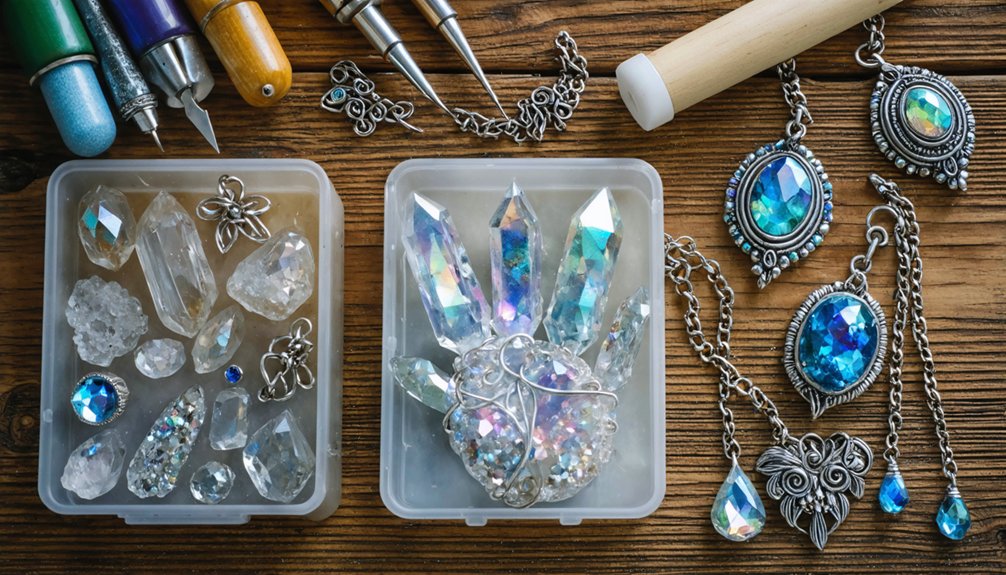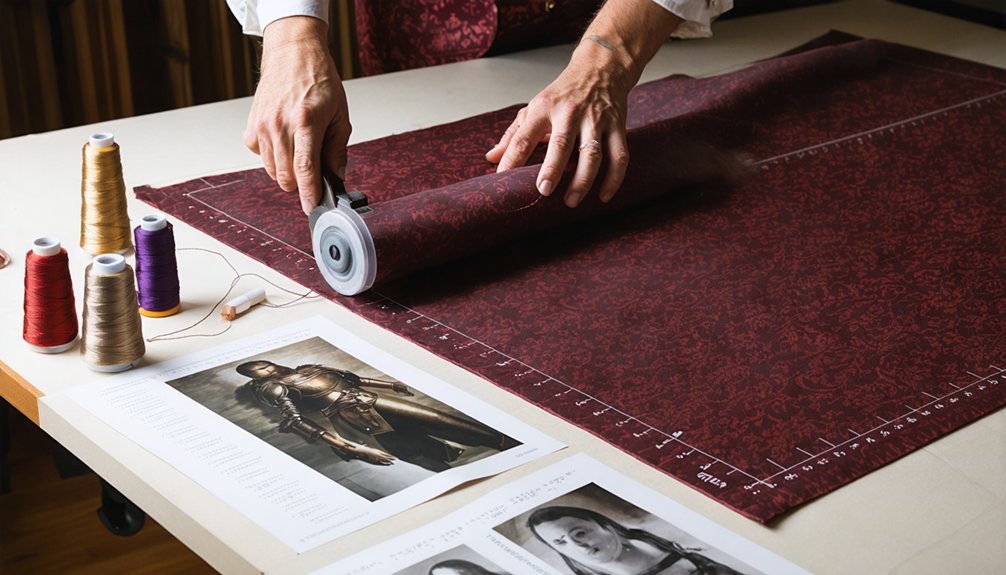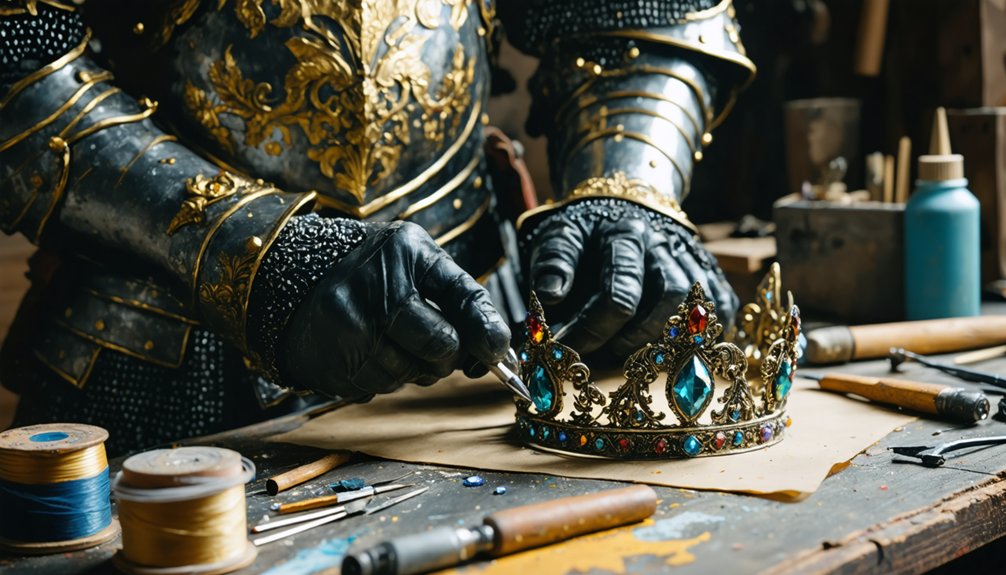
You can tackle cosplay repairs fast by keeping safety pins, fashion tape, and a compact sewing kit on hand for quick fabric fixes. Match your adhesive to your material — super glue bonds plastic and metal in seconds, while barge cement handles leather and vinyl. Store props in cool, dry conditions to prevent long-term damage. Master these core techniques, and the deeper strategies ahead will take your repair game even further.
Key Takeaways
- Use safety pins perpendicular to tears for quick emergency seam fixes, securing damaged fabric in under five minutes.
- Match adhesives to materials: super glue for plastic, barge cement for leather, and hot glue for fabric and foam.
- Apply cyanoacrylate for clean prop fractures or five-minute epoxy for larger gaps requiring superior fill strength.
- Double-sided fashion tape instantly bonds loose material without stitching, making it ideal for quick on-site fixes.
- Compact sewing kits enable permanent fabric repairs within 10 to 15 minutes during events or emergencies.
Fix Ripped Seams and Torn Fabric Fast
When a seam tears mid-convention, you’ve got minutes—not hours—to fix it. Grab safety pins first—they’re your fastest emergency stitching solution, securing ripped seams in under five minutes without thread or needles.
Pin perpendicular to the tear for maximum hold and reduced fabric stress.
For quick fabric patches, double-sided fashion tape bonds loose material instantly without visible stitching marks. Press firmly along the entire damaged edge for full adhesion.
If time permits, a compact sewing kit delivers a permanent fix within 10 to 15 minutes using basic running stitches.
Always pack electrical tape as a backup adhesive when glue isn’t accessible. Stain remover pens handle any discoloration from handling.
Prioritize your portable repair kit—it’s what separates a ruined costume from a seamless convention experience.
What to Pack in a Cosplay Convention Repair Kit
Your convention repair kit should include super glue, safety pins, duct tape, a multi-tool, scissors, and a Sharpie as non-negotiable essentials.
Pack adhesives and tapes in sealed Ziploc bags to prevent leakage during transport and keep each item category grouped for fast access under pressure.
Organizing your kit this way cuts retrieval time considerably when you’re mid-convention and dealing with a failing seam or cracked prop.
Essential Kit Items
A well-stocked repair kit can mean the difference between a salvaged costume and a ruined convention day. For emergency repairs, pack super glue, five-minute epoxy, and hot glue sticks to handle adhesive failures across plastic, metal, and fabric materials.
Include safety pins, double-sided fashion tape, and a compact sewing kit for fast seam restoration. Duct tape addresses structural tears when stronger solutions aren’t immediately available.
Your portable tools selection should include scissors, a multi-tool, and a Sharpie for quick cuts, fastener adjustments, and scuff concealment. Store all adhesives in sealed Ziploc bags to prevent leakage during transport.
A stain remover pen protects light-colored fabrics from visible discoloration. Organizing these components systematically guarantees you’re accessing the right tool within seconds, not minutes.
Organizing Repair Supplies
Organizing your repair supplies into clearly defined zones prevents frantic searching mid-convention. Use a segmented tackle box or multi-pocket organizer for effective storage, separating adhesives, mechanical tools, and fabric repair items into distinct compartments.
Place super glue, five-minute epoxy, and barge cement in sealed Ziploc bags to contain leakage. Dedicate a second zone to mechanical reinforcement: duct tape, safety pins, and your multi-tool. Reserve a third section strictly for surface finishing — Sharpie markers, poly-putty, and a compact sanding block.
Label each compartment with waterproof tape for instant identification. This repair supply organization system eliminates guesswork, letting you execute fixes confidently under time pressure.
Prioritize compact, stackable containers that fit inside your convention bag without occupying excessive space.
Choosing the Right Adhesive for Every Cosplay Material
When you’re choosing an adhesive for cosplay repairs, matching the glue to the material is critical for achieving reliable results.
Super glue bonds plastic and metal in 10 to 30 seconds, while five-minute epoxy handles large surface gaps and heavy-duty connections with superior durability.
For flexible materials like leather and vinyl, you’ll want barge cement, which provides the flexible bonding those surfaces specifically require.
Adhesive Types For Materials
Choosing the right adhesive for your cosplay materials can mean the difference between a prop that lasts the convention and one that falls apart mid-panel. Understanding adhesive properties and material compatibility is essential before applying anything permanently.
For plastic and metal components, super glue (cyanoacrylate) bonds surfaces within 10 to 30 seconds, delivering high-strength results.
For larger gaps or heavy-duty connections, five-minute epoxy provides superior durability.
When working with leather or vinyl, you’ll want barge cement specifically, since it maintains flexible bonding under movement stress.
Hot glue handles fabric, foam, and lightweight accessories effectively for immediate fixes.
Matching adhesive properties to material compatibility prevents bond failures before they happen, keeping your build structurally sound throughout demanding convention environments.
Bonding Strength And Durability
Bonding strength and durability aren’t one-size-fits-all — different materials demand adhesives matched to their specific stress tolerances.
When you’re selecting bonding techniques, you’ll need to evaluate adhesive properties against material flexibility, surface porosity, and load distribution.
Super glue delivers rapid, high-strength bonds on rigid plastic and metal within 10 to 30 seconds, making it ideal for structural prop repairs.
Five-minute epoxy outperforms other adhesives on large surface gaps and heavy-duty connections, offering superior long-term durability.
For leather and vinyl, Barge cement provides flexible bonding that resists shear stress during movement.
You should never apply rigid adhesives to flexible substrates — this mismatch causes bond failure under repeated stress.
Match adhesive properties precisely to material behavior, and your repairs will hold through extended convention use.
How to Repair Cracked or Broken Cosplay Props
Cracked or broken cosplay props don’t have to sideline your build — with the right adhesive and technique, you can restore structural integrity fast. For clean fractures, apply cyanoacrylate along the break line and hold firm for 10 to 30 seconds.
For larger gaps, five-minute epoxy delivers superior fill strength across wide surface areas.
Advance your prop reinforcement techniques by inserting steel nails or rebar into fracture holes, boosting load-bearing capacity by up to 40 percent. Wrap alteco super glue rings around fracture edges to prevent secondary cracking under stress.
Once mechanical reinforcement is complete, apply poly-putty to execute precise surface repair methods — filling voids, smoothing shifts, and restoring original prop contours before finish sanding. These layered steps guarantee both structural reliability and visual accuracy.
Restoring Scratched and Scuffed Cosplay Prop Surfaces
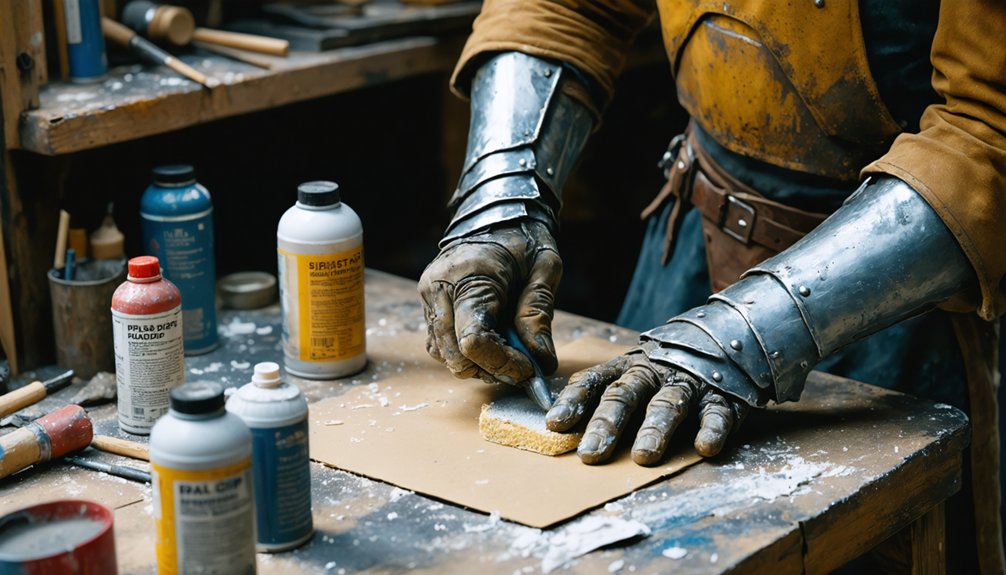
Scratches and scuffs on cosplay props are surface-level damage you can fix with three reliable techniques.
First, apply poly-putty directly into scratches, let it cure fully, then sand it smooth to restore original surface contours — this method delivers seamless surface finishing on rigid plastic or resin props.
Second, use a hair dryer to apply controlled heat over minor deformations, softening the plastic enough to manually smooth irregularities without requiring filler materials.
Third, for dark-colored props, a Sharpie marker provides instant scratches removal on small scuffs, eliminating the need for full repainting.
Prioritize the poly-putty method for deeper damage and the marker technique for superficial marks.
Always inspect repaired areas under direct lighting to confirm uniform texture before returning props to active convention use.
How to Store Cosplay Props to Prevent Damage
Five storage habits protect your cosplay props from long-term structural and surface damage. Proper prop storage directly determines how well your accessories survive between conventions, so you’ll want to implement these damage prevention strategies immediately.
- Use dedicated storage bins or closets to shield props from accidental drops and crushing forces that compromise structural integrity.
- Maintain cool, dry environments to prevent mold growth on wood, foam, and fabric components.
- Store props in protective cases to block dust accumulation and UV-related surface discoloration.
- Repackage props in original boxes after each use to preserve their shape and prevent deformation.
Avoid damp storage corners entirely. Moisture accelerates paint peeling, wood warping, and metal corrosion, degrading your props faster than physical handling ever would.
Frequently Asked Questions
How Do You Remove Stubborn Stains From Light-Colored Cosplay Costumes?
Use a stain remover pen for quick fabric care on light-colored costumes. You’ll want to apply it directly onto the stain, blotting gently to lift discoloration without damaging delicate fibers, ensuring effective stain removal every time.
Can Electrical Tape Permanently Replace Stitching on Heavily Stressed Costume Seams?
Seams fail 70% faster under stress without proper stitching. Electrical tape can’t permanently replace stitching for seam reinforcement on heavily stressed areas—you’ll need fabric alternatives like double-sided fashion tape combined with a sewing kit for lasting durability.
How Long Does Barge Cement Take to Fully Cure on Vinyl?
Barge cement properties allow full vinyl adhesion cure within 24 hours. You’ll apply thin coats, let each flash off for 10 minutes, then press surfaces together firmly, ensuring a flexible, durable bond on your vinyl costume materials.
What Environmental Conditions Accelerate Mold Growth on Foam Cosplay Components?
Like a silent invader, mold thrives in warm, damp environments. You’ll accelerate mold growth on foam by storing it in humid, poorly ventilated spaces. Prioritize mold prevention and foam maintenance by keeping components cool and dry.
How Do You Prevent Super Glue From Bonding Fingers During Prop Repairs?
Wear nitrile gloves for finger protection before applying super glue alternatives like five-minute epoxy. You’ll minimize accidental bonding by keeping acetone nearby, working in small precise amounts, and using applicator tools instead of direct finger contact.
References
- https://twincitiesgeek.com/2016/12/the-geeks-guide-to-creating-the-ultimate-cosplayers-emergency-repair-kit/
- https://www.reddit.com/r/cosplayers/comments/uqest7/any_tips_for_a_first_time_cosplay_repair_man/
- https://www.cgarmors.com/blog/tips-to-maintain-fix-cosplay-props-made-of-different-materials
- https://www.youtube.com/watch?v=jIqGUXzAA_I
- https://www.youtube.com/watch?v=R5aZo4ioh64
- https://learn.adafruit.com/cosplay-hacks/repair
- https://www.skywingknights.com/cosplay/how-to-make-the-perfect-portable-cosplay-emergency-repair-kit/
- https://medium.com/cosplayers/how-to-store-and-care-for-your-cosplay-props-and-accessories-dfb173313aa
- https://www.facebook.com/groups/293147727533723/posts/3114206935427774/
- https://cosplayadvice.com/how-to-make-quick-costume-repairs/